Chronicles / Language
Having an awareness and understanding of kata is paramount to gaining comprehension of, and deal with the Japanese. The entire traditional Japanese culture, starting with personal etiquette, and then in how one learns to do all routine things in life, was, and still is based on precise kata.
Proverbs are indigenous to all cultures, and often expose the deeper roots of the philosophy and psychology of a society. Japanese culture is especially rich in kotowaza or proverbs, as Japanese culture is ancient and has been highly sophisticated for a very very long time.
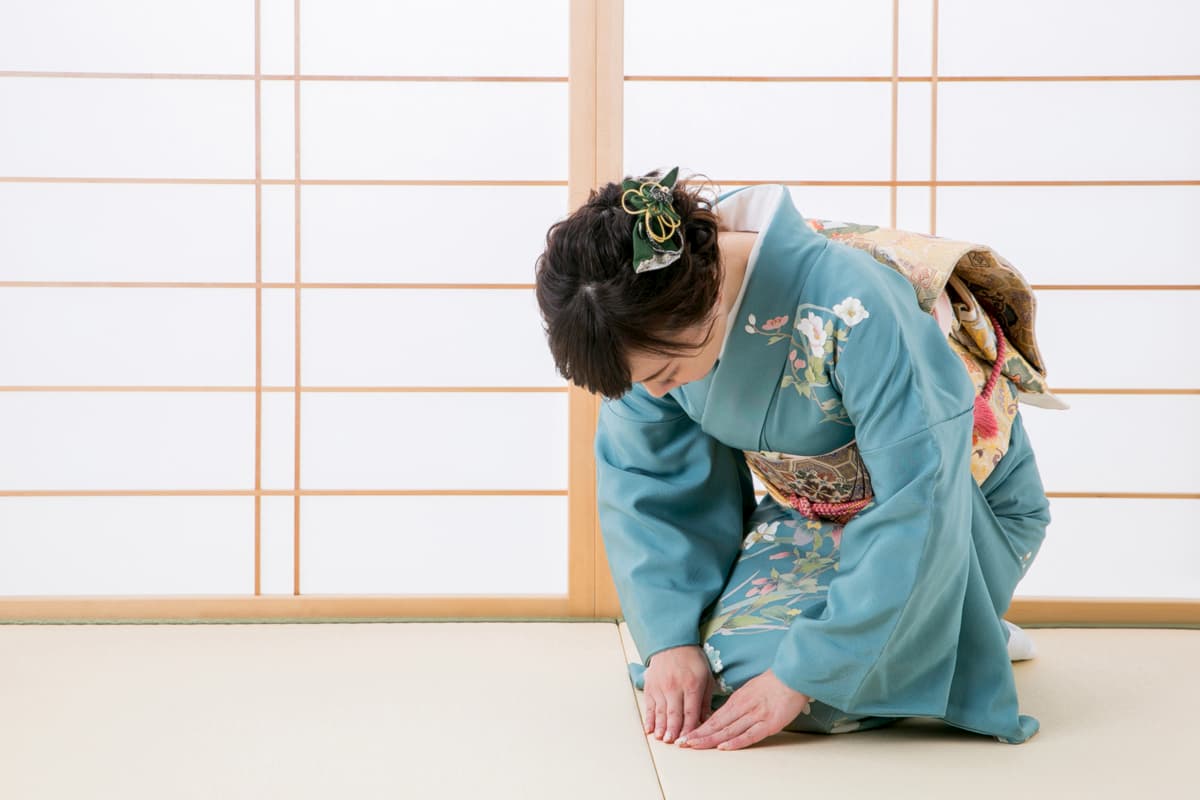
Japan’s traditional etiquette continues to be one of the most structured, refined, and sophisticated patterns of behaviour ever imposed on any people. From infancy, the Japanese were trained physically and verbally on how to behave in the prescribed Japanese manner.
Like many things in Japanese culture, coming to an understand of key social concepts and the significance of their meaning to the Japanese takes intention and awareness to fully understand. One must say gaining an in-depth understanding of “kao" or "face", and the gravity of protecting one's face is of paramount importance to successfully interacting with the Japanese.
Among the most important tenants of Confucius philosophy are the obligations children owe to their parents, the young owe to their elders, students owe to their teacher, and that all people owe to their superiors. These obligations are natural and inherent.
Some of the Japanese social conventions took much longer to internalize, and some of these lesson were really tough. The age old custom of the Japanese attaching the honorific san to the first and/or last names of the people one addresses is perhaps one aspect of Japanese etiquette which may seem like trivial nonsense to some foreigners.
A deeper concept than “I’ll scratch your back if you scratch mine”, gaining an understanding into "amae", is to gain an understanding into the Japanese way.Very early in Japanese history the concept of "amae" became a primary principal in the cultural and one of the fundamental foundations of where bonds of mutual trust are build into long, durable relationships.
Traditionally, the Japanese women were happy to be stay-at-home mothers, running the house, taking their children to their extracurricular activities, and visiting with their friends.
I have a relationship with a subsidiary of a large corporation since 1992. There was a gruff but kind engineer who had been with this company from its inception in 1970. He called me “anchan” all the time, which I guess was an appropriate suffix for him to use in this ridged Japanese hierarchal system.
The beauty of the Japanese language never fails to take the breath away.
A large vessel can not be created quickly; To become great, it takes much time. Therefore, it’s not too late, for one.
Coming from Zen Buddhism, this is a state where two parties need not language spoken or written to communicate between their heart for mutually unspoken understanding. i shin den shin is still a fundamentally unknown concept in the west, however, it is an ingrained Japanese cultural phenomena unparalleled anywhere else, it’s woven into the Japanese DNA, I don't doubt it.