
Pigeonhole
English is the lingua franca permeating the Material Sludge—in fact, it contains tonnes of fascinating linguistic elements, along with an abundance of figurative metaphors, similes, and distinctive expressions.
A wonderland for lovers of elegant prose, poetic possibilities, phantasmagorical themes, and a massive inventory of memorable memes.
Its remarkable spoken structures make it a global connector, linking almost every society on Earth through a common communicative medium.
In this particular moment within the infinite quantum-field reality, one can travel almost anywhere in the world and find someone with whom to communicate.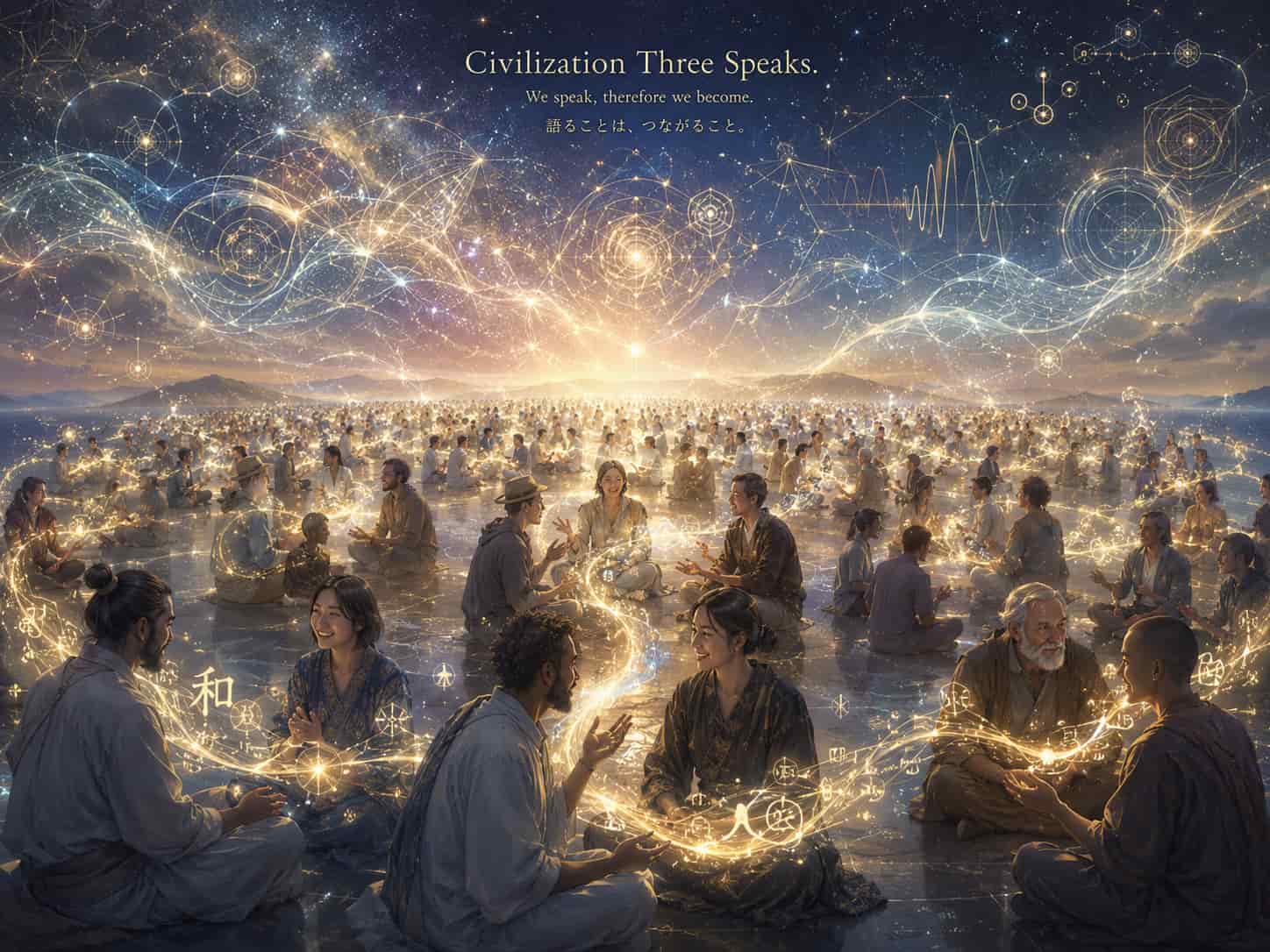 If English happens to be your native tongue, boy is that ever fun—it often feels like a kind of global tissue connecting Civilization Three.
Which brings us to the crux of this composition—and the meaning behind the pigeonhole theme.
Looking toward the future, one begins to see the truth hidden within its definition and what it reveals about authentic self-identity. Originally, a pigeonhole referred to a small compartment used for sorting papers, mail, or documents.
Today, the word has evolved into something far more sinister—the pigeonhole has become a prison of identity.
Time marches on endlessly, and today’s reality soon becomes tomorrow’s past while the world continually metamorphoses into new possibilities. The pigeonhole is therefore the last place one should wish to remain, for it steadily diminishes the odds of becoming the person one might otherwise have become.
Left there long enough, every dream eventually remains trapped inside phantasy.
The pigeonhole is an extraordinarily narrow place—rather like wandering into a Venus flytrap. Once inside, there is no escape, and that is the tragedy, for eventually everything becomes far too late.
The existence of one who was once wild and carefree gradually turns into a stale version of personal identity.
System creep runs deep, and each day presents another fork in the road—one path leading toward the pigeonhole, representing society’s expectations—the other leading into the nooks and crannies of the free-range avatar, into the unknown where true adventure begins. Which path you choose is entirely up to you, and confronting that decision tree is the first step toward changing your life trajectory.
The pigeonhole protocol begins at an early age within the machinery of industrial education.
Imagine being in your teenage years when someone asks—“What are you going to be?”
It is an astonishingly dense question to pose to a young hunter-gatherer of experience. At such a young age, most people have barely scratched the surface of who they are, let alone who they may become while exploring the infinite possibilities within the quantum field.
Yet society and its stupified system clones immediately begin sorting people into occupational compartments, as though dealing a random hand of cards. Guidance counselors often inherit the stale notion of classification, forever searching for the next available compartment into which another young mind can be neatly sorted.
They look not for infinite possibility, but for the nearest available compartment into which an adolescent can be neatly filed away.
It is institutional laziness disguised as guidance—a feckless culture of system clones.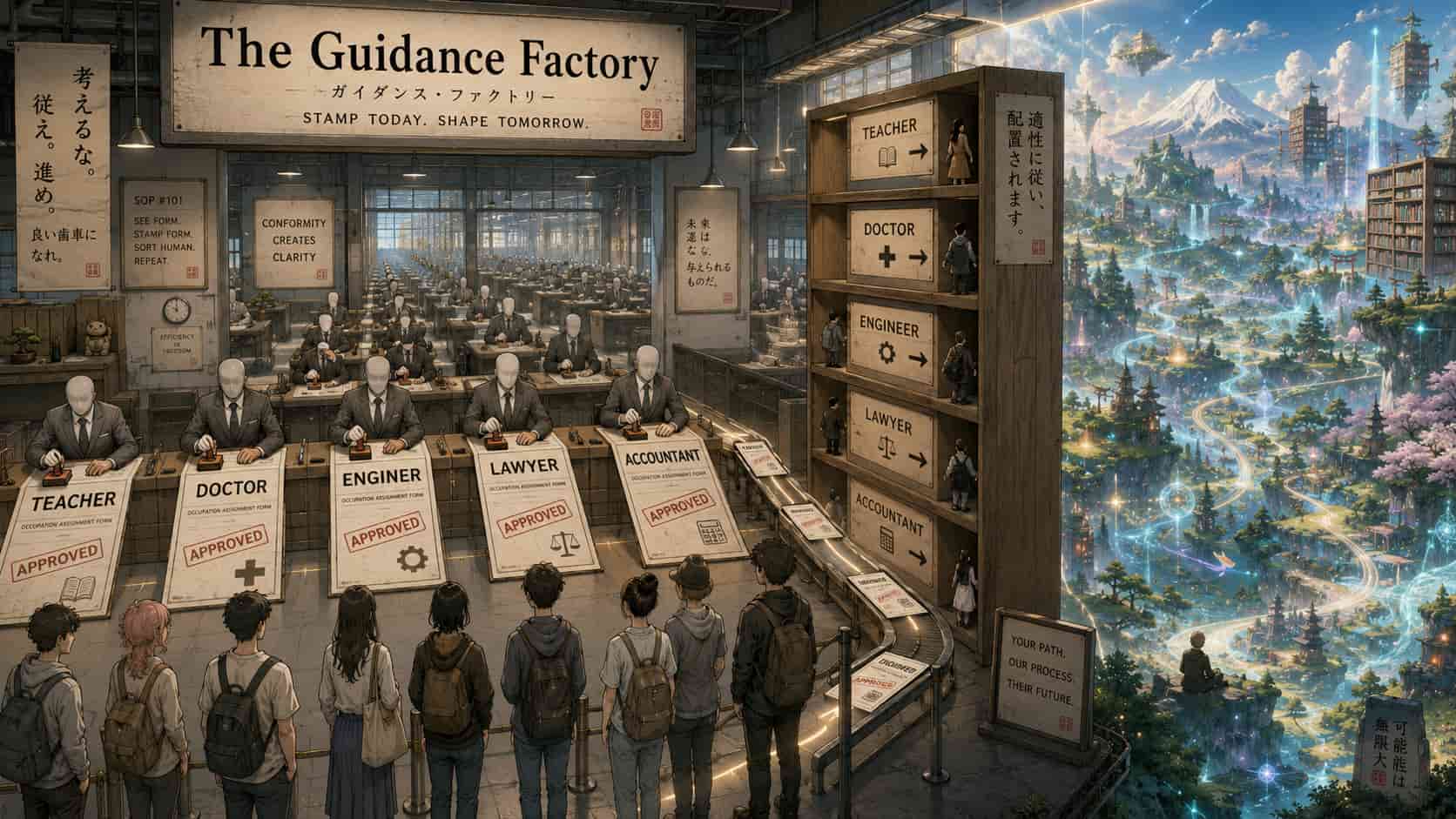 Is this truly what you aspire to be?
A primary example was a random bloke from Down Under who had quietly accepted his lot in life without raising an objection.
Entirely lacking any deeper sense of self, he confidently declared—as though stating an immutable fact of existence—“I am an English teacher, it is what I do.”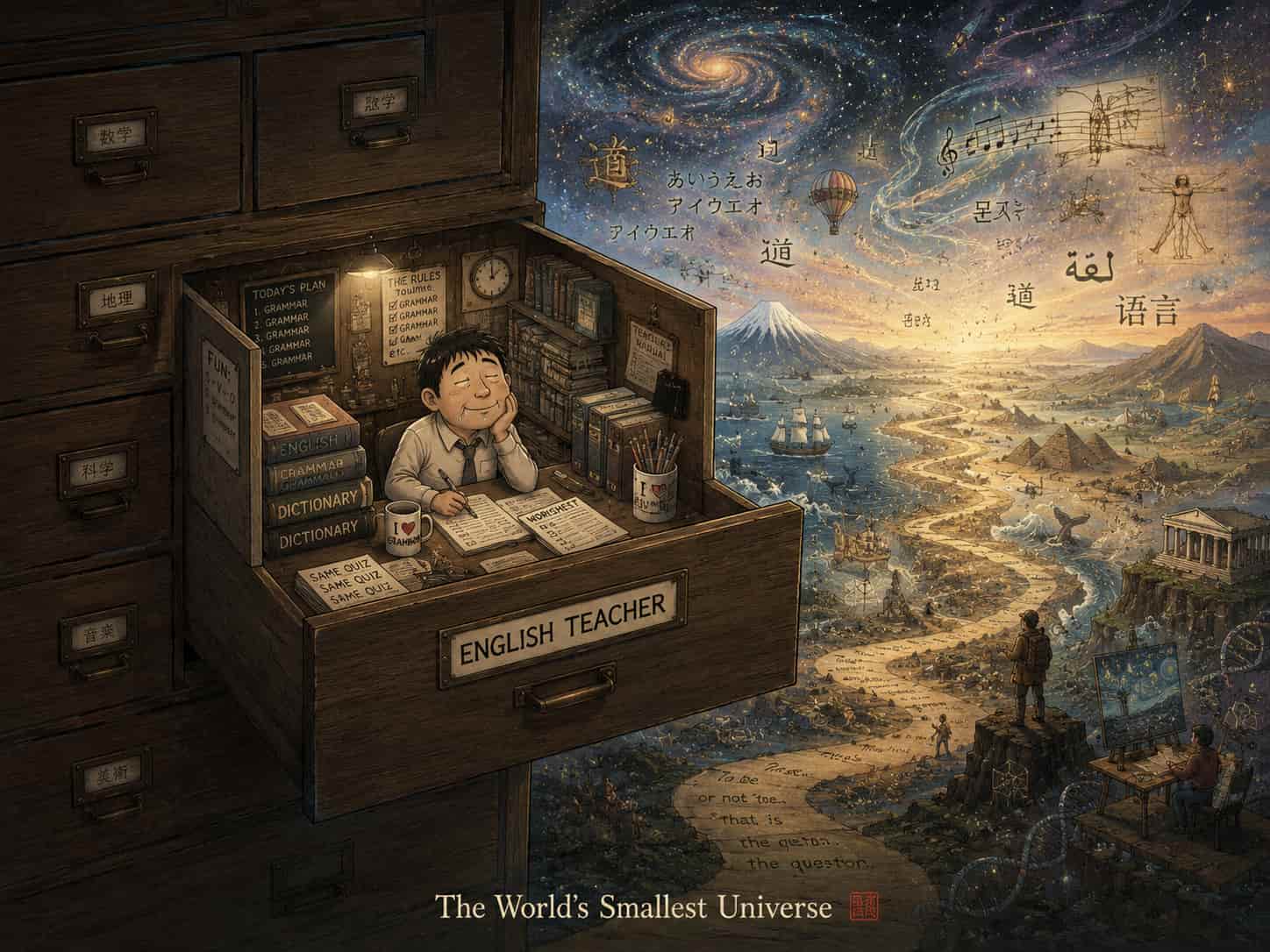 What appeared to be certainty was, in reality, a lack of mental clarity accompanied by a generous dollop of intellectual laziness.
What once seemed like an ideal situation can gradually decay into stagnation.
If that is the chosen attitude, then the pigeonhole is precisely the place for you—having never stepped beyond the darkness of Plato’s Cave. Indeed, every pigeonhole eventually grows old as time changes and markets wax and wane.
Do you truly wish to remain the same person in your thirties, your forties, and your fifties?
If the answer is yes, then your existence has willingly accepted the pigeonhole under the heading of “lame.”
The crux of the matter—and indeed the meat of this entire thesis—revolves around escaping an inherited identity. Indomitably, universities are exemplary at producing specialists, yet specialists often confuse their profession with their identity, willingly placing themselves into the pigeonhole.
Physicist.
Lawyer.
Accountant.
Engineer.
Tenured professor.
Each label slowly leaches away the individual until the profession itself becomes a prison of one’s own making. The résumé problem is equally stark.
Ask someone to describe themselves and the pigeonhole ritual begins almost automatically—occupation—nationality—age—education—where did you go to school?
Notice that every one of these is merely an administrative category, and none of them answers the question of a unique identity.
The Material Sludge and the system clones love labels because labels simplify bureaucracy, yet bureaucracy has never possessed the capacity to describe a living being.
The trick up the sleeve of the free-range avatar is the continual expansion of cognition.  Categories are temporary conditions—the pigeonhole is a static identity.
The new reality is that everything alive changes, and so too should identity and life trajectory.
After all, the pigeonhole was invented to organize paper—not human beings.
Yet somewhere along the way, humanity decided that the pigeonhole was also suitable for organizing people, reducing living beings to pawns in someone else’s game—one of civilization’s greatest tragedies. The pigeonhole is a black hole of identity and should be avoided like the plague.
Create your own pathway, for identity is never discovered through compartmentalization—it is forged along a personified trajectory.