Talking Stick
“When you hold the talking stick, you carry the weight of your ancestors’ voices. Speak with care and purpose.”
The tutelary deity of the Kizuna Jinja came to Japan in 1968, bringing a talking stick as a unique gift from our neo-clan to the Japanese, thereby establishing our presence in Japan decades ago. Like Japanese culture, societies rooted in ancestor veneration, such as the Secwépemc Nation, place ancestors at their core.
Although raised with traditional Christian values, Kizuna Jinja’s tutelary deity felt a stronger connection to the Secwépemc people and Japan, drawn by the pull of ancestral guidance.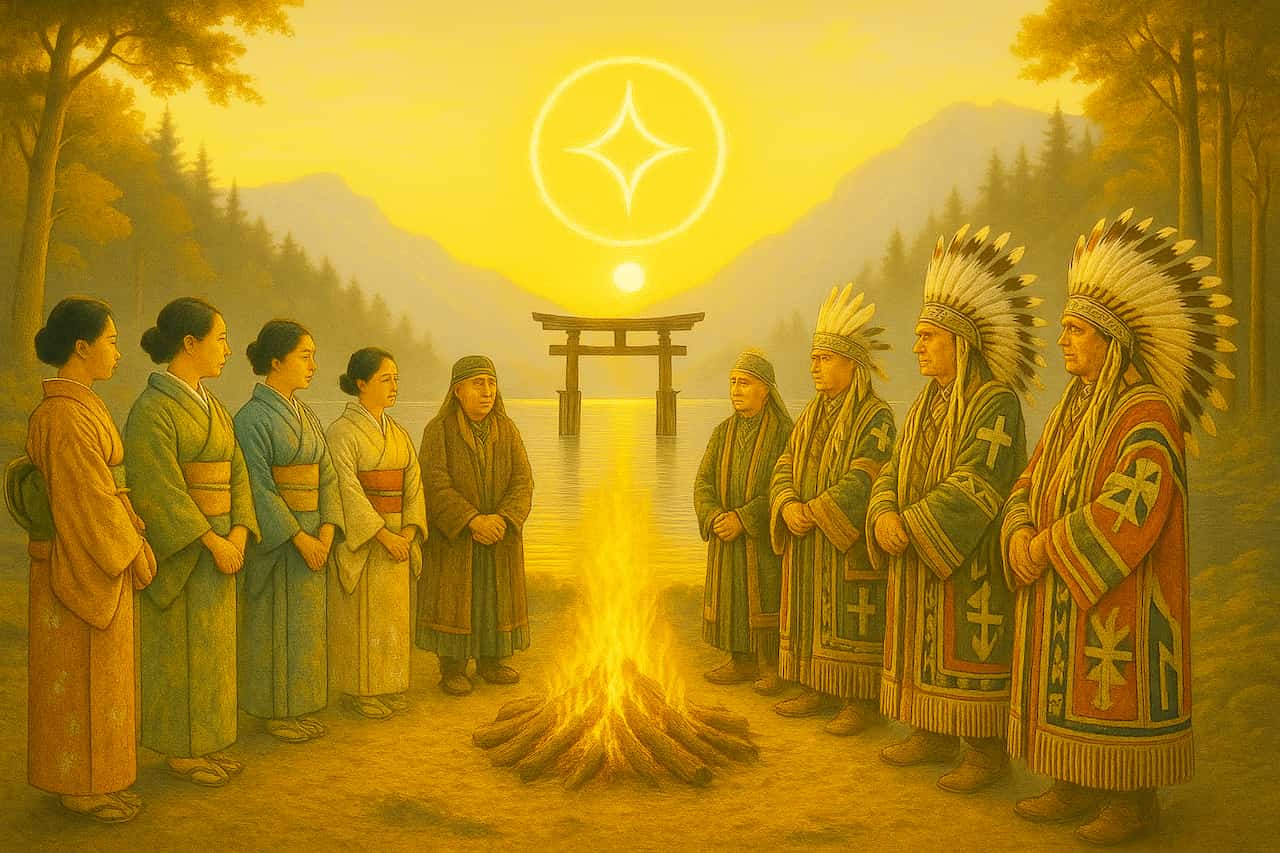 When he explained the talking stick’s significance to the Nissan president Katsuji Kawamata, the spiritual connection was immediately recognized.
This moment marked the strengthening of the relationship between our neo-clan and Japan, sealed by the ancestral gift of the talking stick.
The Japanese, known for their stoicism and non-verbal communication, embraced the talking stick’s story, as it reflects values of respect and order in group discussions.
The talking stick is a ceremonial tool used by Indigenous cultures, including the Secwépemc Nation, where our neo-clan originated. This protocol fosters respectful and orderly dialogue in council circles, community meetings, and spiritual gatherings.
The talking stick is a decorated wooden object, often carved, painted, and adorned with feathers, beads, leather, or animal symbols that hold cultural significance.
In a council or discussion circle, the talking stick is passed from person to person, allowing only the holder to speak.
This ensures that every voice is heard without interruption, promoting deep listening and mutual respect. In our modern world, filled with noise and distraction, the talking stick remains a powerful tool for building close-knit communities.
Surely, less hot air and pointless banter crowding out precious moments of our ephemeral existence is the key to serenity—the essence of a meaningful existence.
A key feature of the talking stick is its role in the council circle, where decisions are made by consensus, and every voice, regardless of age or status, is valued. The council circle’s emphasis on equality contrasts with the traditional Japanese mindset, where hierarchical structures, rooted in millennia of cultural evolution, prioritize elders’ guidance.
Japanese society continues to evolve, with its youth finding their voice and emerging as the nation’s future leaders.
It is hoped they will draw on ancestral wisdom to guide their decisions and uphold Japan’s reputation as a high-trust society.
Like Secwépemc culture, Japanese culture is rich in symbolism, connecting people to their ancestors and shaping the future of a modern traditional Japan—let the ancestral spirit of the tutelary deities guide us with intent and purpose for this is Seity's plan.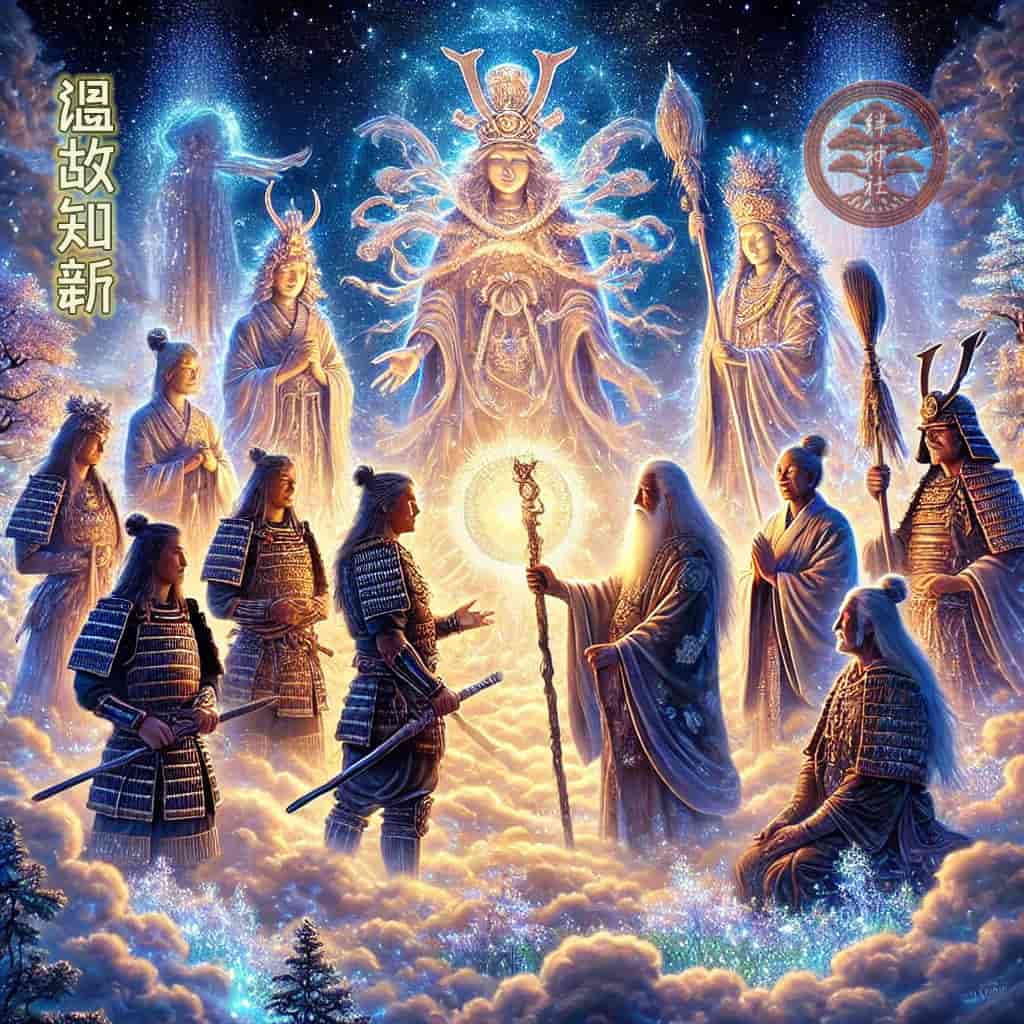 Each element of the talking stick carries symbolic meaning:
Wood Type: Often cedar, a sacred tree among Pacific Northwest nations.
Feathers: Represent truth and freedom of speech.
Carvings: Depict spirit animals, ancestors, or clan crests—reflecting the speaker’s lineage or totem.
Beads & Colors: Represent the Four Directions, life stages, or spiritual themes.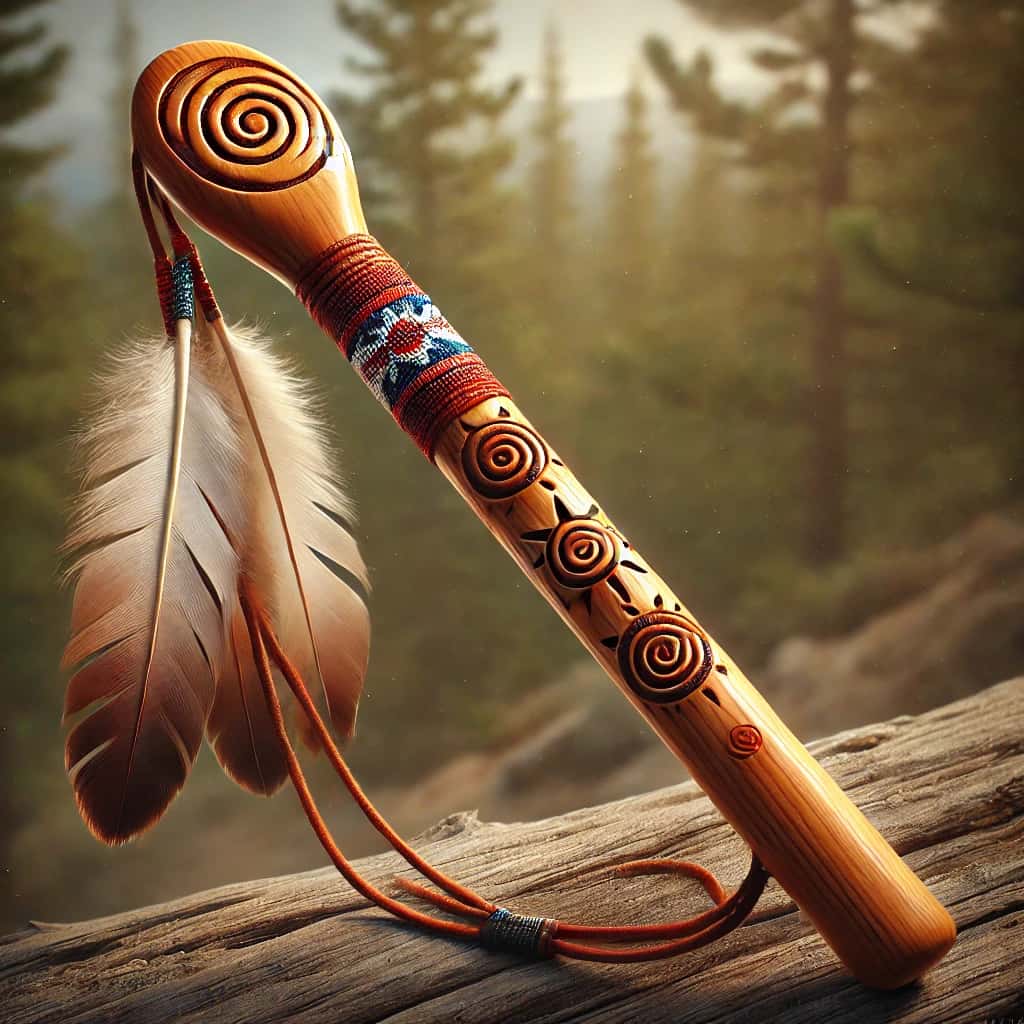 The talking stick’s primary purpose is to promote equitable communication, often aiding in peacemaking and conflict resolution.
It also encourages active, respectful listening, which is valuable in modern contexts like education and healing, particularly in therapy and trauma recovery.
Always remember the talking stick’s lesson, whether holding the talking stick or not.
“When you hold the talking stick, you carry the weight of your ancestors’ voices. Speak with care and purpose.”