God Fraud Squad
Creation mythology paints gods into all kinds of shapes and sizes—imaginary imagery used in a construction of ‘reality’ or from the Japanese perspective tatemae—the layers peeling away, the news cycle of yesterday, turning into the Hardcore History epoch of our times each day.
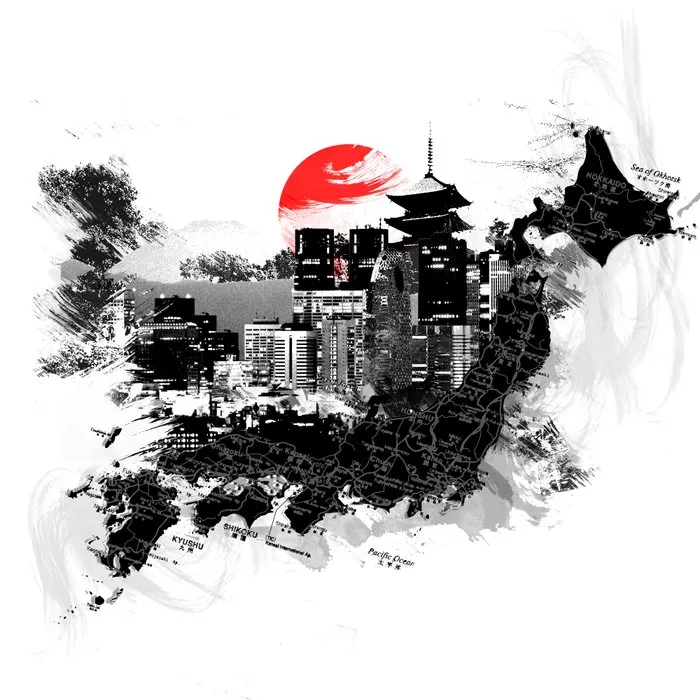
Japan is not only referred to as ‘Land Of The Rising Son’ but also as ‘Land of the Gods.’
The abundance of Shinto shrines and Buddhist temples spread throughout sacred spots in the ancient nation of Japan, bears testament to this sublime reality, therefore, Japan has deservedly been christened as Land of the Gods.
 Indeed, the Japanese are extremely flexible when considering the doctrine of Others, and the variety of gods contained in human mythologies.
The Japanese maintain a deeply spiritual essence, even though they are not considered by Others to be religious people—as a matter of fact, all Japanese are embedded within stringent social, cultural, and moral protocols—in essence being Japanese.
The foundation of the Japanese nation is based upon the assimilation of information coming from Others—moulding foreign notions into powerful potions, reformulating concepts and ideas, making them uniquely Japanese.
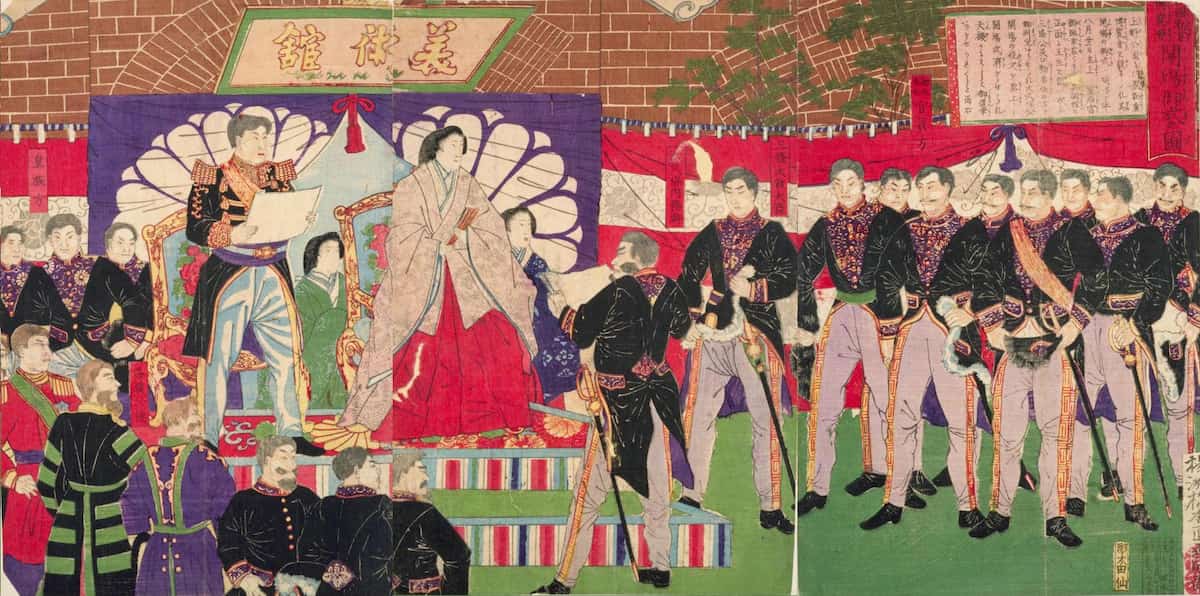
 Emphatically the Japanese are masters of integrating external worlds into the way of the Japanese, including the successful integration of Buddhism in the Heian period from 800 CE, weaving the Buddha into the way of the Japanese gods, thus, the super-conscious tenets of Buddhism becoming an essential part of being Japanese.
The success of the Buddha can be linked to one main thing, the skill to overlay these new tenets on top of the indigenous protocol of ancestor worship—⛩神Shinto道⛩—preservation and deification of deceased kin, anointing them as gods to be worshiped as ancestral clan.
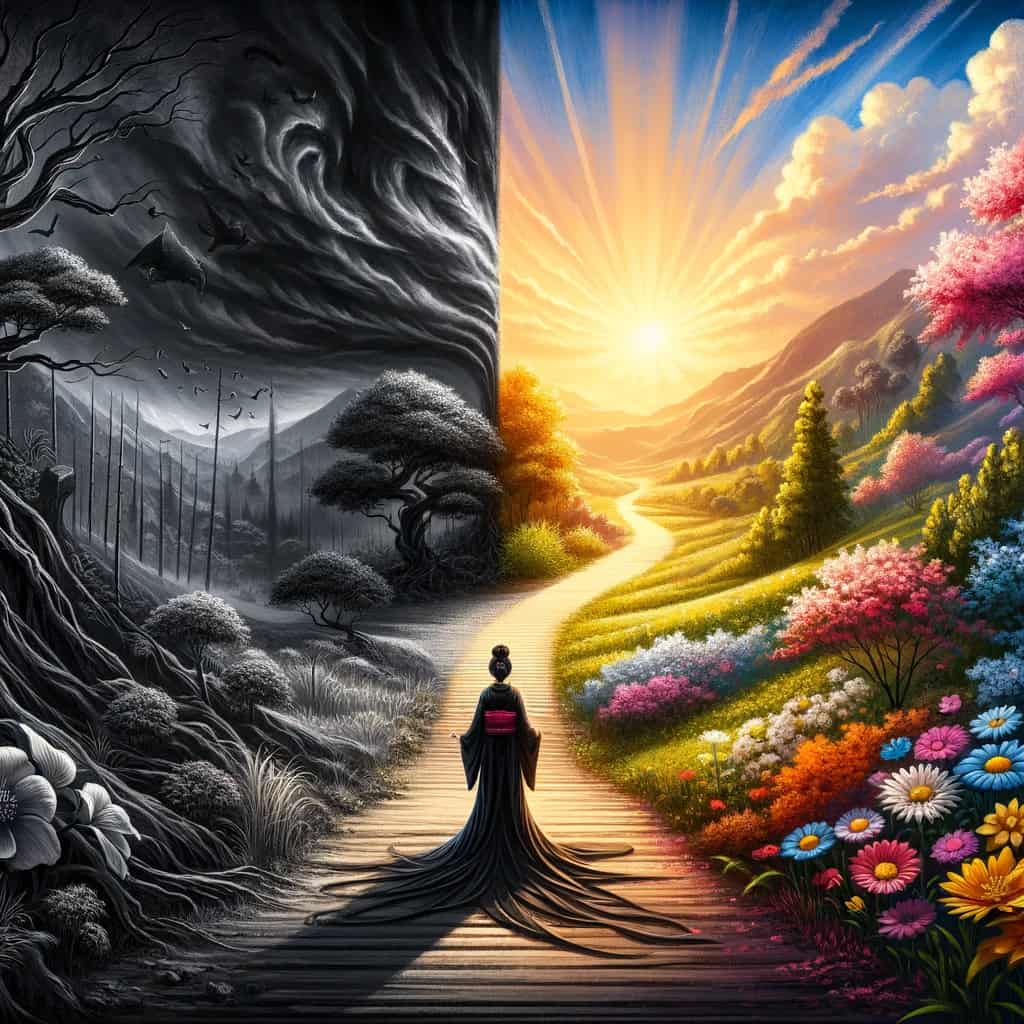
 Peeling back the stark black and white of mythological dogmatic stories, lies an insight into suppressive dogma, emphatically embedded into decayed ideology, the indoctrinated adherent submerged in the authoritative notion—either Zero or One, heaven or hell you cannot pick both, so you have to choose one.
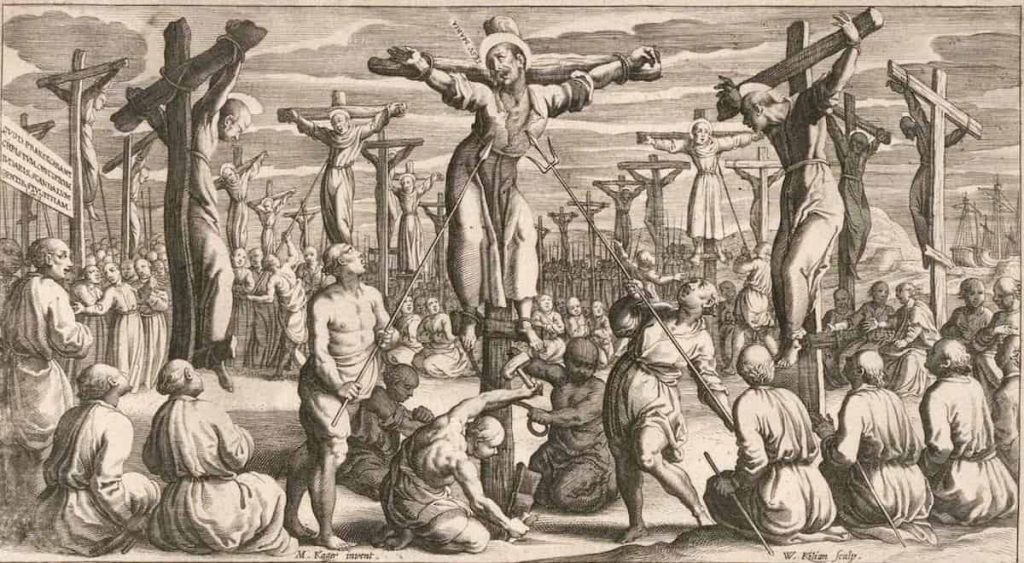
 The mandate of the Portuguese Jesuits was to convert the Japanese—to instigate the creation of fresh patrons—tithing to feed a vast unholy beast—geographically distant from this Pacific Island nation—conceptually remote from the Japanese.
The collapse of Christianity in Japan and rejection of their Zero or One doctrine were due to the diabolical notion of clan destruction, along with the decimation of the honourable notion of the loyalty Japanese show towards their clan.
In fact, the Japanese have no religion per se—the core tenets of Japan are reflected in the Japanese Way—mirrored in their ancient culture—forever binding them to societal protocol—by birthright to which they all must agree.
Form Order Process is the Japanese way—sending forth into the world, recreating foreign objects and concepts into all kinds of things—ancient ritual tasting like fine matcha tea—the Japanese are destined to merge and purge, integrate and reiterate, concepts, ideas, and convictions, now in the process of building the pinnacle of human thriving—Civilization Three.