
Not for Naught
Everything in life has a purpose; nothing is entirely for naught. Even the ugly and brutal lessons born of adversity contain information that can be tested against the truth of one’s experience. If they appear to teach nothing, perhaps it is because we are ignoring—at our peril—the still, quiet voice that calls us toward an authentic life.
The Japanese language offers an excellent yoji jukugo, or four-character expression: hanmen kyōshi (反面教師). It describes a negative example from which a positive lesson may be drawn. This wisdom lends weight to the armchair theory at hand: whenever possible, learn from the misfortunes and mistakes of others so that you need not descend into the same abyss.

Once this intimate truth is understood, you find yourself standing at the portal of a new reality. Beyond it lie all the nooks and crannies of embodied life—the bizarre material stew in which we are destined to dwell until the final day arrives and it is time to say goodbye. To understand deeply that everything in your life has occurred for a purpose is to discover that existence is continually pressing you toward meaning.

Every experience teaches you something about the next fork in the road: one path may end in repetition and ruin, while the road less traveled leads toward liberation of the soul and ultimate bliss. Within the practical application of this theory, even what once appeared amiss can be gathered into meaning. This does not mean that every wound was deserved, nor that cruelty should be excused. It means only that what happened need not possess the final word over what happens next.

In his magnificent theory, Dilbert Sensei states that events from the past—even those that appear to have damaged the health of one’s being—may be given a clean and honest reframe. Adversity can thereby be transformed from an enemy into an ally. The key is the angle of perception: change the place from which you look, and you begin to change the reality you are capable of manifesting.

Keeping the theory of “not for naught” in mind while examining one’s personal ruminations is a powerful first step. It allows us to clear away the piles of psychological rubble—the accumulated baggage that obstructs the mind, clouds perception, and leads us repeatedly into the same dead-end alleys. This clearing creates the possibility of a great reset, opening the future to a new paradigm within material existence. From there, one may cultivate a life that is calm, serene, and ultimately sublime—even if, at first, the transformation is visible only from the inside.
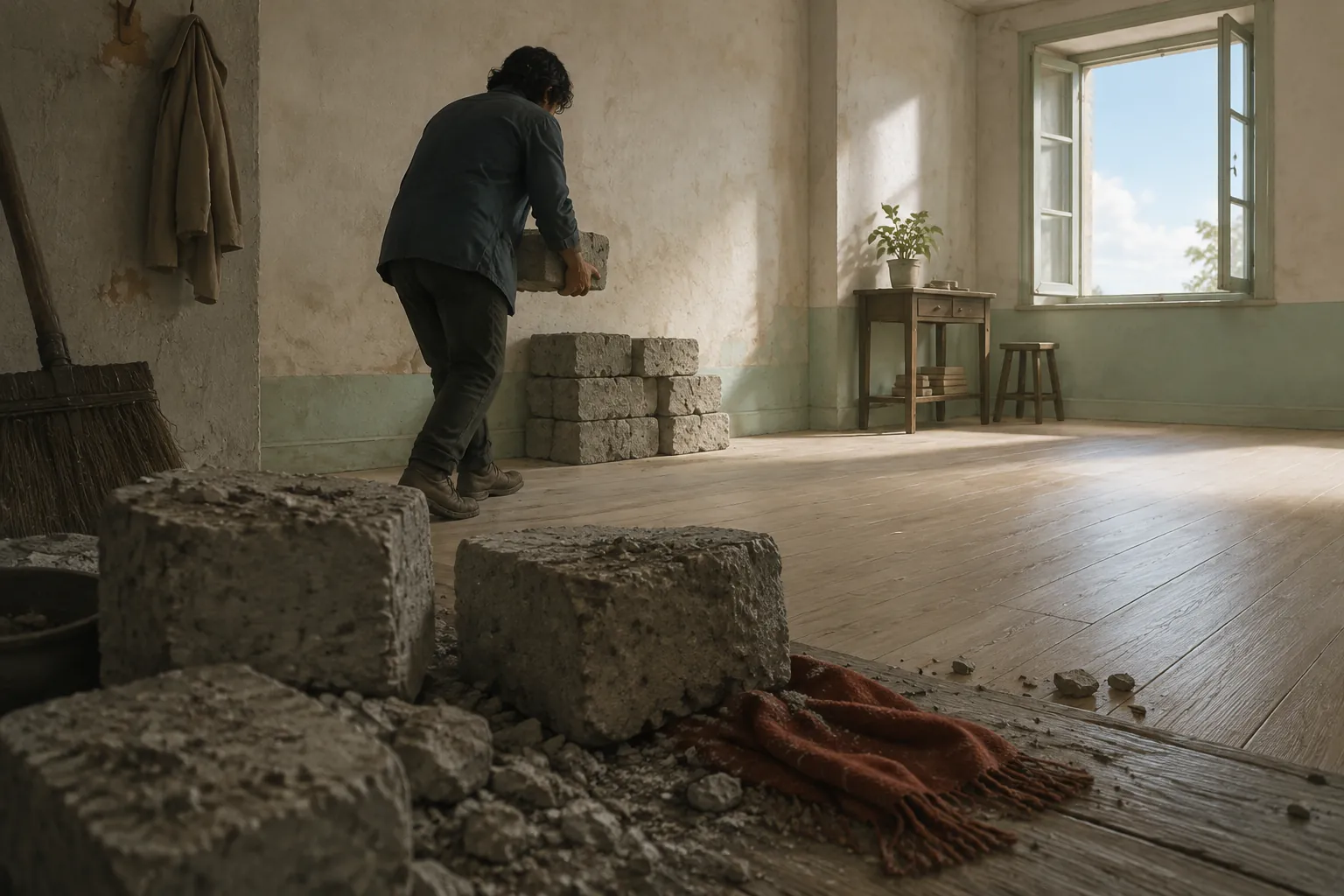
One eventually realizes that life is a personal coloring book whose pages cannot be completed by another. Fill them with the colors of your imagination, so that those who come afterward may read the storyboard of a person who overcame adversity and transformed existence into a personal journey of discovery.

The world waits breathlessly for those who can see it as it is without surrendering their power to imagine what it might become. Such people cultivate the inner world like a garden abundant with possibility. The critical key is to calibrate the subconscious antenna and tune it to the frequency of Seity. As the signal grows clearer, perception becomes the switch that collapses possibility into direction, altering the fabric of personal reality.

Seity has always been—and will always remain—an ally in transforming latent possibility into manifested destiny. Yet every destiny has an origin, and every personal mythology sends its roots backward into the same mysterious soil: the family tree, that living ontology from which the self first emerges.

Nevertheless, do not be fooled into believing that this path is easy. The road less traveled earns its name through the trials and tribulations of the mythic journey, yet what waits along it is worth the arduous climb. To dismiss this as myth is the refuge of the spiritually lazy—those who stare at isolated trees but refuse to perceive the living forest.

Seity can be a severe teacher and an uncompromising taskmaster. When one wanders from the path prescribed by the tutelary deity of the family tree, suffering may become almost unbearable—especially when the inner voice has already described one’s destiny clearly and persistently.

The longer one carries on while ignoring that guiding voice, the longer one remains imprisoned within the frame of endless rumination. This is the inner jigoku-dani—the valley of hell whose everyday name is perpetual ennui. Nothing appears to move there, yet the mind travels the same painful road a thousand times.

Realize clearly that your life is a dashboard displaying the trajectory of your mentated reality. At each dawn, you arrive once again at a fork in the road and must swallow the day’s metaphorical dose of nattō: strange, sticky, perhaps difficult to appreciate, yet deeply nourishing.

The more carefully you attend to the frequency of the inner voice—refining your vibration and calibrating the subconscious antenna—the sooner unnecessary pain begins to subside. The wounds of perpetual suffering can then become signposts toward a destination where heart, soul, and mind are emancipated—released to roam through existence like a liberated, free-ranging avatar.

Such an awakening pleases the tutelary deities and offers a reprieve from Seity’s harsher methods of making the reluctant soul see. Once you find the proper track and experience the wonder of this experiment, there may be little reason to look back. Why not try?

The old road will still be there should you wish to return—the familiar descent into jigoku-dani, valley of malaise and ennui. But perhaps, having once heard the true frequency beneath the daily cacophony, you will no longer be able to pretend that you do not know the way home.