
Samurai Salaryman
Like many aliens, I mean foreigners, I got my start in Japan as an English lecturer.
Fortunately, I had the privilege of sub contracting to a large Japanese company for my career.
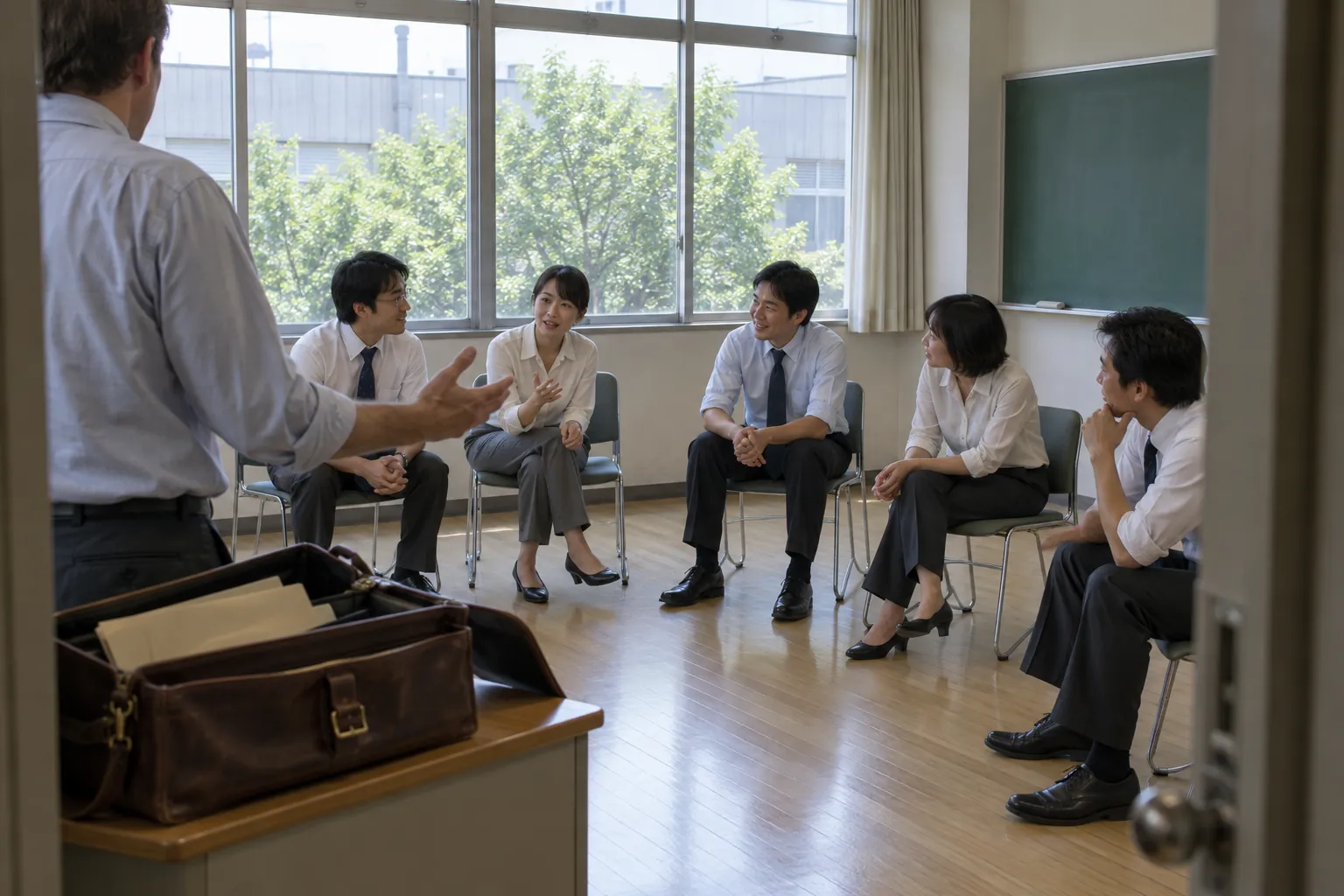
There I saw complex hierarchical human relationships, fierce factions, the constitution of the Japanese salarymen, and the office ladies that support them.
The dedication of these salarymen to their companies is incredible.
I had to laugh;

There was a long holiday (10 days in a row is a long holiday for the Japanese), at the end of April beginning of May in celebration of our new emperor.
I was talking to a middle manager, and he was in a quandary as what to do with himself during this "long holiday".
After the holiday was over, I asked him how it went and he said "I couldn't wait to get back to work, because I didn't know what to do with myself".

Rest assures this is a typical response throughout the mindset of the salarymen.
Fundamentally, after these men enter their companies, they from then on refer to themselves as, for example: I am a so-and-so company man, or I belong to so-and-so company.

Their identity becomes that of their company, and by the way their families and children also become one with their company.
In the rare instance where a salaryman changes companies in midstream, it was looked upon as treasonous, and these anomalies jumping ship in the middle of their careers are looked upon with suspicion if not disdain in their new companies.
The company in essence becomes the master of these employees, and the employees become the servant of their company, just as being born Japanese make you a servant of the nation of Japan.

These workers live in company supplied housing, get car and house loans with the major affiliated bank of their company, and attend events sponsored by the company.
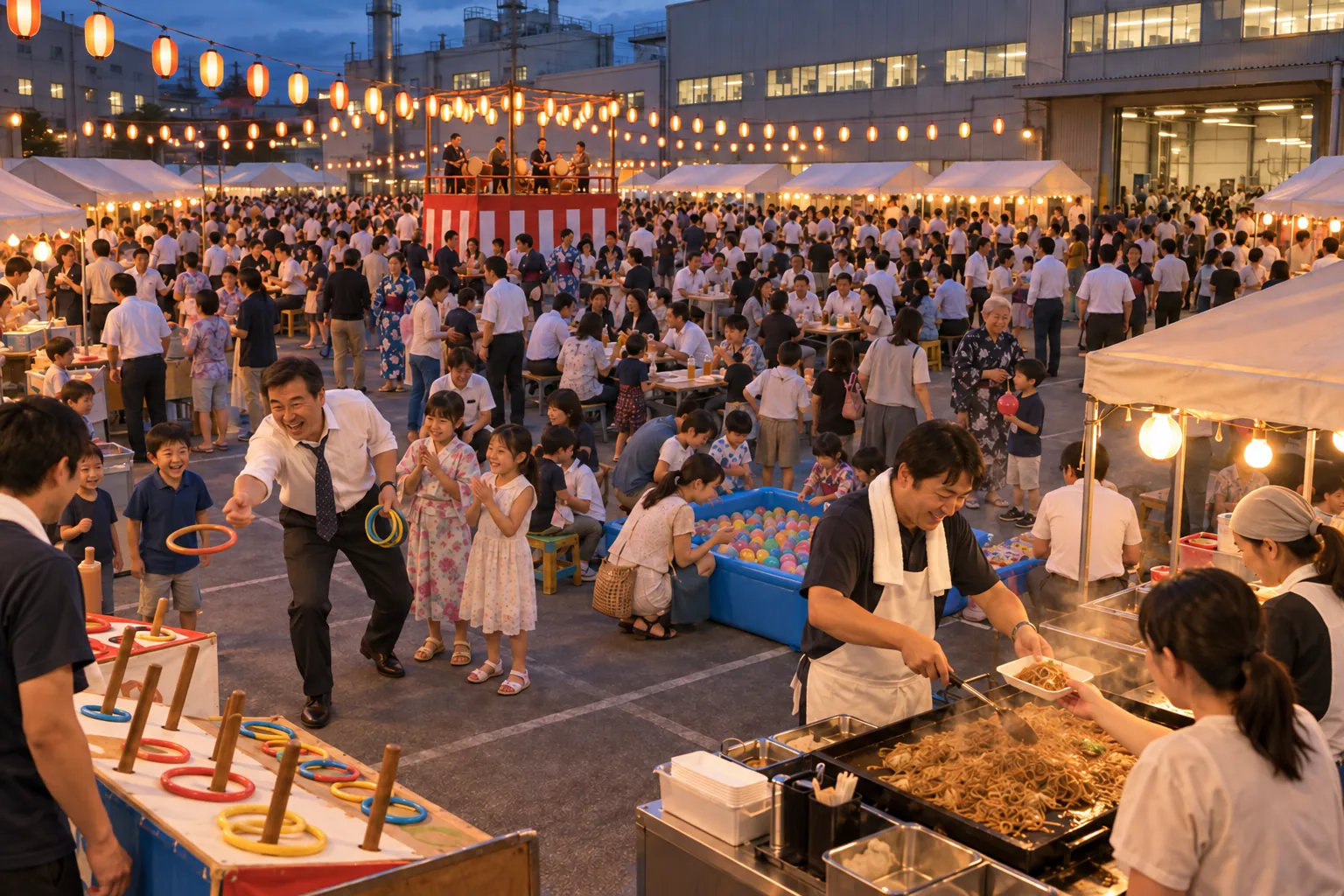
I attended one of their summer events and there were hundreds and hundreds of people. All of them work for the main company, subsidiaries, or related companies. The atmosphere was truly festive and there were many booths representing each subsidiary selling some carnival food or holding games for the children. I was amazed as the sense of community and belonging that these people felt as a group, a group loyal to their company.
Thinking about this in a deeper way, being a salary man is merely an extension of being Japanese. This means being a citizen of Japan first, an employee of the company, then a member of your surrounding community, and at last your blood family.