Kagami Crystal Clear
One of the fascinating aspects of having lived in Japan for nearly four decades is the deeper understanding that gradually emerges from exploring the nooks and crannies of this ancient and often esoteric civilization.
One could not help but stand in wonder during the early days of this phantasmagorical journey of following the sun—a journey that ultimately led me all the way to Japan.
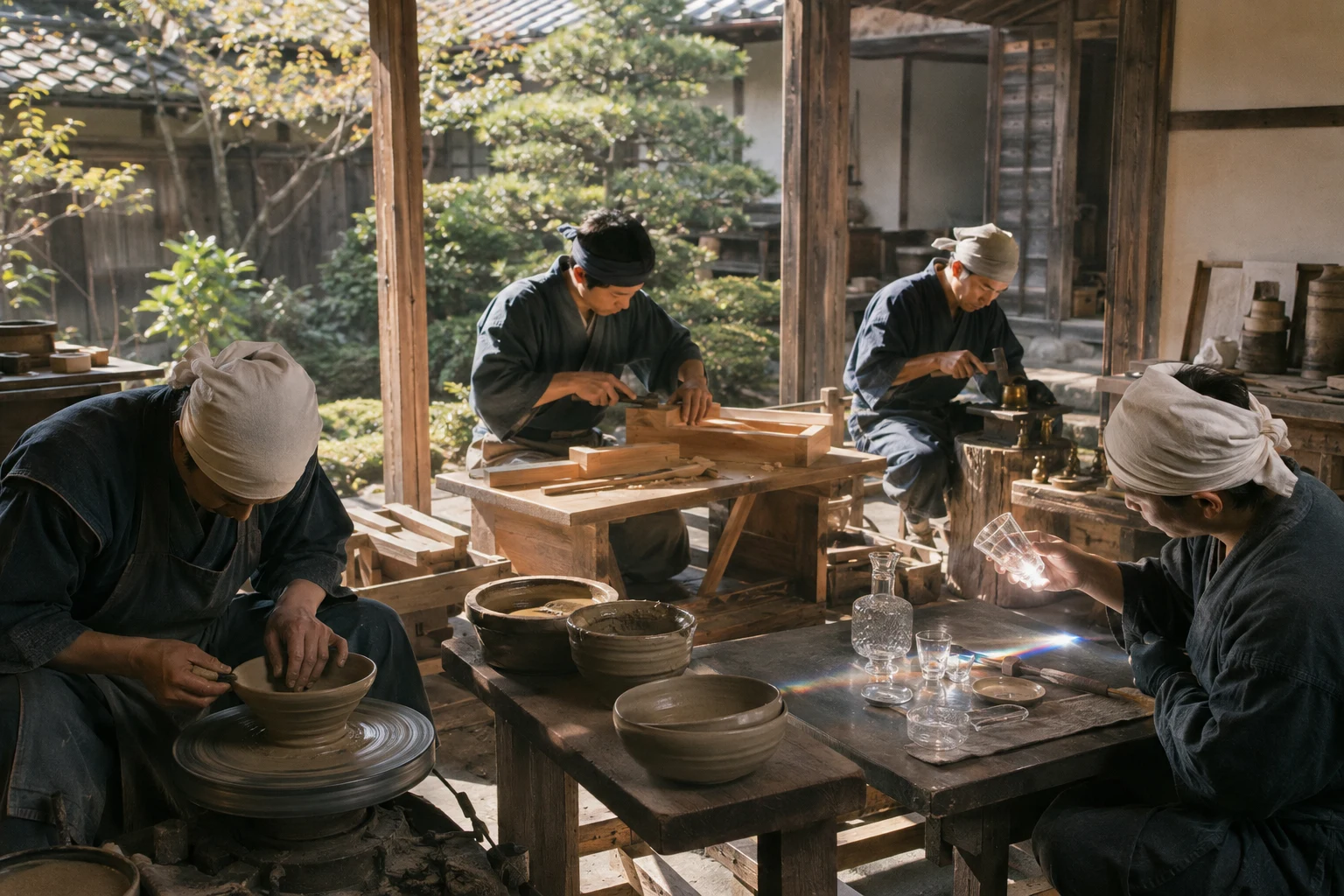
One of the things that has touched my heart most deeply about the Japanese spirit is its profoundly ingrained artisan tradition.
If you pay attention, you can see this sensibility reflected across a remarkable spectrum of Japanese life—including among the people who built and still sustain the country’s industrial machine.
During the Meiji era, Japan modernized with extraordinary speed, developing modern industry, infrastructure and electrical systems within only a few decades.
The artisan impulse did not disappear in that transformation; rather, its habits of precision, discipline and refinement continued to inform modern Japanese manufacturing.
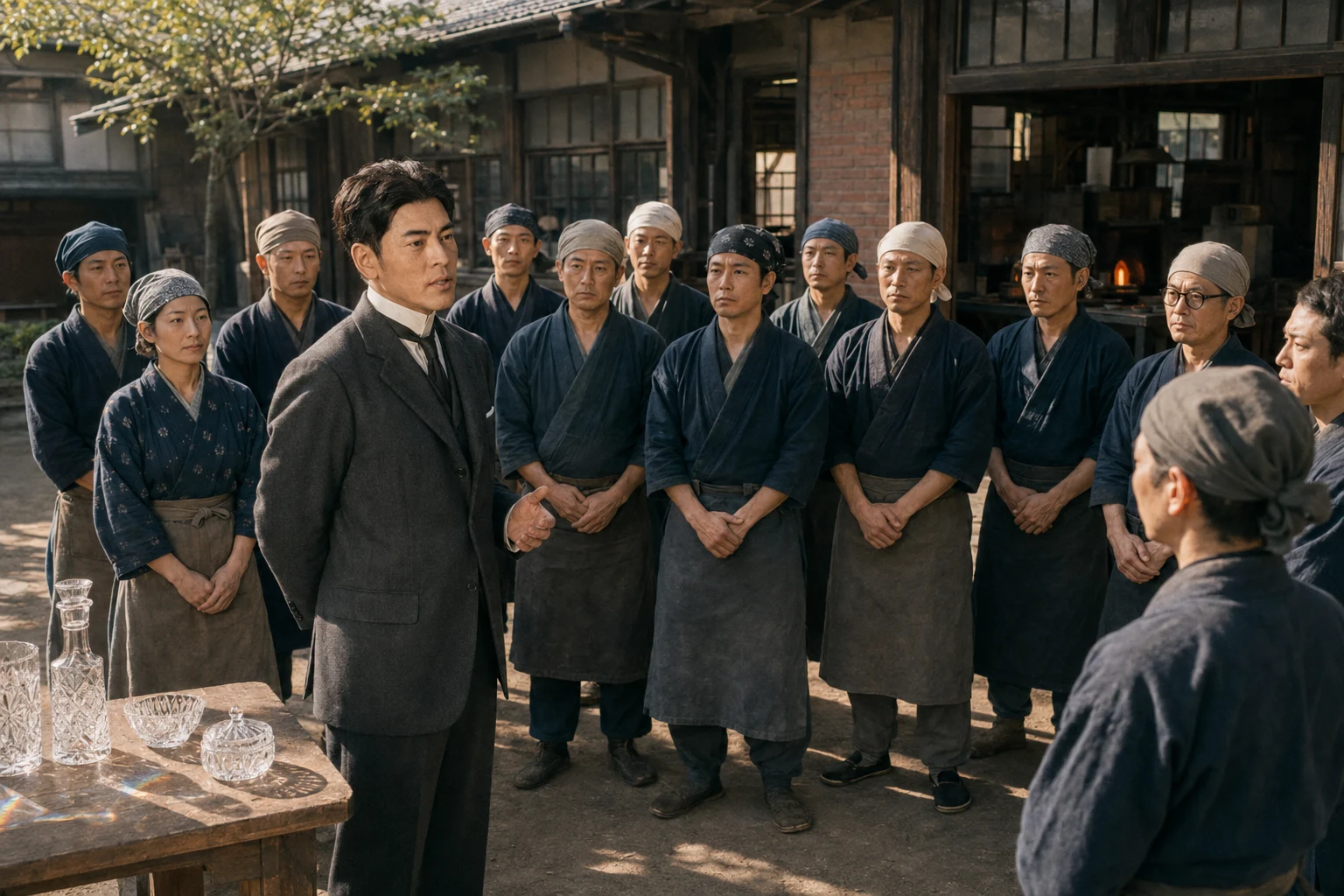
One repeatedly encounters a Japanese cultural preference for fastidiousness and meticulousness, qualities vividly expressed in the refinement and miniaturization of countless objects and technologies.
For outsiders encountering modern Japan, this capacity to make things smaller, finer and more precise became one of the wonders of the country’s technological story.
Which brings us back to the artisan spirit: knowledge carried from one generation to the next, with techniques refined again and again until they approach perfection.
More often than not, it remains something of a mystery how one stumbles upon these glorious legacies.
Yet when you dig deeply enough into the story, you cannot help but feel that the life of Kagami Crystal’s founder begins to read almost like an allegory.
Light, fire, patience, and the making of modern Japanese crystal: this is a hidden gem among the countless artisan legacies woven into the fabric of Japanese reality.
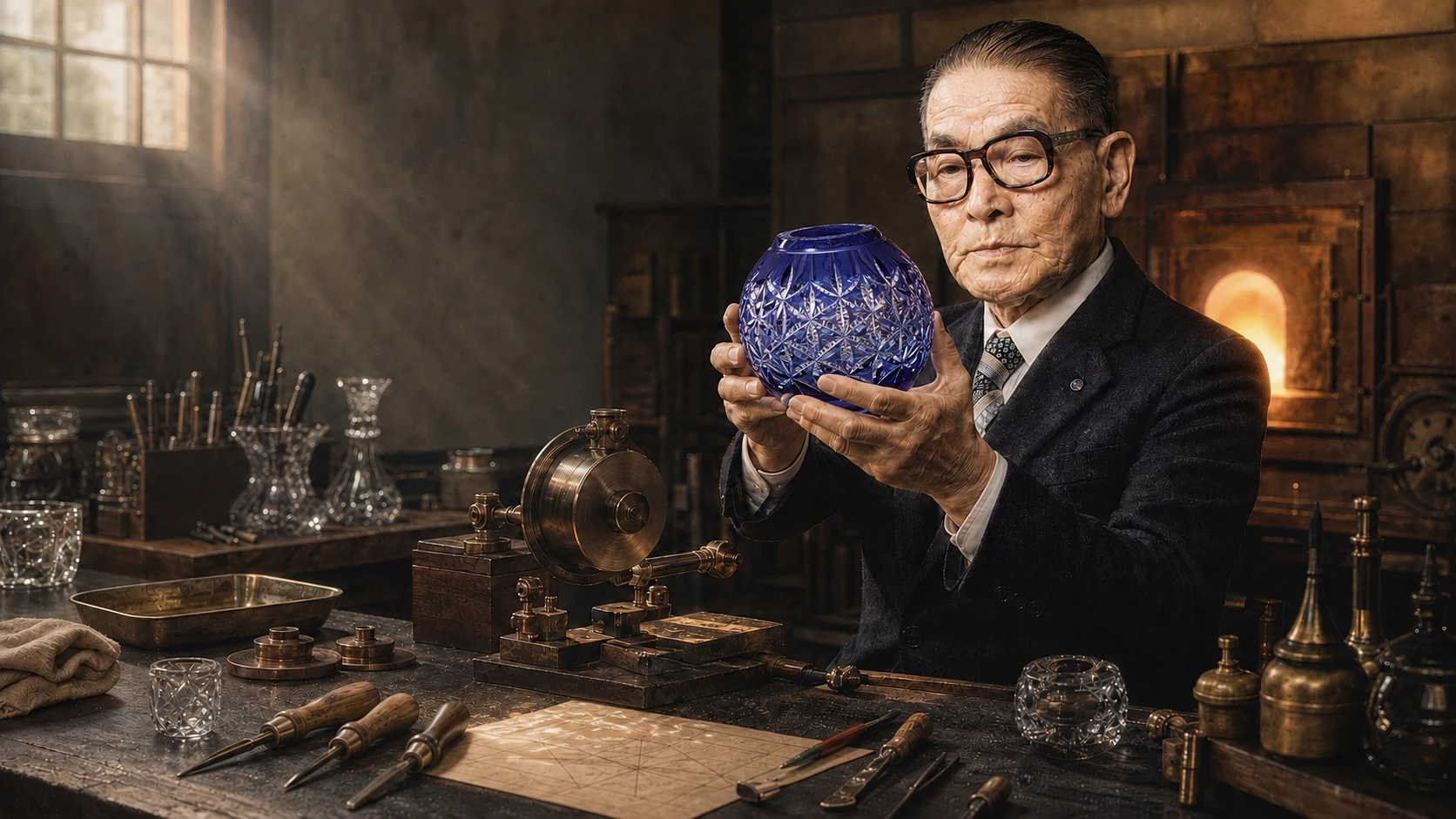
Kagami Kōzō was born in Toki District, Gifu Prefecture, on March 3, 1896.

He would become one of the central pioneers responsible for establishing modern Japanese glass as a serious field of artistic craft.
Kagami-sensei stands beside another major pioneer of modern Japanese glass, Iwata Tōshichi—Iwata being especially associated with colored glass, and Kagami with crystal.
After completing his studies, he remained at the school for several years working in its ceramics department before entering the research world of the South Manchuria Railway Company, where he pursued work connected with ceramics and glass.
Kagami emerged from the worlds of ceramics, design and industrial research rather than from an already established Japanese glass-art tradition.
After completing his studies, he worked at the school in ceramics before entering the research environment of the South Manchuria Railway Company, where he conducted work associated with ceramics and glass.
This matters enormously to the crux of our tale, because Kagami embodied something close to the spirit of a Japanese Renaissance artisan.
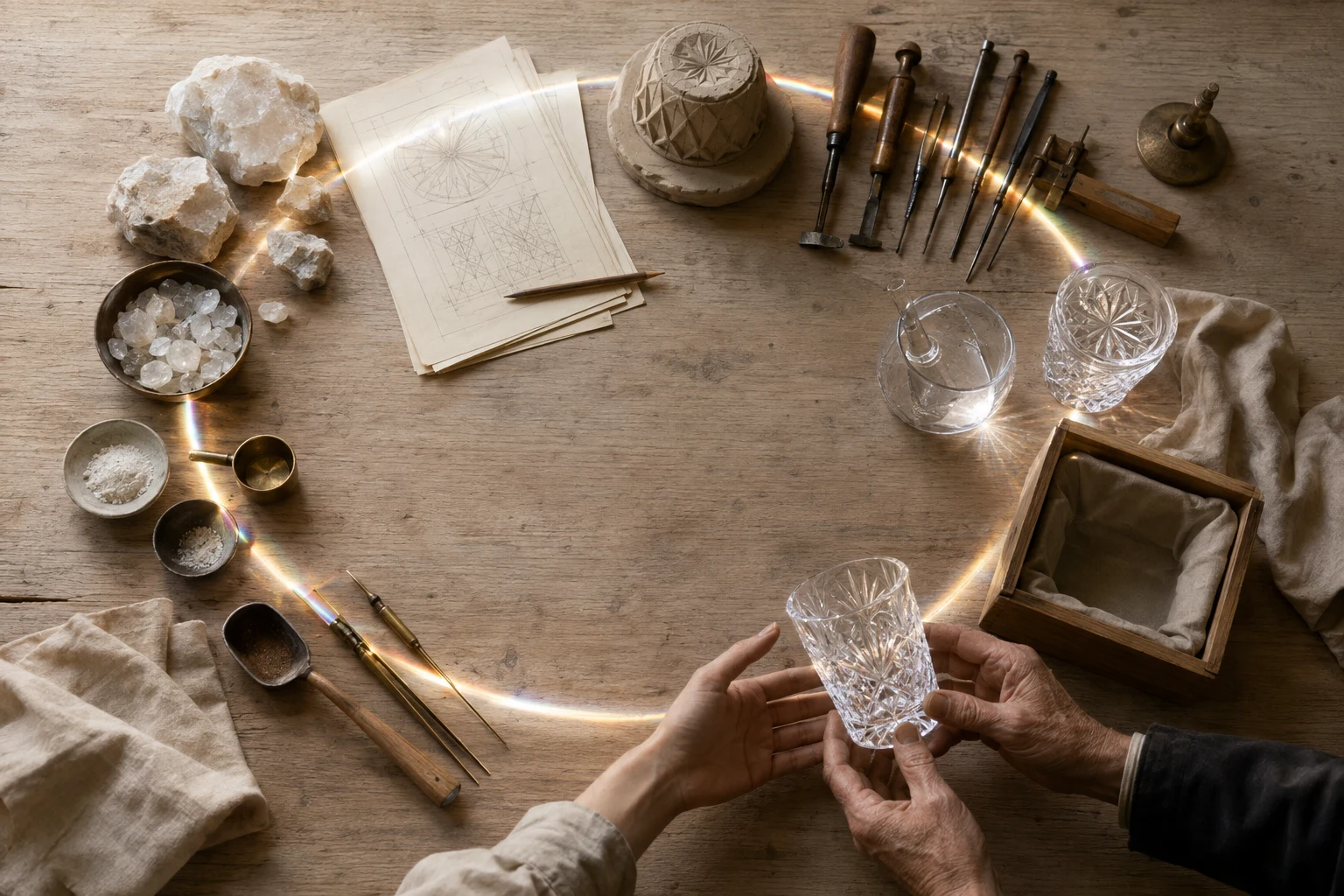
He was not simply a man who learned to decorate glass; he understood the entire chain: material → chemistry → furnace → manufacture → form → decoration → design.
That systems-level understanding eventually enabled him to establish not merely an atelier, but an integrated crystal-manufacturing operation.
Perhaps, through the mythic lens of our own story, the next step in this extraordinary journey might be imagined as the work of his tutelary deities, guided by the voice of his Seity.
Historically, what we know is that in 1927 he was sent to Germany.
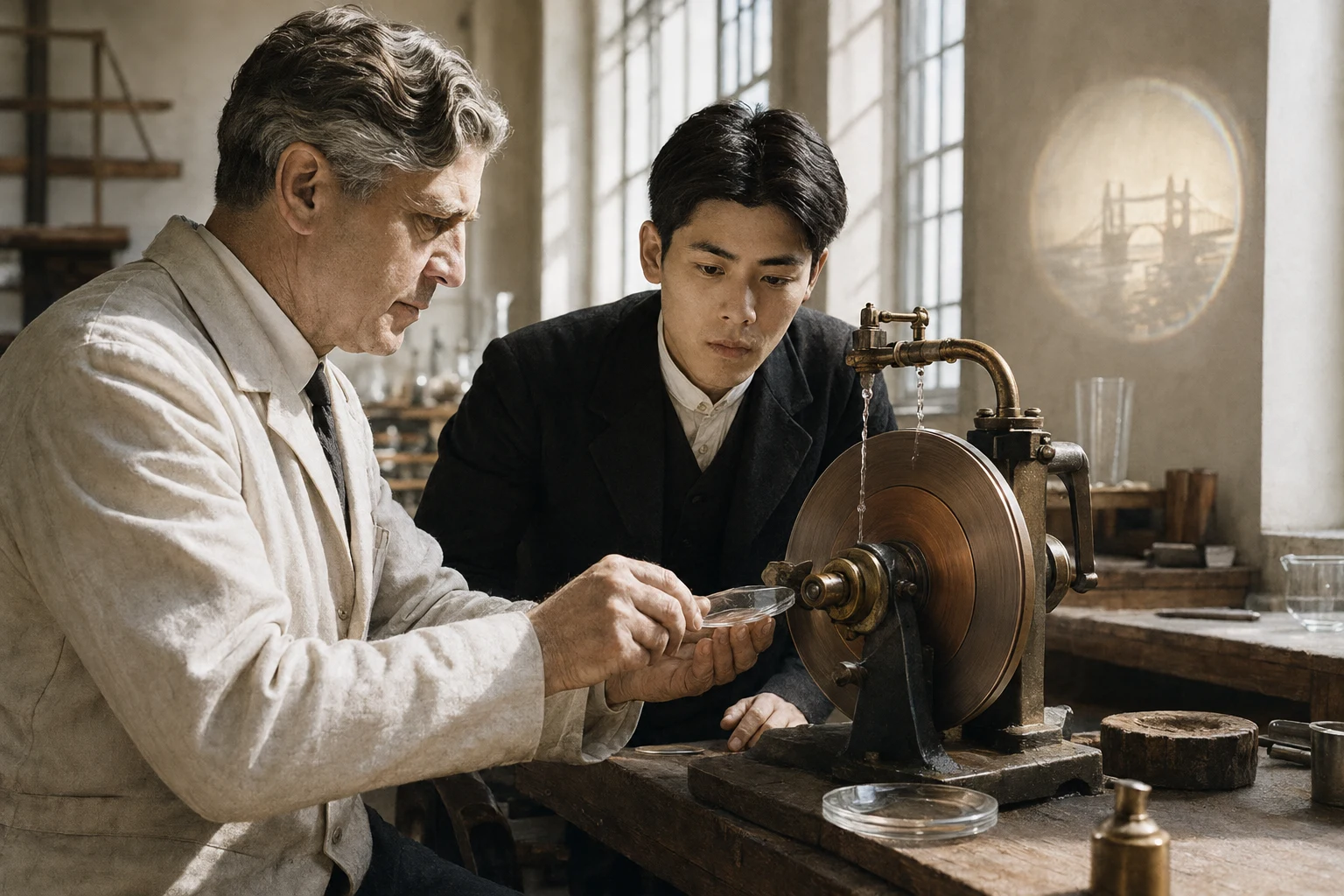
There he entered the Stuttgart School of Arts and Crafts and studied under the prominent glass artist and educator Wilhelm von Eiff, spending roughly a year and a half mastering crystal-glass processing techniques—particularly Gravur, or copper-wheel engraving, together with crystal cutting.
This becomes the founding transmission event in the mythology of Kagami-sensei.
He did not simply copy Europe.
Instead, he absorbed its technical grammar, transformed it through his own sensibility, and gradually helped give it a distinctly Japanese artistic language.
In that transformation, the art of crystal becomes—quite literally and metaphorically—Kagami Crystal Clear.
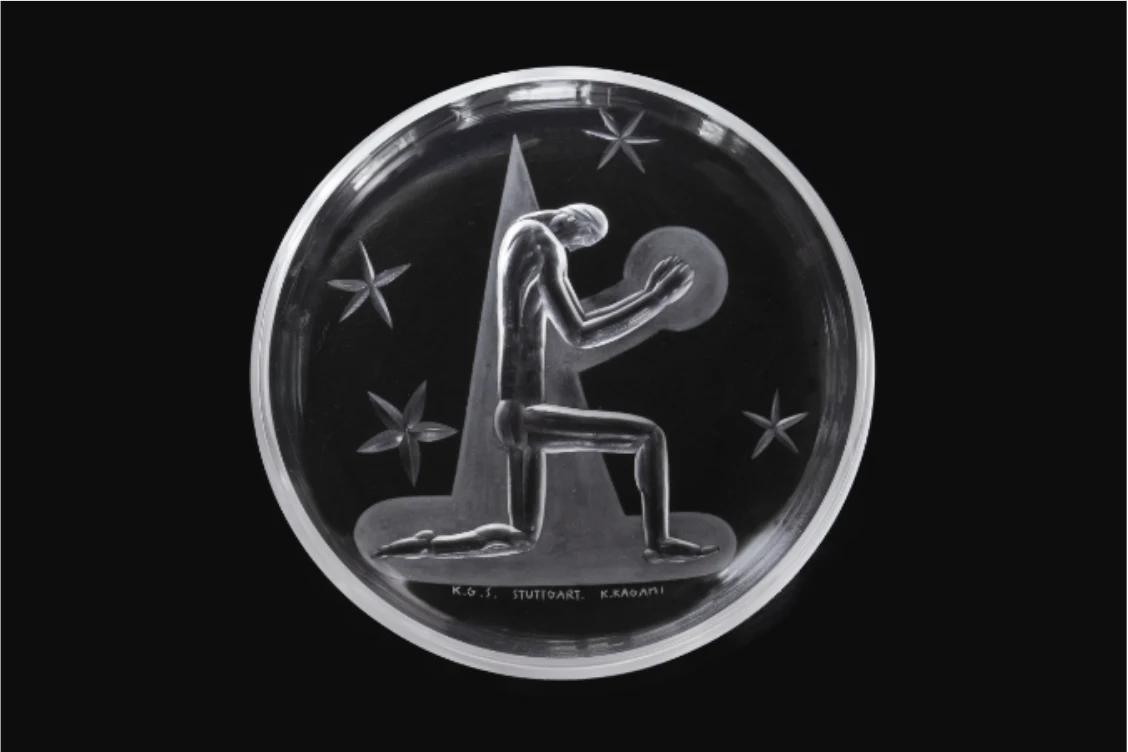
In 1929, while still in Germany, Kagami-sensei produced his graduation work, fixing an early cornerstone of the KAGAMI legacy firmly into its historical canon.
Kazari Sara [inori] — “Prayer” Decorative Plate
KAGAMI records that Professor Wilhelm von Eiff praised the work highly.
Today, KAGAMI describes Prayer as a work that can be regarded as an origin point of Japanese crystal glass and as one of the great treasures of its collection.
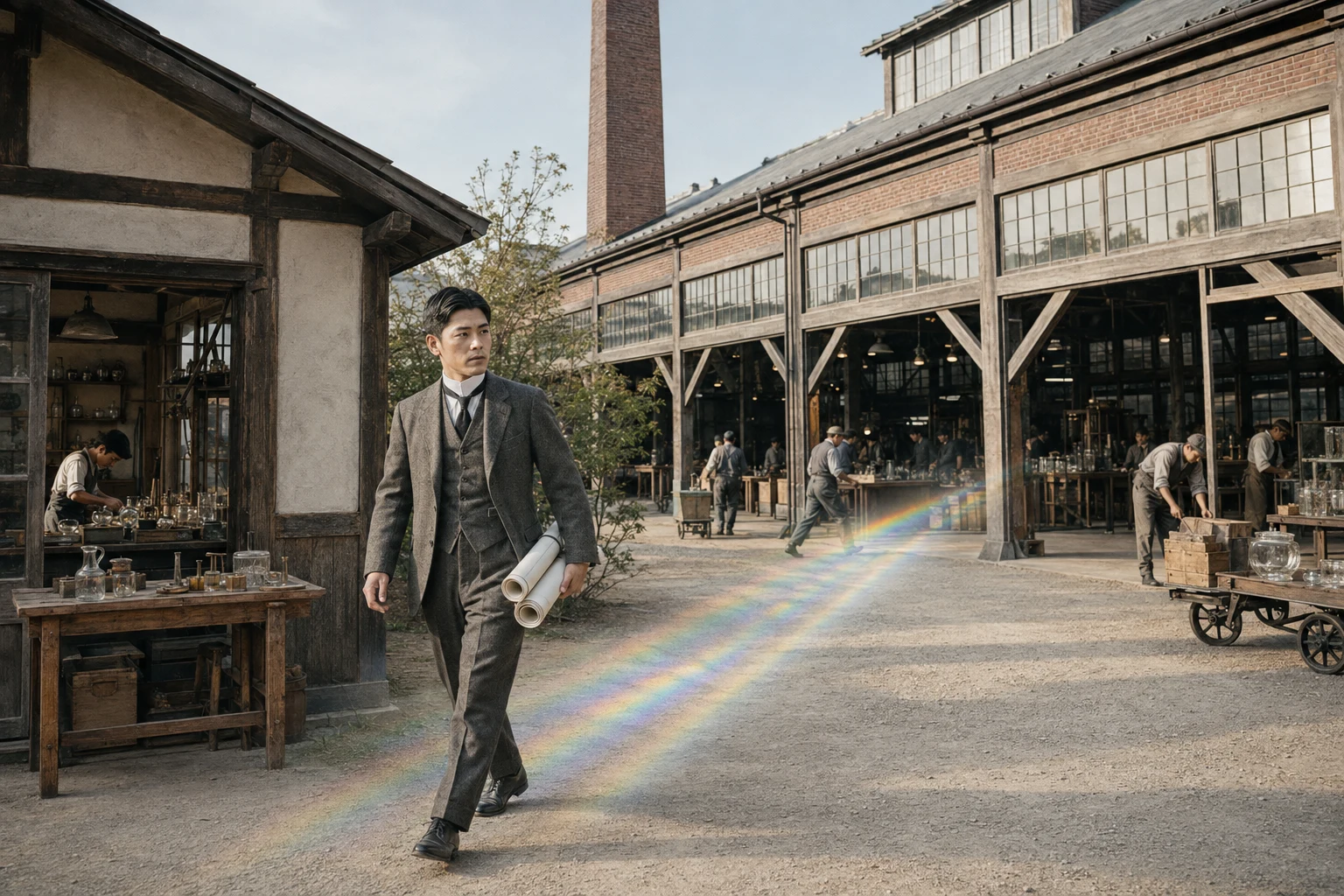
In 1930, he established the Kagami Crystal Craft Glass Research Institute in Takinogawa, Tokyo, where he began independently creating works using cutting and gravure engraving.
Four years later came the decisive move.
In 1934, Kagami-sensei established the Kagami Crystal Works in Kamata, Tokyo—Japan’s first factory equipped with an integrated production system specializing in crystal glass.
Kagami-sensei combined two identities: artist and industrial founder.
He understood that Japanese crystal could never become a living tradition if an artist merely produced isolated exhibition pieces.
He saw the creation of exquisite crystal holistically:
The material itself had to be produced.
The furnace had to exist.
The glassmakers had to be trained.
The cutters had to be trained.
The engravers had to be trained.
The company had to survive.
And the knowledge had to pass to another generation.

The genius within this achievement was not merely the creation of a collection of objects.
It was the transmission of a cultural legacy: roots in European artisan tradition fused with Japanese ingenuity and a Renaissance-like artistic sensibility.
That fusion became part of the miracle of KAGAMI’s enduring trajectory—Kagami Crystal Clear.
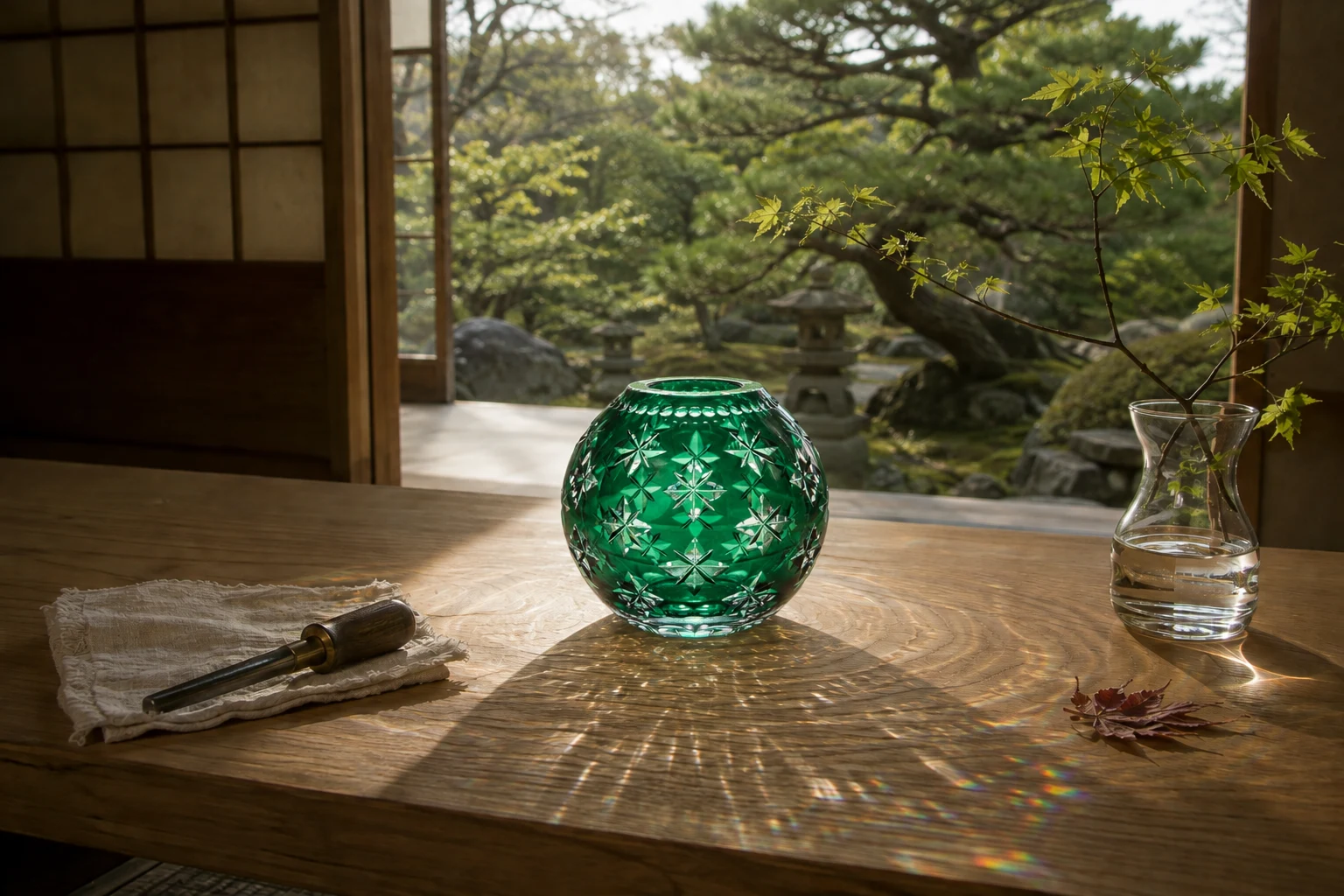
KAGAMI preserves an important statement from its founder.
In essence, Kagami-sensei argued against chasing short-lived effects and insisted instead on creating things of true and enduring value.
The company connects this philosophy to the idea of monozukuri-no-kokoro—the spirit and passion of making.
Kōzō Kagami said, “We should pursue creation of true value refraining from short-sighted, ephemeral creativity,” and endorsed the idea of monozukuri-no-kokoro, which KAGAMI renders in English as a passion for manufacturing excellence.
Based on this principle, KAGAMI states that it will continue refining its technologies, skills and commitment to products of high technical and creative standards, bringing hope and brilliance to people’s lives through enduring, high-quality glassware.
Through this foundational philosophy, KAGAMI became far more than a luxury crystal-glass brand.
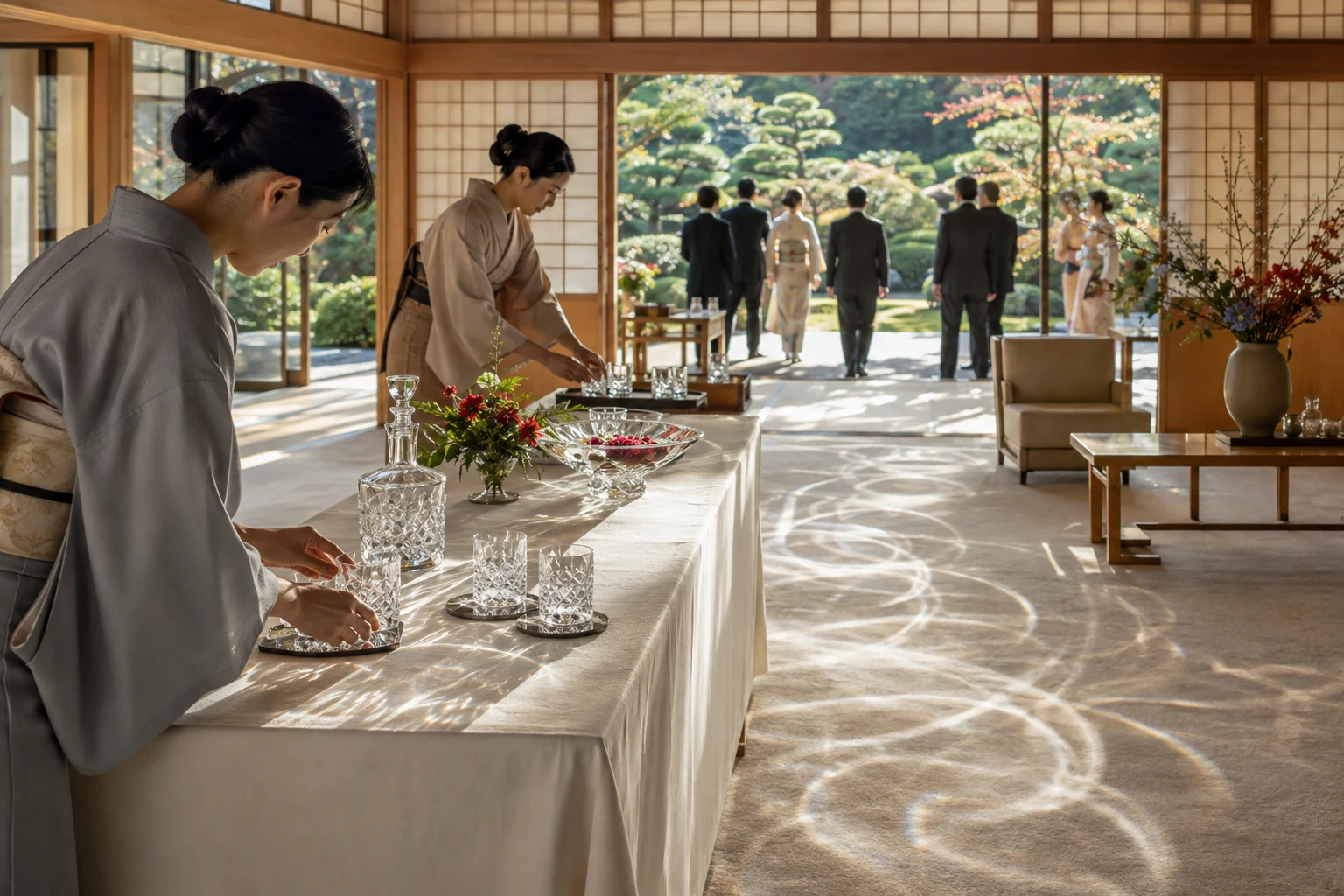
Its history includes crystal supplied for the Imperial Household Agency, the State Guest House at Akasaka, official diplomatic dinners, Japanese embassies and consulates, the Prime Minister’s official residence, and important Imperial Household occasions.
Fine crystal is prized for its exceptional transparency, brilliance, refraction and clear resonance.
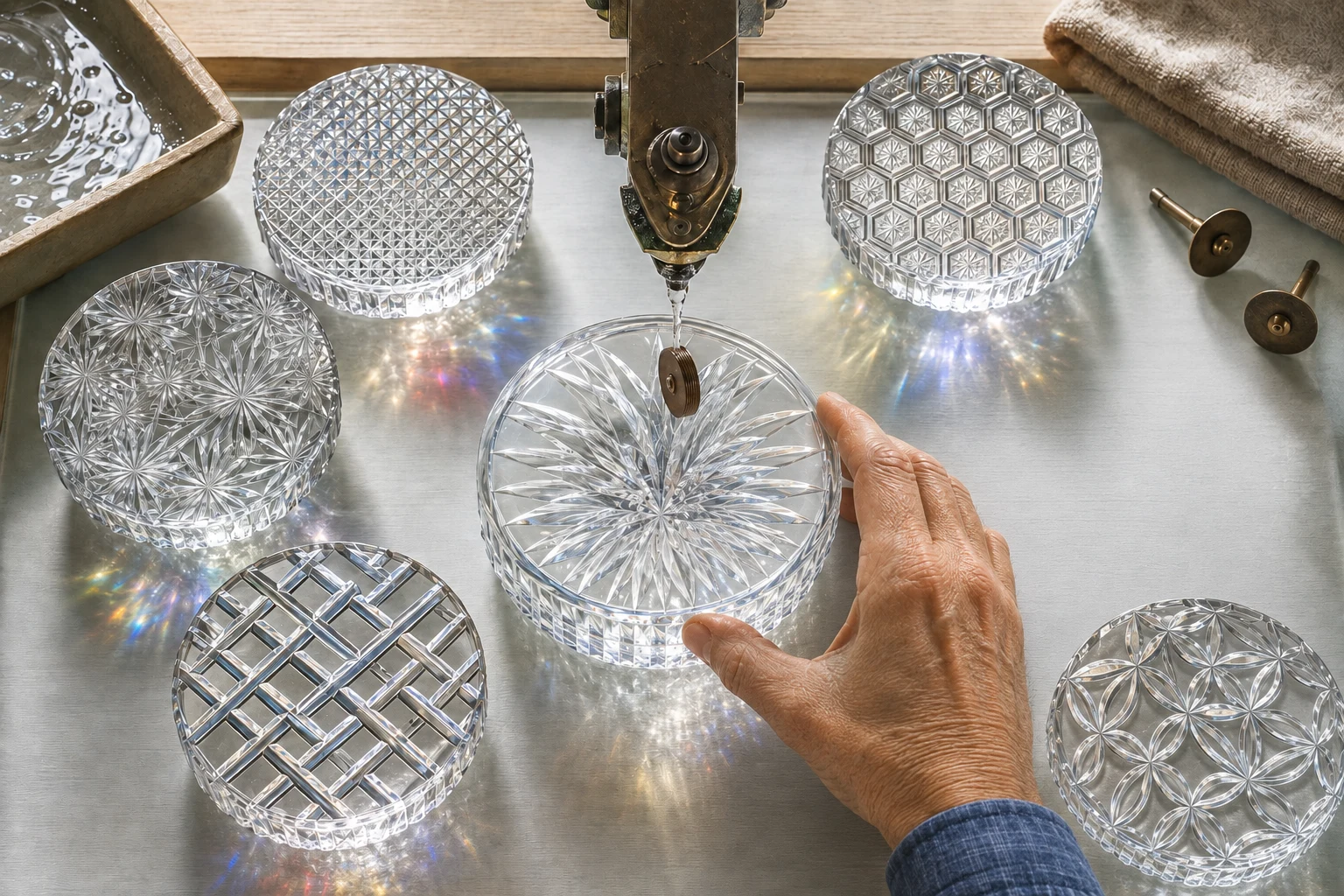
KAGAMI is also renowned for Edo Kiriko, but it is important to distinguish that tradition from the German copper-wheel engraving lineage Kagami brought back to Japan.
Edo Kiriko predates KAGAMI by approximately a century.
Edo Kiriko originated in late Edo-period Edo—modern Tokyo—and its cutting traditions have been transmitted through generations of specialist artisans for more than 180 years. Today, KAGAMI combines these inherited patterns with contemporary compositions.
Traditional forms include:
Fish-roe pattern — Nanako
Hexagonal basket weave — Rokkaku Kagome
Chrysanthemum-link pattern — Kiku-tsunagi
Hemp-leaf pattern — Asanoha
Bamboo-fence pattern — Yarai
Interlocking-circle / “Seven Treasures” pattern — Shippō
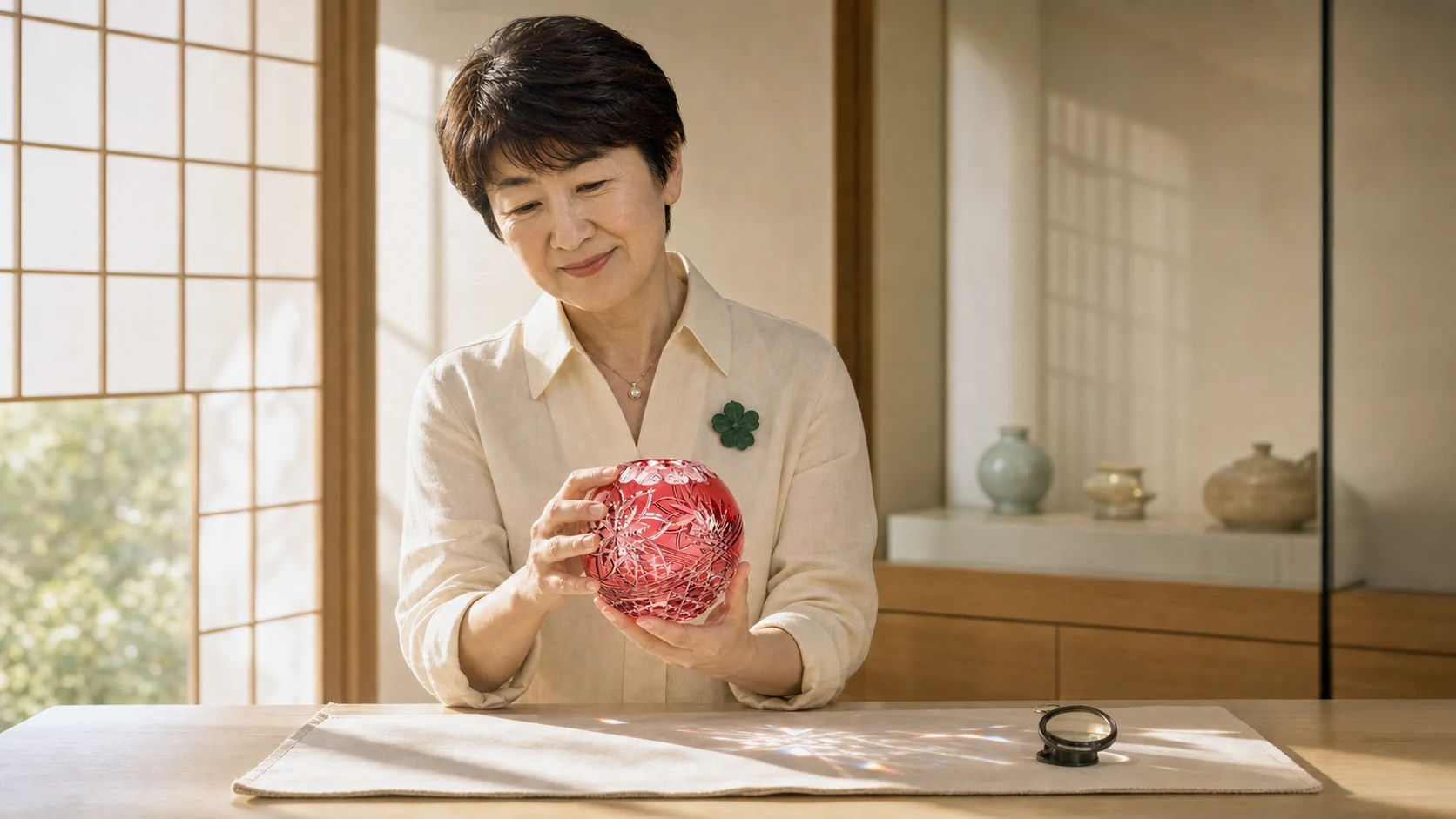
Perhaps the most important point for the present-day storyboard is this: Kagami Kōzō died in 1985. His hands stopped; his knowledge did not.
The reach of Kagami-sensei’s knowledge is still visible in the living tradition carried by KAGAMI’s present generation of artisans, including:
Okano Yūkichi — Kiriko artisan
Inagawa Masaomi — Kiriko artisan
Ōzeki Hiroki — forming artisan
Ise Yūsuke — forming artisan
Okabe Risako — gravure artisan
Noguchi Tomokazu — Ibaraki Traditional Craftsperson; Kiriko workshop foreman
Takei Morihiko — Ibaraki Traditional Craftsperson; forming artisan
You, too, can watch this living history unfold before your eyes.
KAGAMI currently offers reserved factory tours on the fourth Wednesday of each month; the standard tour begins at 13:30, lasts approximately 50 minutes, and is free.
The spirit of this seminal artisan lives on and, if the chain of transmission remains unbroken, will continue to live for generations.
The vibration illuminating these masterpieces of cultural integrity still gives those who love beautiful things a chance to see the world through the crystal lens Kagami-sensei left behind.
And my hope for you, dear reader, is that you, too, might look at your own life through a different lens—and see the world with Kagami Crystal Clarity.