Less Stupider More Smartest
No one chooses the circumstances into which they are born. Indeed, birth may seem like a random act guided by the fickle finger of one among the plethora of gods dotting the infinite horizon.
Perhaps the lot allotted to each of us at the beginning of this earthly journey is part of some quantum game, as it increasingly appears that all are participating in a wetware simulation—something weird and exquisitely wonderful at the very same time.
Regardless of the family into which you were born, or the lot in life smeared upon you—including religious persuasion, national indoctrination, and whether you arrived with a silver spoon in your mouth or not—there is never an excuse to remain in one place, spinning the wheels mistaking motion for progress.

There is really only one way to find a path through and throughout this tricky matrix. Personal sovereignty is necessary for those who wish to become more than they ever imagined themselves capable of becoming, regardless of where the starting line was drawn.
Speaking from personal experience, one of the most unpleasant beginnings was being shoveled into the industrial education complex—a vast institutional machine designed to stamp out stupified system clones.
Having the attention span of a gnat, I could not pay attention for love nor money to the droning government-employed system clones stationed at the front of the classroom.

Surely, many would agree that some version of this scenario has been played out repeatedly throughout the industrial education complex.
Those who somehow made it through that unpleasant quagmire with their curiosity intact may give themselves a well-deserved pat on the back.
These are the free-range avatars who, through some innate resistance to domestication, become autodidacts by default. How about that?
Acknowledging that it is human nature to remain stupid in one area or another—regardless of credentials—is the beginning of becoming less stupider and more smartest.
It means bowing before the modest gods of humility and choosing to remain a lifelong student of the existence’s infinite mysteries.

The real problem arises through a recurring and deeply unpleasant phenomenon: the confusion of institutional certification with intelligence.
The credentialed appear time and time again bearing useful technical knowledge, multiple degrees, professional authority, and prestigious titles, yet many possess almost no curiosity, self-awareness, adaptability, emotional intelligence, or independent judgment.
A personal encounter with this phenomenon began in Japan during the late 1980s.
Many assistant language teachers arrived carrying an assortment of degrees, although the quality and practical value of those credentials often remained an open question.

Despite supposedly being educated, a surprising number appeared to be system clones of the highest degree.
Knowledge is what someone has accumulated. Smartness is the efficiency with which someone can manipulate that accumulated information.
Intelligence is the ability to perceive, adapt, connect seemingly unrelated dots, and continue meeting the world with the heart of a beginner.
Wisdom is revealed through how intelligently someone actually lives.
Less stupider, more smartest is therefore a pathway toward mastery.
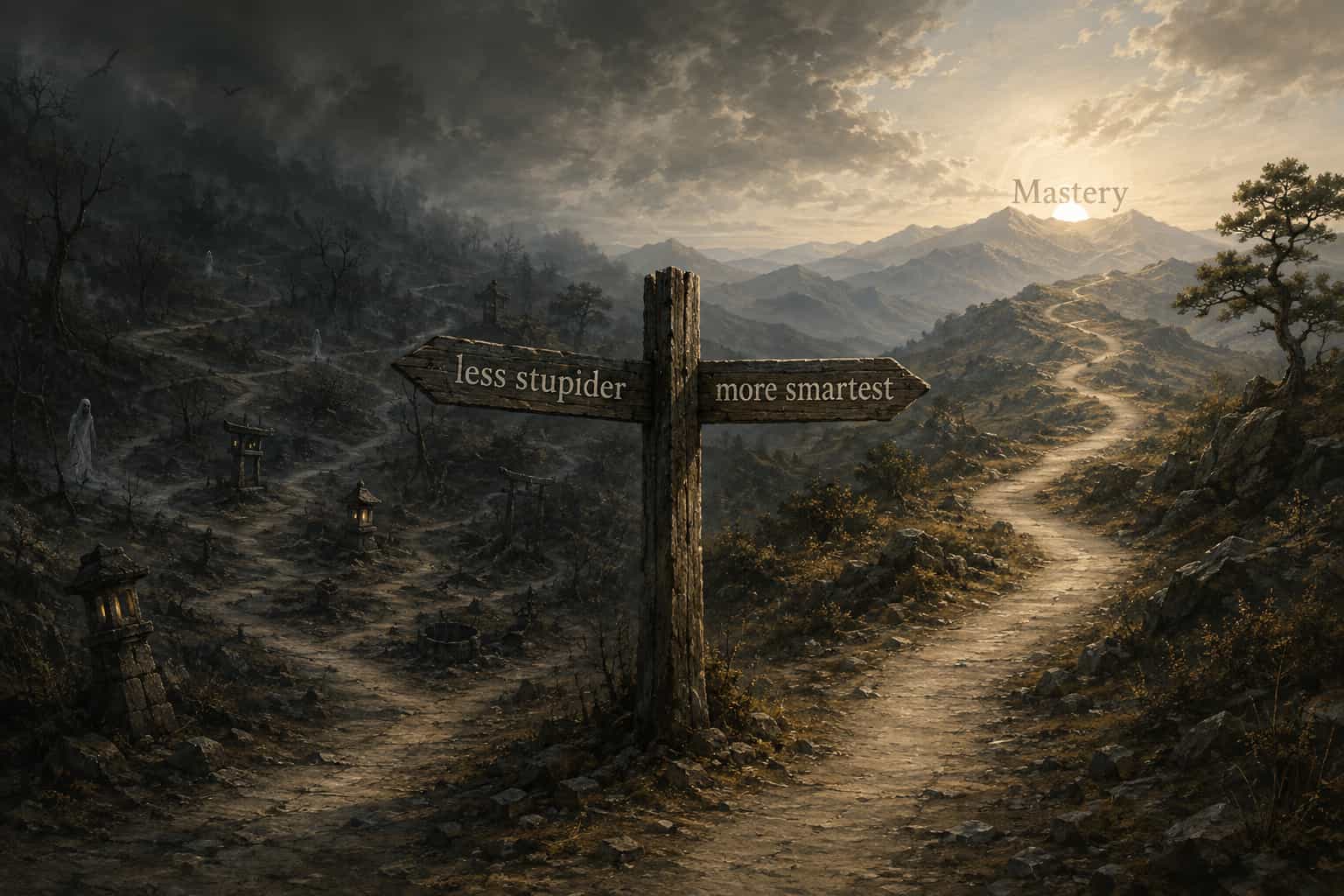
Indeed, the story always returns to its natural resting place: curiosity is the name of the game in this quantum field of time and space.
Curiosity matters more than appearing smart. It reveals the exit from the pigeonhole prepared by parents, schools, professions, nationalism, religion, and the economic machinery.
The professor may be profoundly stupid outside the narrow borders of the professor’s expertise, while the supposedly uneducated person may possess extraordinary intuition, practical perceptiveness, emotional intelligence, and a generous helping of spiritual depth.
Credentialism, for those who have not yet noticed, has become a quasi-religious cult phenomenon.
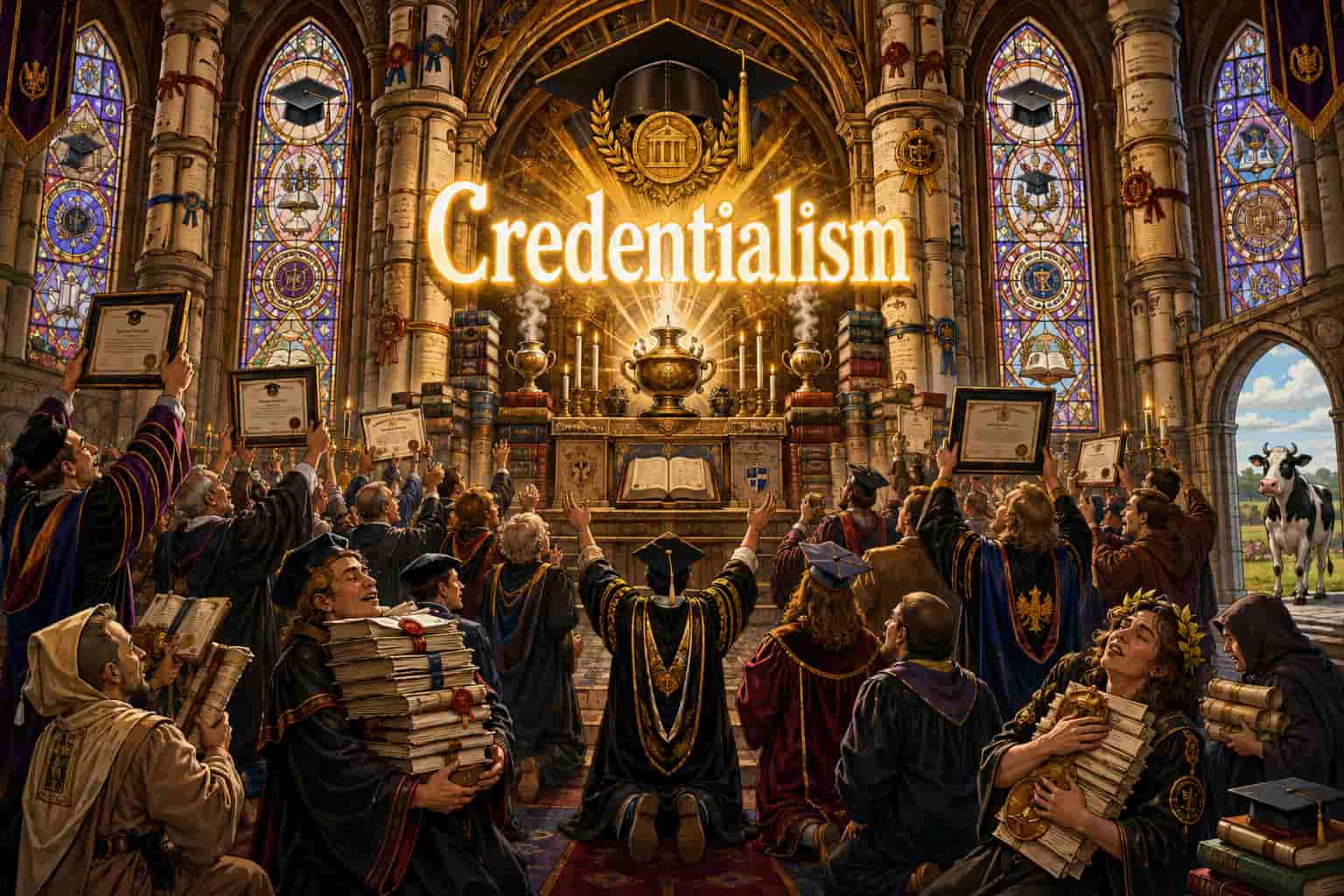
Graduates are stamped into standardized worker units, and many officially smart people become intellectually motionless.
Their conversations grow shallow and repetitive, filled with ideas lifted from textbooks and recited as though they were revelations, without an original thought rattling around inside the minuscule mind of institutional certainty.
Escaping the industrial education fray requires a permanent commitment to the pursuit of human mastery.
Each day, the task is to become a little less stupider and a little more smartest.
This requires the mind of a beginner, the humility to recognize one’s ignorance, and the curiosity to pursue something fresh, strange, and vibrant—rather like the daily serving of natto one must courageously face at the dawn of every day.