3 min read日本語

Long Chicken

🎧Listen to this entry

Once upon a time, important enlightenment penetrated this malleable mind at the most delicious yakitori shops in all of Japan.
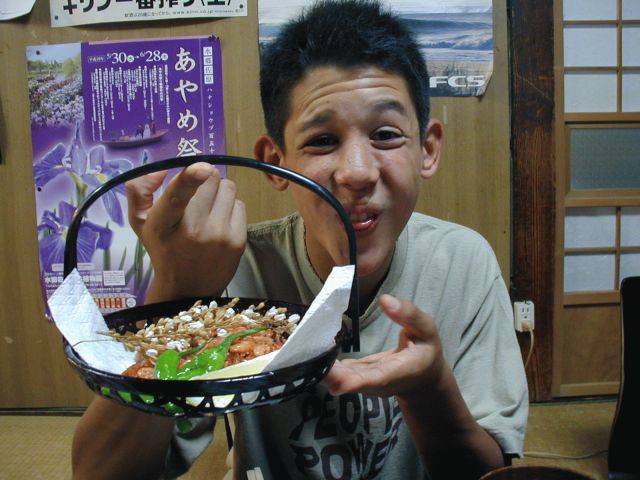
A grinning teenager holds up a wire basket of grilled skewers garnished with green leaves in a small restaurant, posters on the wall behind.

This out-of-the-way, hole-in-the-wall was run by the dishevelled master~
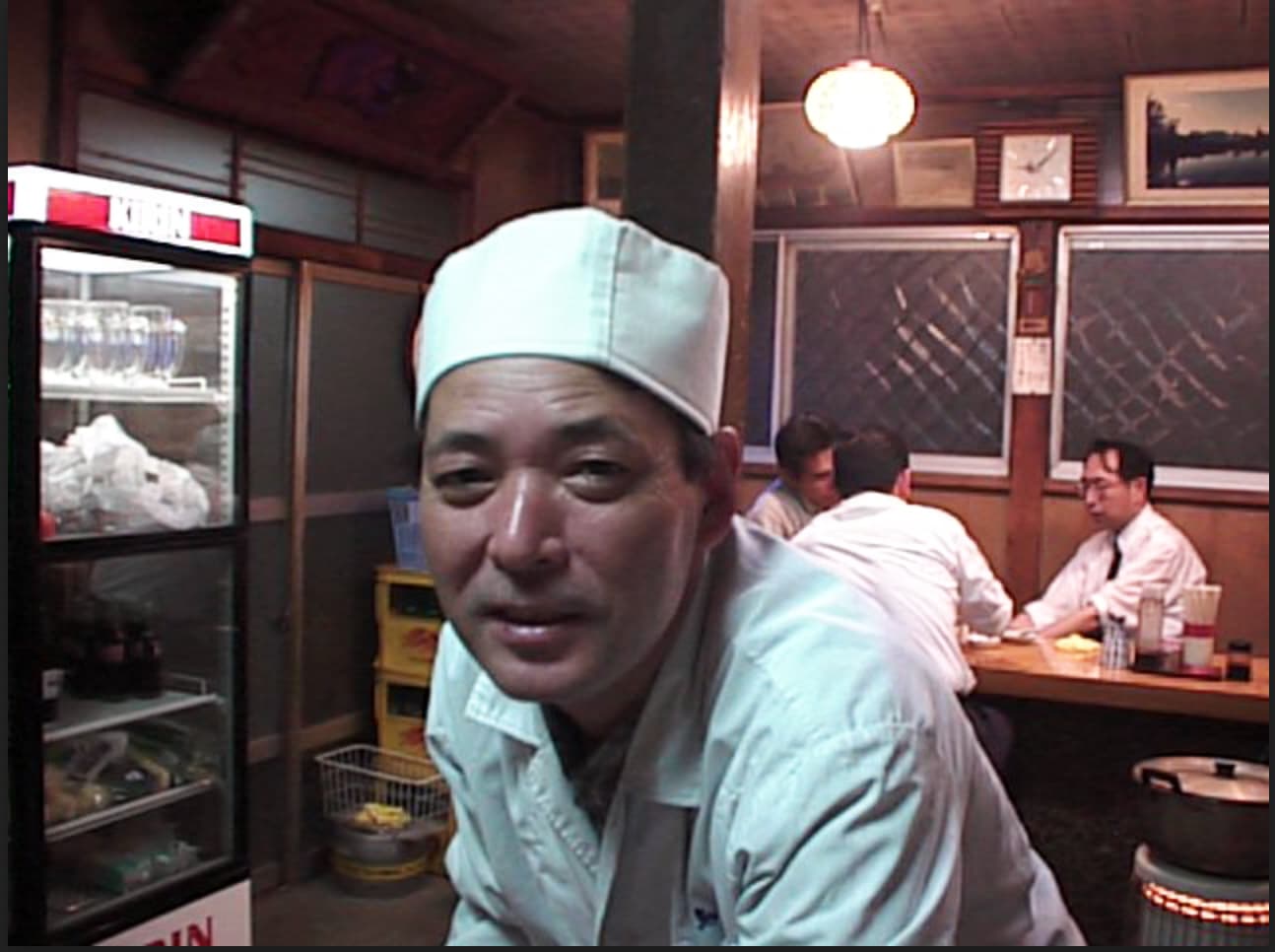
A man in a white cook's cap and jacket leans on a counter in a small restaurant, customers seated at a table behind him and a drinks fridge at the left.

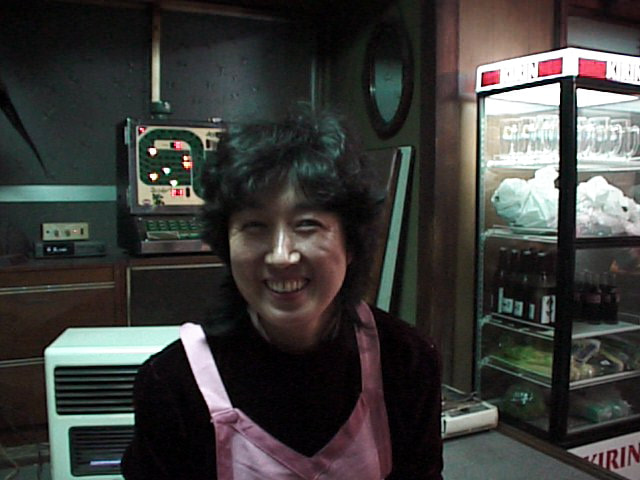
and his somewhat rustic wife.

A smiling woman in a pink apron stands in a dim restaurant interior, a wall-mounted game machine behind her and a glass drinks case at the right.

This kind of special place was truly representative of the Japan one encountered often back in the early days, but these kinds of atmospheric shop, alas, are now slowly fading away.

The kitchen floor was like a traditional style Japanese farm house—earthen.
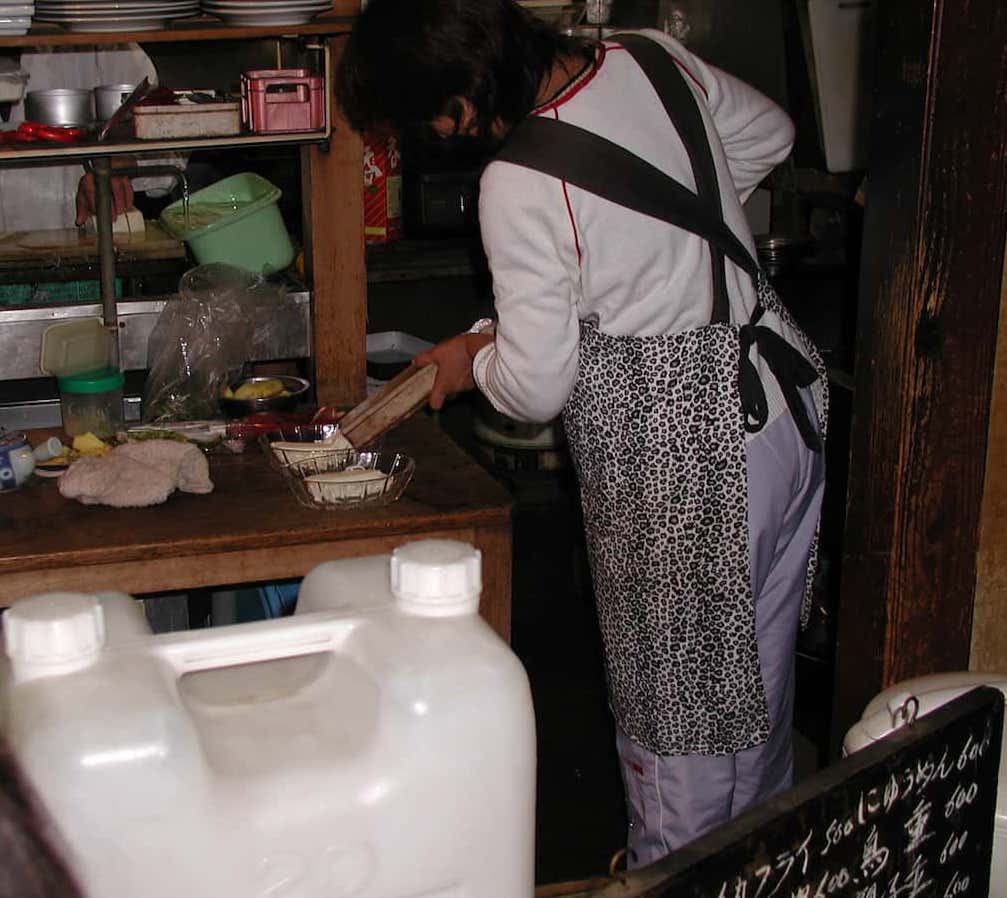
A woman in a leopard-print apron works at a cluttered kitchen counter, plastic water containers in the foreground and a chalkboard menu at the right.

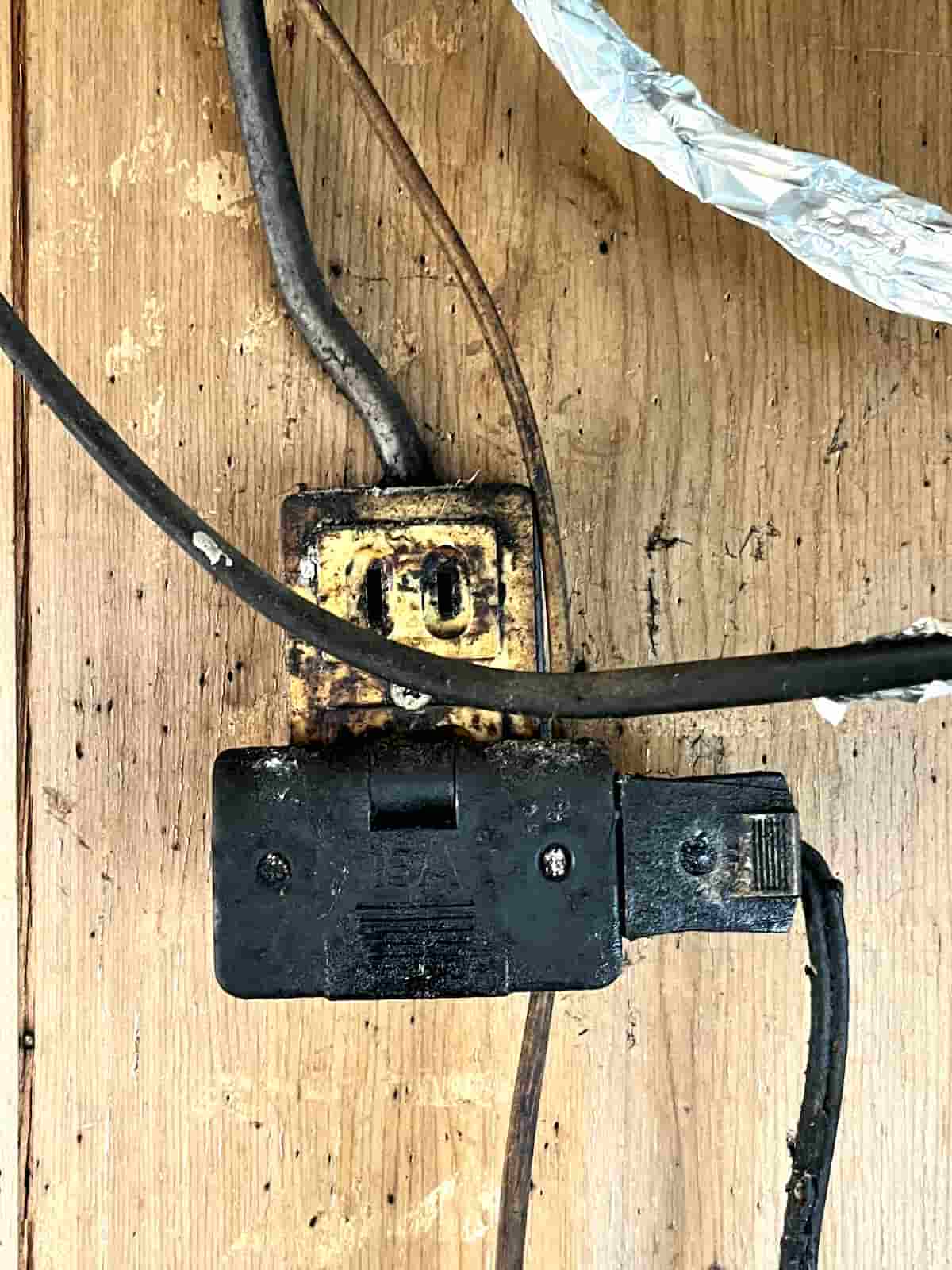
Not only was his electrical octopus maxed out, it was also smothered in grease—a wonder the place didn’t burn down.
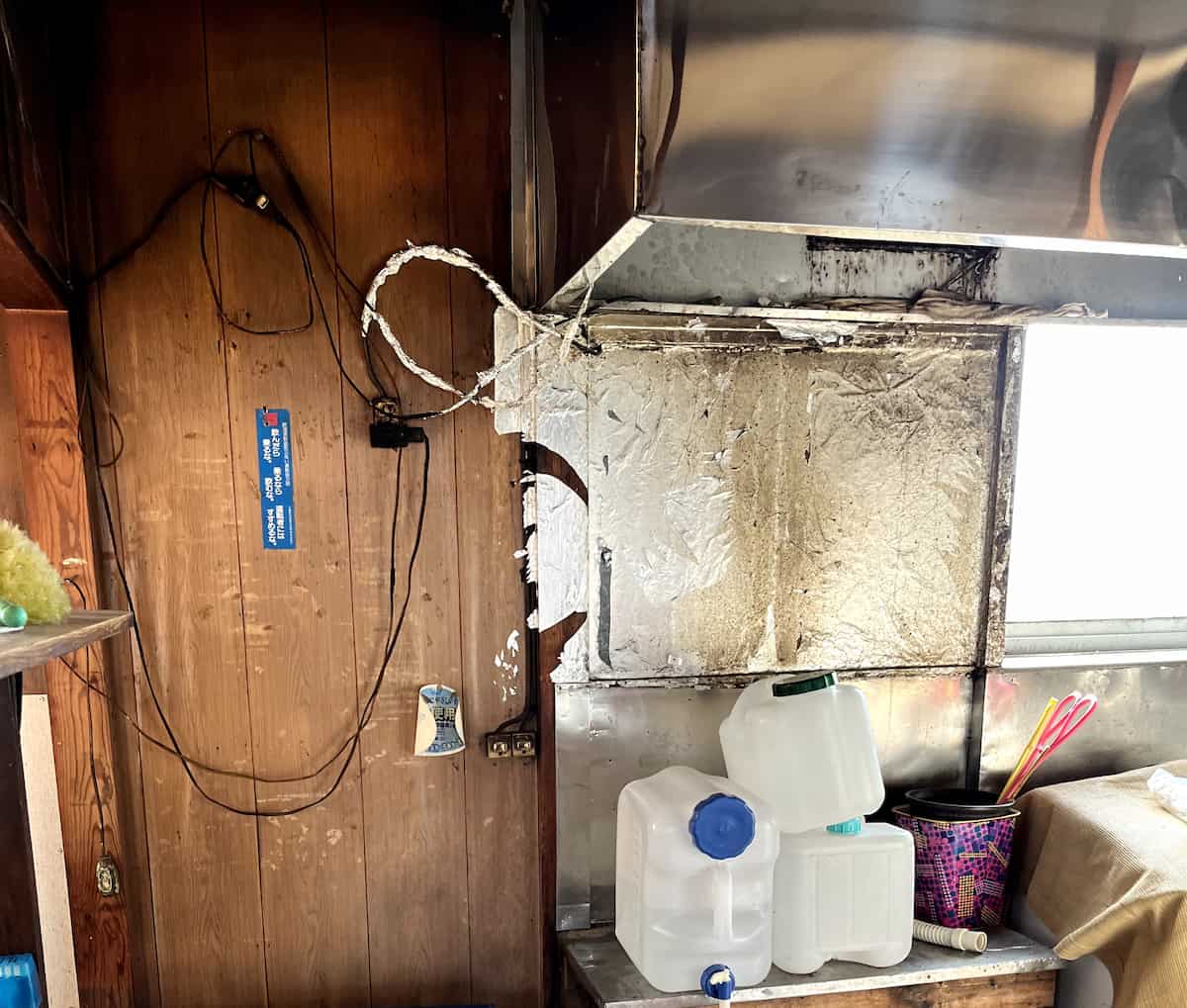
A grease-caked stainless extractor hood over a stove in a wood-panelled kitchen, cables running down the wall and plastic containers stacked below.

A blackened, grease-caked electrical socket and switch box mounted on a bare wooden wall with cables running from it.

Often the guests coming in later were those who carried out business outside traditional hours.

ヤクザ - Land Of The Rising Son

One of the boys plopped himself right down beside this Occxie and started to chit-chat about this and that.

Always amicable for conversation, one could not help but notice this individual was missing both his pinkies and a ring finger.
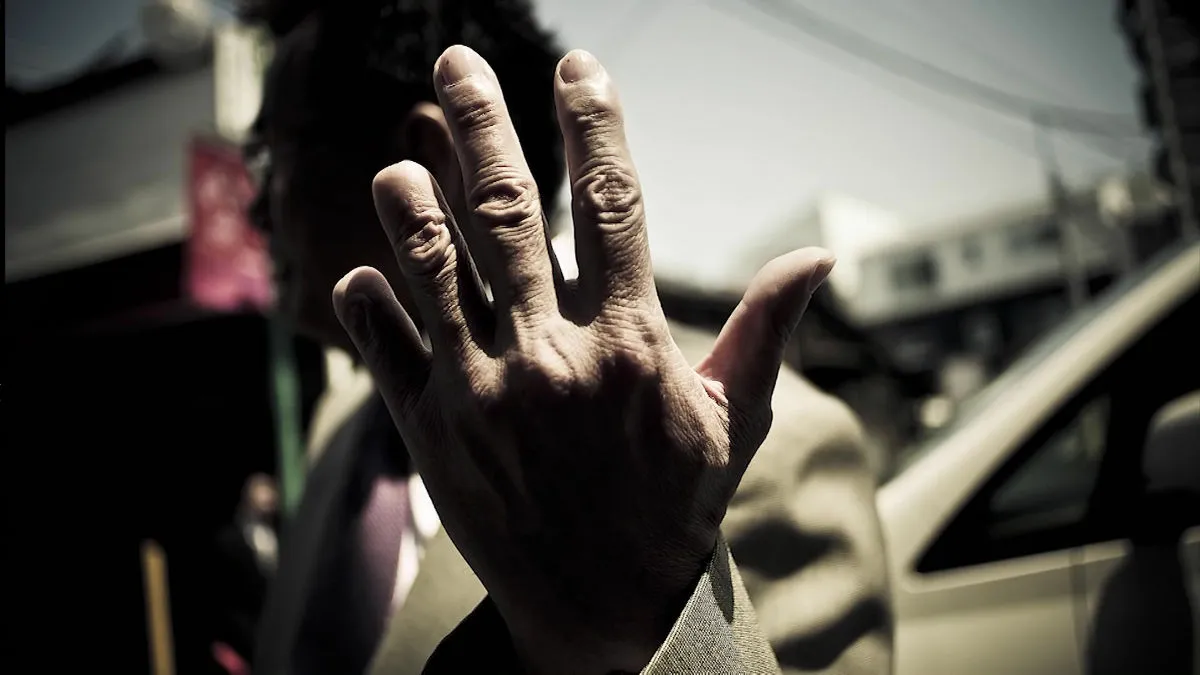
ヤクザ Missing Fingers - Land Of The Rising Son

Nonetheless, there was never reason to inquire as to his line of work while engaging him with mediocre Japanese language skills.

The protocol here is to adhere to the age-old adage:

Do not judge a book by its cover.
Four thread-bound volumes of an old Japanese history text standing beside an open one showing columns of classical script

All guest, no matter what class or status, were there united in a common purpose—to consume the masterfully cooked Toricho chicken-on-a-skewer—among many other types of home-style cooking in the Japanese country kitchen.
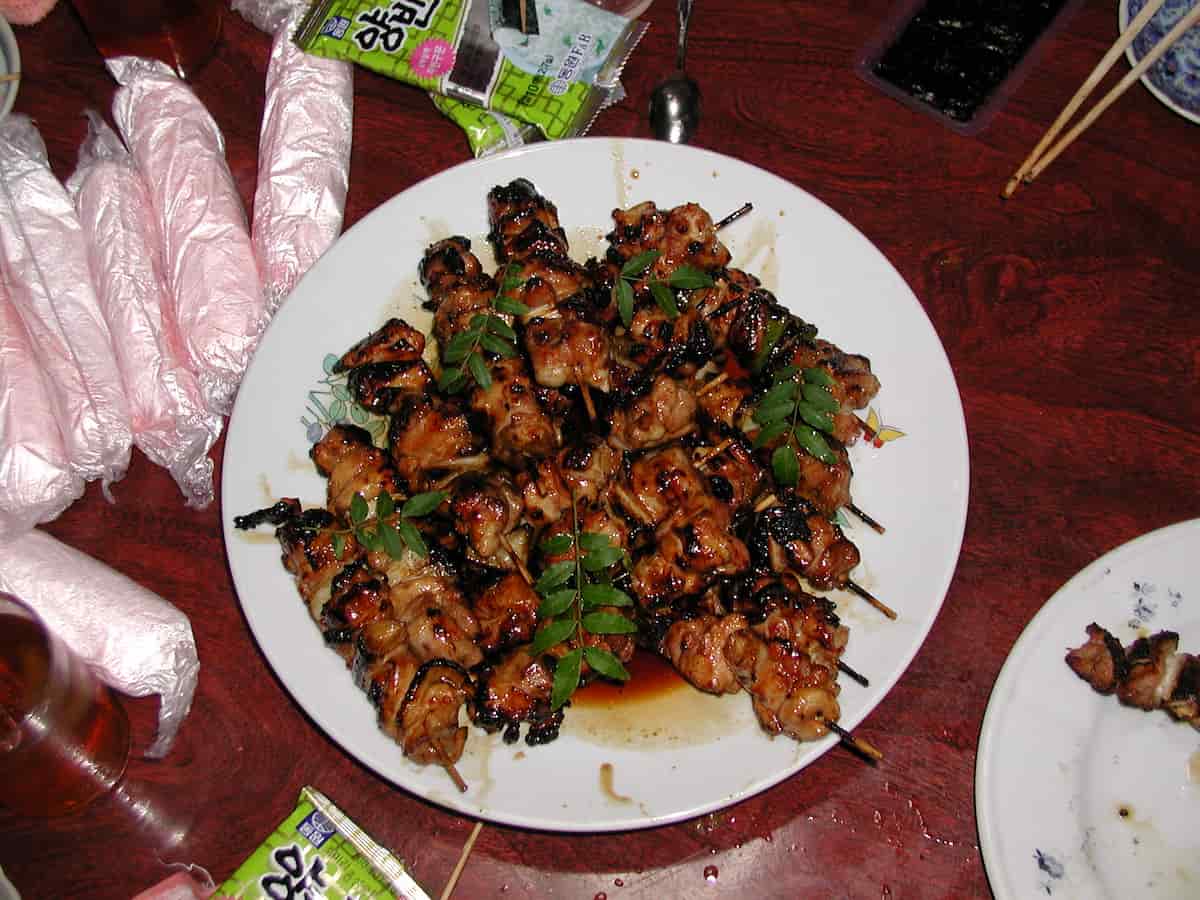
A large plate heaped with grilled chicken skewers garnished with green leaves on a dark red table, with condiment packets and chopsticks around it.

Toricho holds a very special place in the heart of this country-boy who came from a very far away and conceptually remote world.
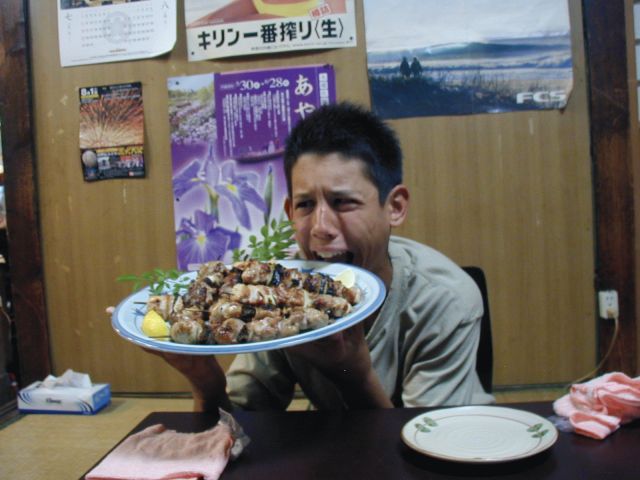
A man pulls a comic pained face while holding up a plate piled with grilled skewers in a small restaurant, posters on the wall behind him.

This was a very favourite place to go to in the wee hours of one’s youth, and two dearly departed friends, in particular were an important part of that particular period.
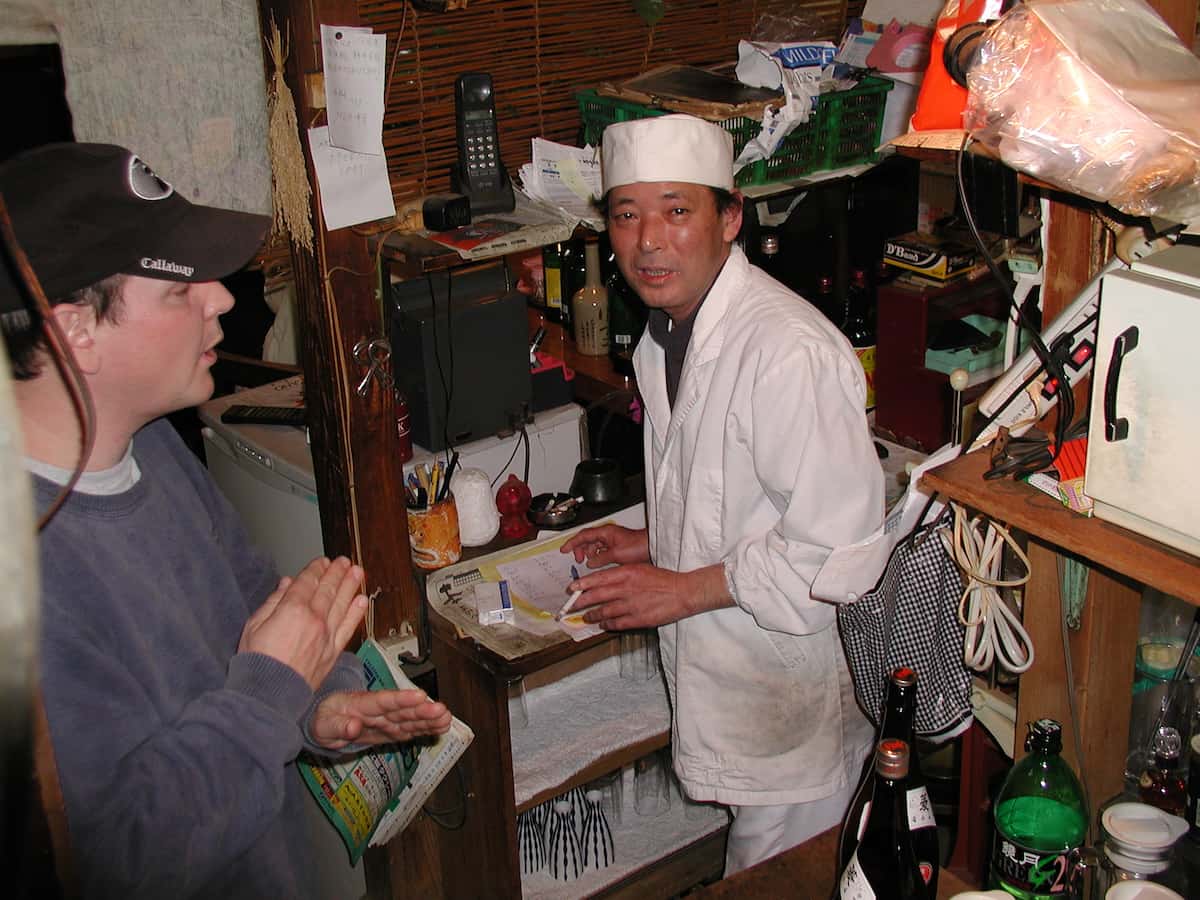
A cook in a white cap and jacket stands behind a cluttered counter in a cramped kitchen, talking to a customer in a baseball cap at the left.

The closing time of this joint?

When the last customer left.

Often in tandem with the crowing of the roosters and the distant sound of newspaper deliverymen making rounds at the crack of dawn on the standard Honda Cub 50.

新聞配達中 - Land Of The Rising Son

When asked what the secret was to his delicious chicken he said:

“Cook the parts that aren’t.”
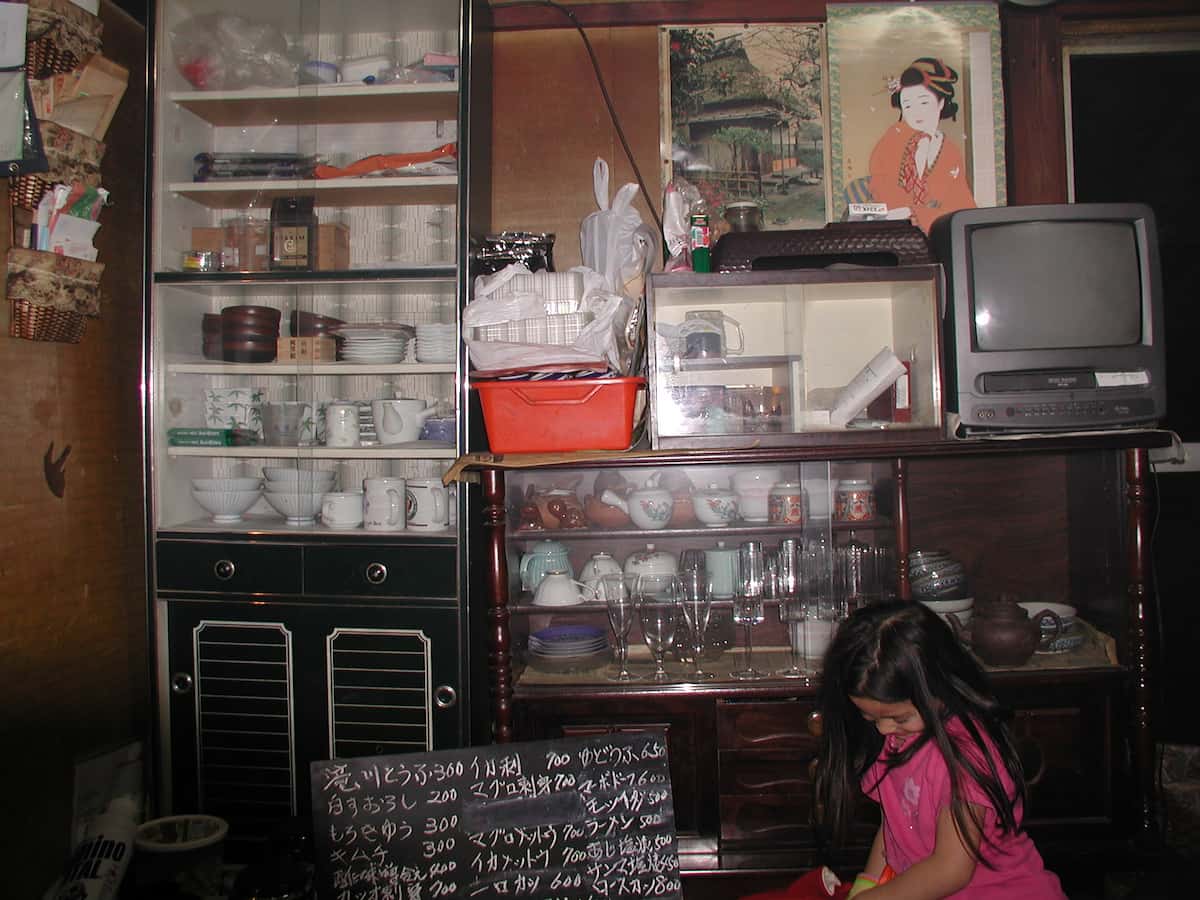
A dark restaurant interior with a glass-fronted crockery cabinet, a boxy television on a sideboard, a framed poster of a woman in kimono and a chalkboard menu; a child in pink sits at the lower right.

This stuck as a metaphor for things one starts but never finishes.

Half baked one could say.
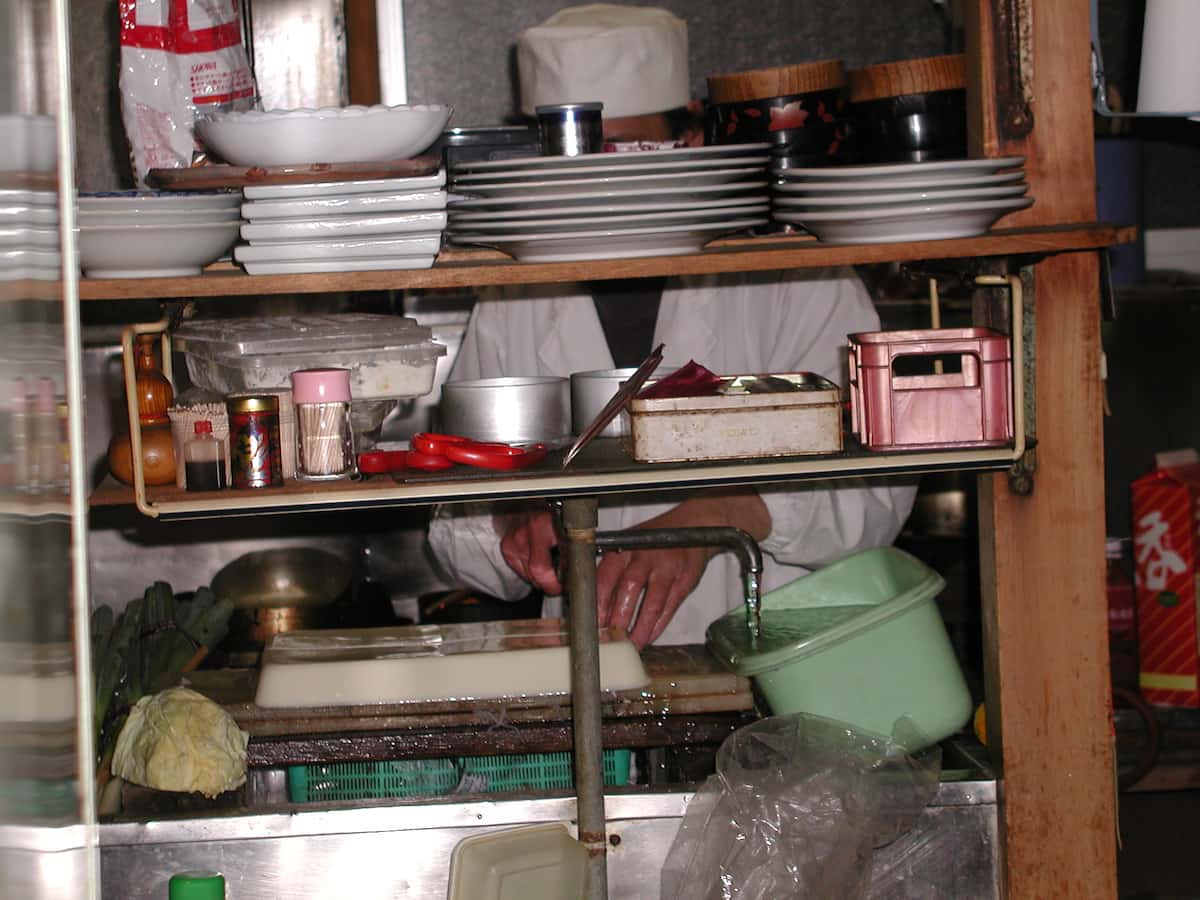
A view through kitchen shelving stacked with plates and seasoning bottles to a cook in whites working at the prep counter beyond.

This comes into much more clear focus as the week and month really start to whisk by as the days of one’s life upon earthly paradise dwindle away one-by-one—mostly unnoticed—until the final decline.
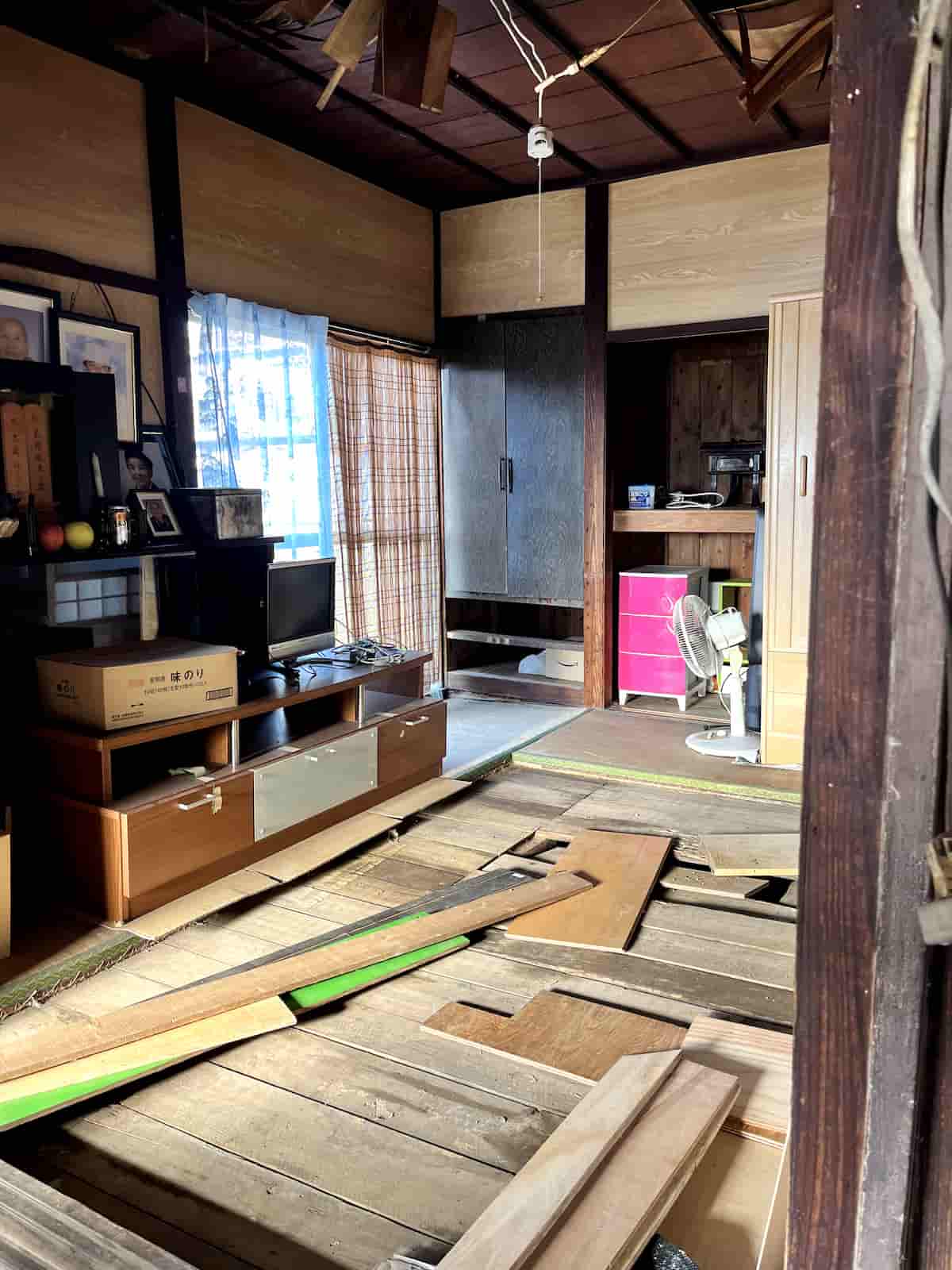
The interior of an old Japanese house being stripped out, floorboards lifted and stacked, a television cabinet and furniture pushed to one side.

It is folly to believe all whims of youth should come to fruition, but the niggling in the heart and the voice whispering in the ear for years can not be silenced—not up until the final door—marked EXIT.
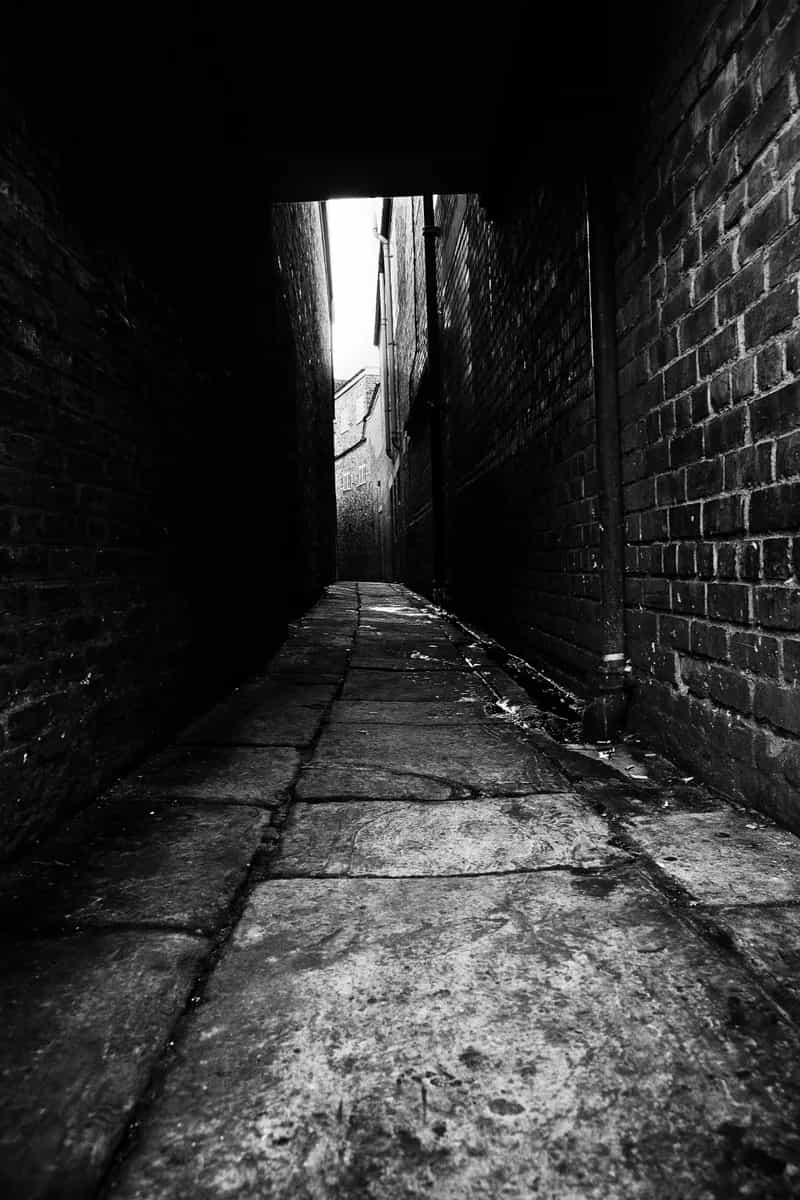
A black-and-white photograph of a narrow brick alley in deep shadow, the flagstone path leading toward a bright opening at the far end.

One has had a few of these uncooked items on the metaphorical plate for eons, and now the forward motion and inspiration to “cook the parts that aren’t” are palpable—again in the immortal words of the Toricho master:

“Cook the parts that aren’t.”

The secret of the Toricho chicken-on-a-skewer was never revealed as the heavy smoking and mostly drunk Toricho master passed away early (50ish), and the shop close many moons ago today.
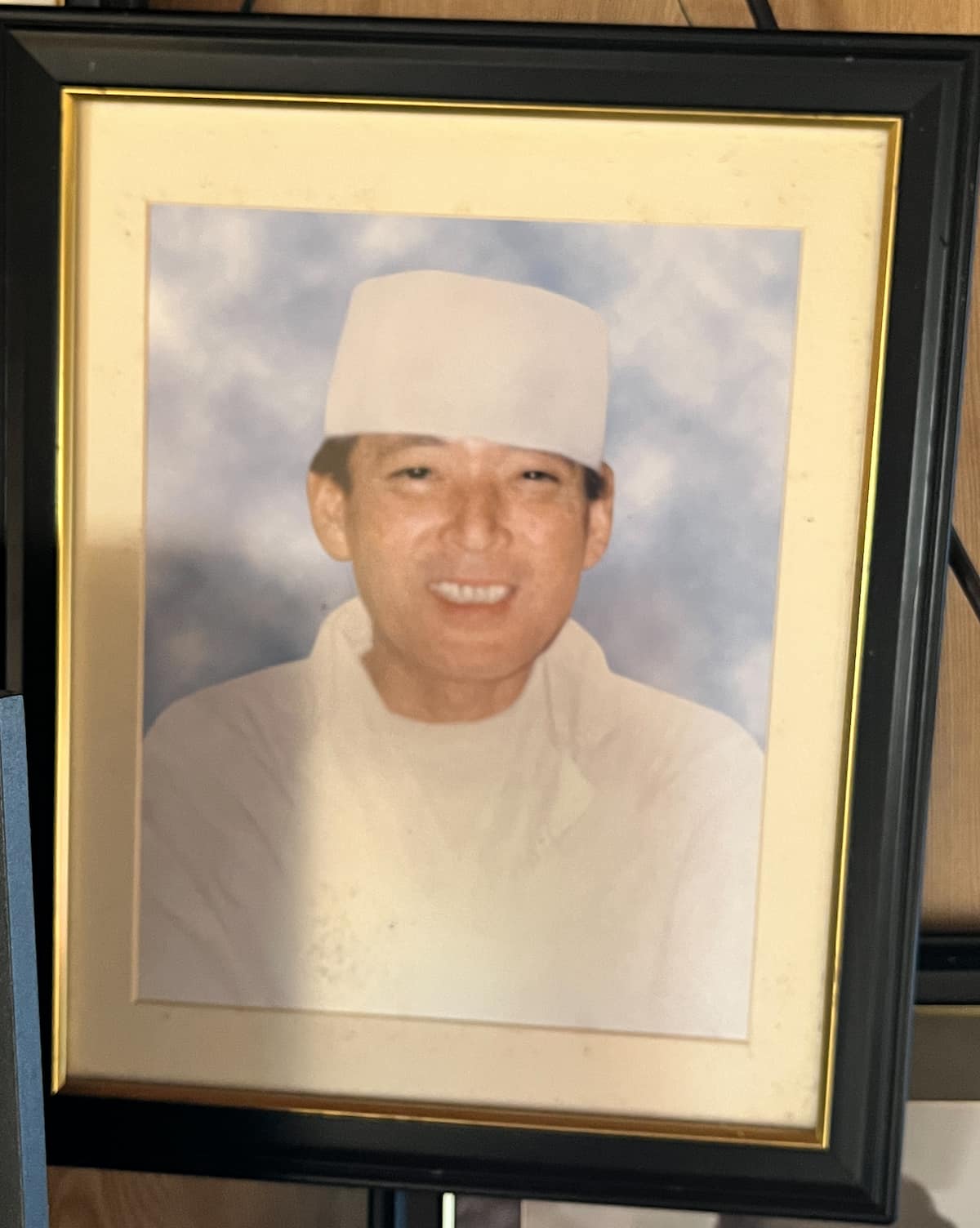
A framed memorial photograph of a smiling man in a white cook's cap and white jacket, propped against a wall.

He passed his life in service to the hungry and thirsty of our community without giving a thought to his lot one way or another, for his destine was to be the Toricho master, and thus it was so.

Life passes by in the blink of an eye, so one must finish the unfinished masterpieces of one own life, before it’s too late, and to "cook the parts that aren't."

A man in a white cook's cap and a woman in a leopard-print apron stand together in a kitchen, both grinning and holding up two fingers.

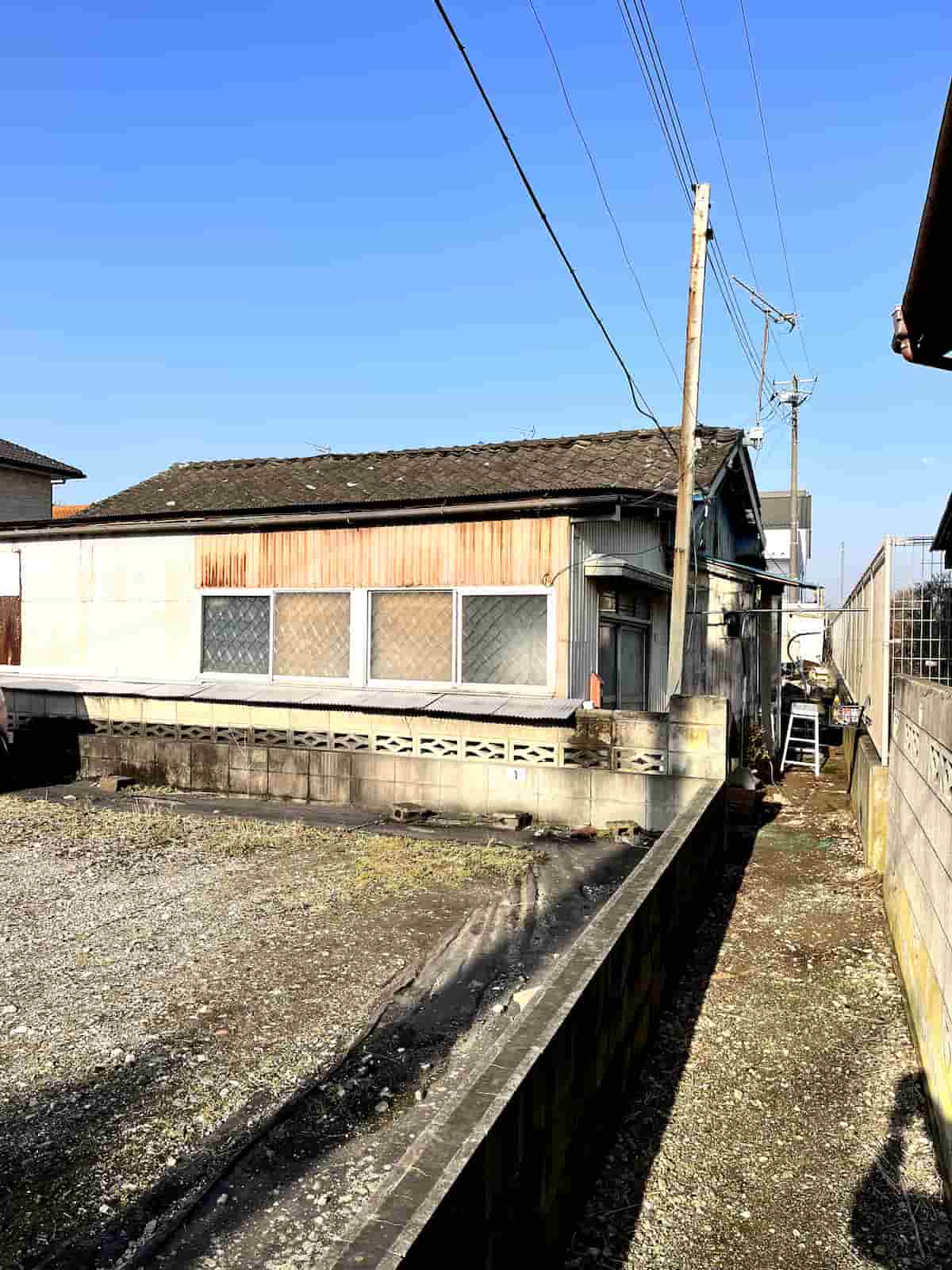
A weathered single-storey timber house with a low tiled roof and lattice windows, standing beside a concrete-lined ditch under a clear blue sky.

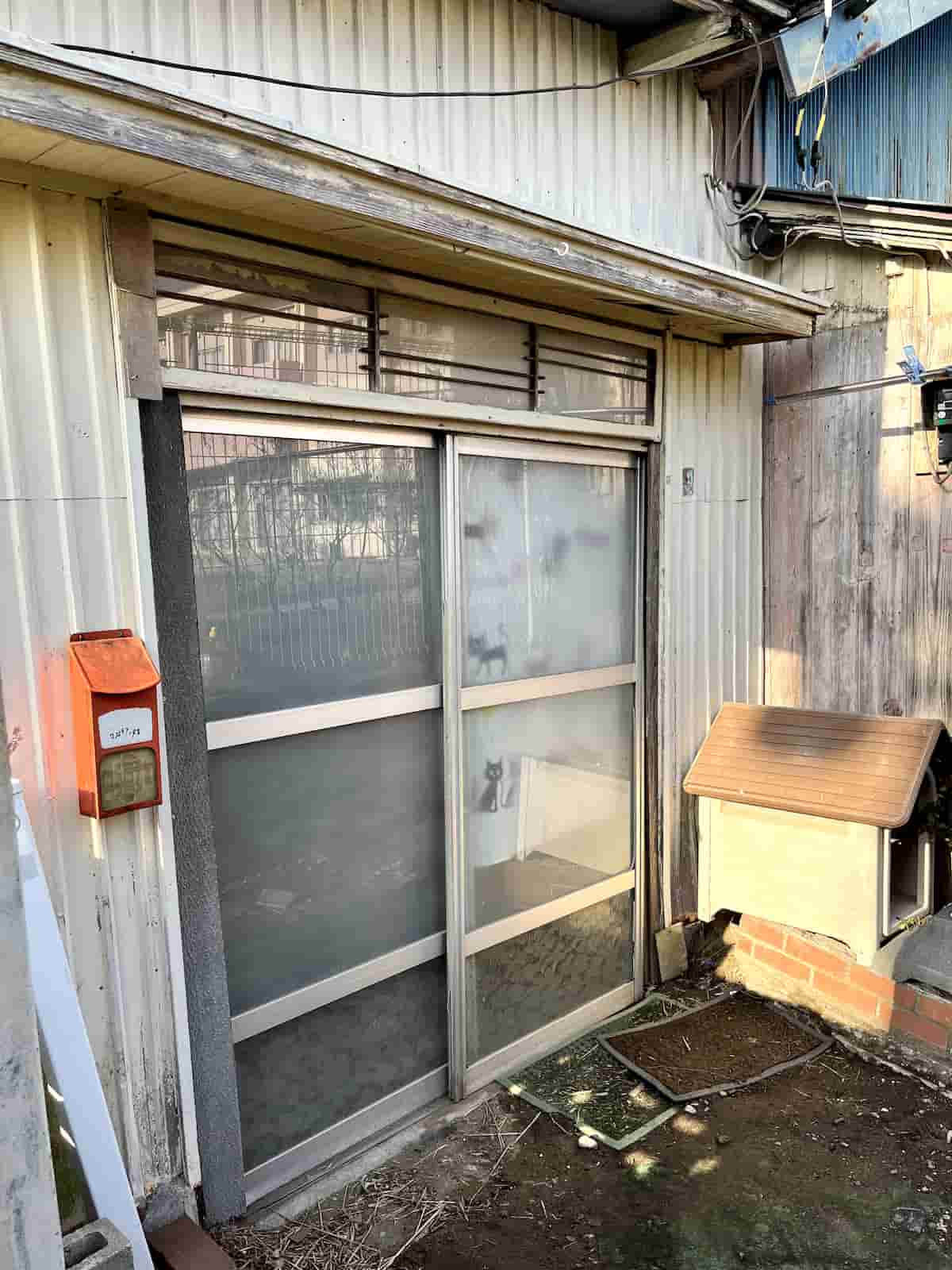
A weathered aluminium sliding door in a corrugated metal wall, a small dog visible through the frosted glass and a wooden kennel to the right.

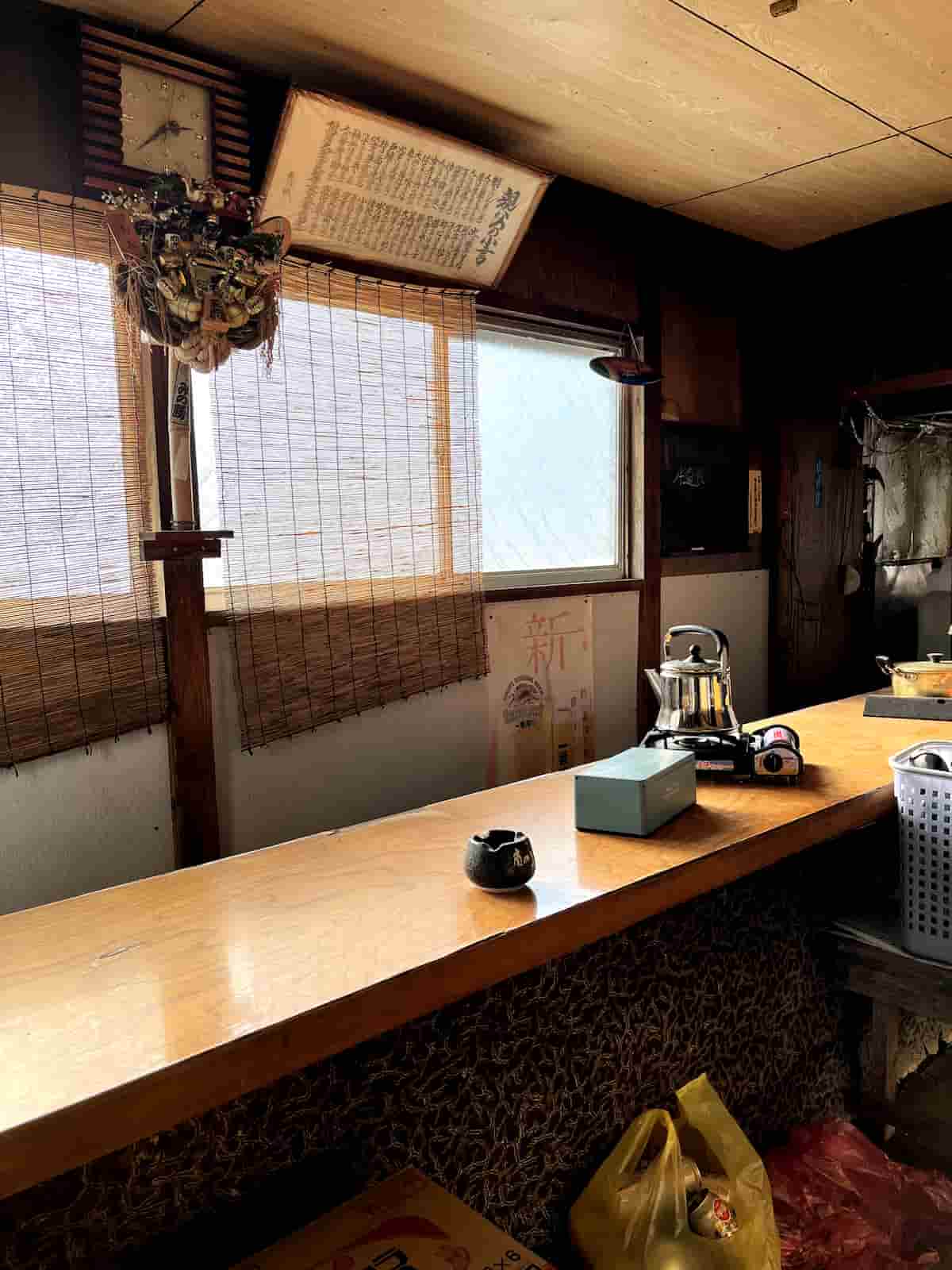
The interior of an old shop with a long wooden counter, reed blinds at the windows, a framed text and clock on the wall and a kettle on a stand at the far end.

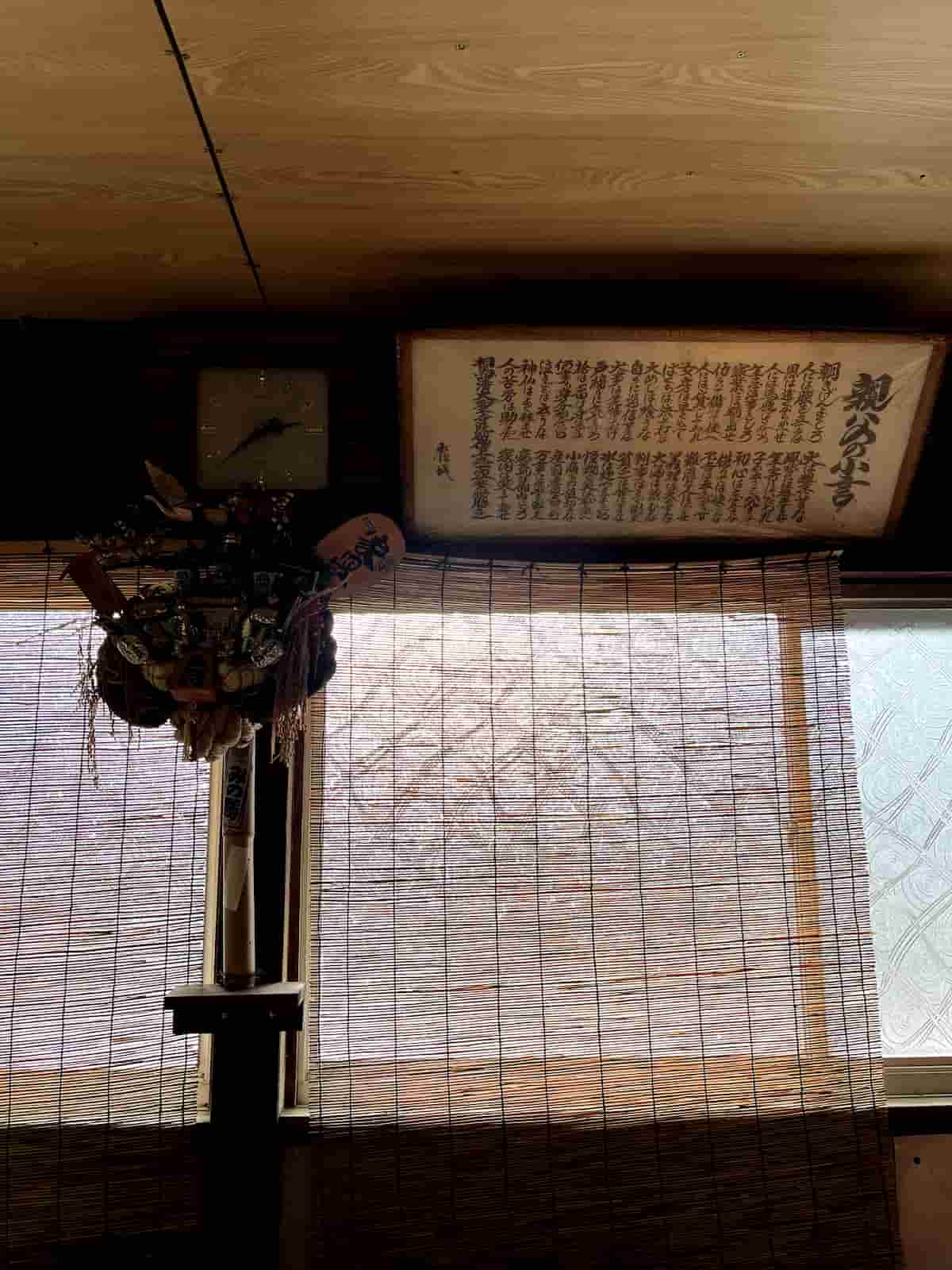
A dim interior with a framed panel of Japanese calligraphy and a clock high on a wooden wall above a reed blind, a dried flower arrangement hanging beside them.

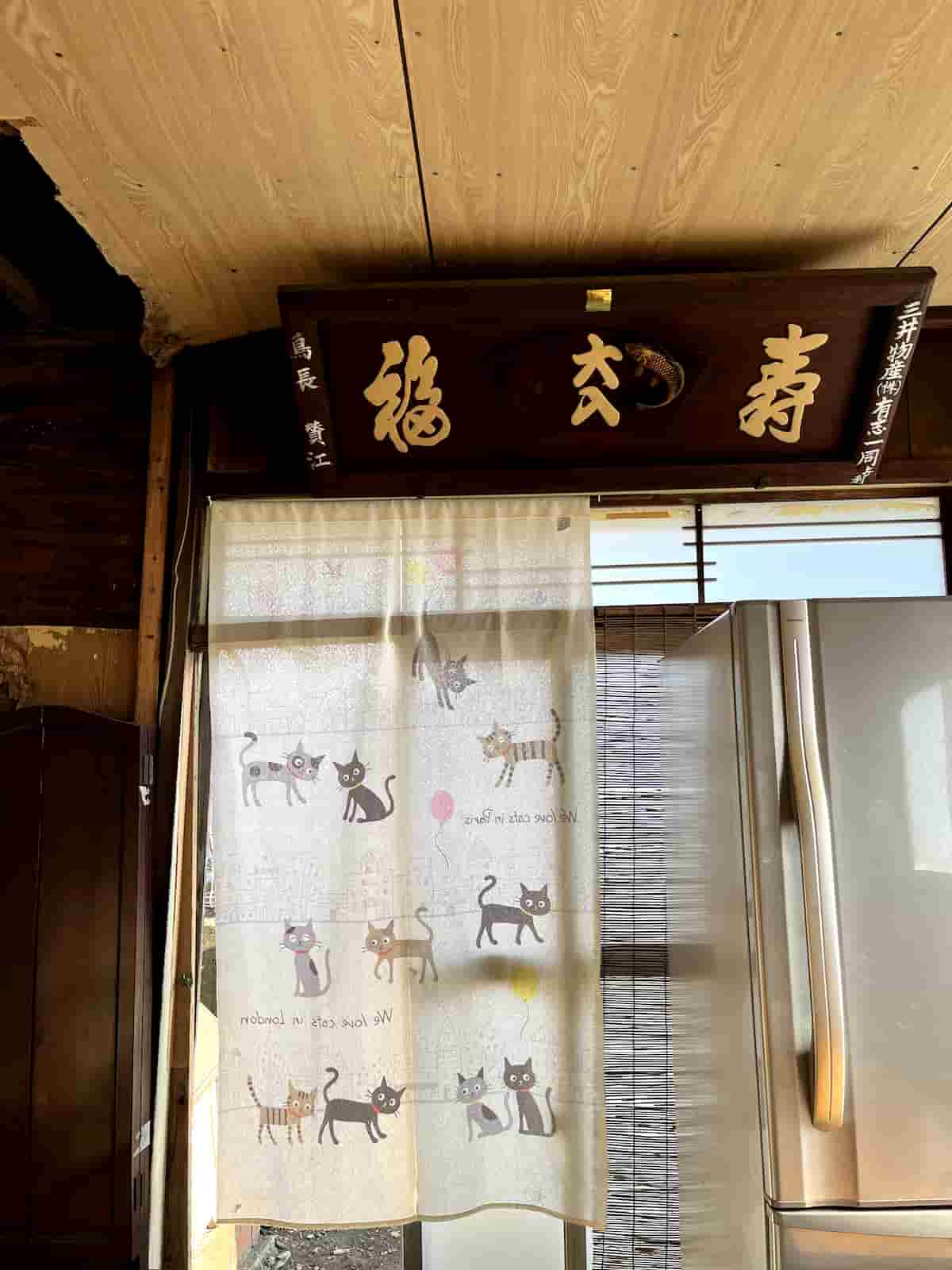
A carved wooden signboard with three characters above a noren curtain printed with cartoon cats, hanging in a doorway beside a refrigerator.

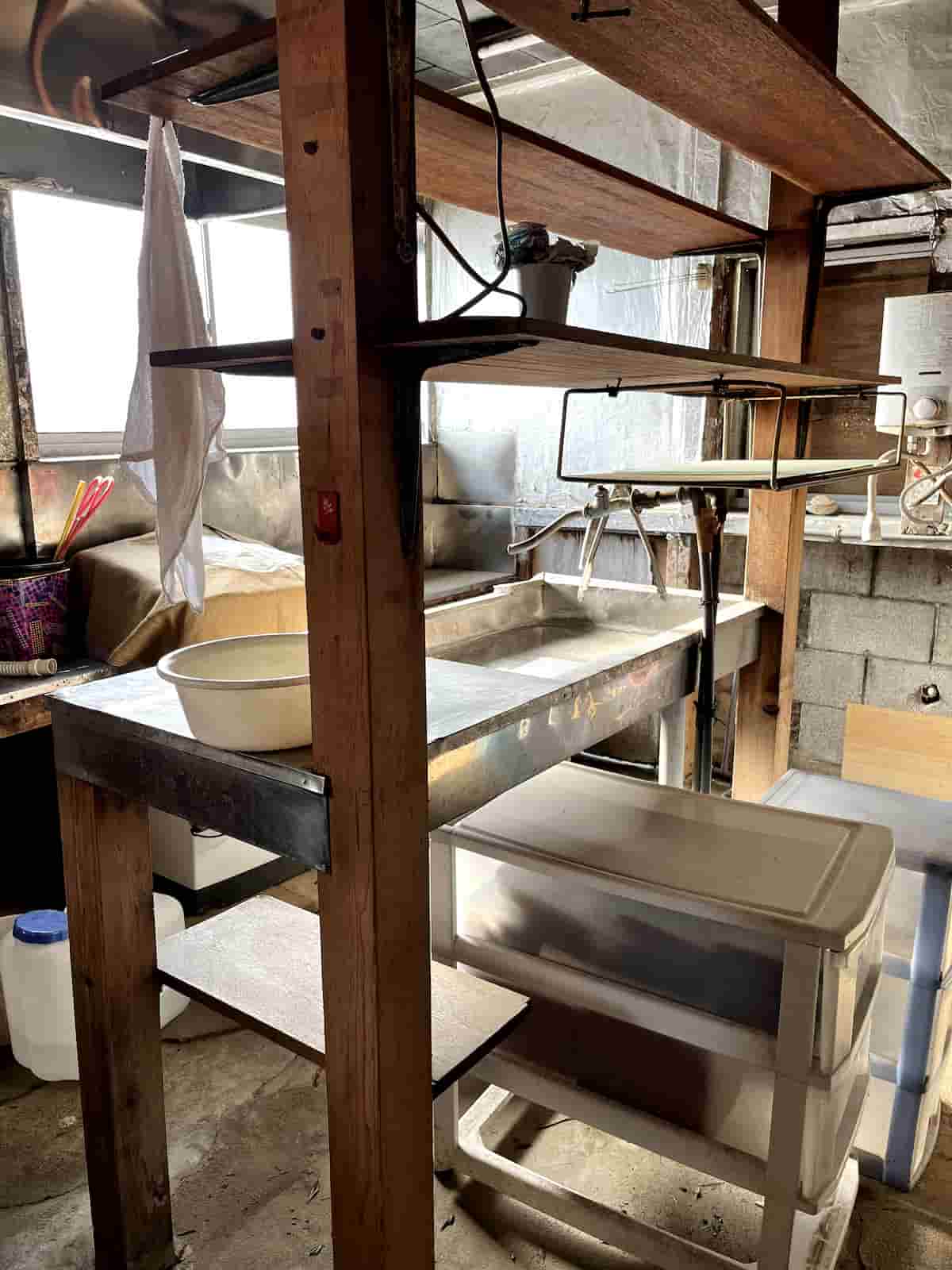
A rough kitchen scullery with a timber-framed shelf, a stainless sink and draining board, a plastic basin and a stack of trays beneath.

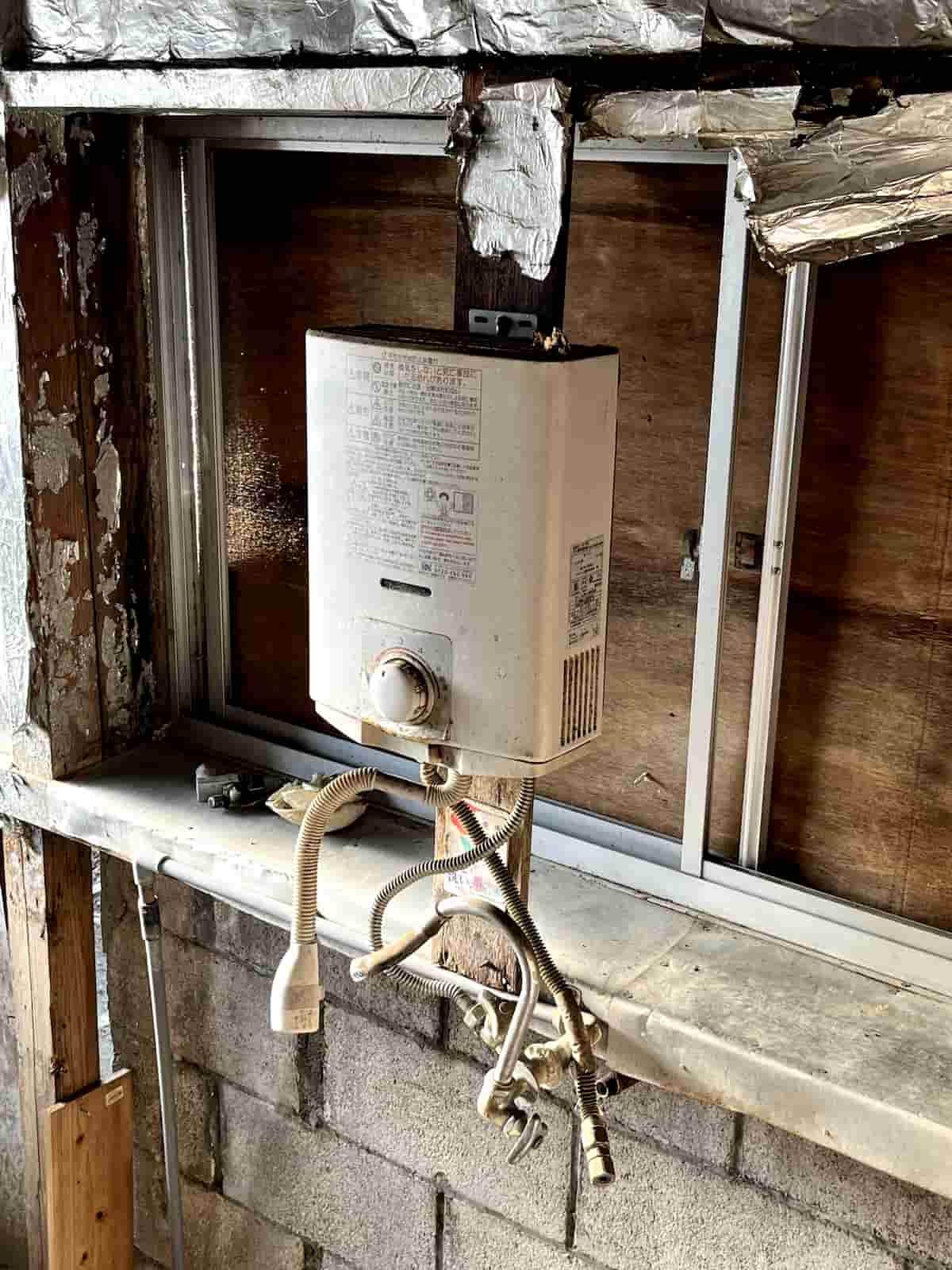
An old wall-mounted gas water heater on a window sill in a partly demolished wall, its flue taped and a tangle of pipes and a shower hose beneath.

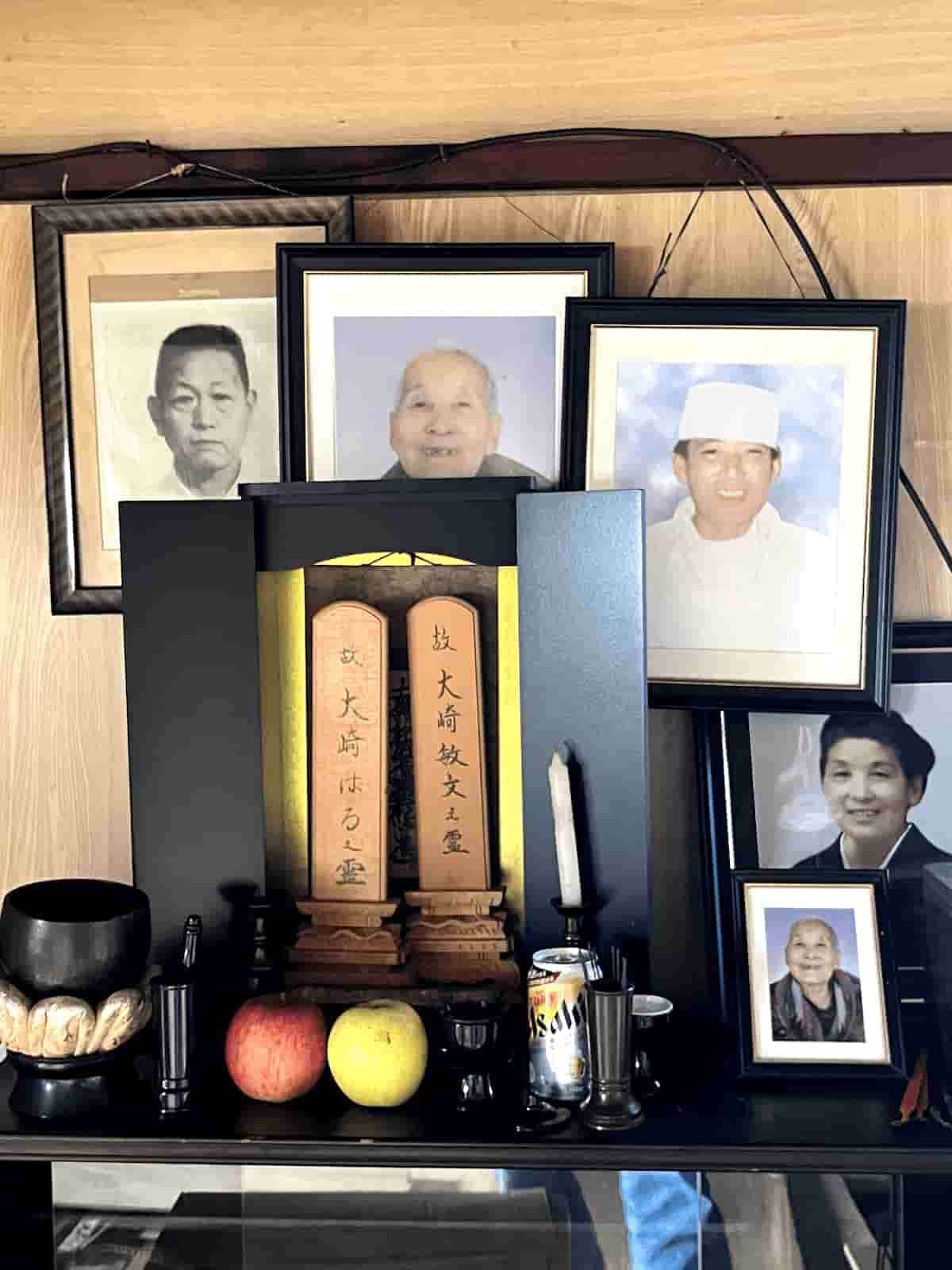
A household Buddhist altar with memorial tablets at the centre, framed photographs of family members around it, and apples, a candle and offering vessels set out in front.