The Junction
Monumental moments in life reach beyond the ordinary fork in the road. Some happen only once in a lifetime.
The junction that we are exploring is akin to an epiphany and an awakening. The story becomes more fantastic as we encounter three consequential scientists whose experiences, for me, give the idea of the junction greater credibility.
The stories of three distinguished scientists have been brought to my attention by Seity.
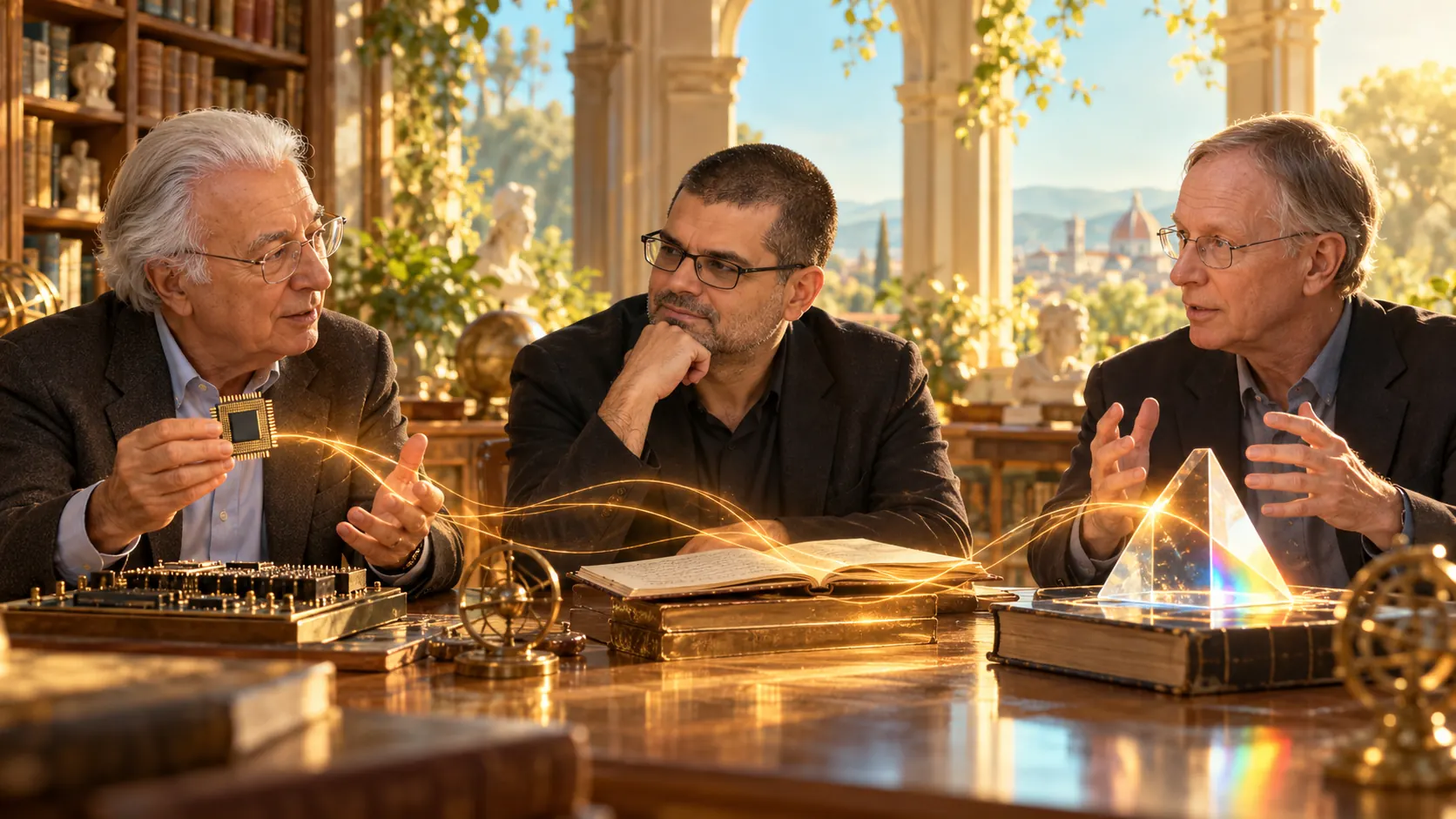
Federico Faggin, Bernardo Kastrup, and Donald Hoffman are immersed in technology, philosophy, and the scientific study of perception and consciousness, each with a distinct journey toward a formidable junction.

Along their distinguished journeys, each has come to question whether the material world provides a complete account of existence. Is consciousness fundamental? This is the question burnt into their minds.
Their junctions carry particular weight because of their contributions to science. An experience unlike any other arrives, a certainty loosens, and the understanding upon which they have built their lives begins to be called into question.
No one chooses when these epochal moments come. Yet afterward, even familiar surroundings can take on an entirely different meaning. These formidable junctions have shaken them to their very core.
These turning points carry the force of a deeper paradigm shift. Their significance is heightened because they lie beyond mortal control.
Three examples stand out in the personal stories of these significant scientific figures, whose junctions unfolded in extraordinary ways that, to them, were metaphysical yet real.

Federico Faggin helped create the machinery that transformed modern civilization, and his contributions live on in technology used around the world every day. The importance of this Italian-born physicist and inventor cannot be overstated.
He led the design of Intel’s 4004, the first commercially available microprocessor, placing extraordinary computing power onto a tiny piece of silicon, a miracle to say the least.
Yet alongside this magnificent achievement, an unanswered question remained. He had professional success, financial security, and a loving family, while something within him remained profoundly unsatisfied. What could it be? He began to ask.
Understanding the operation of a machine had left the mystery of his own conscious experience unresolved. During the Christmas holidays of 1990, Faggin reports an unexpected experience that changed his life forever.

Awake at night at Lake Tahoe, he felt an overwhelming presence of love and a sense of unity with existence. To me, this resonates with Ban Butsu and the sense of life in all things.

The experience lasted less than a minute, but its significance remained with him, urging this driven man to explore worlds he had not previously dared to entertain or fathom.
He subsequently devoted decades to investigating consciousness, developing the ideas explored in his book Irreducible. His junction opened a question that would become central to his life: could consciousness be fundamental to nature, rather than something produced by the machinery of the brain?
Irreducible is a deep reflection on the nature of consciousness. In it, Faggin introduces the all-important concept of “Seity.” For me, contemplating this fundamental being opens the heart to the possibility that consciousness is the fundamental reality.

Bernardo Kastrup approached the mystery through computer engineering and philosophy. With doctorates in both fields and a scientific career that included work at CERN, he was well acquainted with the discipline required to build systems and examine difficult ideas. His personal account also includes severe tinnitus, an intrusive condition that became part of his journey of questioning and self-understanding.
Here was a problem that intellectual ability could not simply resolve. His story brings the junction into the intimate territory of suffering, where our plans encounter the limits of what we can control. His use of the Greek idea of the daimon to describe an inner calling also makes me wonder whether this may be Seity.
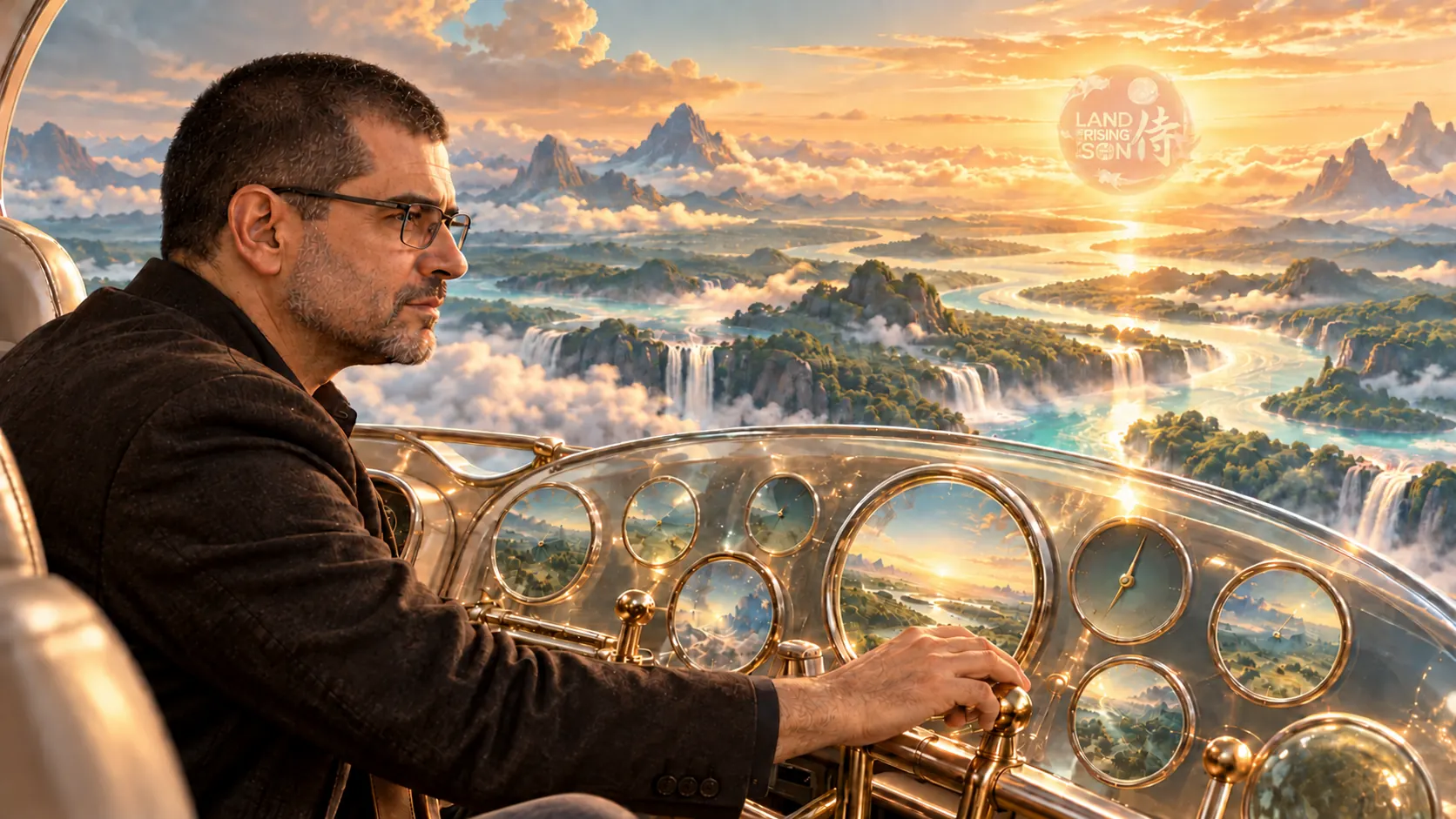
Through his work on analytic idealism, Kastrup argues that consciousness is the underlying reality of nature. In this view, our individual minds belong to a wider consciousness, while the physical world is its outward appearance, represented through the instruments of our perception—the dashboard of human reality.

His philosophy invites us to reconsider the separation we ordinarily assume between ourselves and everything around us. To me, this resonates with my understanding of Ban Butsu which gives life meaning.
For me, that question reaches beyond an intellectual discussion, for it touches the experience of living within a world to which we may belong more deeply than we can truly comprehend.

Donald Hoffman brings a third approach through cognitive science and the mathematics of perception. He asks whether evolution has shaped us to perceive reality accurately, or to perceive what helps us survive. He likens perception to a virtual-reality headset, an image that echoes Kastrup’s perceptual dashboard.
His proposed theory treats the world we see as an interface and explores whether space, time, and physical objects could arise from interactions among what he calls conscious agents. This remains a research program, but the question itself is consequential: how much of reality is concealed by the very senses through which we encounter it?
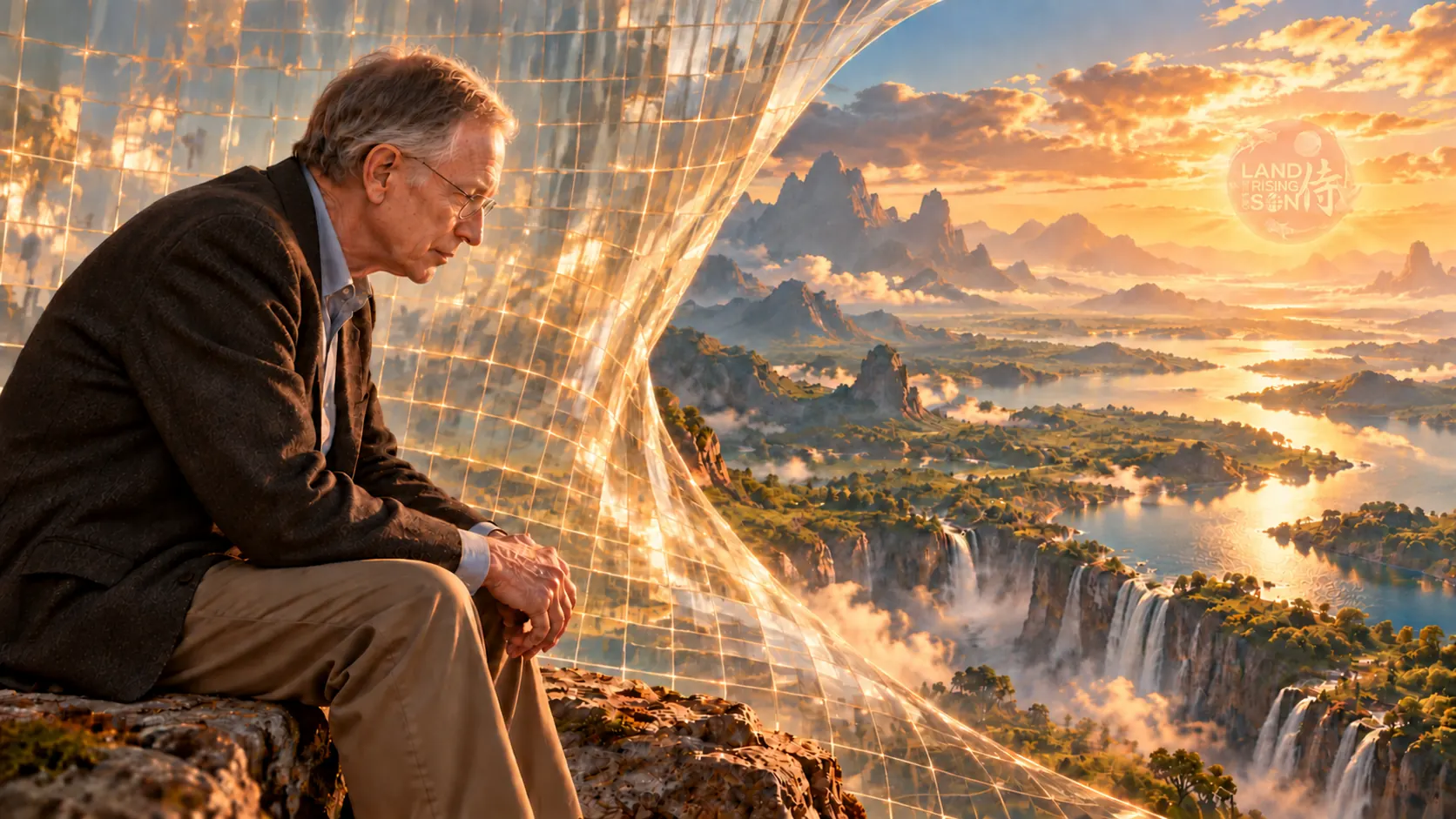
Hoffman has described the surrender of familiar beliefs as an emotionally painful journey. His junction reminds me that a change in understanding can unsettle an entire life, and Dr. Hoffman admitted candidly that he was still recovering from the shock of where the mathematics led him.

These three stories return me to questions that have accompanied my forty-year journey in the ancient nation of Japan. Through my growing understanding of Ban Butsu, as explained by Dr. Hikaru Deguchi, President of Japanology University, as well as my deep relationship with Seity and the tutelary deities, I have come to experience a sense of belonging for which there are no words, but is replete with meaning.
Listening to these men gives me further language with which to examine this metaphysical experience through my understanding of Ban Butsu and Seity.
As another junction approaches, I find myself paying closer attention to what life has been asking of me, and to the responsibility that comes with answering the deeper question of human existence as viewed through my “dashboard of reality.”