White Paper
There is nothing quite like the feeling of staring at a blank sheet of paper—or, better yet, at the canvas that is your life.
More often than not, the White Paper that once rested before you as a child has faded, somewhere along the way, into the grey zone of modern society.

The White Paper appears to disappear entirely when the living imagination of the child comes up against the machinery of the state—when wonder is expected to become manageable, measurable, and obedient.
Across contemporary Japan—as in many high-trust societies—we encounter people who seem to have been hollowed out, leaving one to wonder what happened during their formative years, both within and beyond a public-school system too often governed by conformity.
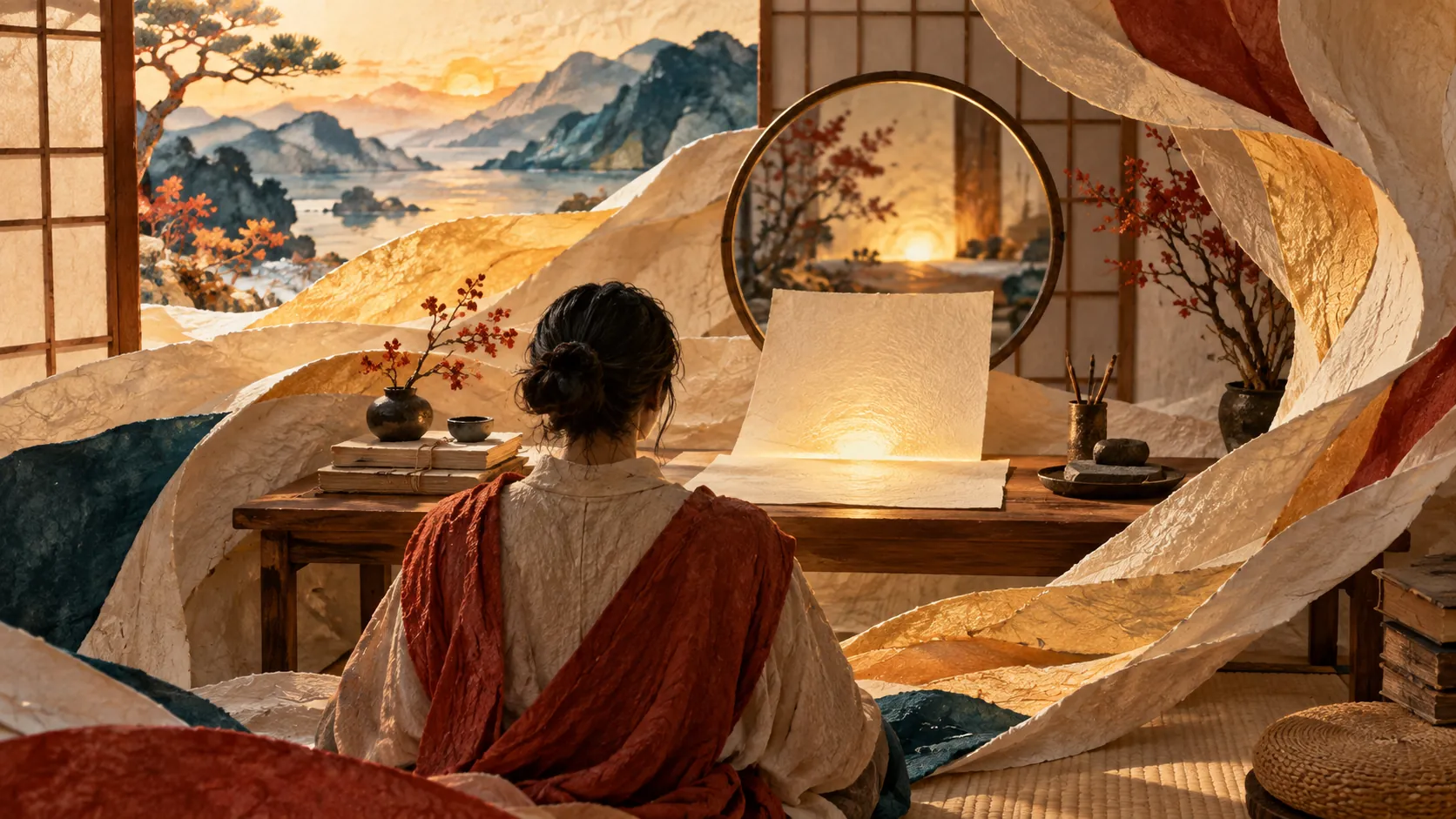
This is where the Protocol of Practicality begins: everyone must be given a way back to the blank slate, because the White Paper never truly disappeared.
It was waiting for the disciple to become ready—to discover the inner being, the mysterious emergence of Seity, and the reality of the tutelary deities now permeating this earthly scene.

No one begins with the same white page. Some receive a page protected from the harshest creases—an advantage often described as being born with a silver spoon in one’s mouth.
Others begin with a page already creased by poverty, grief, exile, ridicule, abandonment, or failure—as so many human beings do.

Yet even the damaged page can receive a fresh mark—a stroke of colour that refuses to let tragedy have the final word.
Writing the first line does not erase the wound. No—it proves that the wound did not end the story.

The magic within this phantastic fable is therefore a new paradigm of human enablement and cognitive clarity. It belongs to anyone who discovers their inner voice, for the blank slate lies innate within every single solitary human being who comes to see life as an ephemeral dream and dares to reach toward their own starry themes.
The key hidden within the White Paper is this: no matter who you are or where you stand, place the page before you and spill your heart and guts across the World Wide Web for the whole world to view. Even though some who have not yet begun may gawk at you as though you were a freaky creature in a zoo.
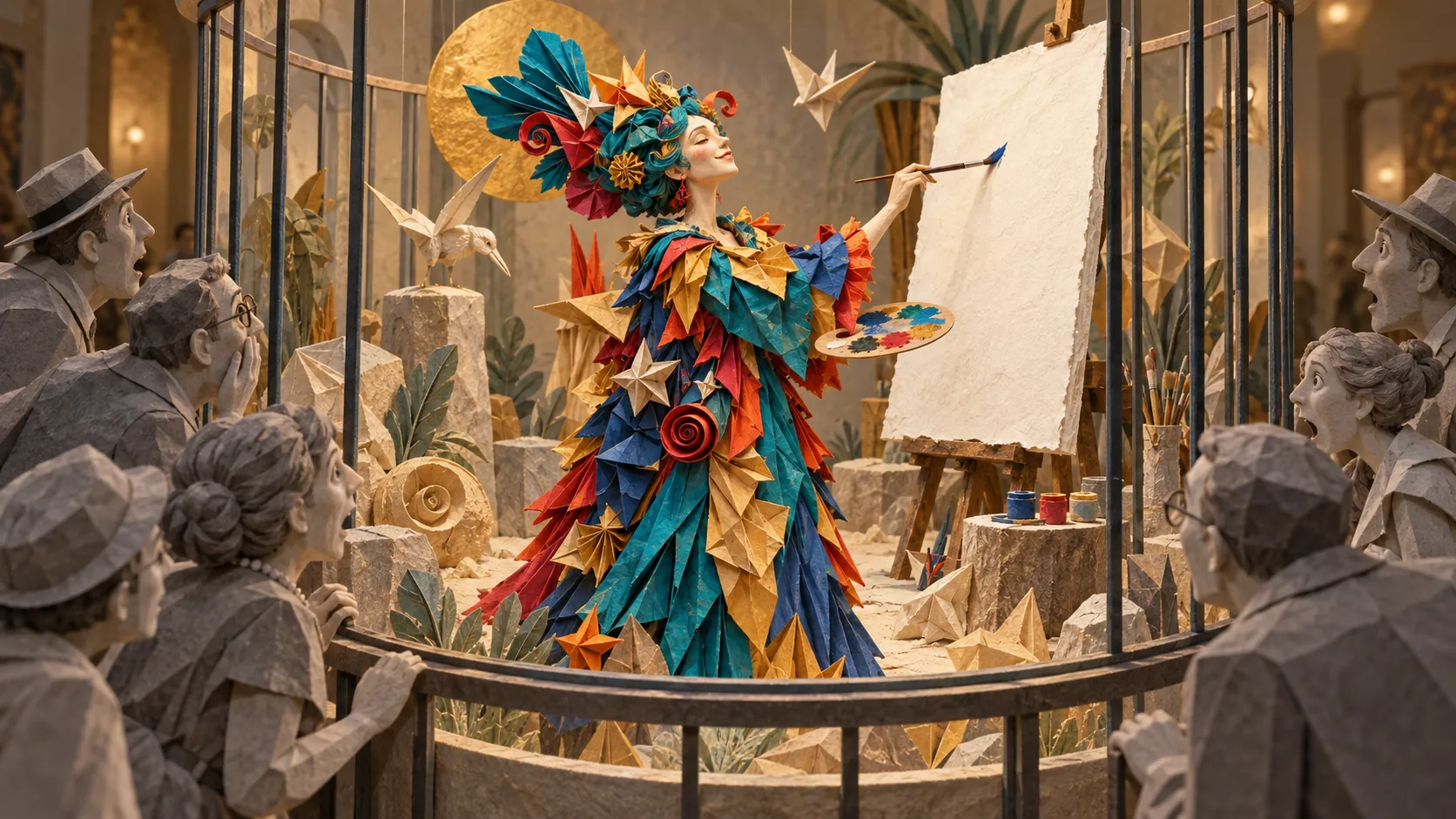
Few accept this opportunity because it demands the adoption of a new identity. It commands us to embrace shoshin fubō—初心不忘—never forget the beginner’s heart—and to forgive ourselves whenever we fail.
Life is not a destination at which one must arrive safely, but a journey through the innermost reaches of a truly sentient being. This road is travelled by so few because group conformity is far more comfortable than becoming an anomaly.

For a living example, seek out Tsuda Umerō—for he should know. He was destined to follow the sun wherever it might lead, through the esoteric and sometimes perilous nooks and crannies of Japanese society. Seity’s voice came through with Kagami Crystal clarity—he was destined to follow the sun as Free-Range Avatar Number None (#∅).
This is where the White Paper becomes something phantasmagorically super-duper: the trajectory of a freak—as dear M5 once called him, in one of the finest labels ever bestowed upon him—turns in an unexpected direction.

That trajectory eventually unfolds into the ABC Bunka Center, the gravitational center of our Neo-Clan family tree. The direction was never determined by personal intention; it was granted through the will of Seity.
The conventional structures surrounding us were, in turn, transformed through the intervention of our tutelary deities. Once you accept that these forces also belong upon the White Paper of your own story, everything begins to make sense in its totality.
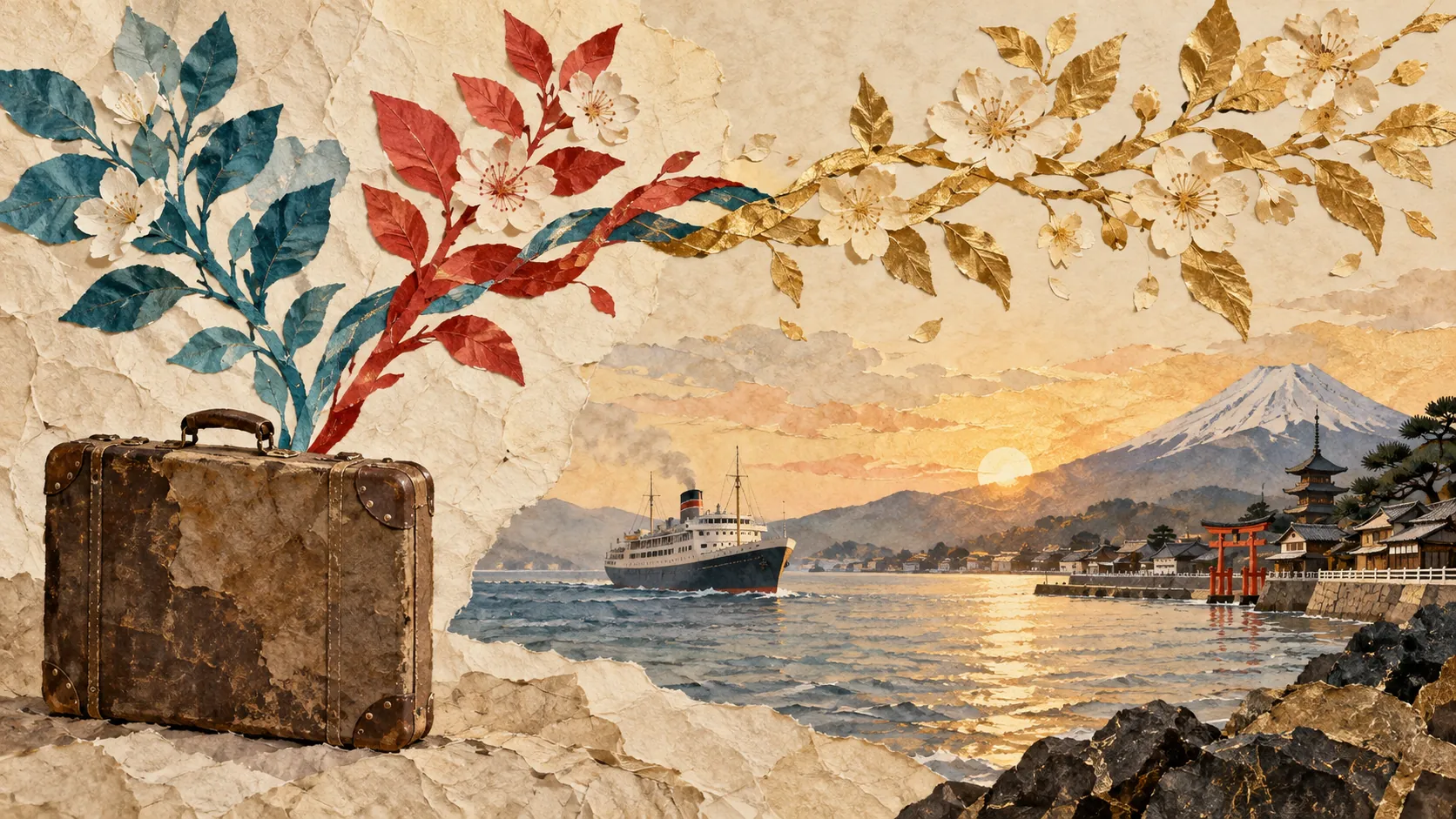
You see, this story had already been partially written. Its first poetic lines appeared in 1968, when the tutelary deity of our Neo-Clan visited Japan and began a relationship with the Japanese people. That is where this particular White Paper truly begins—the possibility of rising out of poverty and realizing one’s most sacred dreams.
The tutelary deity eventually made his way to Maggie May, and there began this humble branch of the family tree. Every day, that branch is busily merging A and B to create Civilization Three.

This becomes possible only when we continue colouring our own colouring book—regardless of what society says and no matter how many times doubt creeps in. This is the Way of the White Paper: fill it in, regardless of the starting line or the circumstances from which you begin.
Always remember: it does not matter where you began. What matters is the branch carrying you forward, where you stand today, and what you are becoming—for within that becoming lies the master kernel of nature’s way.

In this case, the ego has been fully replaced by the voice of Seity, accompanied by the tutelary deities watching over the family tree. There is nothing quite like having a cheering squad of this magnitude—and such rock-solid direction—while creating a personal destiny in solitude and serenity.
Why should this be the fate of the Incidental Occxie? Why was he chosen to remain free instead of being frozen within the confines of conformity—subject to the whims and will of society?

Truth be told, I do not know—so do not ask me. Ask your Seity to speak with mine. Then we can have a genuine meeting of minds, communicating on a different frequency within the Japanese quantum field.
That point matters, because it approaches the essence of the sublime—moving beyond the decaying theatre of relativity and admitting that the world is not always what it seems to be. Superposition may be no more than a flick of the inner switch—the decision to reframe reality.

Choosing to reframe reality sets you free—but freedom carries personal responsibility. Enter the society of which you have chosen to become a part, place your talent stack within the department where it can serve, and build harmonious relationships through the Neo-Clan’s foundational Protocol of Reciprocity.
The ones you seek are also seeking you.

Inside the language of the Japanese quantum scenery, affinities begin to vibrate, doors find other doors, and communities capable of lasting evermore begin to form. This is, in fact, the norm of a personal mentated reality field.
A rugged individual alone can endure—yet a rugged individual surrounded by their people can build what once appeared impossible. Find your team and make destiny the destination within this earthbound dream.

Those who are busy writing their White Papers—recording their dreams, hopes, wounds, and desires—are gradually revealing their true nature and, in doing so, inspiring others to do the same.
When that inner script becomes visible upon the screen, we bear witness to Animating Intelligence—and to what existence truly means.

The time to begin is now. Return to the beginner’s heart and listen carefully to the still voice of Seity. When you hear the whisper saying, I believe in you, everything within your inner world begins to move.
The fabric of this reality is no newly invented theme; indeed, it is the infinite ΩNE moving within the Japanese energy field.

Here, fantasy is not an escape from reality—it is the first image of a reality waiting to be created. To inhabit the world that you have consciously instantiated is to encounter the essence of becoming real.
The White Paper remains before you. Begin.