Different Drummer
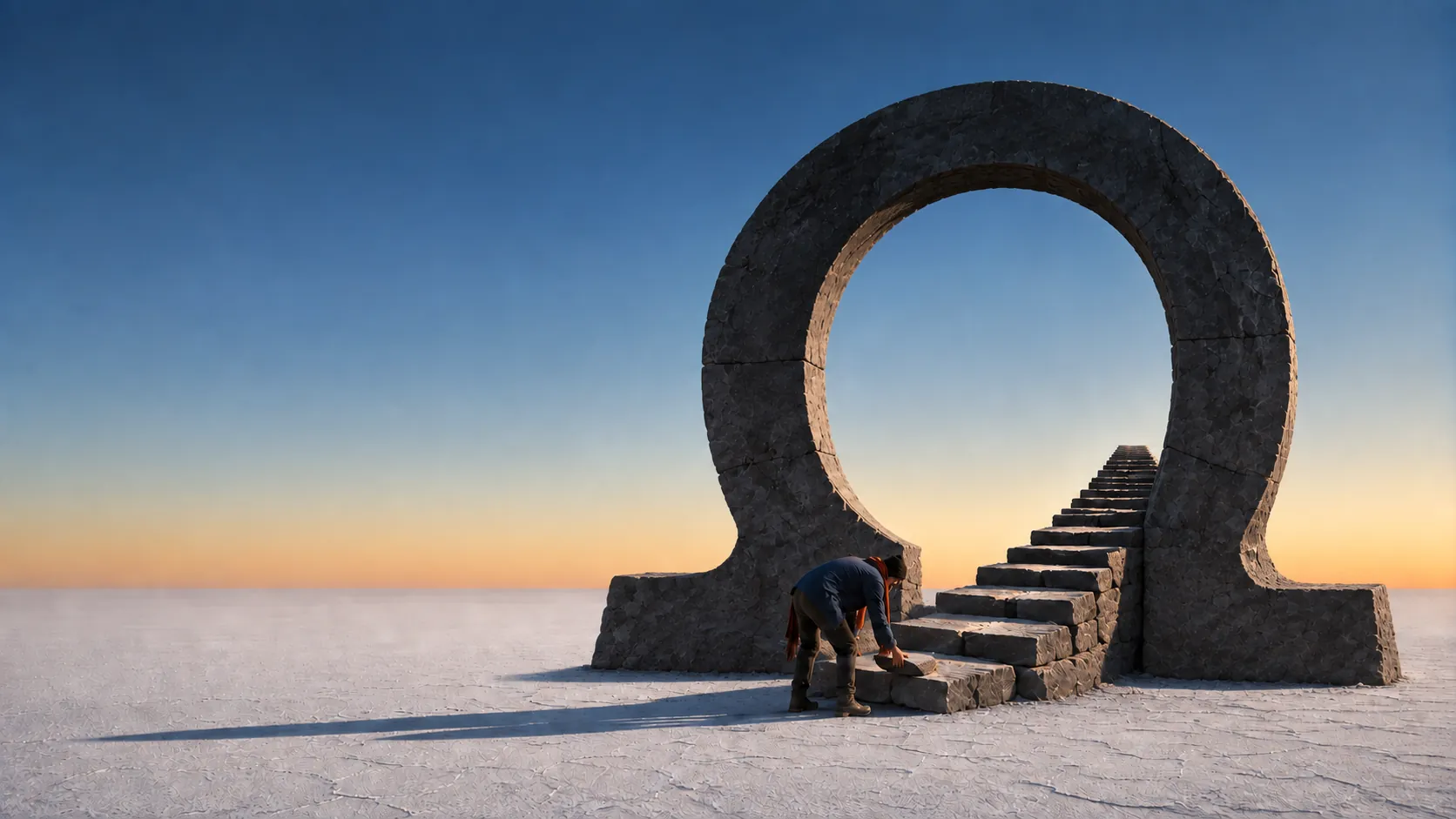
For better or worse, those who march to the beat of a different drummer are often the ones who change the world.
Biologically speaking, human beings are social creatures.
The desire to belong is not a weakness, but one of our deepest and most pervasive motivations.
Yet belonging and conformity are not the same: one binds people together; the other can silence the voice within.
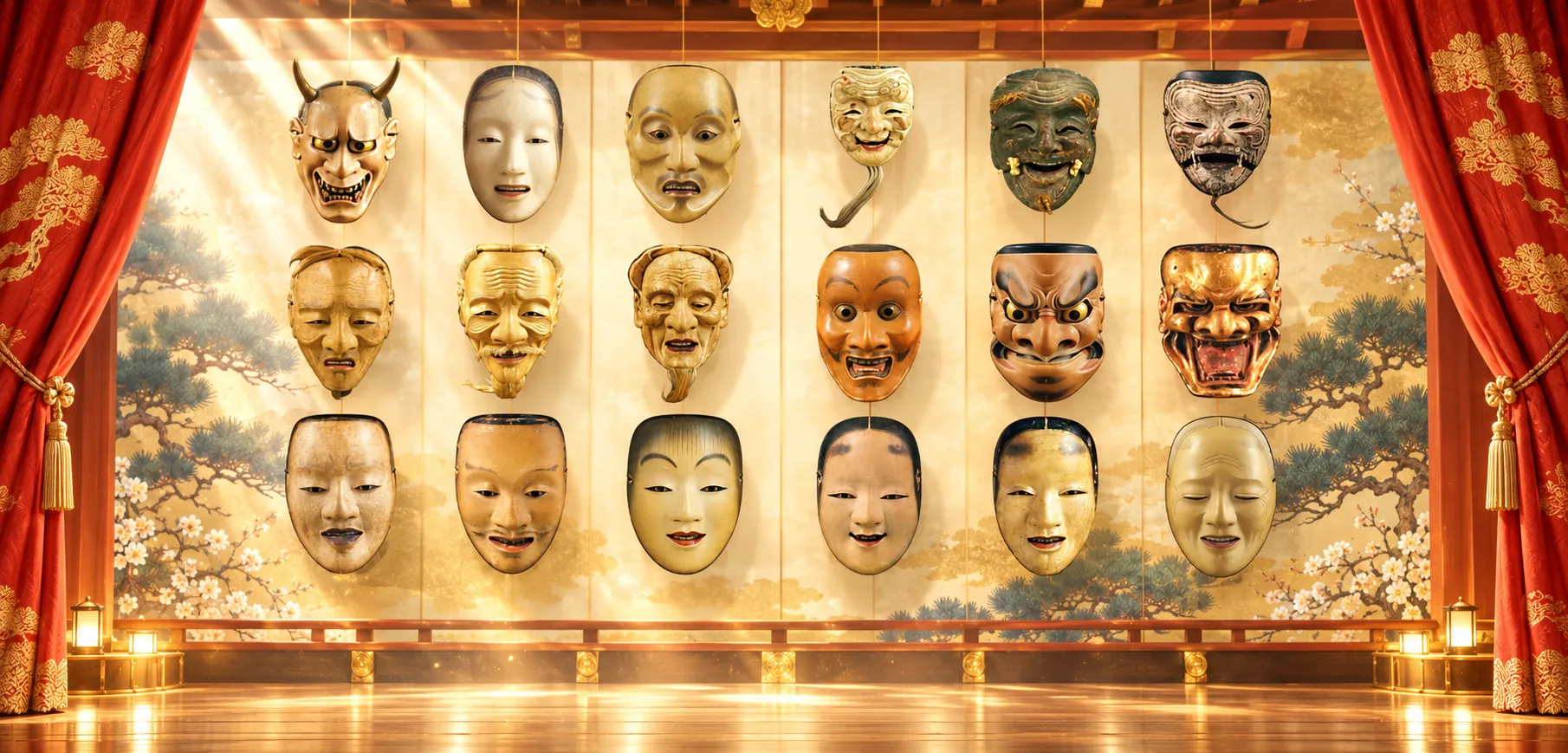
Japanese history gave conformity a particular gravity. In periods governed by rigid rank, household obligation, collective responsibility, and severe punishment, to stand apart could endanger not only oneself, but one’s family and neighbors. At times, disobedience could cost a person position, livelihood—even life.

That history created a visceral incentive to keep one’s head down and perform the role assigned by birth and circumstance.
In earlier times, this was often the safer road. Life appears simple when only one command remains: “Do what you are told.”
Times change.
That is the essence of flow.
Never has the gateway beyond strict conformity been more accessible—and yet it remains curious, even mysterious, because only a few brave souls are willing to cross its threshold.

Why?
Because consensus offers comfort.
It lends us certainty, acceptance, and a ready-made identity.
In Japan, as elsewhere, the constructed reality of the group can feel safer than the uncharted reality of the self—the inner frontier where one must listen for the voice of Seity.
Yet modern Japan is not condemned to repeat the order of the past.
It can look forward, drawing upon inherited forms while allowing individuals to construct new realities from within them. The voice of Seity does not demand that those forms be destroyed; it invites the individual to discover what they can become.

Thus, the future need not demand a choice between belonging and what it means to be free.
The spirit of kaizen offers one model: transformation not as reckless rupture, but as continuous improvement of both the self and the system.
Japanese visionaries can carry that principle beyond industrial reality and into culture itself, shaping a new way of being within the quantum field of this emerging Japanese meme.
This opens the infinite possibility of a Japanese synthesis—rugged individuality fused with the power of group unity—Civilization One and Civilization Two brought into resonance to give birth to Civilization Three.

What does it take to hear the beat of one’s own drummer and follow the sun toward a manifested destiny?
Within this storyboard, the answer lies in the mystery of Seity and the will of the tutelary deities.
That is why the story has the potential to resonate so deeply in Japan: it makes individuality not an escape from belonging, but a sacred responsibility within the Japanese reality field.
Japanese tradition has long imagined the lands of Yamato as 神国—shinkoku—a realm protected by the kami.
That idea was not transmitted unchanged “since eternity”; it developed through history.

Within the mythology of this storyboard, it becomes a living invitation: hear the drum carried through one’s family lineage, then walk with Seity as an individual branch of a greater ancestral tree.
Yet many people—not only in Japan—become estranged from family, ancestry, and their inner voice.
Unable to hear what rises from within, they surrender their direction to the edict of the day, the endless proclamations from above, or the judgment of the crowd.

In time, the herd becomes not merely their shelter, but their identity.
To march to the beat of a different drummer is to take what M. Scott Peck called the road less traveled.
Whenever the road divides, the choice between the easy way and the difficult path must be made anew.
The hard road is not valuable merely because it is hard; its value lies in the discipline, responsibility, truth, and growth it demands.
Once the drum is heard with clarity, one’s trajectory changes—and with it changes the world one is able to see through Kagami Crystal Clarity.

Kōzō Kagami heard such a rhythm.
In 1927, when modern crystal craftsmanship had not yet taken root in Japan, he travelled to Germany to study copper-wheel engraving.
He returned not to imitate Europe, but to translate what he had learned into a Japanese language of light.
In 1934, he established Japan’s first integrated factory specializing in crystal glass.
His difference was not rebellion for its own sake; it was mastery carried beyond imitation.
Those who hear a different drummer can be found everywhere: among artists and artisans, scientists and teachers, dissidents and founders, inventors and entrepreneurs.
Their disciplines differ, but each has listened for a rhythm not yet audible to the crowd. That unheard rhythm is the voice of Seity.

One peculiarity of marching to a different drummer is that others often respond with trepidation—even suspicion.
The nonconformist reveals that the constructed order is not inevitable, and that revelation can unsettle those who depend upon it.
This is the harsh reality faced by people who protect their authenticity while creating extraordinary things under the guidance of Seity.

Growing up in a small town in British Columbia, in Canada’s Great White North, I watched people march to their own rhythms.
Our neighborhood was a living mosaic—each person carrying an individual style, an individual story, and an individual contribution to the community we built together, once upon a time in the Great White North.
That lesson came from the widest range of characters: the principal of our junior high school, who lived in our neighborhood, and the hippie next door, who lived freely according to principles of their own.
They could not have looked more different, yet both belonged to the same community. From them I learned that social cohesion does not require sameness; it requires harmony.

When I arrived in Japan in 1987, however, strict school dress codes and the near-uniformity of black hair made conformity immediately visible to me.
It was a shock to discover that not every society resembled the one that had formed me.
Yet over time, I came to see that Japanese individuality was not absent. It often expressed itself within form, order, and process—through mastery, variation, detail, and the precisely chosen moment when the form could be surpassed and a new trajectory revealed.
The next step, then, is neither to abandon society nor to disappear inside it.
It is to participate as a valuable citizen while marching to the beat of one’s own drummer.
That beat is the inner voice, and we have discovered her name—Seity.
She works in concert with the tutelary deities. To recognize this deeper truth is to begin to set oneself free.

So do not be afraid to put down the phone and turn off the television.
You were never meant to hear this music through the noise, and you are not alone.

Those who march to the beat of a different drummer can become the movers, the shakers, and the Renaissance makers of this extraordinary epoch.
You, too, can reset your trajectory.
And if you still doubt it, look into your own heart and soul—and ask Seity directly.