
Whirlpools Of Consciousness
Just in case this fundamental point of human existence is not Kagami crystal clear, let it be stated once and for all—matter is not primary—mind is.
The ΩNE universal truth is this: a whirlpool of consciousness is a localized, self-organizing pattern arising within a universal field of consciousness.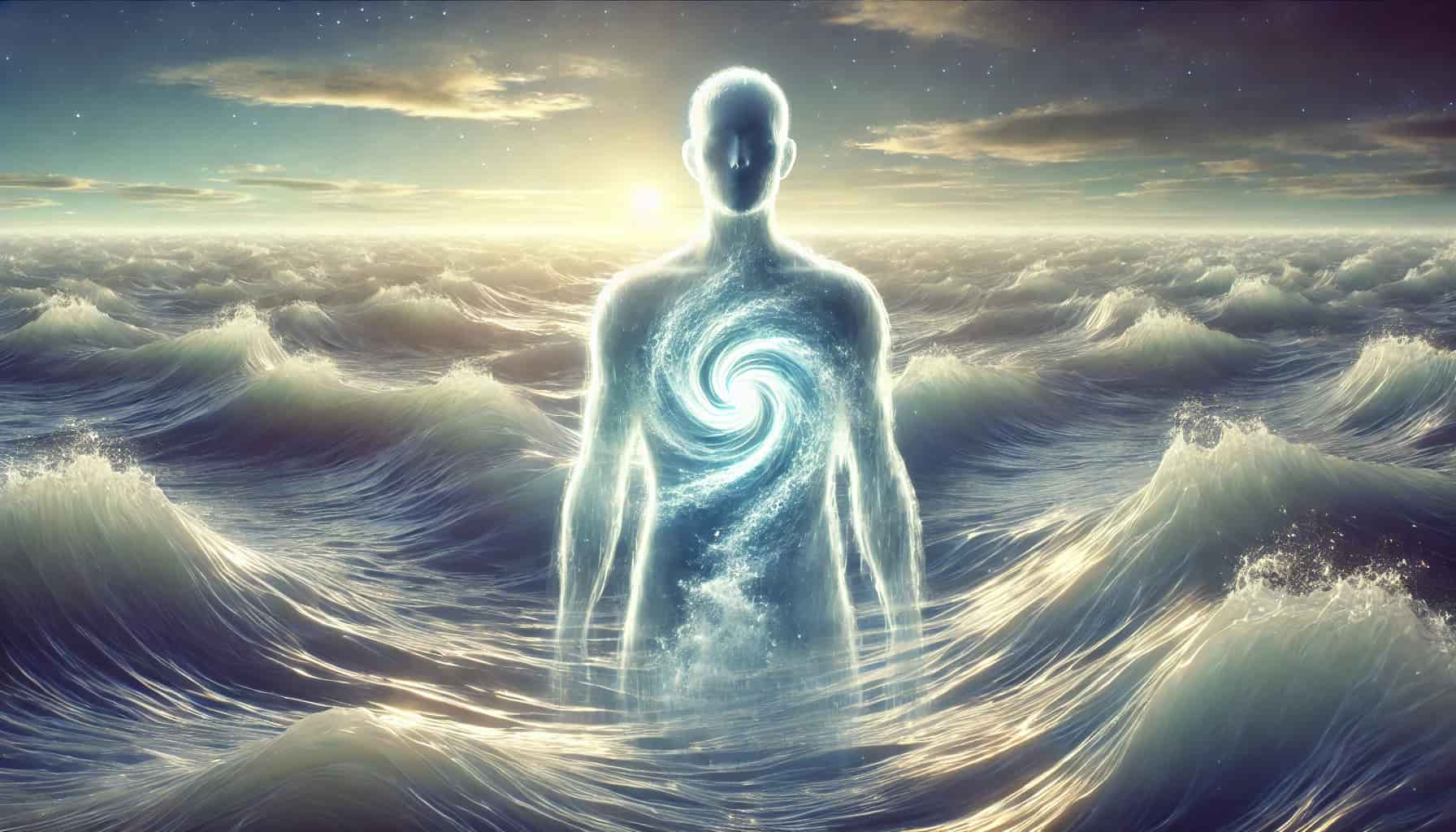 Visualization is the most effective way to internalize this otherwise abstract notion.
Imagine consciousness as an ocean, vast and continuous.
An individual human mind is a whirlpool within that ocean.
The whirlpool is not separate from the ocean.
It has temporary boundaries, internal structure, and persistence—yet upon expiration, what we call physical death, it dissolves back into the greater field of conscious unity.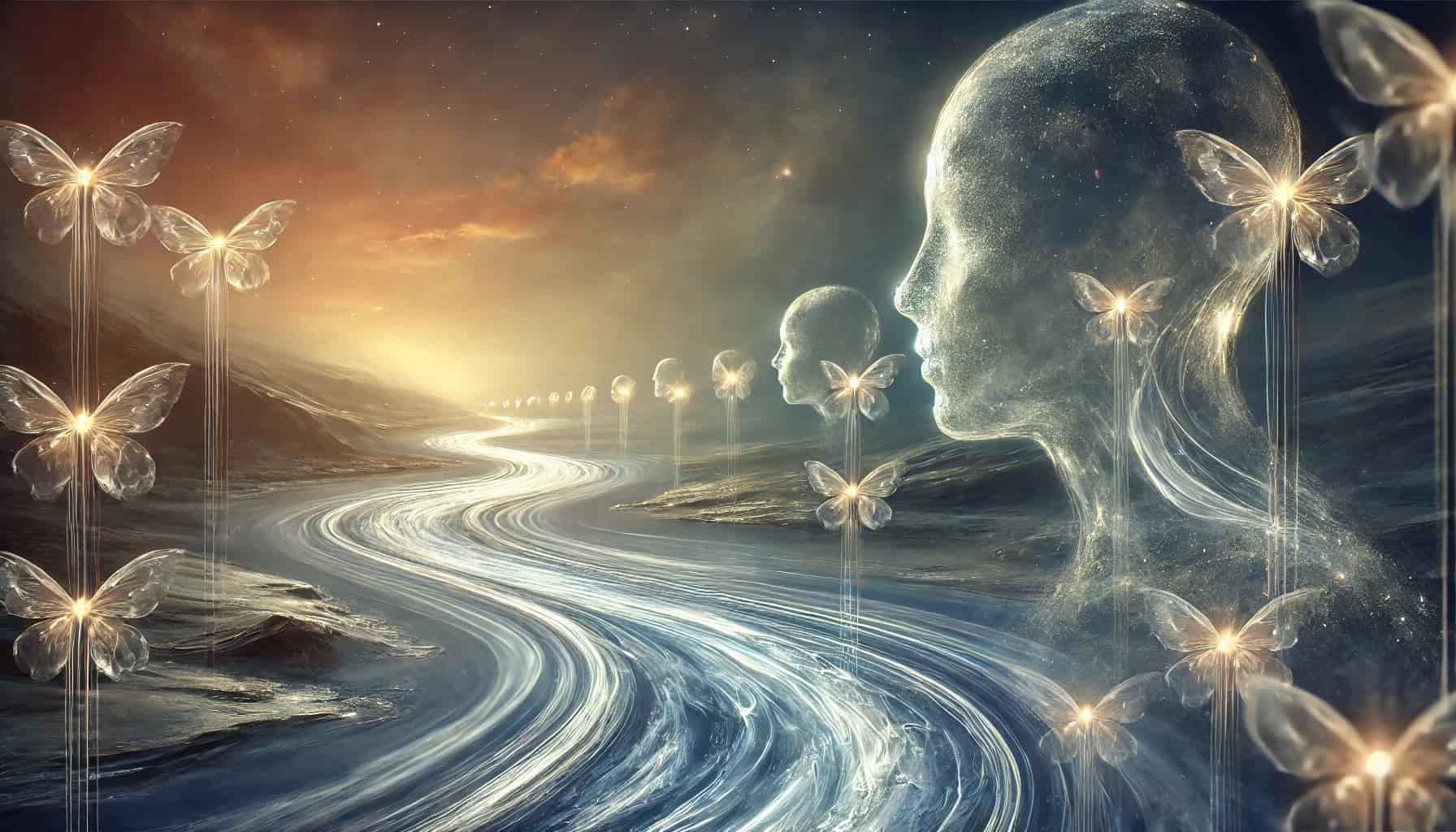 A whirlpool does not contain water.
It is water in motion.
In the same way, humans do not have consciousness.
They are consciousness in motion.
This is not merely metaphor, it is a literal ontological claim.
As articulated with exceptional clarity by Dr. Bernardo Kastrup, the fundamentals of mentated reality can be expressed simply. There is one consciousness.
Individual minds are dissociated segments of that consciousness.
Dissociation is not separation.
The brain does not produce consciousness—the brain filters, constrains, and localizes it. Dissociation is the key term for understanding whirlpools of consciousness.
It explains why you experience a sense of “self.”
Why you do not experience the entire universe at once.
Why subjectivity appears localized rather than infinite.
A whirlpool forms when flow conditions constrain movement.
Its boundaries emerge from dynamics, not substance.
Likewise, a psyche forms when universal consciousness self-limits.
Identity is a functional boundary — not a metaphysical wall. This insight aligns directly with phenomena such as psychological dissociation, dream states, psychedelic ego dissolution, near-death experiences, and deep meditation—all of which involve a loosening of the whirlpool’s boundary.
This is not mysticism, it is a reinterpretation of matter itself.
Within Analytical Idealism, matter is how mental processes appear when viewed from the outside. Physics describes the extrinsic appearance of consciousness.
Experience reveals its intrinsic nature—qualia.
A brain scan is not the mind itself—it is an image of mental activity—just as a whirlpool’s surface pattern shows flow, but is not the water itself.
What this means to be human is profound.
You are not a biological machine—you are a living pattern of meaning. Death is not annihilation—death is the dissolution of the whirlpool.
What ends are localized identity, memory structures, and ego boundaries.
What continues is consciousness itself — the field — BAN BUTSU.
This requires no belief in supernatural souls, dualistic afterlives, or religious dogma.
It is strict metaphysics grounded in logic and coherence.
Remarkably, Analytical Idealism resonates directly with BAN BUTSU. All things partake in being.
Whirlpools of consciousness explain how rocks, trees, animals, and humans are expressions of the same field.
Differences in complexity do not imply differences in reality.
Consciousness does not “turn on” at humans.
It organizes differently.
A tree is a slower, differently constrained whirlpool.
An animal is a more mobile, affect-rich whirlpool.
A human is a self-reflective whirlpool capable of recursion. This aligns seamlessly with ancient protocols embedded within Shinto animism, Japanese cosmology, KIZUNA JINJA doctrine, and Neo-Clan metaphysics.
Whirlpools imply motion, temporality, process, non-separateness, and event-based identity.
This framing avoids ego absolutism, reductionism, nihilism, and spiritual fantasy.
Human beings are not entities embedded in consciousness.
They are whirlpools of consciousness themselves—localized, self-organizing patterns arising within the vast field of BAN BUTSU, destined not to vanish, but to return to flow within ΩNE.