
Eat Dirt
One of the quirkiest things about early life in the material sludge was my neighborhood bad-boys feeding me dirt and worms―and thus the “Eat Dirt” story begins.
At the age of three, this somehow seemed perfectly normal for a free-range avatar living in the Great White North―and perhaps that is precisely why my personal gut microflora remains robust and replete.
Apparently, this led to a hardy immune system, for eating worms and dirt helped cultivate a vigorous microflora garden blooming into full swing.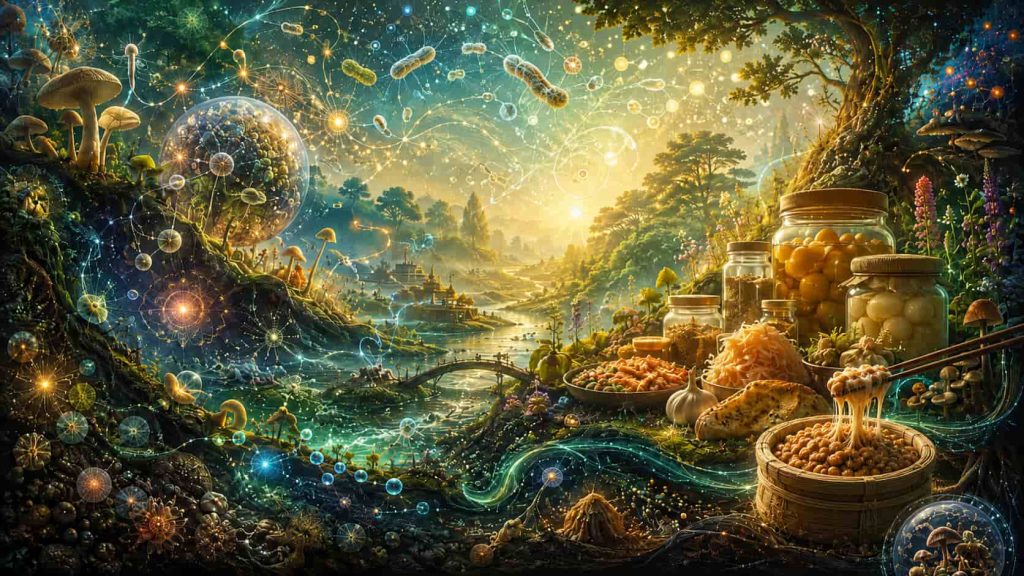 And if this story resonates, let us take a walk down Homeostasis Lane, for it is my pleasure to explain why this packet of information may change your entire earthy game―leading toward longevity, vitality, and a healthier existence regardless of your life stage.
The gut microbiome is your personally curated ecosystem of bacteria, fungi, viruses, and microorganisms living inside the intestines as a symbiotic team coexisting with you as a homeostatic human being―a noble microbial army operating within a living, breathing command center otherwise known as the second brain.
Always keep in mind that the human body is not a sterile Petri dish―it is a vibrant and critical ecosystem, and remaining aware of this reality is imperative.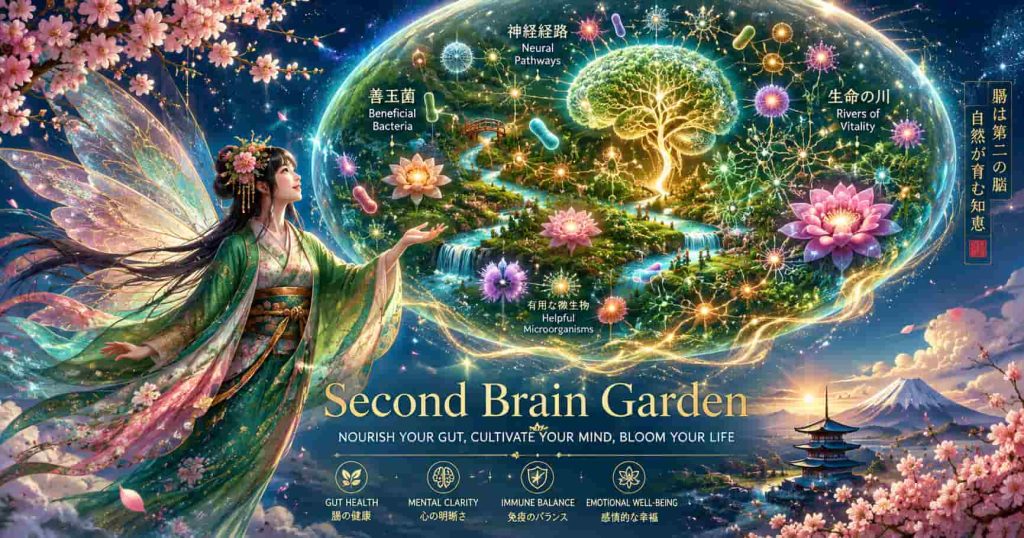 A healthy gut and its microflora allies operating within a balanced ecosystem are about far more than the mundane task of food digestion.
The reality goes much deeper than digestion alone, as the gut microbiome profoundly affects immune regulation, inflammation, mood, energy, metabolism, and perhaps most importantly cognition through what is known as the gut-brain axis―hence the nickname―the second brain.
The gut-brain axis functions as a bidirectional communication network involving the gut microbiota, enteric nervous system, immune system, endocrine pathways, and the all-important central nervous system―how about that for some essential enlightening information?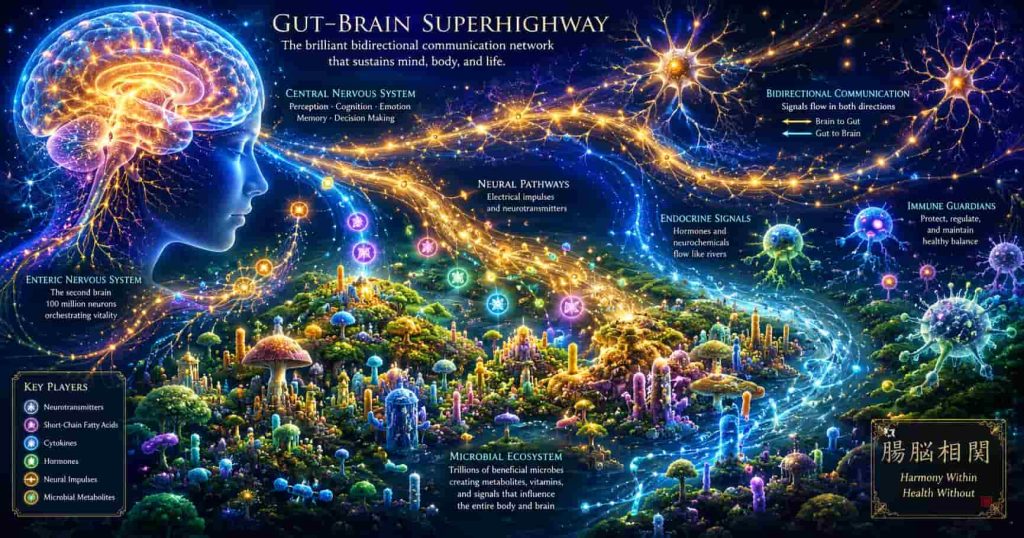 So stop treating the body like a sterile machine and begin treating it like a living garden that blooms anew each day.
The critical message is this―reverse the microbial poverty created by junk food, low fiber intake, excessive antibiotic use, minimal contact with nature, and the alarming absence of fermented foods―all of which slowly starve both body and soul while decimating the vital gut ecosystem―just so you know.
Humans were never meant to live as sealed laboratory specimens endlessly spraying sterile alcohol all over everything.
Mud, animals, gardens, forests, farms, fermented foods, and ordinary contact with the living world are all part of how the immune system becomes robust in this material world.
The Japanese have retained ancient culinary wisdom, reflected through an extraordinary array of fermented foods functioning as historical survival technology still woven naturally into modern Japanese dietary conditions―alongside the incredible flavors found within the Japanese food prism.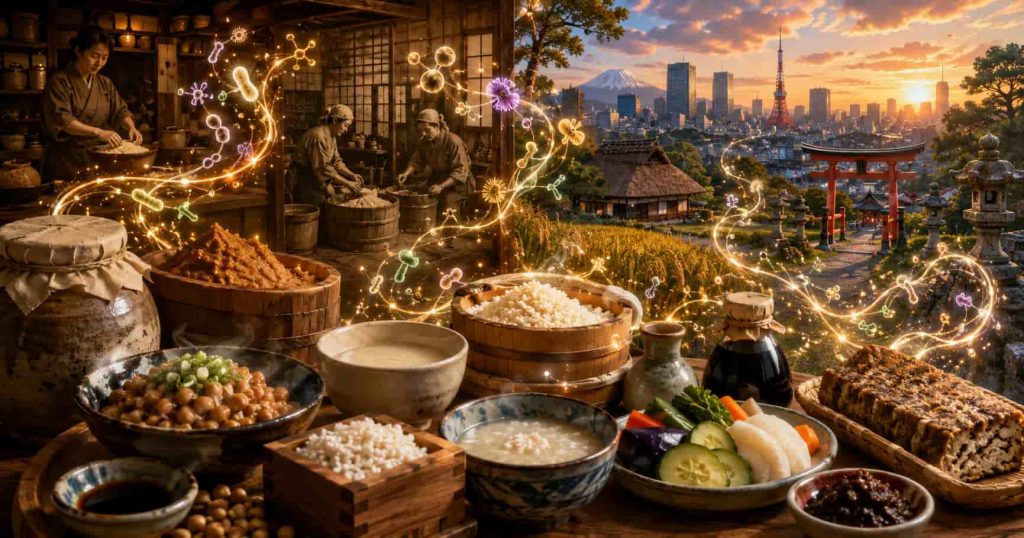 Miso, natto, nukazuke, koji, soy sauce, and amazake are not merely flavors―they are living microbial cultures embedded directly into culinary tradition itself.
To the Japanese these foods are entirely ordinary, though they may appear bizarre to those unfamiliar with the deeper nature of Japanese cuisine.
Here is one of Japan’s ancient fermented secrets―the fundamental soul food known as natto,, packed with astonishing nutritional value including the almighty nattokinase, a compound so extraordinary it almost feels miraculous.
Ready to try some?
There is, however, one small issue―the slimy texture and pungent aroma of this super-duper Japanese soul food may serve as the true beginning of your second-brain culinary adventure. Regardless, the nutritional profile of natto, cannot be denied.
Macronutrients (per 100g)
– Calories: 211 kcal
– Protein: 19.4 g (complete plant protein)
– Polyunsaturated Fat (beneficial omega-6)
– Carbohydrates: 12.7–13 g
– Dietary Fiber: 5.4 g (prebiotic fiber that supports gut health)
– Sugars: ~4.9 g (naturally occurring)
– Sodium: 7 mg (very low)
Natto, is low on the glycemic index (GI around 56) and highly digestible due to fermentation٩(๑❛ᴗ❛๑)۶
Key Vitamins
– Vitamin C
– Vitamin K
– Vitamin K2
This is one of the richest dietary sources of bioactive Vitamin K2 in the world―far higher than any other food ᕦ(ò_óˇ)ᕤ
Remember, vitamin K2 supports bone health, cardiovascular health, and calcium regulation.
Other B vitamins (riboflavin, B6, folate, etc.) are present in moderate amounts.
Key Minerals
– Calcium
– Iron
– Magnesium
– Manganese
– Copper
– Potassium
– Zinc
– Phosphorus
– Selenium
Other Notable Compounds
– Probiotics: Live Bacillus subtilis (natto,bacteria) – supports gut microbiome.
– Nattokinase: A unique enzyme with fibrinolytic (blood-clot breaking) properties.
– Isoflavones and antioxidants
If not yet having embraced this super food yet, always keep in mind that natto, is nutrient-dense, low in sodium, cholesterol-free, and a vegan source of high-quality protein and Vitamin K2.
In reality, eating worms and dirt to improve your gut microflora is not highly recommended―no indeed. However, making natto, part of the daily routine cannot be recommended enough.
The goal is robust health and long-term longevity, and embracing natto, is a surefire way to say “yes” to your own second brain while stepping onto the homeostatic longevity pathway―eat natto every day.