Blog / Civilization
The reanimation of two distinct constitutions has recently come to the forefront, causing significant stir and commotion—heralding societal evolution, the bifurcation of civilization, and the emergence of neo-clans with expanding global communities.
This profound realization resonated like a major chord, a direct revelation not to be taken lightly or conjured up on a whim—attaining serenity, rising above pettiness, and definitively ascertaining the meaning of life—ban butsu—infinite life in all things.
Originally the zoo was a place where a segment of the animal kingdom is put on display for the amusement of a different class of animal—mammalian humanoid—supreme rulers of all beasts—at least in this particular fleeting picosecond of infinity.
Embrace turmoil as the change it brings points the way to create personalised days—tumultuous water grinds away fear, honing the family’s legacy and way.
The Universal Truth in this story is like a sublime Aesop’s tale—it matters not the birth order dilemma nor on which side of the tracks or the place where born—you are not where you came from—you are who you are today.
The practical nature of the Japanese shows how to successfully structure societies that adapt and evolve, enriching the greater world encapsulating Japanese life philosophy—live and let live—what will be will be.
Even though Japanese are not considered by Others to be religious people—as a matter of fact, all Japanese are embedded inside specific social, cultural, and moral protocol—in essence, being Japanese.
If you are Japanese, or aspire to integrate Japanese societal protocol into your core being, but do not understand the fundamental protocol of tatemae, you will be labeled as KY—kūki yomenai.
Declaring the profoundest edict in the entire spectrum of infinity, Mr John Locke merely points out inalienable rights as sovereign individuals—irrefutable and irrevocable—never to be changed, nor once recognised unseen.
It’s imperative to hear this cautionary tale crystal clear—avoid like the plague or risk becoming the dregs—internalize the meaning of yobi sute—呼び捨て What exactly is yobi sute ΩNE might say?
The notion of friendship and what it entails is clearly differs from that of the Japanese and the reality of Japanese hierarchical class structure starts early in earnest at around six.
Once upon a time, in a distant land, the Japanese government owned the means of international communication—Kokusai Denshin Denwa (KDD)—the charge for 3 minutes to Canada circa 1988—¥1,200. Here is where the beauty of technology and relief on the pocketbook came into clear focus.
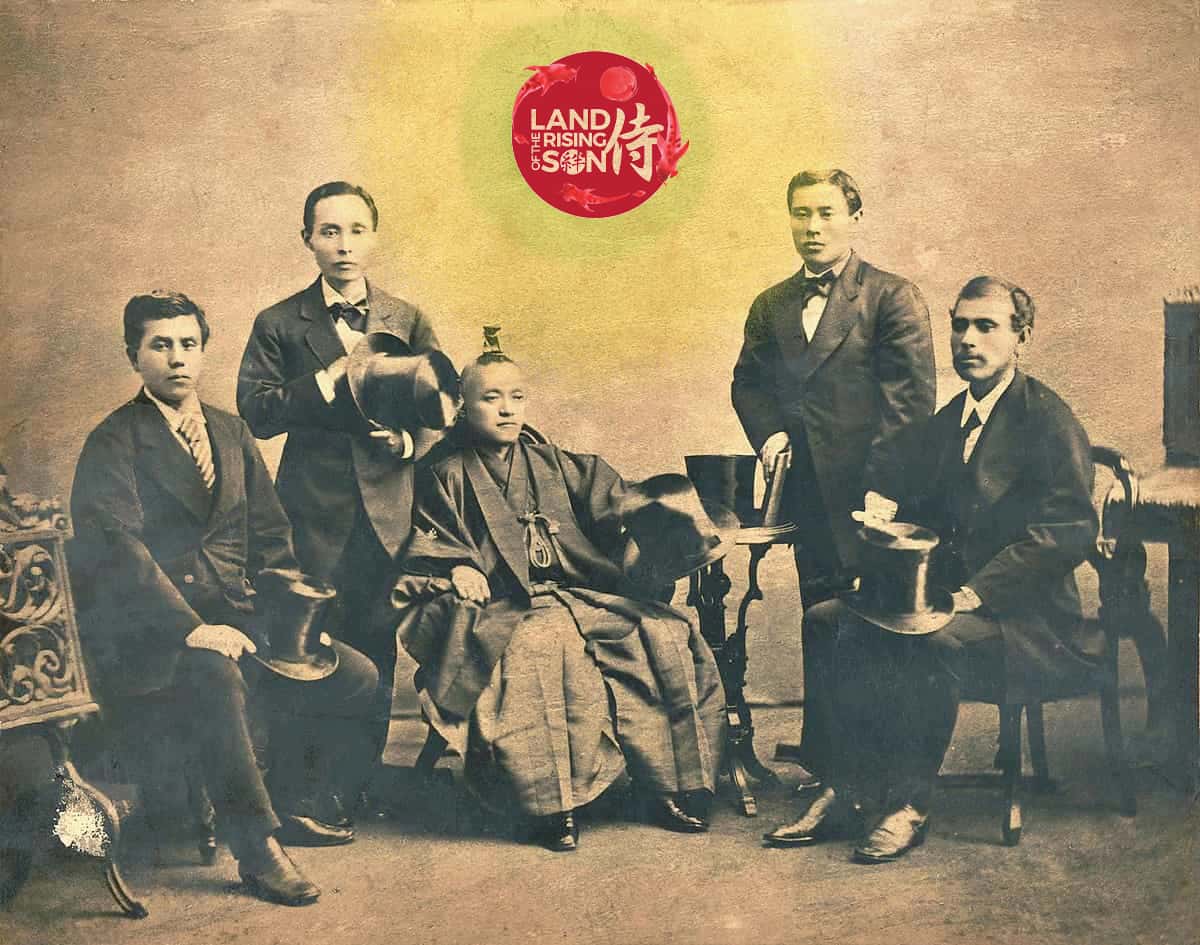
Born into the Satsuma clan twenty-one years before the 1868 Meiji Restoration ended the Tokugawa Shogun’s rule, very few Japanese could have ever foreseen such an abrupt end to over two centuries of peace, or the crucial role the Satsuma clan would play in the transition to Westernized Industrialization.
Regardless of the inevitable growing pains during the coming-of-age ceremony of the nation of Japan, it is now clearly understood—Japan has given birth to civilization 3.0—having never wavered from its foundational principals—Form Order Process.
Japanese have specific roles to play, when deadwood does not pull weight (productivity), lethargic slugs find their chair, has been moved in sideways motion, to arrive then reside beside the window—becoming a shamed member of the dreaded Window Tribe.
In Asian societies, the mental wellbeing of One’s clan members, particularly in domain of mental stability, is never responsibility of State.
It was here inside extreme adverse weather and impoverished attitudes of those living under frozen icy conditions, where the Noble Notion of color blindness was hardwired into One’s electrical circuitry via Maggie May, the matriarch of our Clan.
The frequency of Japan embodies the essence of what it means to be Japanese, imprints of ancient protocol, which are embodied in four-ideogram-compounds which is the key into the psyche of the Japanese and their deeply ingrained Notion of Motion
The highly worthwhile compounded effects, were somewhat akin to a miracle at the time, but when in fact, merely an accumulation of small intentional acts, culminating in a significant change, over immeasurable moments of time
In Old Japan, right and wrong were based on the universal concept of "might is right," and this established law-of-the-jungle still sets the rules and remains firmly in place today. This truth is clearly reflected in the language protocol of the Japanese—particularly the predominate communication conventions of honne and tatemae.
An unprecedented time to be alive, growing old offers a plethora of opportunity for the mature and wise to formulate, create, and build a strong and powerful clan with peaceful, thriving, knit communities.
Depending on the place of birth, and whether born with a silver spoon in the mouth or not, the material sludge is profoundly different and each situation as unique as a snowflake.
Perhaps the most famous of the master Japanese swordsman, the example set by Musashi Miyamoto was by no means rare during that particular era. Before the rapid industrialization of Japan from the 1870s, effectively all Japanese, in whatever art or craft, spent most of their lives in pursuit of perfection in their fields.
The Occxies only see innocence and naivety as characteristics that are appropriate only for the very young. In Japan, on the other hand, innocence and naivety had traditionally been regarded as highly admired traits in people of all ages, and something that was especially admired in adults.