Storyboard / Language
System creep runs deep, and each day presents another fork in the road—one path leading toward the pigeonhole, representing society’s expectations—the other leading into the nooks and crannies of the free-range avatar, into the unknown where true adventure begins.
The crux of this matter—and the meat of the story—is the evolution of communication protocols, indeed this young lady didn’t actually know the origins of the PDQ terminology, nor the origins of its meaning.
The urge to merge—Kind-Necessary-True—with Form-Order-Process—leaves not much left, but one small step—and without further ado—a gift from us to you—the evolution of creative communication solutions.
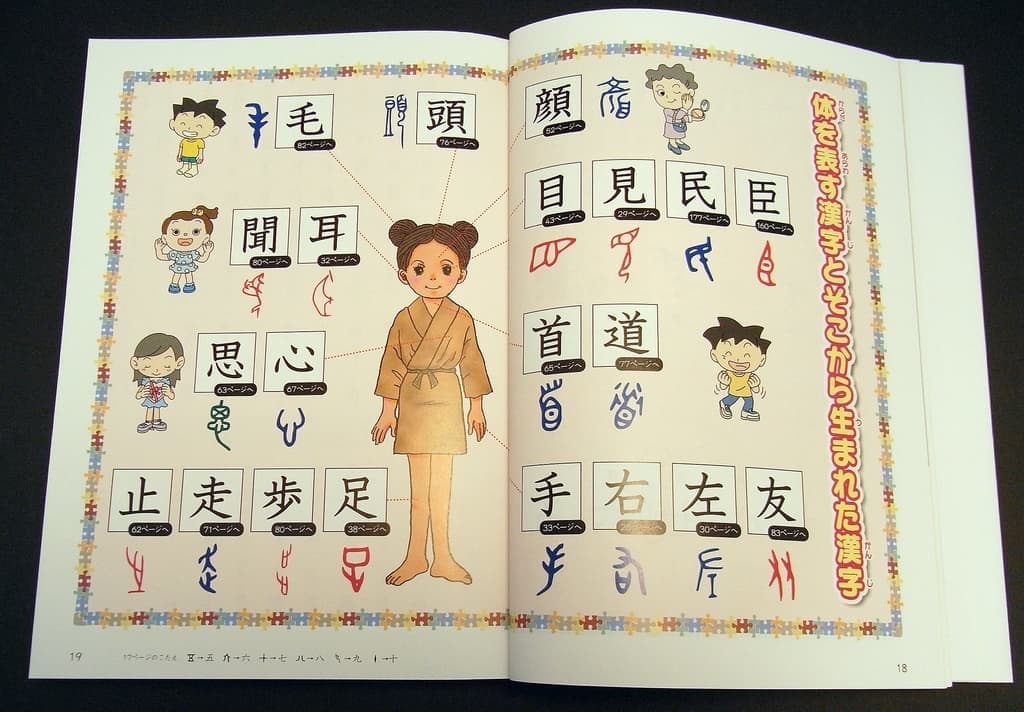
For those cultivated under the 26-letter alphabet soup used as the communication mechanism of English, the initial shock upon discovering Japanese students must go through 2,136 mandatory characters at the behest of the Ministry of Edification can not be denied.
Truly, most Japanese distain those who come here with the arrogance of attitude embodied within “open up Japan,” and the boisterous blob of the greedy American was no exception in failure to “open up Japan.” So what exactly does “Suck It Up Buttercup” mean?
minoru hodo kōbe wo tareru inaho kana The sake flowed and the party at the counter got underway in earnest, and during this party, each individual character was laid bare for all to see.
A delightful arrow in the linguistic quiver is to sprinkle one’s Japanese with onomatopoeia. These most flavourful sounds and phrases always add special sauce to the esoteric Japanese language.
When the first westerners showed up in Japan in the 1540s, the Japanese found it very difficult to be in close proximity to them, especially in enclosed areas, because the Westerners did not bathe or change their clothes regularly, and they gave off a strong stench.
The Japanese have long been notorious for their racial, ethnic and social discrimination. They have traditionally been incapable of accepting other races and ethnic groups into their inner circle and treating them the way they treat other Japanese; even the Japanese who look or act a little different are not accepted.
Most Westerners prize practical knowledge and hands-on experience above all other kinds of learning. They are also condition to approach work and other challenge is directly, aiming for the “the shortest distance between two points”.
The concept of byodo, or “equality“, among people is a western invention that apparently evolved from the Christian theological beliefs that all human beings are created equal in god’s eyes.
When Westerners first encounter the Japanese writing system, which is an application of the much more ancient and complex Chinese system, they look at it from several different perspectives. Still many others look upon Japanese with a degree of arrogant superiority for the Japanese to have adopted such a difficult way of writing, certainly in these peoples own mind they think the Japanese writing system is a clearly a handicap that is impossible to overcome.
One can say that to the Westerner eyes that Japan is the land of contradictions, everything good or positive about Japan always seems to have a flipside that is negative or unfavourable. Indeed you could say this about all societies, but here this contrast may appear to be much more pronounced.
There are two very important words in Japanese with deep meaning but no equivalent sentiment in the English concept of language. Itadakimasu and gochiso sama are very important parts of the dining etiquette in Japan. Itadakimasu is said just before eating, it literally means “to receive” or “accept ” but in this context more like a DNA infused Japanese Way in a ritualistic connotation, you could almost say it’s like a prayer.
With only a few exceptions, virtually every interaction with the Japanese of any kind begins with, and is based on, a personal obligation as opposed to what some would regards as higher principles. The Japanese have traditionally been known for their generous hospitality that they typically bestow upon visitors and on people with whom they want to develop a professional or business relations.
Fundamentally, the Japanese are weary of people who are good talkers, equating this habit and demonstrations of such ability with unprincipled, untrustworthy behaviour. While we can say there is also a similar attitude towards overly talkative people in the West as well, here in Japan, the negative response to people who talk way too much has a much more deeply rooted culture connotation, and far more important in the overall scheme of things even up until this very day.
Japan has traditionally been noted for the extraordinary exclusivity of its culture and this has been recognized as one of the more serious handicaps when the Japanese deal with the outside world. To make things even more complicated Japan's exclusivity complex is based upon group membership.
In Japanese as in other Asian cultures, the stomach has traditionally been considered the centre of one's being or life, and in that sense this area of the body is fundamentally the equivalent of the mind or heart in a western context.
If you are interested in Japan and the Way of Japanese and would like to really get some excellent insight into the minds of the Japanese, look no further that the incredible work of Master Boye Lafayette De Mente and Emeritus professor R. Taggart Murphy.
Being ignorant of kotodama, and the importance of reading the air, will always leave one at a distinct disadvantage when interacting with the Japanese, if unaware of this element of communication.
The deep influence of a writing system and language on a society can not be overstated. Language is a concept, and the Japanese society is built upon the constructs rooted in complex ideograms imported from China around 700 CE.
The core principal of Japan’s kata cultural from the earliest times has been the promotion and maintenance of harmony. Personal behaviour, as well as all relationships, both private and public, was based upon strictly controlled harmony in the proper inferior-superior context of Japanese society, which continues up until this day.
One could say the most used and significant word in Japanese is shikata. In particular, and most significantly, the form and order of the process.