Naivety

Naivety

Naivety

One was fortune the other day to meet with his friend and loverly wife to meet their 7 month-old-son, who happened to have a very content disposition.

Truly, isn’t there something extra special about the innocence of infants and the very young that brings out feelings of tenderness and protectiveness in the hearts of most people—even those who are not known for their sensitivity or thoughtfulness toward others.
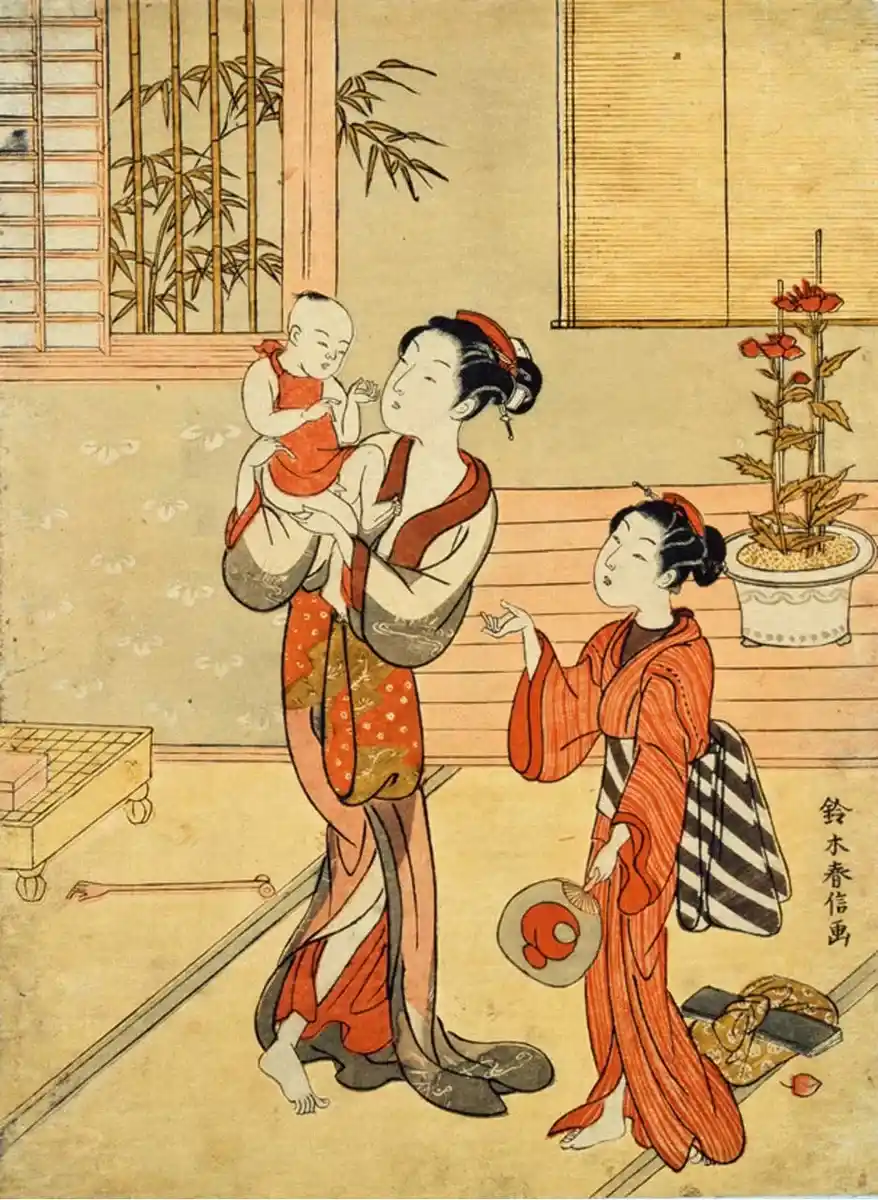
浮世絵母と子供 - Land Of The Rising Son

However, in the Occxie world, the innocence of young children is generally gone by the time they reach six or seven.

This is in large part to the “Monkey See Monkey Do” protocol which mimics the behaviour of surrounding adults who see innocence as an antithesis to maturity.

Monkey See Monkey Do - Land Of The Rising Son

The Occxies only see innocence and naivety as characteristics that are appropriate only for the very young.

In Japan, on the other hand, innocence and naivety had traditionally been regarded as highly admired traits in people of all ages, and something that was especially admired in adults.

Both innocence and naivety were regarded as reflections of purity of heart, unselfishness, and a kind, forgiving nature—somewhat like the disposition of the author of this article.

stepping-stones-over-tranquil-water - Land Of The Rising Son

Like all societies, there is a flip-side to the innocence protocol in Japan’s traditional culture.

It is preferable for young Japanese women to display innocence and naivety.

Even now in Japan, young women consciously and subconsciously assume an innocent, naive mode when they are interacting with men.

This protocol serves two distinct purposes—for protection and to take advantage of the weakness men have for demonstrations of innocence and vulnerability.

This deeply embedded protocol of “are not limited to Japanese females.” Japanese school girls in uniform - Land Of The Rising Son
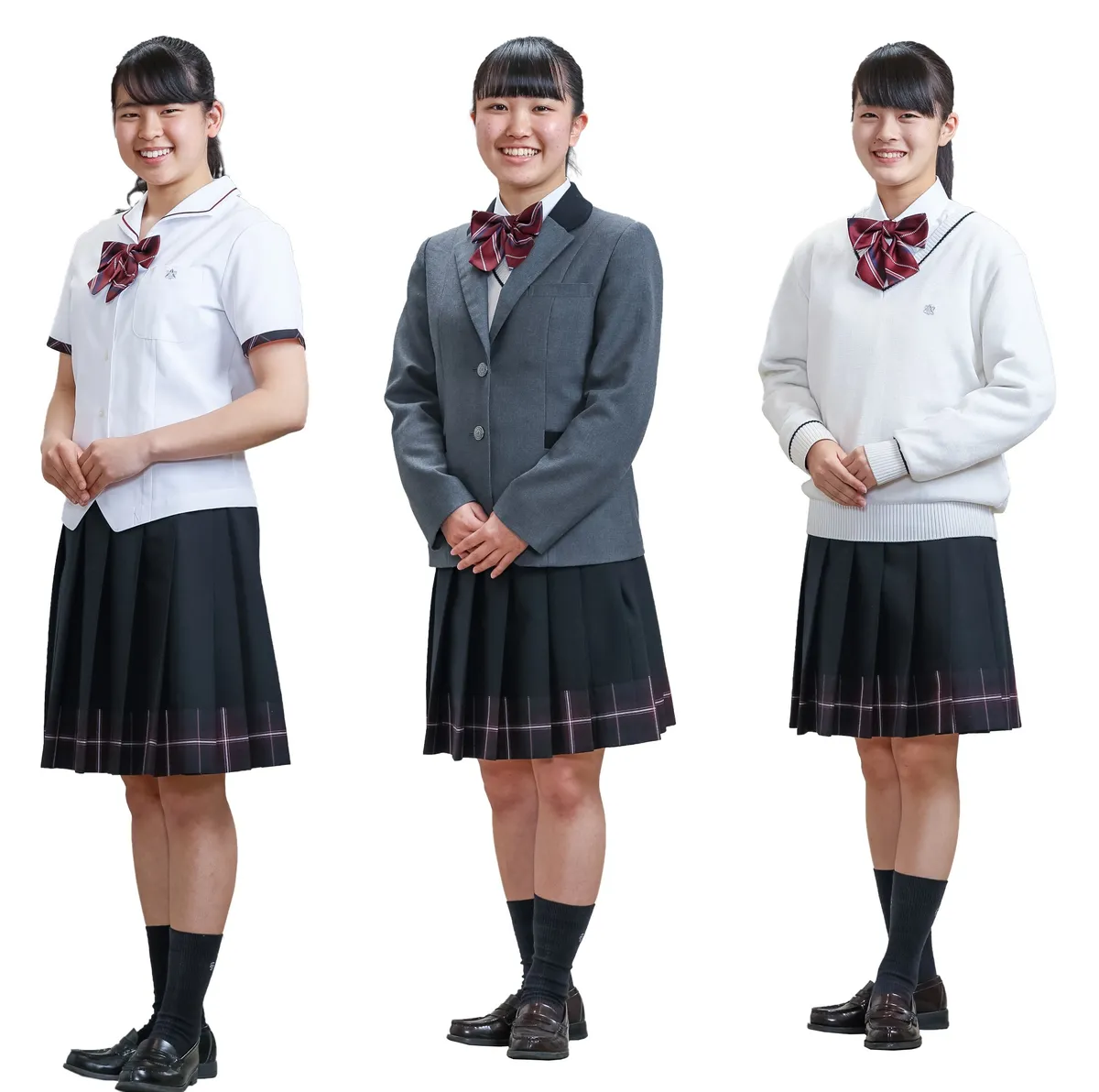
In reality, this type of role-playing is an innate behaviour of most Japanese.

It is a cornerstone of personality and mannerism, which are normally presented in the regular course of life in the society of Japan, and is also exhibited in particularly to non-Japanese.

In addition to traditionally having been taught that naivety is an admirable trait, the Japanese were also molded to detest the opposite kind of behaviour

In the Land Of The Rising Son, there is simply no place in Japanese society for know-it-alls, no matter how knowledgeable or talented they might actually be.

yelling-boss - Land Of The Rising Son

Distain of such individuals can be extreme, resulting in behind-the-scenes action to bring the person down, making an example of those who do not conform to Japanese social conventions.

Besides utilizing the naivety protocol, innocent behaviour is performed to smooth their way within Japanese society.

The Japanese are also aware that the naivety protocol works wonders on outsiders, particularly the Occxies.
Babies - Land Of The Rising Son

The Japanese understand when a typical Westerners meet an innocent and naive person, an automatic reflex sets in.

Here the subconscious assumes the person is childish, and let their guard down, put most of their critical faculties on hold, and tend to fall all over themselves trying to help the poor innocent.

The Japanese are already masters at role-playing due to their highly stylized and demanding etiquette.

role-play - Land Of The Rising Son

Any Japanese who are consciously aware of the naivety protocol are adept at using assumed innocence to put their Occxie counterparts at ease and to elicit extraordinary cooperation from them.

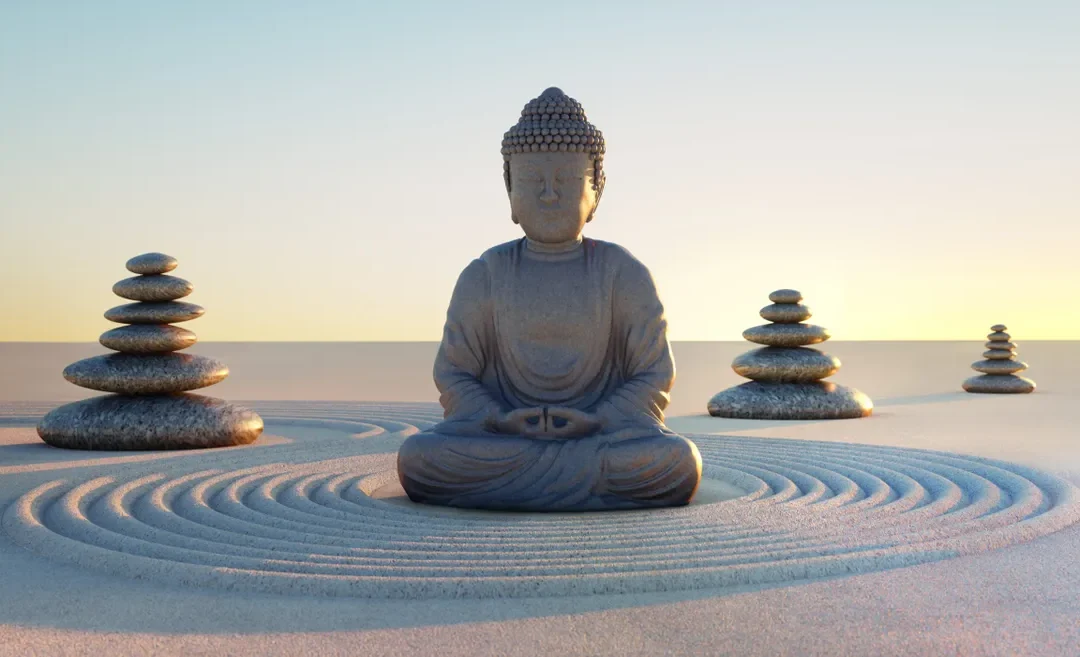
As older Japanese men become more successful, the more they are inclined to assume a soft, gentle, innocent stance that perhaps can best be described as Buddha-like.

Exactly how much of this Buddha-like character is make-believe and how much is real is beside the point.

Kamakura-daibutsu-giant-buddha-japan - Land Of The Rising Son

Their image of virtuous selflessness gives creates an aura of uiuishi that vastly increases their power because people look upon them as saint-like, incapable of evil, and, therefore, someone who can be trusted to say and do what is
best for everyone.

It’s good practice to not only understand the protocol of naivety, but to implement it into one’s own life, smoothing one’s own unique journey among the Japanese.

Land Of The Rising Son Logo

Three Success Doors

Three Success Doors

Three Success Doors

One of the most important lessons the Japanese learned from Zen Buddhism was the significance of spirit in all human endeavours.

Zen Buddhism was first introduced to Japan around 656 of the Asuka period, and brought into prominence by Eisai (1141-1215) followed by Dogen (1200-1253) who was the founder of the Soto sect.

Soto Zen Buddhism - Land Of The Rising Son

Although buried deep in their sub-conscience, the Japanese are imbued with an innate Zen-like calmness and practicality capacity.

This has to do with the deeply rooted evolution of Shintoism, which has shaped the Japanese for millennia along with the extraordinary development of Japanese culture over the centuries since establishment of Zen Buddhism.

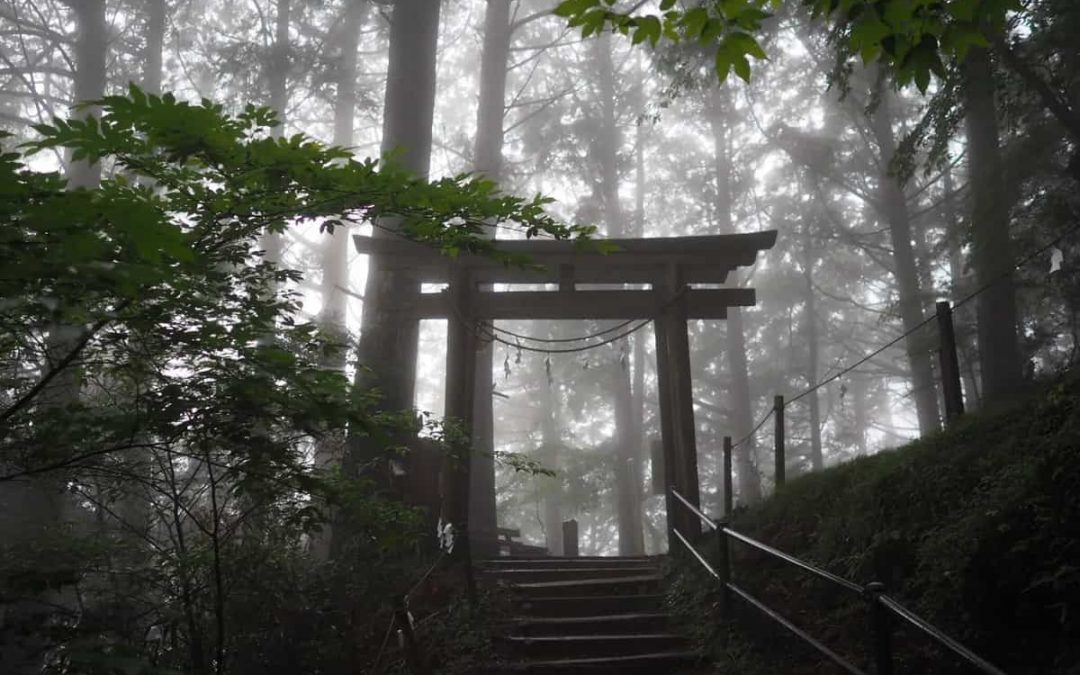
The Japanese are always surrounded by Buddhist temples and Shinto shrines dotting the landscape within the nooks and crannies of Japan, which has historically been referred to as:

Land of the Gods

Seven Lucky Gods of Japan - Land Of The Rising Son

Indeed, could it be the Japanese receive the gift of practicality and calmness via osmosis, which is embodied wonderfully in an old Japanese saying:

mon zen no kozō narawanu kyō wo yomu
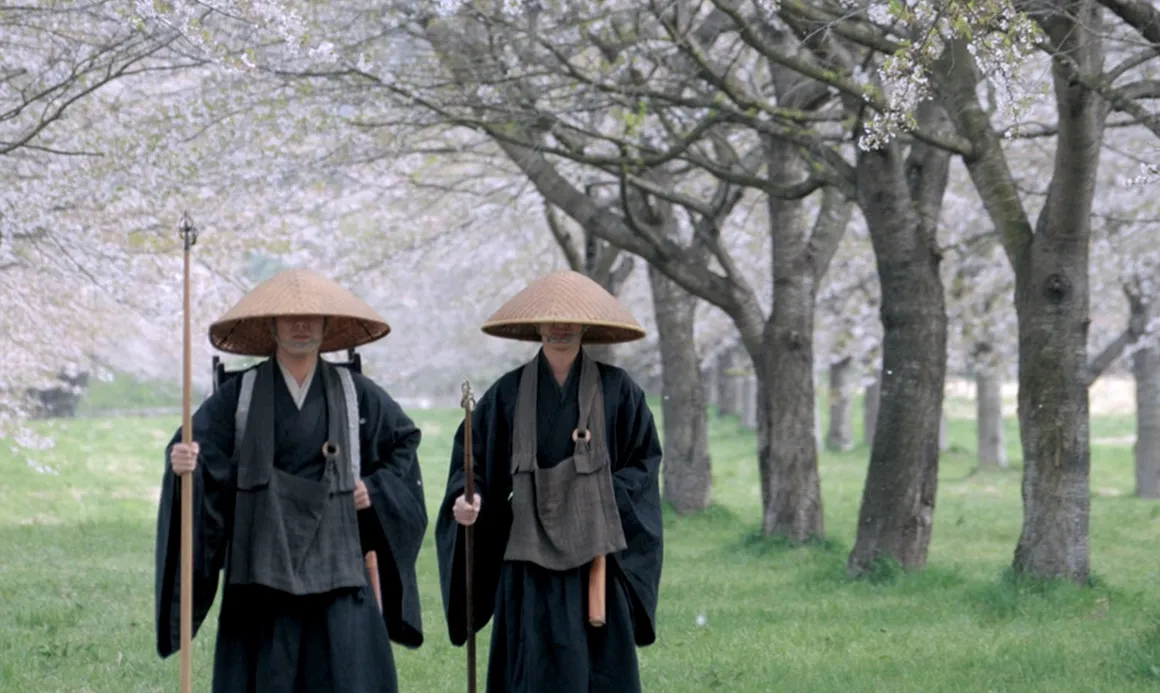
Young monks absorbing sutras sitting in front of the gate.

Japanese Buddhism - Land Of The Rising Son

The Japanese have realized there is a spiritual element in all worthy achievement—the greater the achievement, the greater the contribution of spirit.

During the 11th and 12th centuries the samurai warrior class arose, and these fierce warriors became great advocates of Zen Buddhism and the teachings held within.

Why is this so?

The fundamental philosophy of Zen Buddhism teaches an austere lifestyle combined with an almost obsessive dedication to training in life skills and in the arts.

Martial Arts - Land Of The Rising Son

Since the lives of the samurai depended on extraordinary skill in the martial arts, and eventually an equally extraordinary degree of skill in precise social etiquette, Zen became their spiritual guide and training manual.

As Japan’s ruling class from around 1185 to 1868, the Samurai closed their country, thereby developing a most extraordinary society and culture over centuries of peace as commanded by the Tokugawa clan.

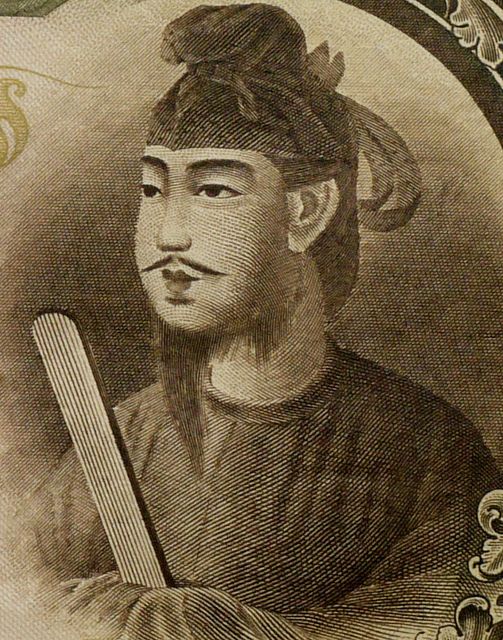
During sakoku 1.0, the samurai set the standards in every facet of Japanese life—language and literature—aesthetics, arts, and crafts—in the highly stylized protocol of everyday behaviour of the Japanese—and in the embedded morality of the 6th century Shotoku Taishi constitution.

Shotoku-Taishi - Land Of The Rising Son

The samurai also imbued Japanese culture with a strong martial nature conditioning the Japanese to do things in a precise, regimented order and to abhor weakness or failure of any kind.

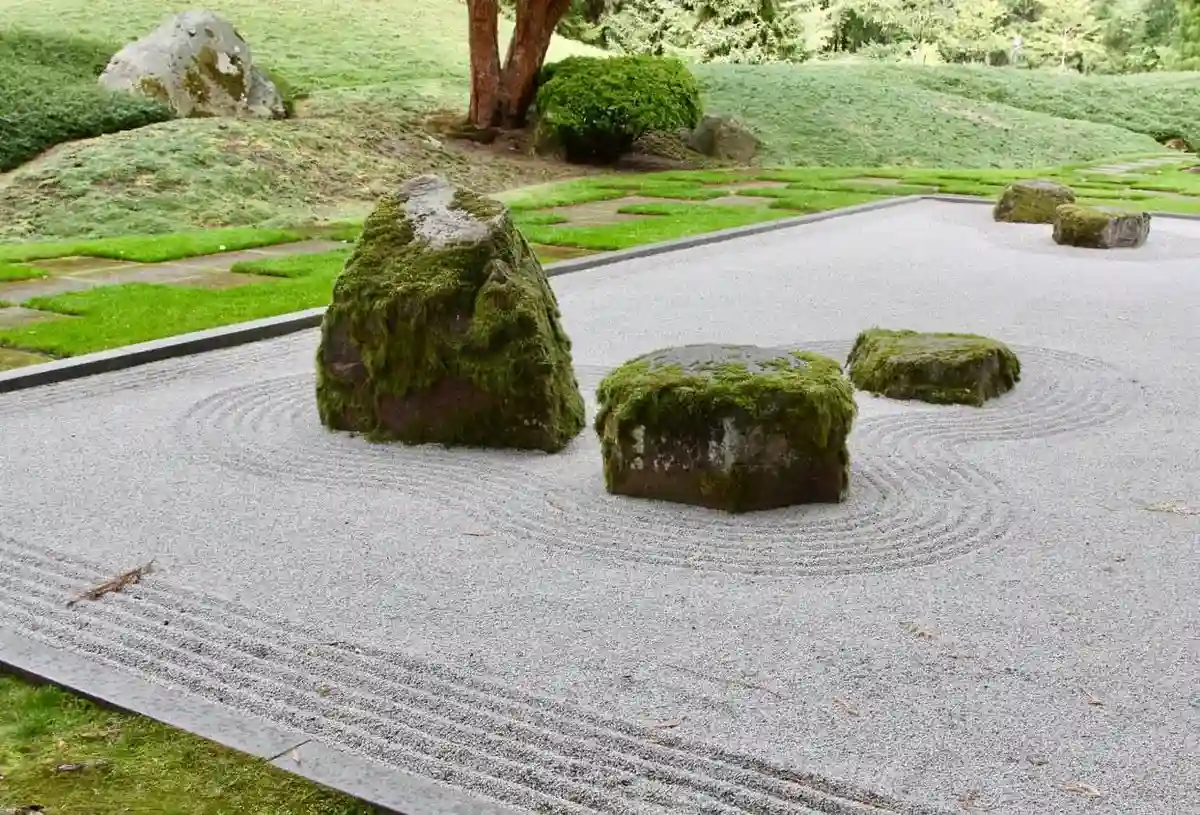
One may consider these truths to be embedded in the Japanese protocol of Form Order Process, which is the foundation of the Way of the Japanese.

Japanese Sand Garden - Land Of The Rising Son

There is no area of Japanese life that is not affected by the legacy of Zen, and one can see the Zen element in the character of every Japanese in all facets of Japanese life.

What is the secret to master ones own life and purpose?

Truly, the answer lies in the repetition of san ma no i—three exercises.

(1) Receiving the right teaching
(2) Dedicating oneself to the teaching
(3) Applying one’s own ingenuity to what is learned from the teachings.

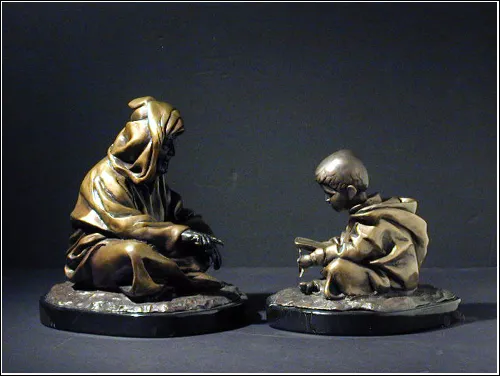
Master Disciple - Land Of The Rising Son

One of the key aspects of both absorbing and using the right teaching is emptying the mind of other matters, striving for complete detachment, and opening the mind fully in order to achieve a depth of perception completely and accurately, whatever the situation.

It is essential to develop keys of wisdom such as—ken “sight” and kan “insight.”

Nurturing the skills to understand ken and kan and applying it to all human behaviour allows one to perceive reality and read other’s intentions.

Telepathy - Land Of The Rising Son

This is a highly valuable skill in Japanese society where it is important to be able to “read the air.”

As all masters understand, once having reached a high level of skill in any art or craft, training and practice must continue in order to maintain the skill, a feature of the kaizen philosophy of the Japanese.

This philosophy holds that one never totally masters anything and one must therefore continually strive for improvement.

A well-known saying in Japanese expressing the belief in continuous improvement:

“Today I must be better than the me of yesterday.”

reach-for-stars - Land Of The Rising Son

Change Is Constant

Change Is Constant

Change Is Constant

The Japanese accept the notion that the world is in a constant state of flux, and under fluid circumstances the ultimate life philosophy is in the flexibility to flow with the wind.

Generally speaking, this timeless concept remains the bedrock of Japanese ethics and morality.

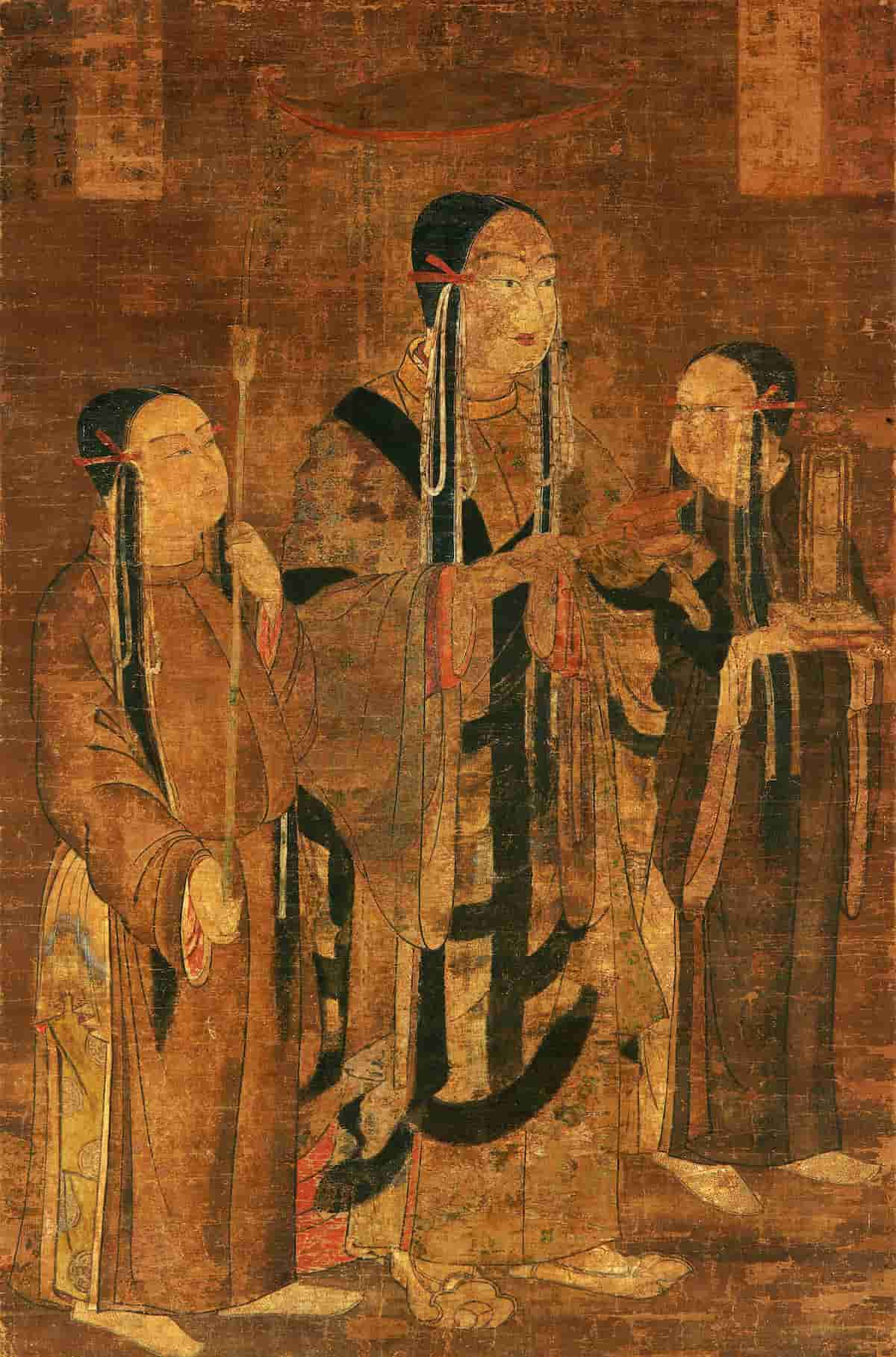
Prince Shotoku with Attendants - 13th century - Land Of The Rising Son

Occxies, on the other hand, have always tended to look upon the world as fixed in place and at relationships and human activities as unchanging.

This difference in Western and Japanese views is dramatically demonstrated in the penchant that Westerners have for intricate details, iron-clad agreements, and contracts.

legal-contract-document

The Occxies take the view the world would fall apart if contracts were not there to hold it together.

In fact, until contemporary times, detailed agreements or contracts were unbeknown to the Japanese.

The natural order of things is for people to form alliances according to both political and business purposes, while understanding—alliances, like the cosmos, are open-ended, and allow for day-to-day adjustments that could be initiated by either side.

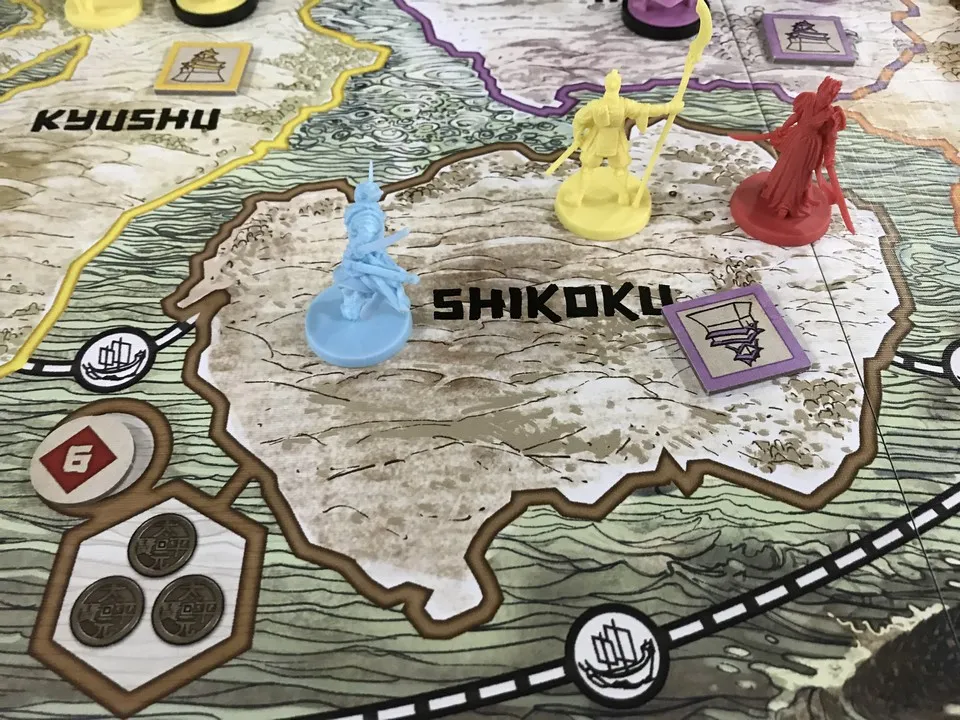
Rising Son Board Game - Land Of The Rising Son

Generally speaking, all agreements made among the Japanese were based on the principle of jijo henkochanging circumstances.

Clearly in a rapidly changing world and with daily circumstances in a constant state of flux, it is imperative the concerned parties to any agreement understand that the terms of a contract could never be absolute, nor should they be.

The absolutism of contractual obligation is now creating an all-the-more-likely, unprecedented clash of civilizations, and the stark contrast between East and West could not be more viscerally evident today.

World in Crisis Land Of The Rising SonWhen the Western practice of written contracts was introduced into Japan, the Japanese considered this as evidence Westerners were so unethical and immoral that they could not trust anyone to keep their word.

The Japanese also regard the idea of being forced to abide by a minutely detailed contract as irrational and rightfully so, as any sensible mind understands that there is no way any given situation can remain the same for either party over a period of time.Common Sense Is The Key To Enlightenment- Land Of The Rising Son
The concept of jijo henko remains imbedded in Japanese business protocol, and contracts are looked upon as general guidelines which are subjected to revision as circumstances warrant.

Indeed, much to the chagrin of the Occxies, Americans in particular, the Japanese still tend to regard contracts as being “flexible” and “adjustable.”

Flexible Woman - Land Of The Rising SonFor certain, the Japanese regularly “adjust” contracts and verbal agreements unilaterally, and occasionally remove them altogether, without any feeling of inappropriateness or unreasonableness whatsoever.
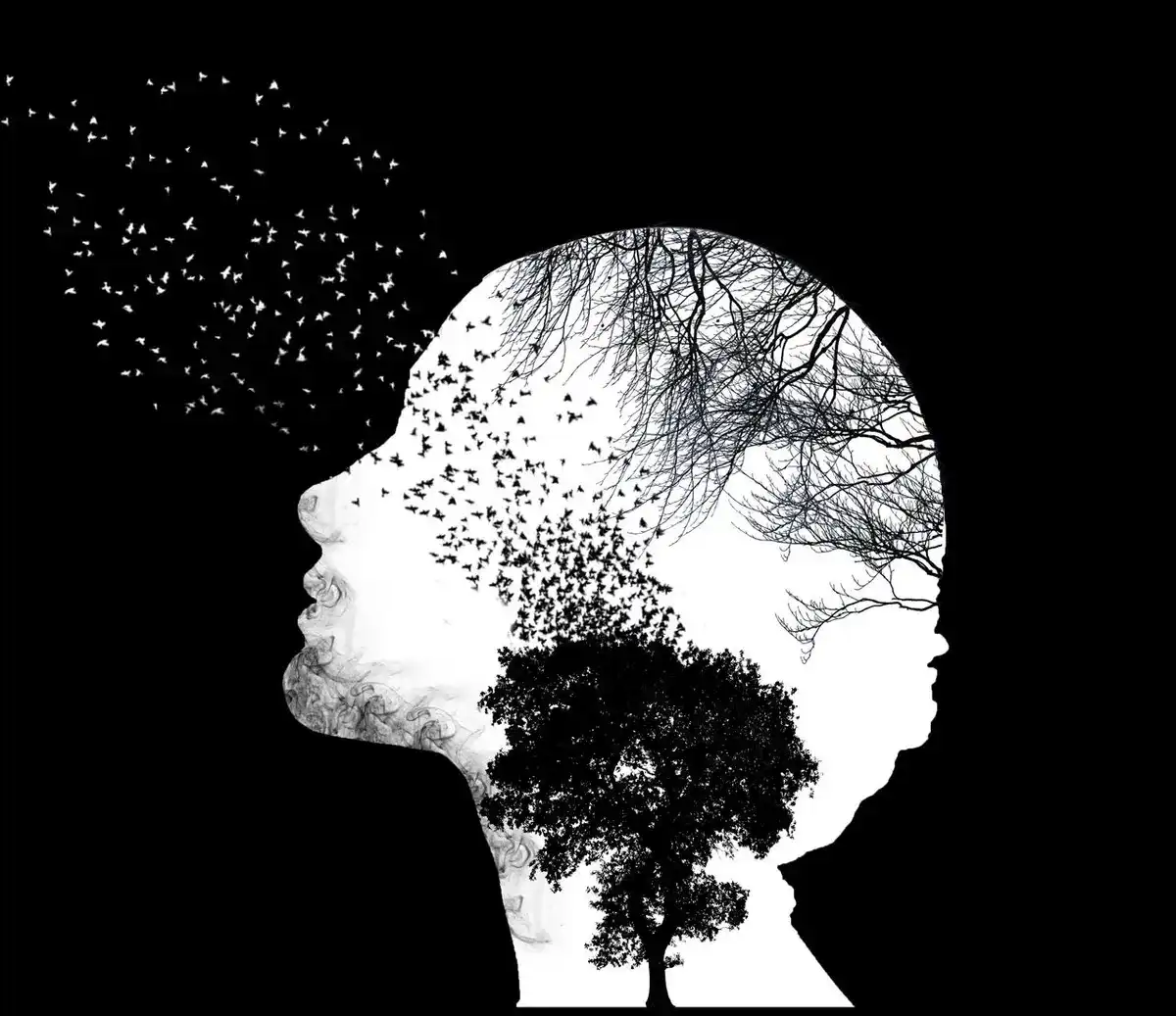
Truly, not adjusting the provisions of a contract when not doing so is detrimental to either parties interests is simply irrational.

Occxies yelling at each other - Land Of The Rising Son

The Japanese see no contradiction in their casual treatment of contracts and they view themselves as among the worlds most honest, sincere, trustworthy and honourable people, which for the most part is true.

Indeed in the eyes of the Japanese, arbitrarily reinterpreting a contact to suit themselves comes under the sphere of personal matters where human feelings take precedence.

abstract_emotions

When these circumstances occur, the other side is expected to understand and accept their actions even if it inconveniences them and costs them money.

It is understood in such situations the side breaking the contract will be obligated to the other side for a similar indulgence in the future—everything balance out in the end.

The concept of jijo henko remains the bedrock of relationships in Japan, and this flexibility solidifies the long-term outlook of mutually beneficial relationships—the long game.

Mah_Jong Set - Land Of The Rising Son

The Japanese, along with those who understand their Way are acutely aware of the ephemeral nature of life.Cherry blossom - Land Of The Rising Son
This can be observed in their reverence of cherry blossom fluttering away—representing the transitory nature of all life.

Truly, the fickle nature of the human condition and the whims of the universe can never be engraved in granite.

Regardless of the intention of either party when initiating a contractual obligation, just like the fleeting life of the cherry blossoms high in the trees, the situation is always fluid, changing, and for that one can be guaranteed.

guarantee-best-quality-stamp - Land Of The Rising Son

Akemashite Omedetō-Reiwa 5

Akemashite Omedetō-Reiwa 5

Akemashite Omedetō-Reiwa 5

The month of January holds a special place in one’s heart as this is the month one arrived to the Land Of The Rising Son on January 11, 1987.

One could have never imagined the places, people, and events to be experienced over the next decades when sitting under the kotatsu on a clear and icy January day, eating mikan and watching the New Year Grand Sumo tournament in the first days of one’s life-long adventure in Japan.

By virtue of living in Japan, the opportunity to meet people from diverse cultures and life experiences has deeply enriched one’s own life in ways too profound to be express in mere words.

The turning of a year as represened by the passing of 12 months, 52 weeks, and 365 days reflects a unique journey upon Mother Earth—the passage of one’s very own life and times—take time to ponder this.

Eddie Murphy - Think about it - Land Of The Rising Son

Even more so, the passage of time represent life events to be marked as significant milestones on one’s very own journey—joyful or sorrowful—or whatever was to have been inbetween.

As a friendly reminder to oneself as to the ephemeral nature of life and the silent passage of time, one marks the turning of each day in a somewhat macabre countdown to 100 years-old.

Each passing day is marked off where one can observe the fleeting nature of life in cold-hard numbers.

Even though there are 15,472 days left in one’s journey as of this day, and this may seem like a lot—but really, it is not…

What will the feeling be when the number is—lower—much lower?!?!?!

The year of Reiwa 5 will be filled with purpose and meaning—only if one chooses for it to be so~

Living a life with intent and purpose must be the sole objective each day on one’s own unique journey around the Sun.

Look at the dawn of each new day as the beginning of a new life.

Explore the nooks and crannies of a unique life experience, reach out to the others, and more and more deeply into one’s own spirit and mind.

Here, there is a Once In A Lifetime opportunity to share one’s personal meaning and purpose with the others.

Touch and inspire those who are lost and looking for purpose, meaning, and the motivation to create initiative in their own lives, while associating with those who encourages and uplifts the others.

One thing is for certain:

Reaching into, and exploring the nooks and crannies of the human experience leads to a much more worthwhile life experience.

When the countdown is finally reaches 0, one can go forth to the great beyond—become a god in one’s own right as the earth continues to spin around and around until the end of time.

May the year of Reiwa 5 be a year full of inspiration, meaning, and purpose, and the continuing health and prosperity of the clan.

兎年

Spiritual Home

Spiritual Home

Spiritual Home

Spiritual Home

The fascinating journey of the Japanese nation reaches back several thousand years, and due to the geographical nature of the archipelago of Japan, have imbued the Japanese with a sense of their uniqueness and cultural eminence.

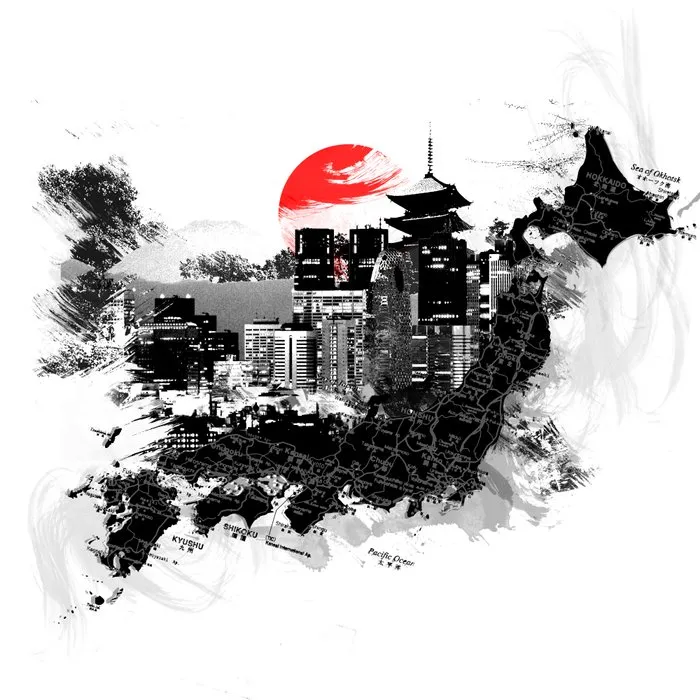
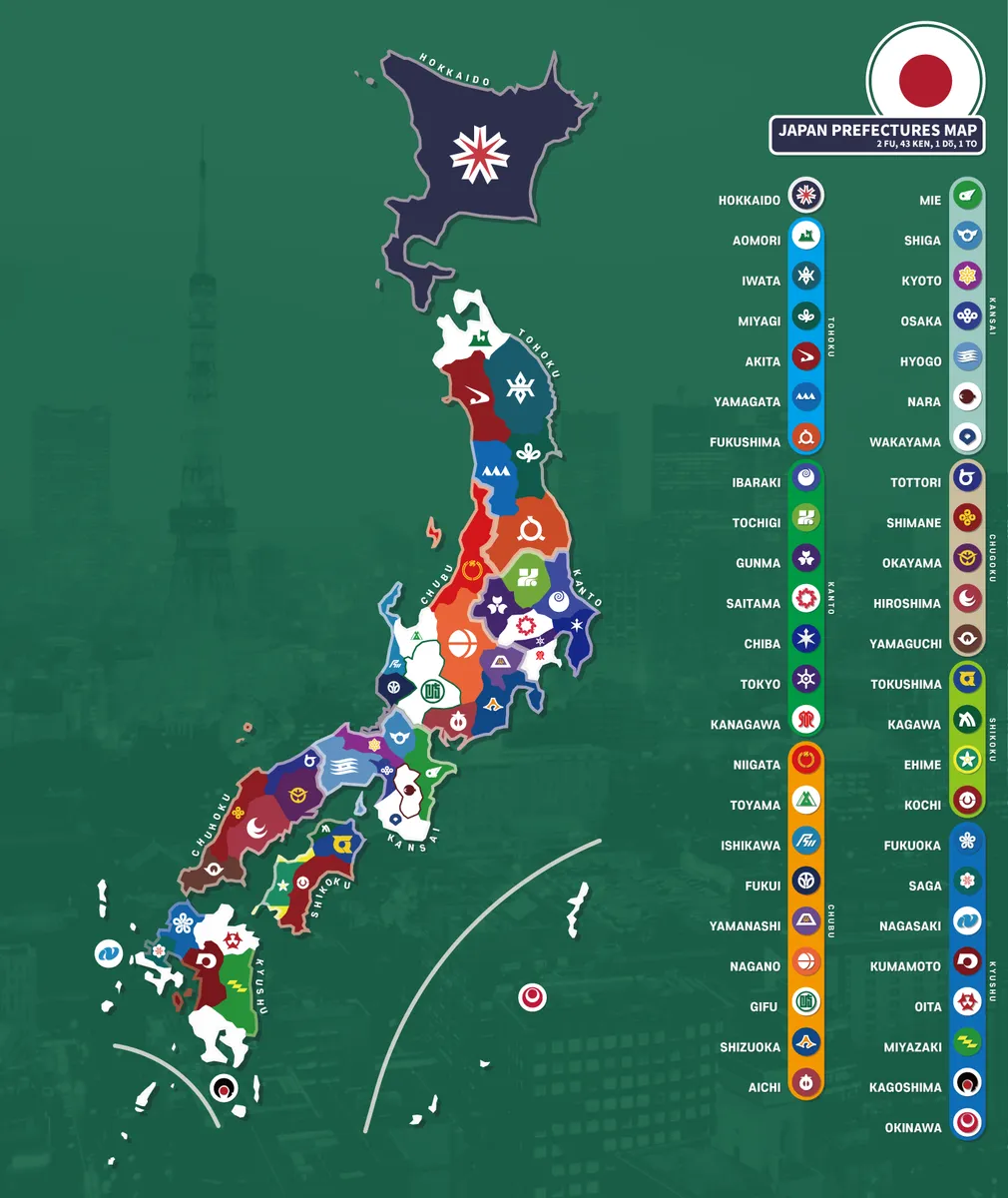
Japan map with prefectures - Land Of The Rising Son

However, in essence, the Japanese suffer from the lack of a spiritual center, which causes them to feel out of place and alone in the world.

The Japanese are still a very much tribal and territorial people, this fundamental and deep attachment to their home—furusato— “birthplace” “home village” “hometown” or “place of origin.” is deep and profound.

Still, the Japanese have a longing for a spiritual home.

Ise Jingu at Sunrise - Land Of The Rising Son

Why is this so?

Virtually all of Japan’s early culture was imported from China, first via the Korean peninsula and then directly from the Middle Kingdom itself.

Despite long periods of virtual isolation from China, the Japanese are still in the process of purging themselves of innermost feelings that they were little more than imitation the Chinese, which they clearly are not.

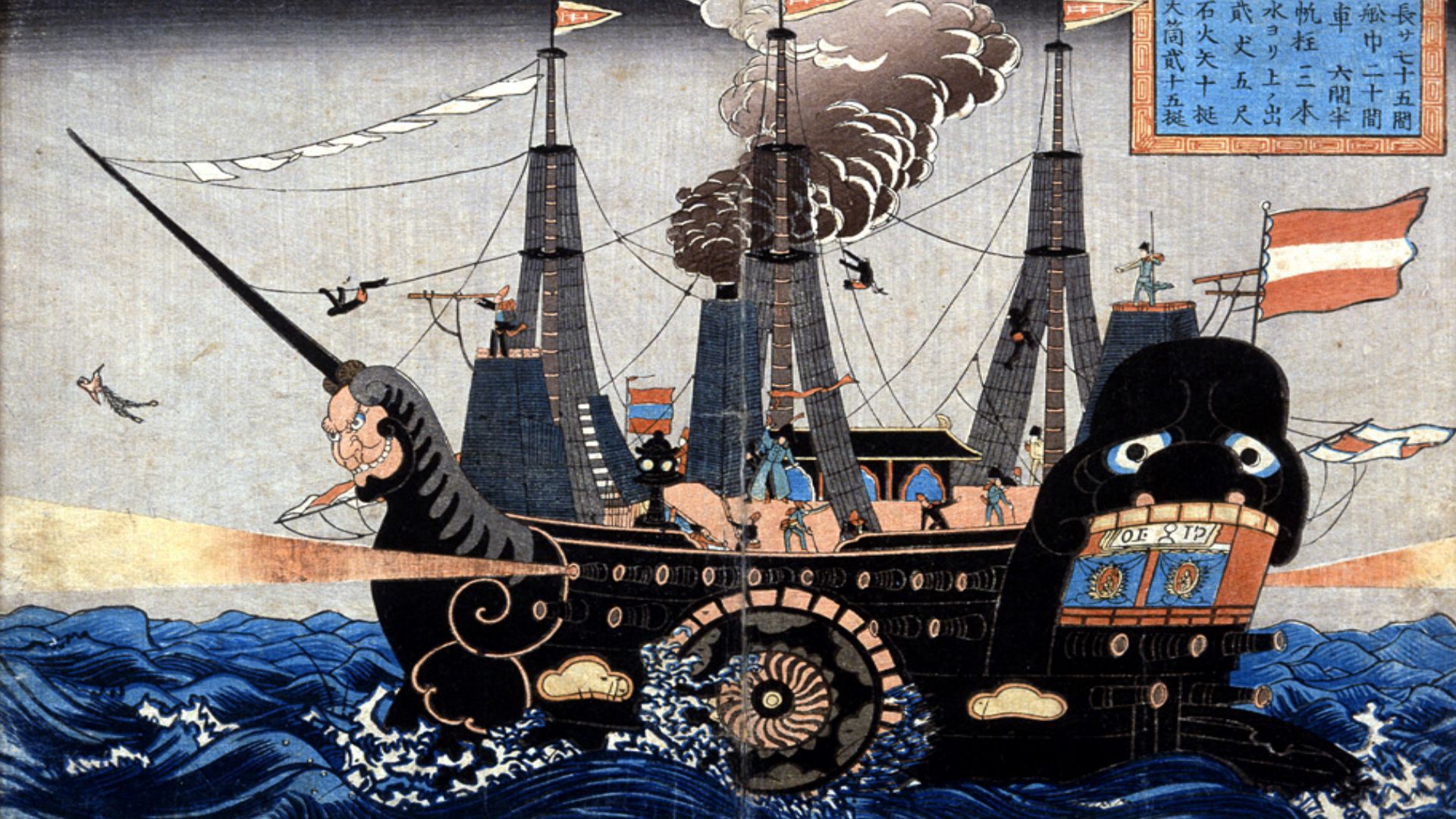
What truly makes Japan unique among nations is that since the middle of the 19th century, the primary influence on Japan has been America and Europe.

Perry's Black Ship - Land Of The Rising Son

This has once again imposed a burden on the Japanese psyche by overlaying alien concepts and customs which often conflict with the traditional protocols of the Japanese, which still contributes to cultural friction within the Japanese society itself.

It seems the Japanese are still searching for their true spiritual furusato, and many Japanese still say China is their spiritual homeland.

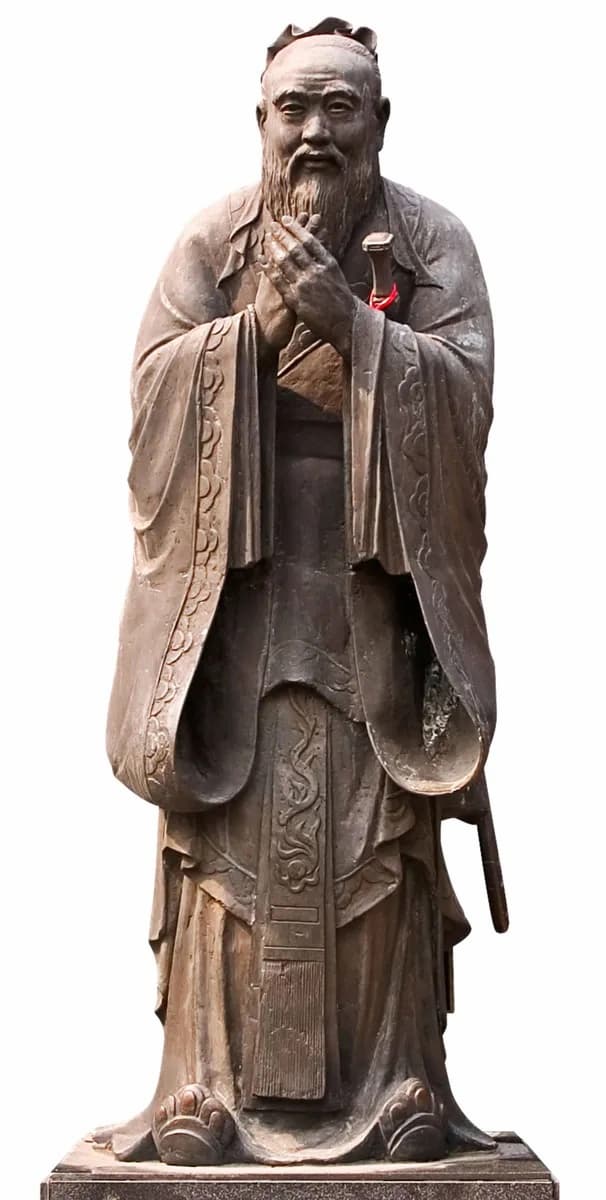
This is true only in the sense that the Japanese innately understood the philosophy of Confucianism, and this moral and humanistic protocol serves as the foundation of the moral and spiritual character of the Japanese.

Confucius - Land Of The Rising Son

Indeed, Confucianism and its concepts and thought processes embodied within have no counterpart in the Western psyche, nor is it possible for mono-lingual Anglophone Occxies to comprehend these timeless humanistic principles embodied by the life of Confucius.

Confucianism embodies a worldview, a social ethic, a political ideology, a scholarly tradition, and a way of life and is sometimes viewed as a philosophy and sometimes as a religion—in fact it is both.

It is an all encompassing way of thinking and living that entails ancestor reverence and a profound human-centred religiousness, which in the case of the Japanese is structured around Form Order Process.

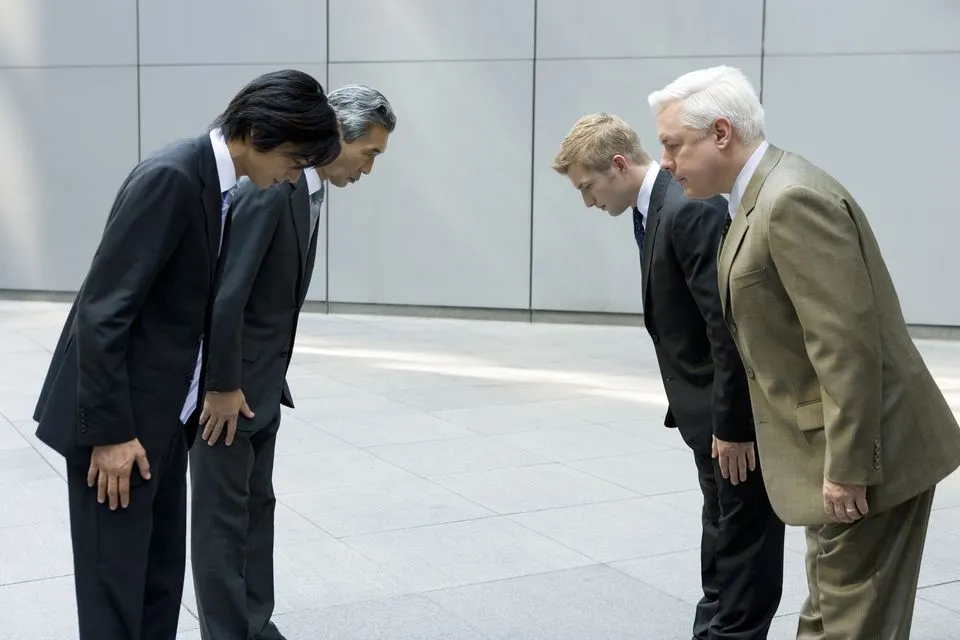
Bowing in Japan society protocol Form Order Process - Land Of The Rising Son

Could this protocol of Form Order Process be rooted in the Japanese love of the antiquity of Japanese culture and rituals which is still clearly evident in the highly stylized society of Japan today.

The journey of Confucius was a search for roots, which he recognized as grounded in humanity’s deepest needs for belonging and communicating, thus giving one’s ephemeral life purpose and meaning.

Confucius considered himself a transmitter who consciously tried to reanimate the old in order to attain the new.

old-and-new - Land Of The Rising Son

This is something that is undeniably rooted in the society, culture, and Japanese psyche.

This is evident in the original Japanese notion of kaizen which is exactly what Confucius discovered on his profound journey—reanimate the old in order to attain the new—this is what the Japanese do intrinsically.

One could actually say the Japanese took spiritual concepts originating in China while molded these fundamental humanistic principles into a unique blend of East and West culture and concepts, creating the third pillar of civilization—Japan.

Welcome to the Land Of The Rising Son

Clarity Over Time - cybersensei - Land Of The Rising Son

Mind Over Matter

Mind Over Matter

Mind Over Matter

Mind Over Matter

After arriving in Japan decades ago on January 11, 1987, one had the opportunity to visit an elementary school as a guest—in the middle of frigid January.

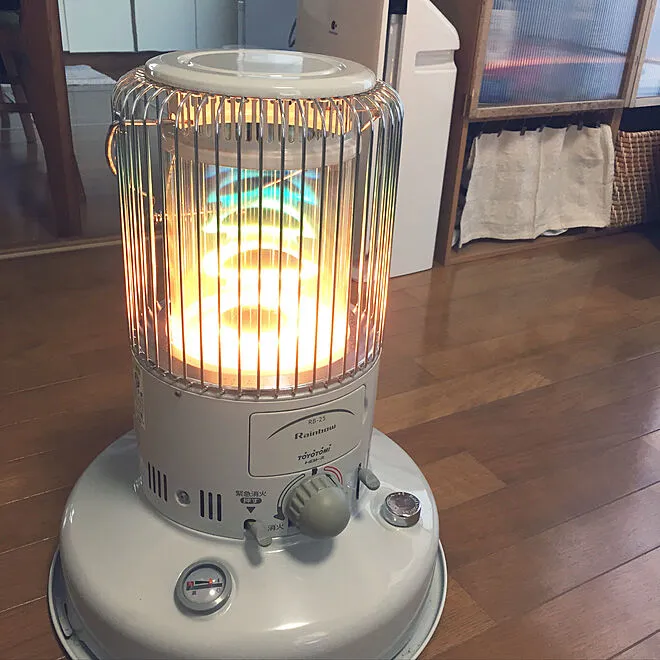
Much to one’s surprise, the heating system consisted of a worn out kerosene heater, which had seen better days struggling in the back of the classroom.

Stove - Land Of The Rising Son

In icy January and February, it was as cold inside the building as it was outside.

Unfazed by the icy cold, the pupils carried on about their day in a most routine manner—some of the boys in short pants.

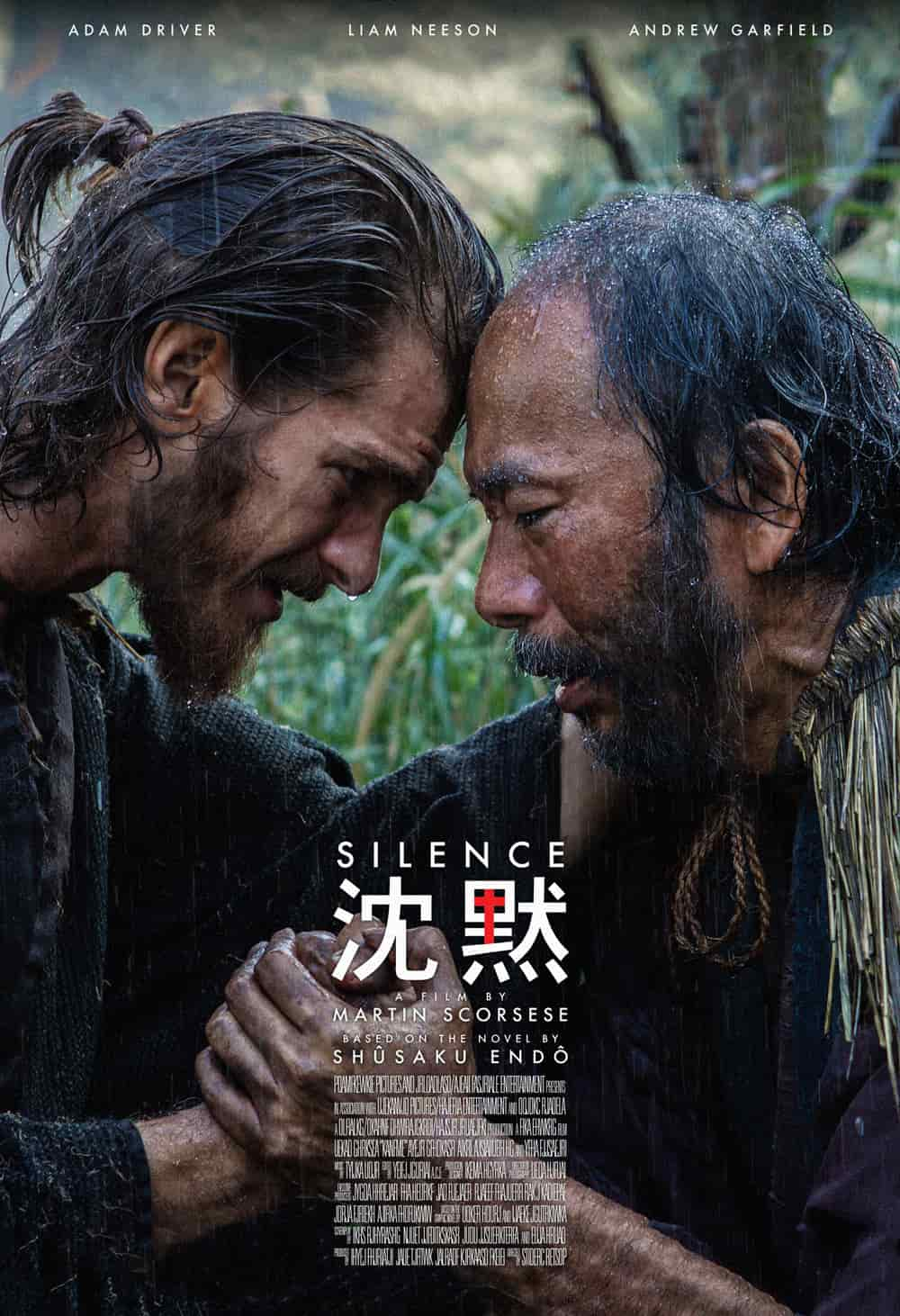
This is also where one first got the history lecture of the events leading up to the period of isolationism starting with the ouster of the Jesuits and Christianity from the early 16oos.

Silence-The Tale Of Jesuit Failure In Japan - Land Of The Rising Son
Unfortunately, the history lecture was carried out by the excited Japanese teacher at the back of the freezing classroom to a white-face who just fell off the plane and could not speak Japanese at all.

I-dont-know - Land Of The Rising Son

It was not only until several years later where this impromptu Japanese history lesson concerning  the Japanese Christian being persecuted became clear as one could recall him going though the motion of stomping on pictures of Christ to prove their loyalty to the daimyo while explaining the history of Japan.

踏み絵を踏んでいる - Land Of The Rising Son

踏み絵 - Land Of The Rising SonNevertheless, this classroom experience was a dramatic introduction to the ancient Shinto concept that enduring the cold of winter as one of the fastest and most efficient ways to develop extraordinary mental control and intellectual and spiritual awareness all of which were essential to mastering martial arts and other skills.
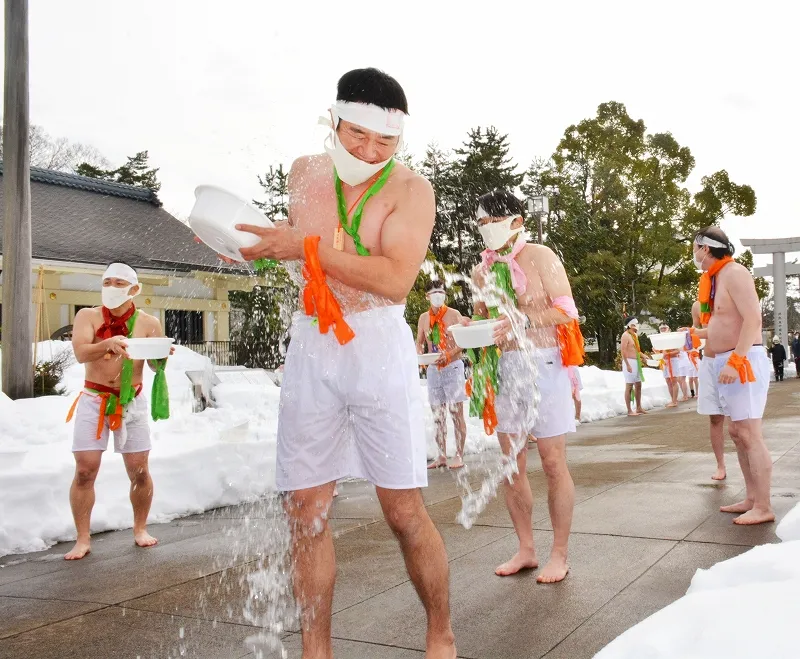
Japanese businessman 大寒 - Land Of The Rising Son

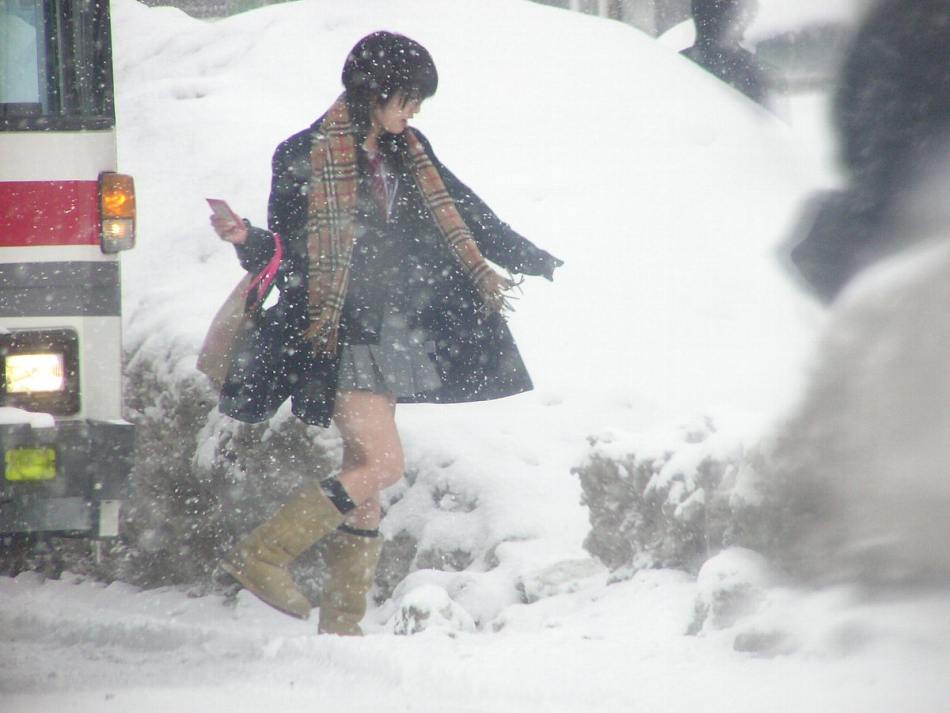
In early Japan it was the custom for samurai warriors, geisha, Japanese high school girls, and others to perform their exercises outside during the winter months and dressed only in the lightest clothing.

japanese-girls-wearing-shorts-in-winter - Land Of The Rising Son

This formidable custom a custom is especially common during daikan, or “the great cold,” from January 20 to around February 20.

Following their exercises, students of martial arts would then drench themselves with icy water.

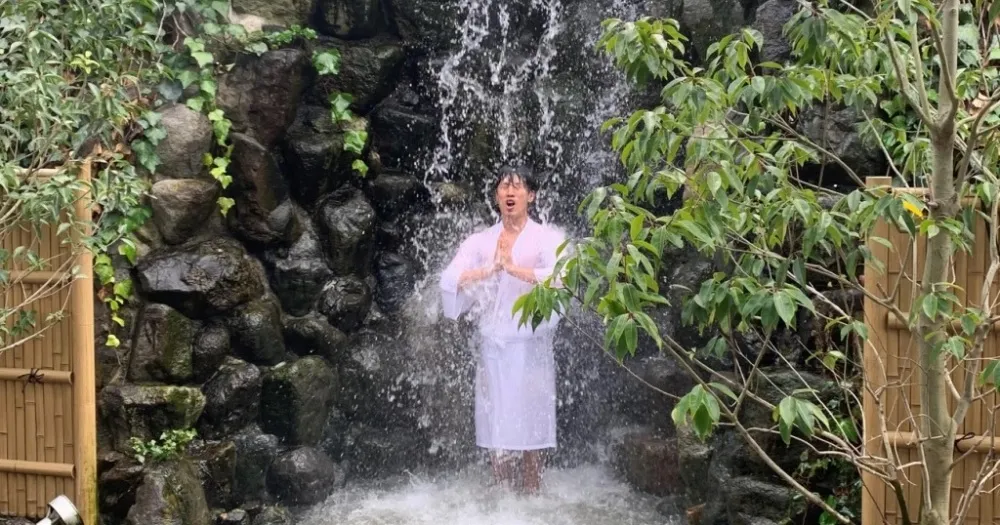
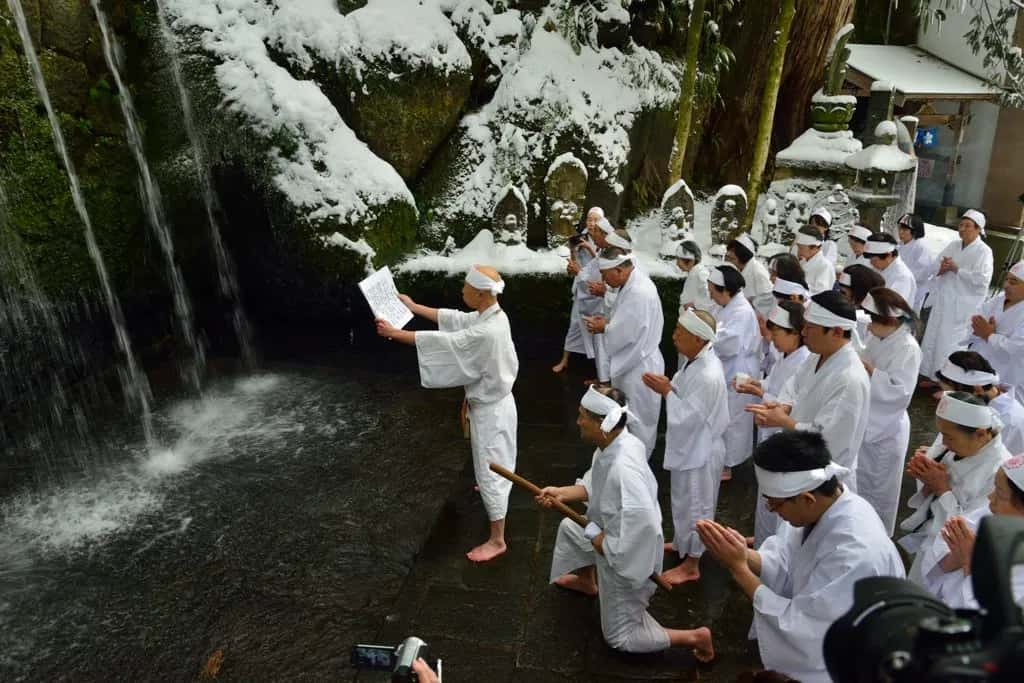
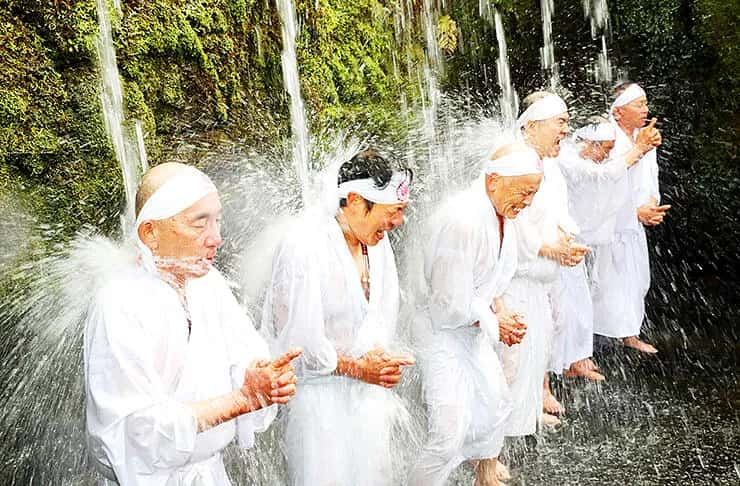
Shinto priests and religious devotees have traditionally stood under waterfalls in the dead of winter to purify their spirits and build their character.

Nothing quite builds character than standing underneath the glorious icy water of the winter waterfall to purify one’s heart, mind, and soul.

Japanese waterfall meditation - Land Of The Rising Son

There was really no attempt to heat Japan’s school rooms until the 1960s, and students, from kindergarten onward, were expected to endure the cold temperatures of the bitter winter seasons as part of their education and physical training.

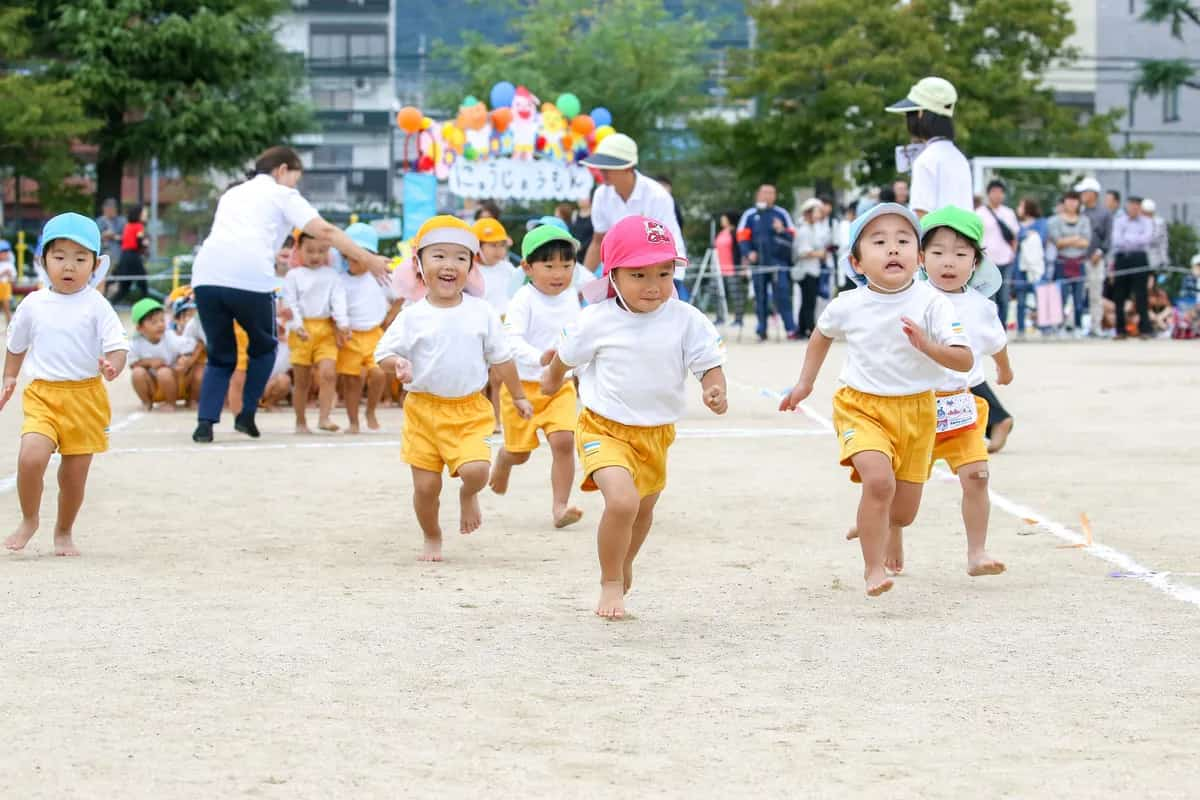
There was famous international intrigue in the 1980s where an elementary school in central Japan received attention due to its requirement for its students, girls as well as boys, to attend classes wearing only shorts and light tops throughout the winter.

The children were shown on national television at study and play, looked happy and robust, faces bright and shining.

School doctors who were interviewed said the children gave no indication that they were suffering; nor were colds or other illnesses any more common among the children than among those who dressed warmly.

little kids sports festival - Land Of The Rising Son

Japan’s traditional attitude toward cold goes a long way toward explaining the characteristic dedication and diligence of the Japanese in all of the enterprises they undertake.

Many Japanese customs are a part of the old belief that the mind can prevail over matter if it is sufficiently trained, and this kind of training played a key role in the extraordinary skill developed by the Japanese in all of their arts and crafts, and indeed business skills.

Getting ready for the waterfall - Land Of The Rising Son

The concept fortifying oneself washed in the icy cold of the Japanese winter (daikan) is much alive in Japan, and it still influences the attitudes and behaviour of most Japanese even until this very day.

In the waterfall - Land Of The Rising Son