Language is a Concept: Giri-Obligation

Language is a Concept: Giri-Obligation

Language is a Concept: Giri-Obligation

Language is a Concept: Giri-Obligation

Understanding concept of “gi”, is to gain an understanding into the Japanese way.

All languages are a reflection of the emotional, spiritual and intellectual characteristics of the people who created them. One could say language is embedded into the speakers DNA.

In essence, all languages are social concepts.

The older, more structured and more exclusive a society and its language, the more expressions and terms it has that are embodied with cultural nuances which fundamentally control the attitudes and behaviour of the people.

Confucianism was infused into Japan early in its history, and Confucius philosophy exerted a profound influence on Japanese culture, and does so up until this very day.

Among the most important tenants of Confucius philosophy are the obligations children owe to their parents, the young owe to their elders, students owe to their teacher, and that all people owe to their superiors.

These obligations are natural and inherent. One is born into them as a result of one’s automatic relationship with ones parents, elders, teachers, bosses, in what is know as a “tate shakai”, which is defined as: a society in which vertical relationships are regarded as supremely important.

The natural obligations are mandated by number of powerful social, economic and political sanctions, resulting in them becoming so deeply embedded in the Japanese culture they were never called into question. You could almost say that adhering to these tenants is now burned into the DNA of the Japanese.

Obligation Banner

Interestingly, the most powerful of these sanctions is shame (understand about shame and being ostracized in Japanese society here).

Over time the Japanese became so sensitive about being shamed and avoiding shame became an overriding principle in their behavior; so powerful that many Japanese historically choose death, and often the death of their families as well, over shame.

These ancient set of obligations that Confucius prescribed for people have now diminished somewhat in modern day Japan, but they still hold strong roots in this society and one can see these protocols in place, both social and professional.

When dealing in Japanese society on any level one must always be cautious about putting you counterpart in a position where they would feel shame.

Moreover, one can have a deeper insight into the Japanese society, when one has a good understanding of giri, or obligation, and all that entails here in this complex and vertical society.

Responsibility and Obligation

Language is a Concept: San-Mr. Mrs. Ms.

Language is a Concept: San-Mr. Mrs. Ms.

Language is a Concept: San-Mr. Mrs. Ms.

Language is a Concept: San-Mr. Mrs. Ms.

Some of the Japanese social conventions took one much longer to internalize, and some of these lesson were really tough.

One would have never thought something as simple as not adding the honorific suffix san to someones first or last name could bring about such angst and unpleasant strife. Even if it was in the name of being “friendly”.

The age old custom of the Japanese attaching the honorific san to the first and/or last names of the people one addresses is perhaps one aspect of Japanese etiquette which may seem like trivial nonsense to some foreigners.

However, whatever foreigners think about this very important social convention is not relevant whatsoever. 

What matters is to understand how absolutely imperative it is to tag the honorific suffix san to someone’s name, first or last. 

This custom is so ingrained in Japanese culture it sometimes appears to have lost its original intent, which is to show respect. 

However, not using san can definitely be interpreted as disrespectful if the individual being addressed is not a junior, a family member, or a friend, and if the situation is formal.

One must also be very careful when addressing relatives that are not in the immediate family. 

One had an extremely unpleasant experience a long time ago when trying to be more “friendly” to an old uncle during a wedding party and not adding anything to his name. It was even all the more worse as I used his first name instead of the last name, doubling the intensity of the shame. 

This turned out to be a major crisis of my former wife’s household and took a long time to fade away, but I can honestly say the permeate damage was done.

This left me in a quandary as to why something as seemingly benign as not adding san could cause such an uproar in this traditional farming family’s house. 

Perhaps along with this old man’s vivid memories of the war planes flying overheard to firebomb Tokyo, this may have left him somewhat prejudice against this naive and palefaced honkey.

American War Planes Bombing Japan

Remember, omission of this important social protocol maybe be taken as sign of disrespectful of the Japanese and their culture, and nothing gets the Japanese’s dander up more than disrespect, perceived or otherwise.

Some foreigners often ask their coworkers who are more or less on equal footing to use their first names without adding the honorific suffix san, and some Japanese may do so in informal settings.

However, in most situations the Japanese will add san to a name as they just don’t feel right about not adding san.

Now after the passage of time, the reason for adhering to this particular important social conventions is now crystal clear. 

Here is some sound advice to the dear reader in order for one not to appear as a savage who stinks of butter: 

Add san to everyone’s name, until one is absolutely sure that not adding it will not end in tears for all involved. 

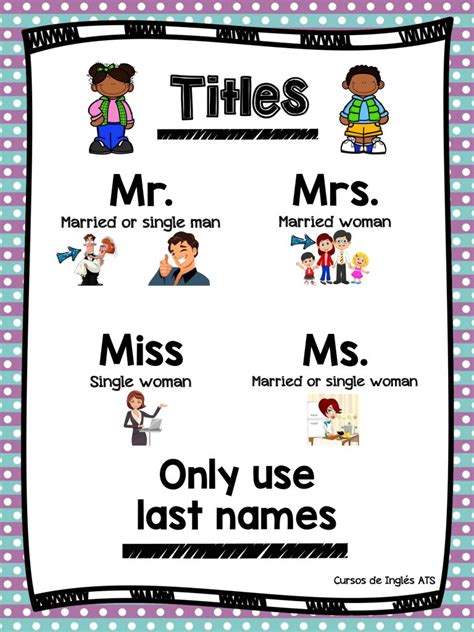
San-Mr. Mrs. Ms.Explanation

The Mask

The Mask

The Mask

The Mask

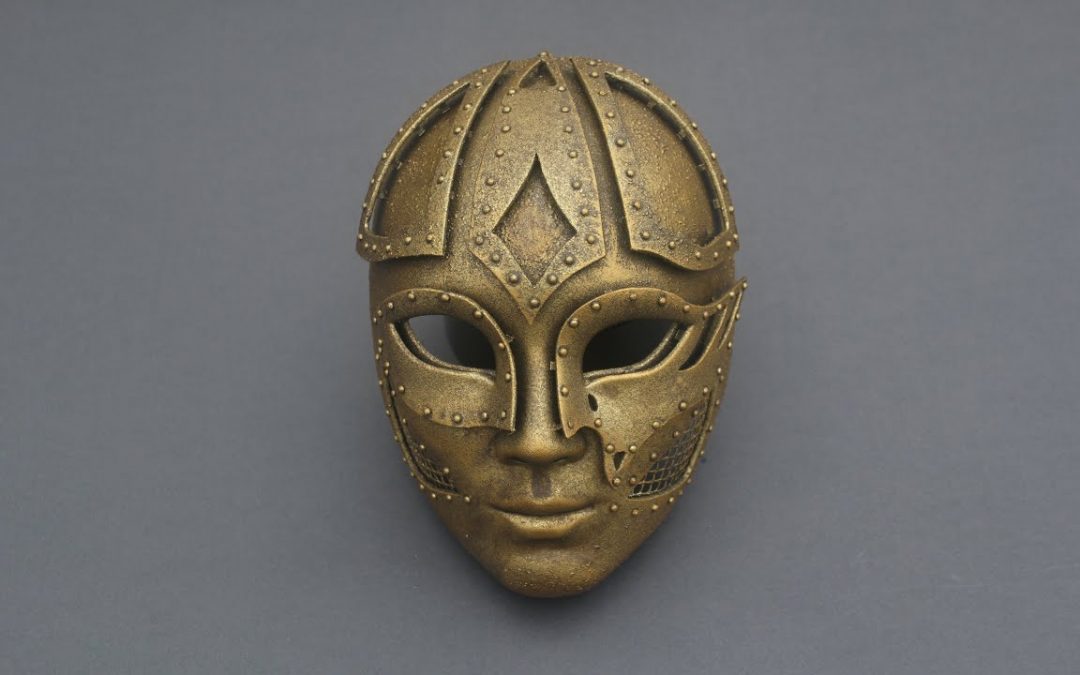
When observing the first winter flu season in Japan, one was quite taken aback by people wearing what looked like white surgical masks, and thought to oneself; wow, there are lots of doctors and nurses out and about today.

Inquiring to a Japanese friend as to why there were citizens wearing masks, they replied, “In this season, if you are feeling even a little unwell, you cover your face with a mask so as not to give something unwanted to anyone else”. 

Well isn’t that so very nice and indeed courteous of the Japanese to think in this deferential way toward their fellow citizen. 

Japanese Bowing To Each Other

Even so, truthfully, one still thought this custom was a little weird even after the explanation. 

However, soon after that one then though, well this makes sense. 

If feeling unwell, should one not venture out into the crowds, and believe me, there are some large crowds pulsing through the metropolises of Japan, as all have been on, or seen footage of the packed trains in morning rush hour.

pushing passengers on to rush hour train tokyo

Anyway, now with the new health challenges facing us globally, the Japanese are wearing masks out of season, but this time, it is almost everyone, and it was clearly not an issue for most in Japan. 

First of all, in keeping with the constitution written by the American occupiers, the wearing of face mask could not be mandated by the Japanese government anyway.

There was however, a “request” from the powers that be where all Japanese should wear masks due to this new health situation. 

Thus, most of the Japanese do so, without giving it a second thought.

However, as in all societies, there are those who for some reason or another choose to stand out, in Japan, the  proverbial “nail that sticks up”. 

Now here is an important cultural note for the dear reader, which points out the difference between the Japanese mindset, and the mindset of the occidentals.

Japanese: The nail that sticks up gets hammered down.

Hammer And Nails

Occidental: The squeaky wheel gets the grease.

SqueakyWheel

One of the little rebellious nails decided to stick his silly little head up by refusing to wear a mask on a domestic flight (mandated by the airline), and caused an unnecessary commotion on the airplane, where he was escorted off and arrested. 

Perhaps what this somewhat dull Japanese citizen did not realize, is beside the financial penalty, and the inconvenience of not getting to where he was going, he may very well also face one of the most dreaded things in the Japanese society: 

Mura hachi bu (村八分) or, becoming an ostracized outcast. 

Whoops!

Historically, this is one of the worst things that could ever happen to a Japanese person. One who brings shame or breaches unwritten social conventions are treated with contempt and disdain.

I would suggest that such an incident as this would have a negative effect on work relations as well as within his family. 

Nothing could really be worse than to bring shame to one’s family or employer, with such poor and anti-social behavior, especially when you are causing meiwaku (disturbing others) to an airplane full of other people.

One believes in any society, unless you’re a psychopath, one would not want to be ostracize. 

In Japan as a stoic type of people who valued stability and adherence to social conventions, becoming mura hachi bu is swift and harsh.

Is there room for atonement to bring this pesky little nail who has been hammered down so as to have a meaningful hansei and then being brought back into the fold?

Of course there is.

However, keep in mind these newsworthy societal transgressions, even though forgiven, are not forgotten, and will hang around this stupid and inconsiderate boy’s head as a dark halo of shame far, far into the future.

I am certainly glad the most Japanese really don’t see wearing a mask as a freedom issue, but as a societal courteous to maintain social cohesion on our shared islands. 

Update 2021-01-22
As pointed out in this blog post, this kind of anti-social behavior in Japan follows one around like a necklace of shame for all to see.

Read about the pesky little nail being arrested 4 months after the fact here.

An anti-mask advocate, the saga of this pesky little nail, Junya Okuno continues here.

反省会

Language is a Concept: Amae-Indulgent Love

Language is a Concept: Amae-Indulgent Love

Language is a Concept: Amae-Indulgent Love

Language is a Concept: Amae-Indulgent Love

A deeper concept than “I’ll scratch your back if you scratch mine”, gaining an understanding into “amae”, is to gain an understanding into the Japanese way.

Languages are a reflection of the emotional, spiritual and intellectual characteristics of the people who created them. 

One could say within languages there are social constructs embedded into the speakers DNA.

The Japanese language has an abundance of expressions and terms which embodied the Japanese cultural with nuances and one can see this reflected in the attitudes and behaviour of the Japanese.

Very early in Japanese history the concept of “amae” became a primary principal in the cultural and one of the fundamental foundations of where bonds of mutual trust are build into long, durable relationships. 

Amae refers to being able to take advantage of other people in a cooperative spirit with the unstated commitment that they can do the same to you when the need arises 

These are the unwritten codes and silent conventions which glue Japanese society together.

The principle of “amae”, which is derived from Shinto , takes precedent over egotistic feelings and the natural human instinct of selfishness. Indeed, there is no doubt in my mind that “amae” is designed to ensure society will function smoothly and efficiently.

Of course this is an idealized concept of the desired attitudes and behaviour of all human beings, and one that has been a key aspect of many religions and philosophies. 

Here in Japan, amae has been harmonized perfectly with the precepts of Buddhism and Confucianism, and is an integral part of Japanese culture and one of the core tenants of humanity that Japanese society is based upon. (See: LANGUAGE IS A CONCEPT: WA-HARMONY)

Both the word “amae” and the concept it refers to are still very much a part of the cultural make up of the Japanese, and will always play a primary role on all relationships, particularly so in businesses and politics.

As one may have now guessed “amae” connotes more substantial implications into a relationship, rather than the much more pedestrian “I will scratch your back if you scratch mine”.

Indeed “amae”, is a loom that weave the fabric of Japanese society, for which the reciprocity embodies in “amae” continues to play a critical part in our solid and harmonious society. 

As one understands how to give and receive “amae” behaviour, one will have undoubtedly internalized a very valuable tool for when dealing with the Japanese.。

Bonus: Ask a Japanese person you know to explain “amae”, or to give a concrete example of “amae”, this will make for some meaningful discussion between you and your Japanese friends.

Japanese Girl With Question

Why Ancestor Worship?

Why Ancestor Worship?

Why Ancestor Worship?

What does it actually mean to worship one’s ancestors?

First of all, there are different ideas about the word “worship” and what it encompasses in a “religious” context. 

The preferred word veneration can be translated nicely into Japanese as sonkei (尊敬), which is more, “down-to-earth.”

While thinking about the Japanese society, and the social conventions to which the Japanese adhere, one came to the realization that venerating the ancestor, along with the Sun is the best way to express gratitude toward our world and what it gives us. 

By the way, Amaterasu Oomikami is the Japanese Sun Goddess.

Blazing Sun Upon Japan - Land Of The Rising Son

This notion of expressing gratitude to those who came before and the life giving energy of the Sun embodies a sense of unity with all people of the world, for we all share the Sun and each has ancestors. 

One has very fond memories of one particular ancestor—maternal grandfather.

Grandfather Richardson - Yukiko Akimoto -Land Of The Rising Son

As a child he had tuberculosis and was cared for in a small room for a year where ones Really Great Grandmother and Great Grandfather were simply waiting to see if he lived or died. 

Helen Otta Kean -Inglis-Richardson- Stephen Kean Filiatrault Great Grandmother

Fortunately for my mom and I, he lived (Dad is happy about this as well).

It was during this time in sickness where he read 100s of books which left him a very well read and enlightened man. 

One’s heart fills with fondness when recalling the time spent together with grandfather and his spirit being manifested.

This leaves feeling the spirit of grandfather as partially residing in the material world. 

One could say—once the last of the people directly touch by this extraordinary man pass away, this spirit of grandfather will also fade away. 

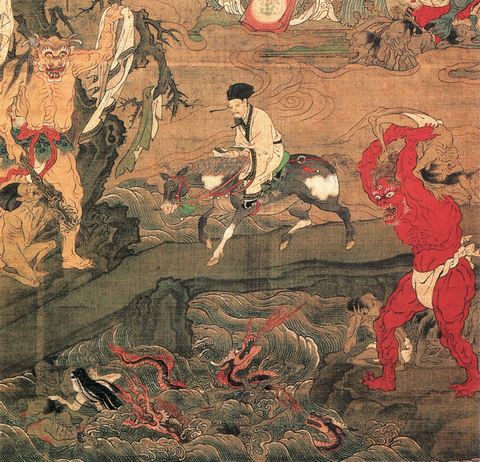
Even if this may be so, the spirits of the ancestors lives on in our alter along with all relatives who have already crossed the SANZU NO KAWA into the afterlife. Mitsunobu_Sanzu_River

Here in Japan, ancestors are remembered on specific holidays.

For example, the Autumn Equinox (Shūbun no Hi), usually occurring on September 22 or 23.

On this day, people will reconnect with their families by tending to the graves of ancestors, and visiting shrines and temples. 

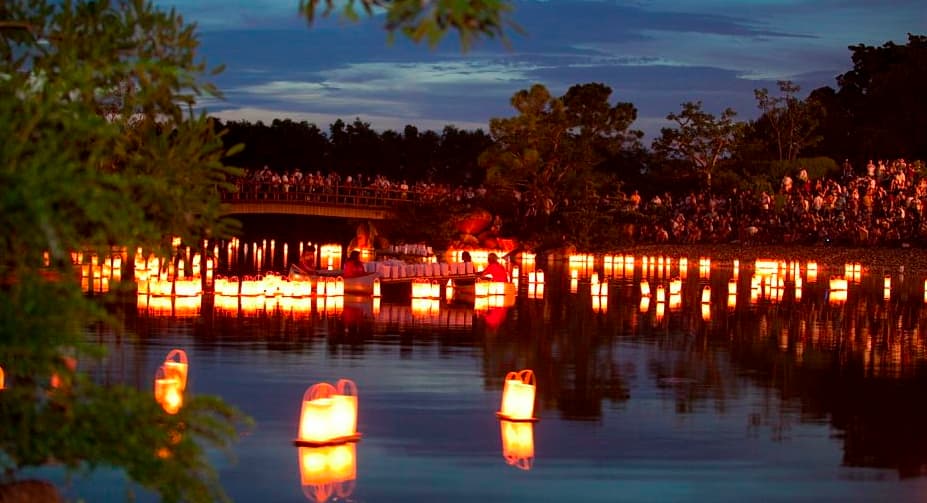
WorshipingDuringObon

Pragmatically so, the Japanese believe all virtue and frailty of being human are natural, and look upon all of the dearly departed as some kind of Gods, representing the entire spectrum of the human experience. 

One finds the inclusiveness of this way of thinking rather refreshing, and indeed to be a much more practical way to think about and live one’s own life.

Looking at ancestor veneration from a different lens, one also likes to celebrate present relatives who will one day become “ancestors.”

As when taking the in-laws on an overnight trip, and saying to the cherished and beloved mother-in-law.

“I believe we should also venerate our ancestor while still here on earth, so you also can celebrate this wonderful world you have sacrificed for your descendants while ya’ll are still here.”

She had a good laugh and concurred with these sentiments. 

Why not take some of one’s precious time now, and give thanks to our shared Sun Goddess while venerate one’s own ancestors, both living and dead, and let them know.

Kokoro yori kansha moshi agemasu

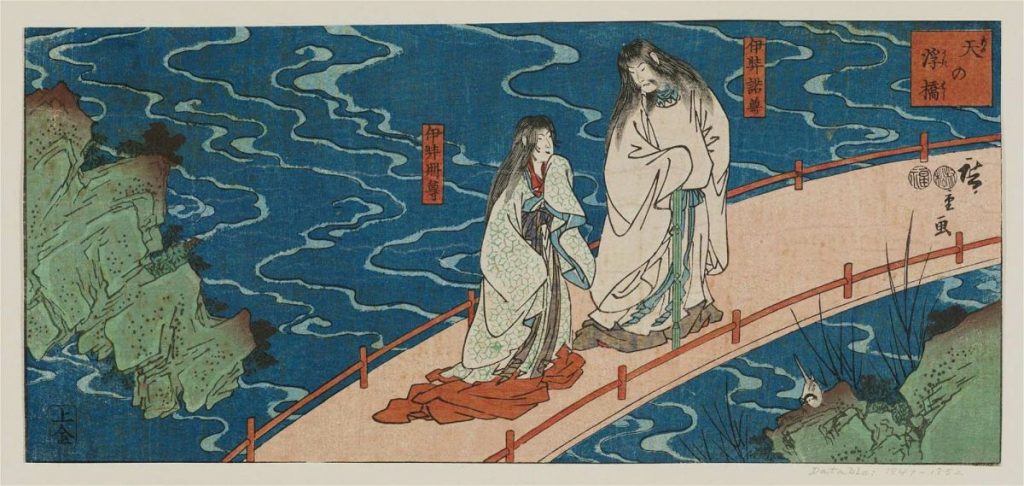
Izanagi-Izanami

Language is a Concept: Wa-Harmony

Language is a Concept: Wa-Harmony

Language is a Concept: Wa-Harmony

Language is a concept: Wa-Harmony

Understanding concept of “wa”, is to gain an understanding into the Japanese way.

All languages are a reflection of the emotional, spiritual and intellectual characteristics of the people who created them. One could say language is embedded into the speakers DNA.

In essence, all languages are social concepts.

The older, more structured and more exclusive a society and its language, the more expressions and terms it has that are embodied with cultural nuances which fundamentally control the attitudes and behaviour of the people.

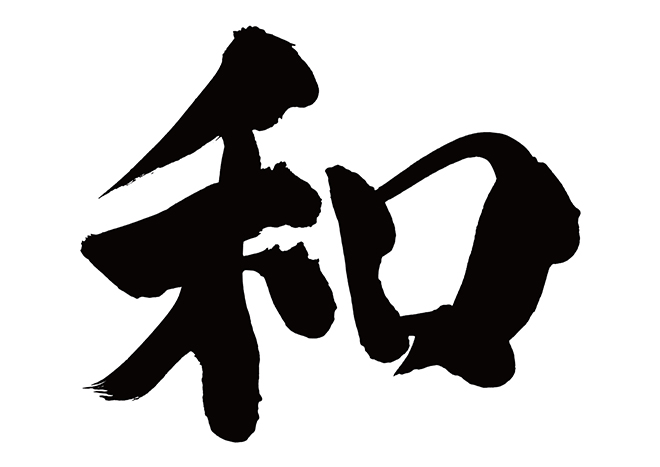
The word “wa” (和) or harmony expresses an essential Shinto concept of harmony between humans, nature, and all things within nature.

This is what the Chinese called Japan long before the emergence of Japan as a unified country.

In the seventh century, Japan’s reigning imperial regent issued a series of edicts that can be though of as Japan’s first “constitution”. The first of these proclamations was that “wa” was to be the foundation of Japanese society.

While “wa” has traditionally been translated to English as “harmony”, it had a much deeper and indeed more profound meaning in the Japanese context. 

In short, it means not doing anything that causes friction or upsets people or nature. On the other hand, it encourages actively doing things that ensure and sustain peaceful, cooperative, and harmonious relationships.

In other words, “wa” means “Japanese style” harmony, not harmony in the western English sense of the word.

As is often the case with Japanese specific cultural words, there really is no translation.

One has to understand “wa” by feeling it in the air and in the ether of Japan.

During the 1960s and 70s Japan’s economy “wa”s growing in to the second largest economy in the world, and the Japanese attributed their amazing growth to the existence of “wa” in business, government, the education system, and throughout society.

Furthermore, all of Japan’s traditional arts and crafts, etiquette, formal speech, cultural practices, and so on, are infused with the essence of “wa” or, of Japanese style harmony. 

When one comes to understands “wa”, one can gain a much more meaningful experience, when visiting the Land Of The Rising Son. 

And based upon one’s deeper understanding of “wa”, one can then see different layers in the Japanese society with the all important social construct of “wa”, in so many aspects of the Japanese life.

Ask anyone who has been to Japan what they found intriguing and perhaps a little mysterious about Japan, and they will inevitable answer; the Japanese seem to have a harmonious and peaceful society, with polite and courteous people.

This is “wa”.

Wa-Harmony