Sumo, Mikan, Kotatsu, Ocha, and Senbei

Sumo, Mikan, Kotatsu, Ocha, and Senbei

Sumo, Mikan, Kotatsu, Ocha, and Senbei

Sumo, Mikan, Kotatsu, Ocha, and Senbei

A few short days after one’s arrival to Japan on January 11, 1987, one was invited to a lovely girls house and what surprises awaited.

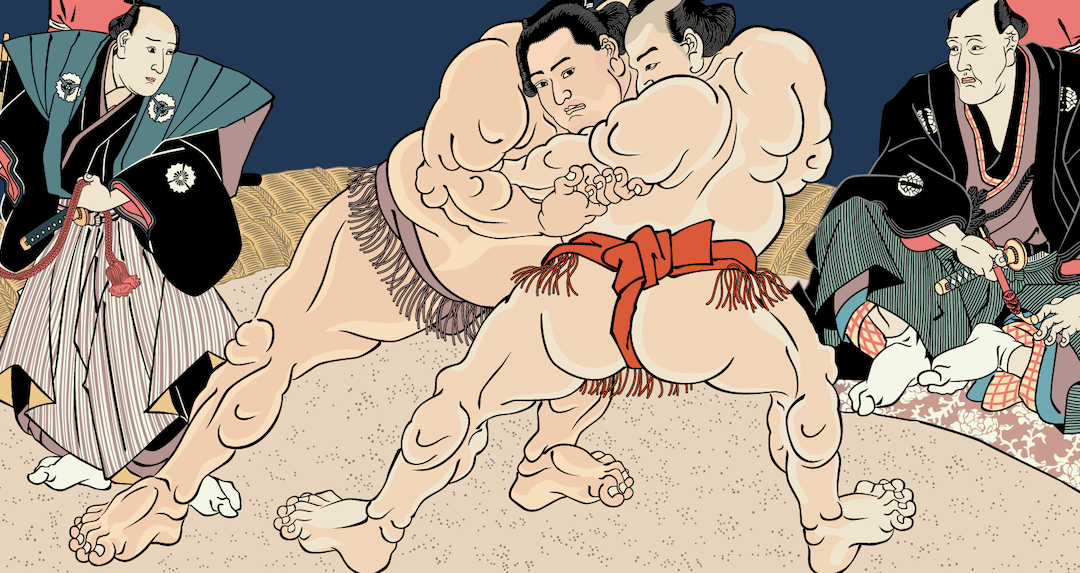
This lovely lady, ushered me into her living room and sat me down in a “kotatsu with the New Years Grand Sumo Championship on TV, serving green tea, senbei , and mikan .

Having not known what to expect and totally caught off guard, I settled into the “kotatsu”, with the wispy green tea aroma billowing from the cup, crunching on delightful senbei, and experiencing the most splendid mikan ever experienced up to that very day (They were called Japanese oranges when I was growing up in Canada and only available at Christmas). Needless to say, they didn’t export their best products out of Japan.

I thought surly I had landed in some kind of a parallel universe paradise!

Having never seen sumo before, this was one of the most intriguing experience I had ever had in my life.

I immediately became a sumo fan, and this was during the rare time there were 4 Yokozuna and 4 Ozeki, including the very awesome Hawaiian born and bred Konishiki, one of the very first foreign sumotori; incredible!

During this time, one of the most prolific sumotori of all time, Chiyonofuji was active, and I consider this to be the golden age of sumo in the modern age.

Chiyonofuji is considered to be one of the greatest yokozuna ever, winning 31 tournament championships, second at the time only to Taihō.

During his 21-year professional career Chiyonofuji set records for most career victories (1045) and most wins in the top makuuchi division (807), earning an entry in the Guinness World Records.

Unfortunately, this very great sumotori succumbed to cancer, and died in Tokyo on July 31, 2016 at the age of 61.

Later on, I learned sumo is an important part of the native Japanese Way known as Shinto.

The sport of sumo has a long history spanning many centuries, and many of the ancient Japanese traditions have been preserved in sumo, such as the use of salt purification, again part of Shinto ritual.

In fact, some shrines still carry out forms of a ritual dance where a human is said to wrestle with a kami, a Shinto divine spirit.

I hope you, dearest reader, have the opportunity to see sumo when you come and visit us in the Land Of The Rising Son.

If not, I encourage you to sit in your very own kotatsu, drink aromatic green tea, and eat senbei and mikan, all the while enjoying this incredible historic ritual known as sumo.

Read more about this incredible Shinto ritual at the Japanese history and culture blog here.

Ichigo Ichie ~ Once In A Life Time

Ichigo Ichie ~ Once In A Life Time

Ichigo Ichie ~ Once In A Life Time

Ichigo Ichie ~ Once In A Life Time

The beauty of the Japanese language never fails to take the breath away.

Ichigo Ichie: just only one chance in a life-time;

An interpretation of this exquisite four-character compound is:

One meeting, one opportunity―this concept from the Way of Tea regards every encounter as a unique opportunity of a lifetime, or in general, of treasuring each passing moment in order to live meaningfully.

One treats each moment as a unique event in ones own space and time.

Each meeting is unique and each moment special, and becomes a part of who we are.

Every day is full of Ichigo Ichie events; for example, while walking in solitude and see a heron taking flight from the rice paddies.

When one recognizes the beauty of this once-in-a-lifetime event, then one will have started to understand the true and deeper meaning of Ichigo Ichie.

Indeed, you and I dear reader, are now having an Ichigo Ichie event as you read this.

One wrote this post for the purpose of having a once in a life time unique encounter with you the dear reader and this will only last one fleeting moment, the time that it takes for you to read this post.

Wake each day and live with the intent of Ichigo Ichie, and you will find yourself closer to understanding the Japanese mind and the Japanese way.

Japanese Tattoos

Japanese Tattoos

Japanese Tattoos

Japanese Tattoos

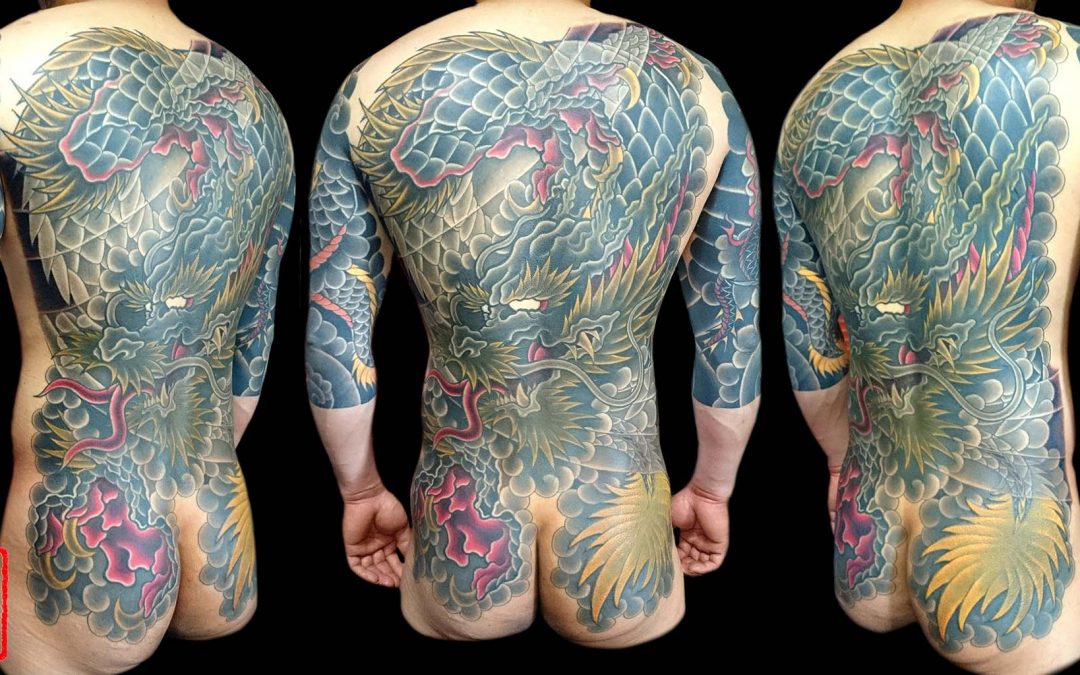
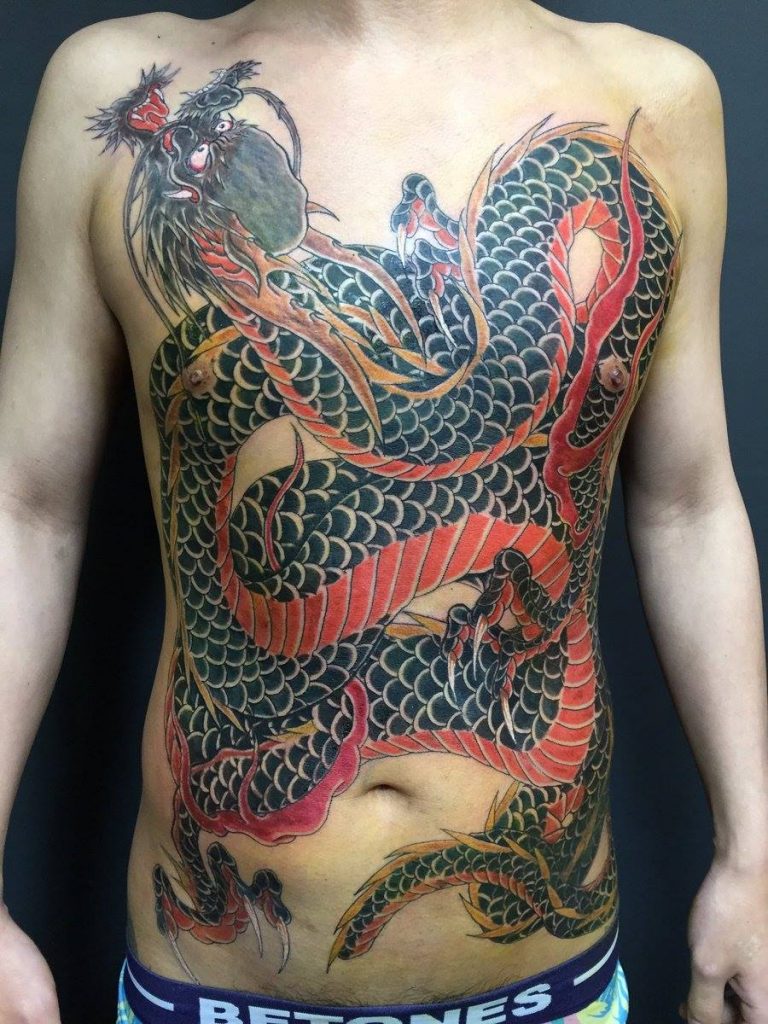
Without a doubt the Japanese have some of the most incredible art, and the art of Japanese tattoos is no exception.

The Japanese word for tattoo, irezumi is translates directly as “inserting ink”.

Fundamentally having a tattoo in Japan is strictly taboo and there is still a stigma attached to those having tattoos in Japan, Japanese or otherwise.

For example, hot springs, and bath houses do not allow visitors to have tattoos, and this is clearly displayed at the entrances. Furthermore, the sports clubs and pools will ask one to cover it up. Those with the full body tats, out of luck.

Historically, tattoos in Japan were associated with the yakuza (Japanese mafia), and, therefore, when the common citizens of Japan see people with tattoos, the red flags go up immediately, and caution mode is invoked.

As we see more and more foreigners coming to the Land Of The Rising Son, in particularly from the heavily tattooed Western societies, the Japanese have become slightly more accustom to seeing ink.

Now, does this change the fact that the Japanese are still suspicious of tattooed humans; absolutely not.

In fact, when the common citizen of Japan see the foreigners with tattoos, this simply reaffirms the image of foreigners as “smelling of butter” and who are still somewhat “savages”.

The significance of having a tattoo becomes even more grave for those Japanese who venture into this forbidden land.

Once you have committed to a tattoo, it’s there for life; like a marriage

Once a Japanese has committed their life to a tattoo (ones they cannot cover up), they have basically recused themselves from the greater society of Japan.

It could be said, in all probability no salaryman or OL in a Japanese company has a tattoo, or if they did, the tattoo would be hidden away, like a dark rebellious secret.

Indeed, labeling oneself as outliers who refuse to conform to the system of Japan, was, is and will be always be a signal that they have reject this society and what it means to be Japanese.

How about a tattoo for you?


Samurai Salaryman

Samurai Salaryman

Samurai Salaryman

Samurai Salaryman

Like many aliens, I mean foreigners, I got my start in Japan as an English lecturer.

Fortunately, I had the privilege of sub contracting to a large Japanese company for my career.

There I saw complex hierarchical human relationships, fierce factions, the constitution of the Japanese salarymen, and the office ladies that support them.

The dedication of these salarymen to their companies is incredible.

I had to laugh;

There was a long holiday (10 days in a row is a long holiday for the Japanese), at the end of April beginning of May in celebration of our new emperor.

I was talking to a middle manager, and he was in a quandary as what to do with himself during this “long holiday”.

After the holiday was over, I asked him how it went and he said “I couldn’t wait to get back to work, because I didn’t know what to do with myself”.

Rest assures this is a typical response throughout the mindset of the salarymen.

Fundamentally, after these men enter their companies, they from then on refer to themselves as, for example: I am a so-and-so company man, or I belong to so-and-so company.

Their identity becomes that of their company, and by the way their families and children also become one with their company.

In the rare instance where a salaryman changes companies in midstream, it was looked upon as treasonous, and these anomalies jumping ship in the middle of their careers are looked upon with suspicion if not disdain in their new companies.

The company in essence becomes the master of these employees, and the employees become the servant of their company, just as being born Japanese make you a servant of the nation of Japan.

These workers live in company supplied housing, get car and house loans with the major affiliated bank of their company, and attend events sponsored by the company.

I attended one of their summer events and there were hundreds and hundreds of people. All of them work for the main company, subsidiaries, or related companies. The atmosphere was truly festive and there were many booths representing each subsidiary selling some carnival food or holding games for the children. I was amazed as the sense of community and belonging that these people felt as a group, a group loyal to their company.

Thinking about this in a deeper way, being a salary man is merely an extension of being Japanese. This means being a citizen of Japan first, an employee of the company, then a member of your surrounding community, and at last your blood family.

Who is Sazae-san?

Who is Sazae-san?

Who is Sazae-san?

Who is Sazae-san?

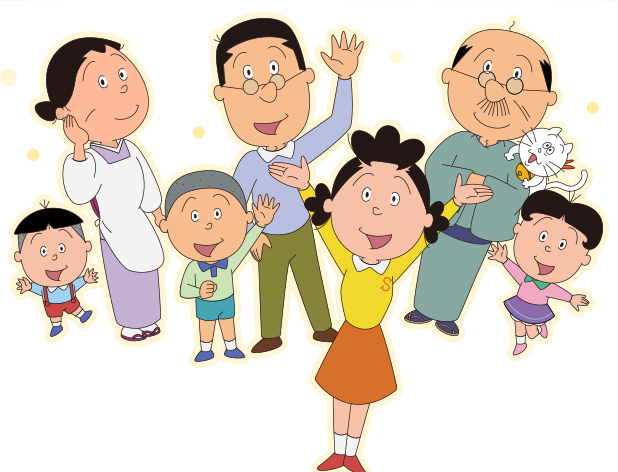
The importance of the Sazae Family to the Japanese can not be over emphasized.

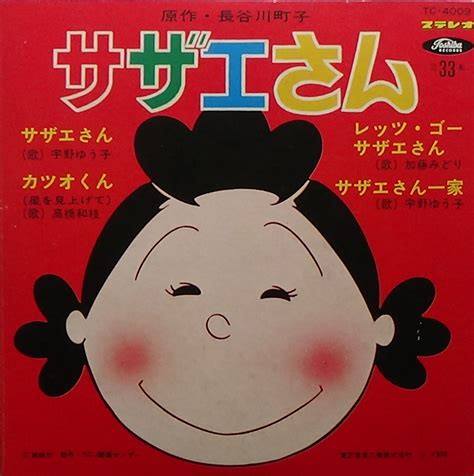
Sazae-san (main female character, lives with her husband, Masuo, her parents, younger brother and sister and her child) is based upon the comic character first publishes in April 22, 1946, just one short year after the end of the second world war, and remains a staple of Sunday night primetime. Interestingly enough, all of the characters are named with things related to the sea.

The author of the original comic book Machiko Hasegawa desire was for the this family to embody the image of the modern Japanese family after World War II, and this image continues to this very day, and remains dear to the Japanese heart.

The TV series began airing in October 1969 and hold the Guinness World Record for the longest running animated television series ().

Sazae was a very “liberated” woman, and many plot-lines revolved around Sazae bossing around her husband, to the consternation of her neighbours, who believed that a man should be the head of his household. Later on, Sazae became a feminist and was involved in many comical situations regarding her affiliation with her local women’s lib group.

For most people unfamiliar with Japan and their society, it may seems that this society is highly patriarchal, and this is true to a certain extent.

However, Japanese women actually rule and run the household, as well as control the finances of the family. The husbands salary is directly deposited into a bank account controlled by the woman of the house.

In fact, the salarymen of Japan usually receive a monthly allowance from their wives, and once this is gone they are done for the month!

These haggard salarymen work extremely long hours, and have long commutes going from the suburbs to the office towers of the metropolises of Japan to run the machine that is Japan.

They don’t really have a say in matters concerning the education of their children, or much in the way of how the household run. They are probably too tired to care too much anyway.

Leave it to the wife!

Things are not always what they seem in the Land Of The Rising Son, and one must never take the surface of Japan to be any thing other than:

a constructed reality to which everyone pays lip service

Traveler’s Guardian Deity

Traveler’s Guardian Deity

Traveler’s Guardian Deity

Traveler’s Guardian Deity

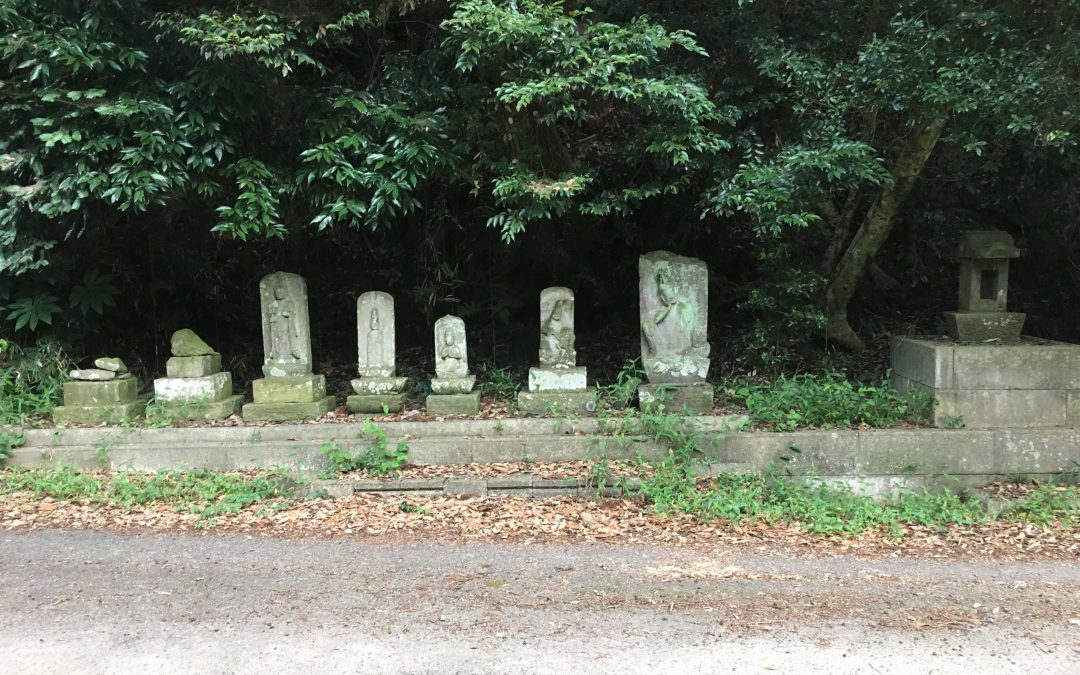
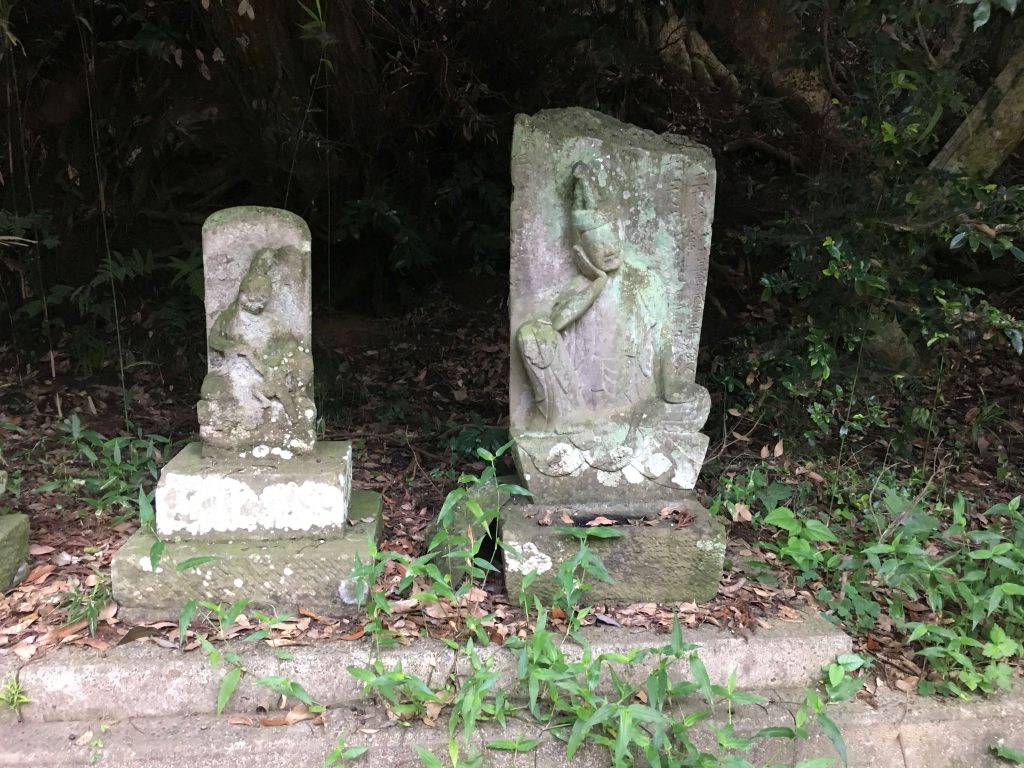
Along my merry way in my neighborhood, I am always entreated by these Deities guarding the traveler. And indeed, for the thoughtfulness of the ones who created and set up these in order to “guard and protect” the wary travelers on the way.

道祖神、どうそしん (dousoshin),
塞の神、さいのかみ (sainokami),
障の神、どうそじん (dousojin),
さえのかみ (saenokami)