Japanese Radio Calisthenics

Japanese Radio Calisthenics

Japanese Radio Calisthenics

Japanese Radio Calisthenics Every Day

My wife (also known as The Big Girl), and I normally started our day with the Japanese radio calisthenics program: Known in Japanese as rajio taisō.

The rajio taisō was introduced to Japan in 1928 as a commemoration of the coronation of Emperor Hirohito, now posthumously know as .

The rajio taisō is used at schools as a warm up for physical education classes, during sports day activities, and by many companies, as a way of building morale and a sense of group unity, as well as to raise energy levels and encourage good health and longevity.

The first time I witnessed this was at a major chemical factory, with all of the workers outside exercising in unison.

How strange is this, I thought to myself!

After memorizing rajio taisō dai ichi, I found doing this as a daily routine has really made me much more supple in many ways, including mentally.

The rajio taisō we use every day includes rajio taisō dai ichi, then a great neck stretch in the middle (The Big Girl and I face each other and hold hands which makes it a good bonding session as well), and finally rajio taisō dai ni, to cap the session off, coming in at manageable 7 minutes and 46 seconds.

If you really apply yourself, this is truly an awesome stretch, try it.

Japanese women have the longest life expectancy in the world at 86.8 years, and then the smoking and drinking (salary) men coming in at .

I can’t help but to think the wonderful traditional Japanese diet of seafood, vegetables, and rice has something to do with this.

I also understand doing rajio taisō daily leads to the long, happy, and healthy life.

Here is the radio exercise we use ().

I suggest one works this into ones schedule every day.

As one does so, one can also be thankful to one’s own-self for caring about oneself and one’s loved ones, as one and one’s loved ones do the Japanese Radio calisthenics each and every day for health and longevity.

 

How Japanese View Death

How Japanese View Death

How Japanese View Death

How The Japanese View Death

My cousin posted the following on social media.

“In loving memory of my Dad, 10 years ago today he passed away. My girls and I paid our respect by cleaning up his head stone and place flowers on his resting place, always missed never forgotten.”

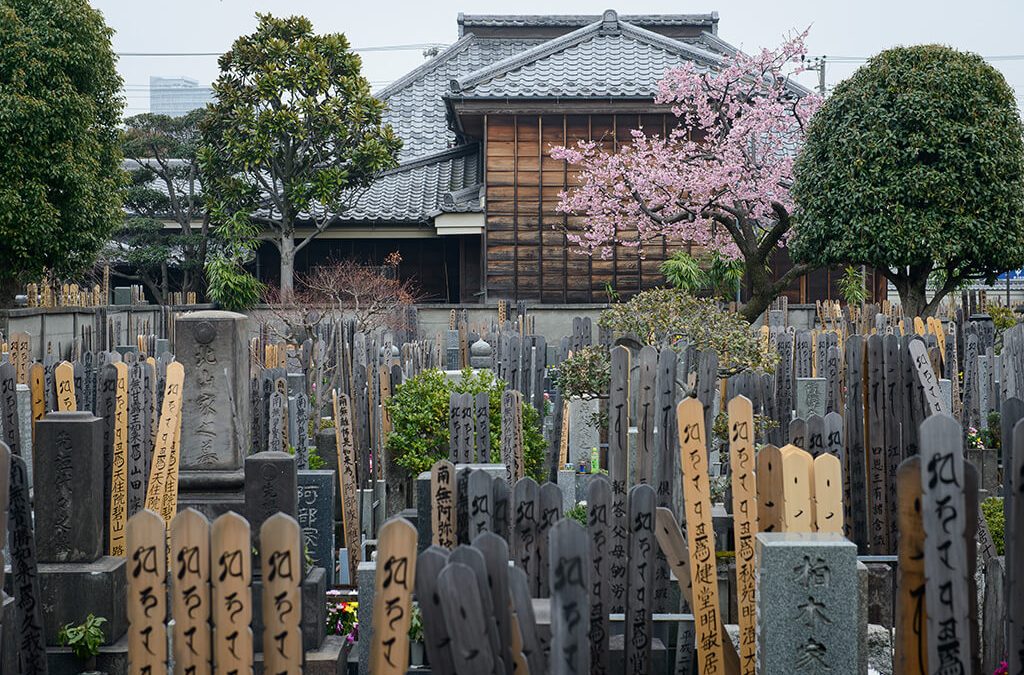
Interestingly enough, this is a common practice among the Japanese, know as meinichi (命日).

I found this to be intriguing, as, for the most part Westerner do not regular go to the grave of their family to lay flowers or clean the headstone.

So, I was very happy that my beloved cousin was doing this, not only to remember his father with his children, but to pay homage to him, like in the Japanese tradition.

In Japan, cleaning the family grave and remembering their ancestors is practiced at designated times throughout the year; once in Spring and then again in the Autumn, this is referred to as higan (彼岸).

More so, the most important time to for Ancestral veneration is the Obon Festival (), which is carried out in different time periods over the summer, depending on which part of Japan you are from.

In essence, the Japanese engage in what can only be described as ancestor worship, which is the core belief tenants of the Japanese; I like it.

For the Japanese, death is regarded as an occasion of major significance, both for the deceased and for the survivors.

For the departed, it marks the moment when the transition begins to a new mode of existence within the round of rebirths.

When the Japanese die, all karmic forces the dead person accumulated during the course of his or her lifetime become activated, and determine the next rebirth.

So, one must be careful of the karma one leaves behind, least you are reincarnated as a cockroach or a fly.

Furthermore, for the grieving member left upon this mortal coil, death is a powerful reminder of the Japanese teaching on the ephemeral nature of life.

Much love and respect to my cousin, for honouring my beloved Uncle in this eloquent manner, and reflecting these profound Shinto values.

Bonus section 1: Funeral, The Japanese Way.

Imagine my shock when I went to my first Japanese funeral of a close relative and no one told me what to expect.

Grandfather plain wooden box was rolled into the cremation oven and we all went to a different room and drank green tea and ate rice crackers. We were called back and the bones of Grandfather were rolled out to the waiting relatives and two by two we picked up special chopsticks and took some of the bones chopstick to chopstick, while placing the bones in the urn. After Grandfather’s bones were all in the urn , the funeral assistance scrunched the bones down and laid his glasses on top of the bones. He then proceeded to close the urn and wrap it up. We then proceeded to an alter in a different room, and there we offered incense to Grandfather, where there was the funeral picture of him. This picture is brought back home and is placed above the family alter, where he will be remembered according to the Buddhist traditions, described above.

A serious word of Japanese etiquette and must never be breached: Never take food (or anything for that matter) from chopstick to chopstick, as it is related to the Japanese funeral.

Bonus section 2: Not Until You Are Dead Too
The Japanese cremate the dead, and the urns containing the bones are interned in family graves, sometime of these family plots go back 10s of generation. I remember an old doctor friend of mine mentioning that his mother passed before his father, and she requested not be interned into the family grave until the father died, as she didn’t get along with her mother-on-law, and would be stuck there by herself with out him. He acquiesced to the wishes of his mother.


The Matsuri: How the Japanese Worship “God”

The Matsuri: How the Japanese Worship “God”

The Matsuri: How the Japanese Worship “God”

The Matsuri: How the Japanese Worship “God”

After going to stay in the 328 year old Japanese Inn, I thought it was only appropriate to visit the annual Summer festival in my hometown.

I mean why not, this is also very, very old. In fact this festival is older than the United States of America!

The festival is one of the Kanto Plain (), three major float festivals, and has the tradition of over 300 years.

These 2 festivals are know as the “Grand Festivals of Sawara”. One in the summer and one in the autumn.

Dramatic figurines up to 4m in height ride the top of these spectacular floats, with these figurines representing different gods.

These gods are specific to each individual neighbourhood, of which the citizens of that particular block care for their god in their local neighbourhood dashikaikan.

In the summer festival, the 10 floats of the East are pushed and pulled, all the while chanting and signing in unison, and, no shock here, drinking large amounts of alcohol, in particular what is known as the nectar of the gods; SAKE (rice wine).

The West side autumn festival has 14 floats, where the tradition of worshipping their gods continues today, as it does every year, from centuries ago.

Nothing beat the energy of the incredibly spectacular Summer and Autumn festivals by seeing them up close and in person.

However, not all of you can do that, so pour yourself your own choice of the nectar of the the gods, and enjoy the distant past embodied in the Japanese in the present today!

Overview of the floats

Spinning of the floats

Dates:

Summer (Gion Matsuri)
July 12(Fri)- July 15(Sun), 2019

Autumn (Shinjuku Suwa Shrine festival)
October 11(Fri) – October 13(Sun), 2019

The Beauty of Gunma & Sekizenkan

The Beauty of Gunma & Sekizenkan

The Beauty of Gunma & Sekizenkan

The Beauty of Gunma Prefecture

When was the last time you stayed in a 328 year old hotel?

Never?

Me either, until the other day!

Regardless of how exotic it may seem to those living outside of Japan, in fact life is full of mundane and daily routines, and mine is really no exception.

However, thanks to my wife and life tour guide, we booked a room in the historical Japanese Style Inn in Shima called Seizenkan Ryokan.

Sekizenkan Japanese Ryokan

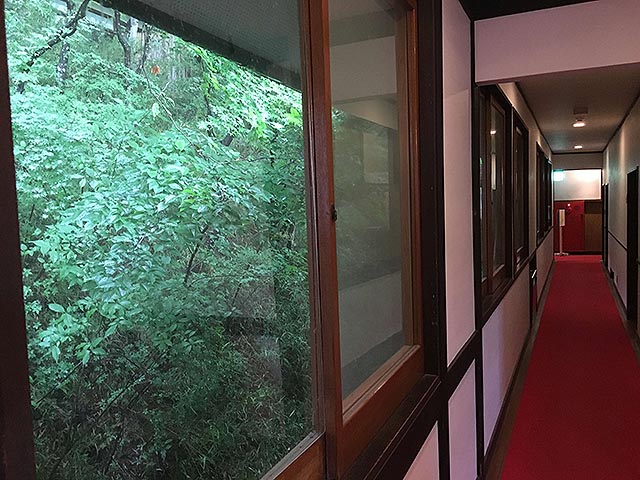
This historic Japanese Style Inn has three building with the original building of the Sekizenkan Ryokan was built in 1691, and this building is known as the oldest hot spring hotel in Japan.
The second building, the Sanso Building was created in 1936 using techniques of the master builders of the time, with the fixtures in each room containing delicate workmanship, helping to make this a building beloved by politicians and prominent authors, and I can attest to the beauty of these rooms.

The third building, known as the Kashotei is located deep in the pine forest. Nothing quite like the fresh smell of the pristine pine forest wafting into your room as you sip Japanese rice wine while ponder the meaning of life.

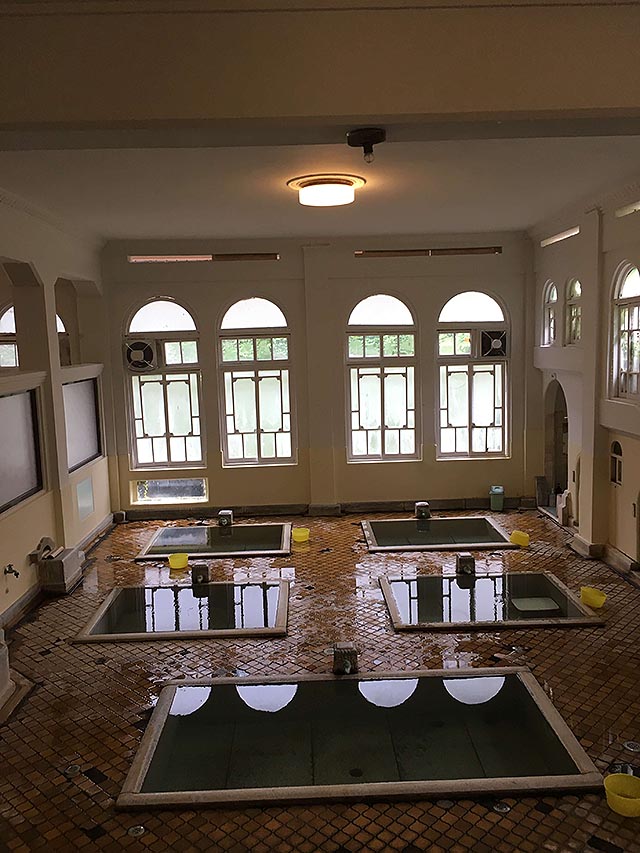
Due the history and architectural design, the Main Building, the Sanso Building, and the Genroku no Yu hot spring baths have been designated as cultural assets of Japan.

Furthermore, to add to the deep sense of history and the importance of this national treasure, this Japanese Style Inn has been the model for movies and animated films.

For example the Seikizen Ryokan served as a model for Hayao Miyazaki’s animated film “Spirited Away”,

If you are not familiar with this excellent anime, then please check at the following link:

Spirited Away

The Seikizen Ryokan was also used as a filming location for the movie “Heaven Station”, staring Sayuri Yoshinaga

Station to Heaven

Starring Sayuri Yoshinaga.

As we were driving along the pristine mountain windy road, all of the sudden, a song started playing as we are driving across the road!
Now, what could this be?

Lo and behold it was a musical road!

I had never heard of this marvellous invention until I drove on this stretch of incredible road while on our merry way to the Seikizenkan Ryokan.

It really never ceases to amaze me what the Japanese create and this is certainly no exception. What a wonderful thing to unexpectedly experience while driving along the country road.

What exactly is a Musical road?

Check out this Musical Road In Japan.

If you ever have the chance to go to this historical Japanese Style Inn in Shima Gunma prefecture called Seizenkan Ryoka, I think you will think what I thought, and that is:

Extremely awesome!

As I walked these hallowed halls of this historic Japanese Style Inn, I couldn’t help but feel a sense of Japanese history and culture in a deep and profound way.

I thought of the Samurai warriors in chonmage (top knots), drinking sake by the oil lamps and planning attacks on other clans while strategizing their next move.

Intriguing to say the least.

So, when are you going to go to the Seizenkan Ryokan in Shima, Gunma prefecture ?


Japanese telepathy: i shin den shin

Japanese telepathy: i shin den shin

Japanese telepathy: i shin den shin

Japanese telepathy:

i shin den shin

Coming from Zen Buddhism, this is a state where two parties need not language spoken or written to communicate between their heart for mutually unspoken understanding.

i shin den shin is still a fundamentally unknown concept to the occidental mind; however, it is an ingrained Japanese cultural phenomena unparalleled anywhere, and has been woven into the fabric of the Japanese DNA over the millennia, there is no doubt.

Originally, this four-character compound “i shin den shin” was meant to convey from the Zen Buddhist master to the disciple’s mind, the essence of Buddhist law not expressed in words or letters.

“I will convey to your heart with all my heart”

two hearts

Another way you could describe “i shin den shin” is:

Understanding the unspoken social conventions of Japanese society and adhere to them.

Indeed, perhaps the Japanese themselves do not really even know it is there; but it is there, nonetheless.

Again this mysterious phenomenon is not really something the majority of the occidentals can begin to fathom.

One must live here and understand how to read the air “kuki wo yomu”, which is an actual Japanese expression.

Sometimes those less aware of the feelings of other are often describe someone who “can not read the air”, or KY.

For a deeper insight into the roots of “i shin den shin” check out the incredible .

Negishi Lives On

Negishi Lives On

Negishi Lives On

Negishi Lives On

I like living in the country of Japan, no, I literally mean in the countryside of Japan.

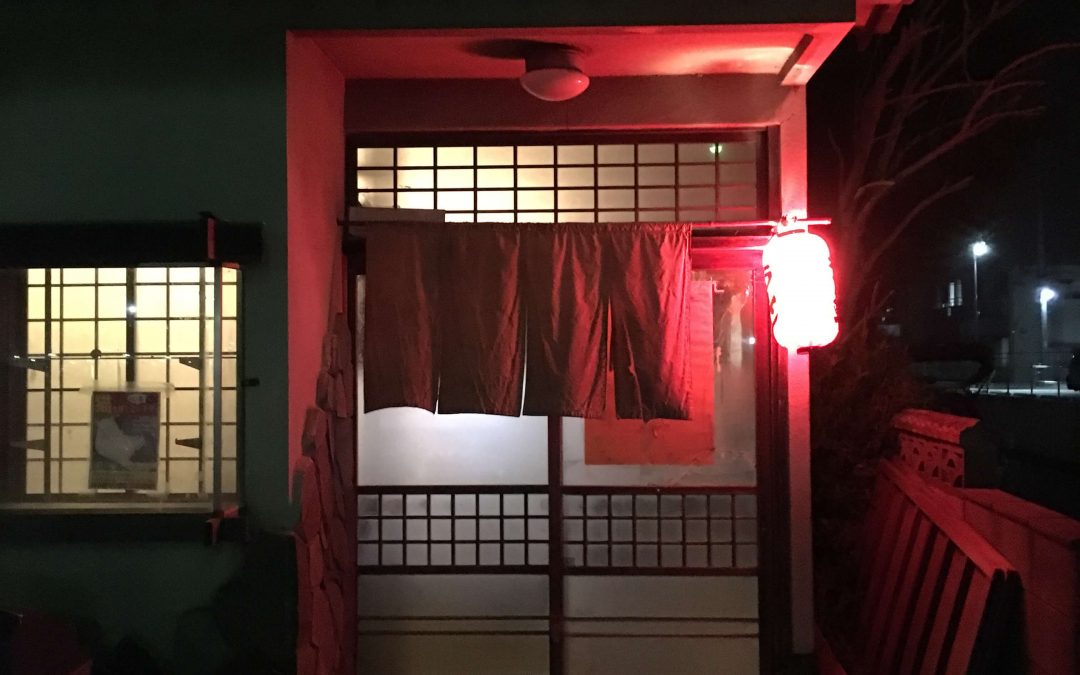
Negishi is the name of this restaurant, and it has been here, well, a long time!

Anyway, that’s not the point, the point is, this establishment servers extremely delicious food, and I’ve been a patron for many years.

Often, some of the items written on the menu board are not available.

Why?

Who knows.

And that’s the joy of Negishi, the absent minded Master who loves to make food, but doesn’t really like to clean up.

Serving the absolute best salt flavoured ramen on the planet, the Master of Negishi takes pride in his food, and we can always see him smiling as he watches his patrons enjoying their meal.

These type of places are ubiquitous in Japan, and I suppose you could say in Asia generally. These shops have their regulars, and they are the grassroots of Japanese drinking culture.

Drinking with colleagues and bosses in well worn and establishments in these long sessions are referred to as junkatsu yu, which means social lubricant. A very important concept to understand while here in Japan.

Now, as you may have noticed by the pictures; The health inspectors, it’s been a while since the they paid a visit.

We used to go to one of the best yakitori (chicken on a stick) places on the planet and it was similar.

The master was cooking his chicken on a stick, as the old open fans clicking away it was plugged in just overhead of the grill and was caked with grease.

Regardless, I asked this now deceased master who usually smoke a cigarette while turning the yakitori what is the secret of this amazing yakitori, and he said to me “cook the parts that are not”.

This is a profound statement full of sage advice, even if this was not the intent while being said.

Indeed, you could look at you own life though the lens of this metaphor.

For me anyway, “cook the parts that are not” is about picking up those lost things for which I had thought would have been done many yesterdays ago.

For example, I have played on a Blues Rock trio for 18 years and have written over 30 original songs with my brilliant best friend and guitar player. So, making the Cranky Old Bastards first album is certainly one of my “cook the parts that are not” items that need attention for certain.

The first album is now in pre-production and has been scheduled for release in Spring of 2020.

So, I say to you dear reader, as we part ways for another day and until next week on Wednesday:

Which uncooked parts of your life are in need of you attention today?