Alcohol Ponds—Meat Forests

 Alcohol Ponds—Meat Forests

 Alcohol Ponds—Meat Forests

 Alcohol Ponds—Meat Forests

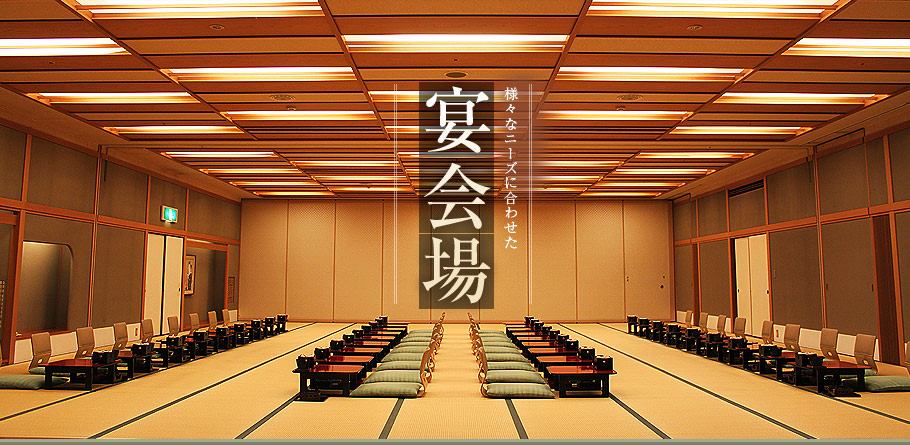
The Japanese love to have parties!

Official ones are known as “enkai”, which translates to “banquet”, but is much more formalized here.

These types of parties are very common in Japan and is a bonding session between members of the feasting group.

Of course the party always starts with some long winded speech by a couple of “important people”, of the group. These speeches tend to drone on and every one wants them to shut up and start the party.

There’s always an amazing array of delicious food and lots and lots of “junkatsu yu” or social lubricant.

When the the party consist of all males, you often see the “companions” come in. These are hired all young ladies more often than not in their early 20s smelling of cheap perfume and they are there to coddle these middle-age salary men or business people along, and add spice to the party.

Clocking in at exactly 2 hours. The banquet ends with everybody standing up and doing something that’s known as “3 bon jimei”. This is where the leader of the party, says ready go, and everybody claps their hands three times and then shouts “yo”, repeated two more times for a total of three, and at the end everybody claps and cheers, and that’s the end of this particular party, but not the end of the night no sir!

The party then breaks up into separate groups with lots of the younger crowd going sing more karaoke, or more commonly so amongst the men, go to what is known as a “snack”, where they drink more alcohol served by young hostesses, and eat overpriced fruit trays.

This is what is known as “ni jikai” or “second party”.

More often than not, these snack men then go into a 3rd and last party, which is at a late night ramen shop.

There they drink more beer, eat hearty bowls of noodles containing heavy calorie rich broth, and eating Chinese dumplings.

Have experienced this myself, and can attest to feeling of heaviness the next day. I’ve only done this a couple times in my life. You are better off to skip this one, unless you are hungry, which you are not.

The Japanese “enkai” banquet is truly a unique experience, and you can not truly understand this unique Japanese party style until you have actually experienced one for your own self.

Tuna Fish Insanity

Tuna Fish Insanity

Tuna Fish Insanity

Tuna Fish Insanity

Personally, I don’t eat things that are becoming endangered, but that is just me.

However, the Japanese are at it again, expensive seafood, really, really expensive seafood.

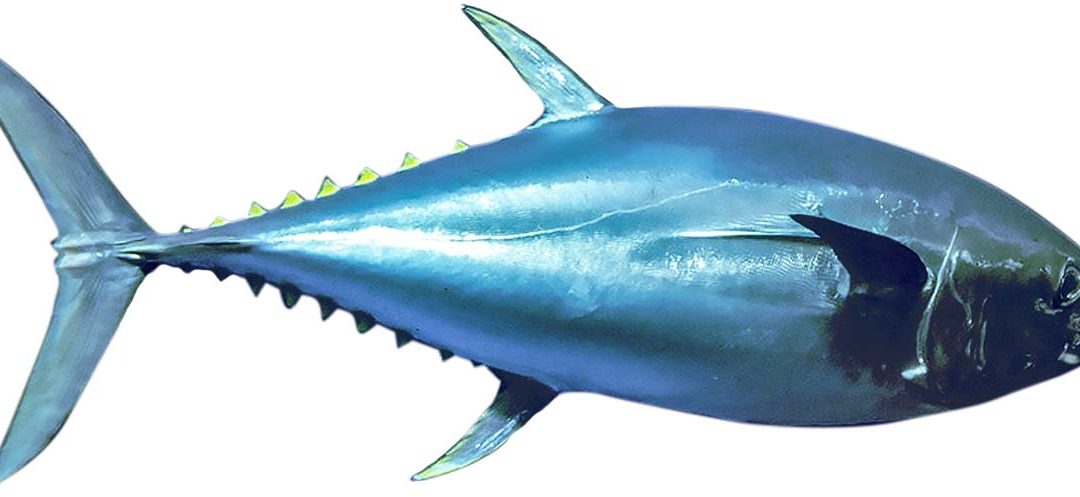
A single  fetched 193.2 million yen on Sunday at the 2020 New Year’s auction at Tokyo’s , the second-highest price on record.

The record holder is a now gone, but not forgotten which fetched a record 333.6 million yen in the New Year auction last year (2019) when it was held for the first time in following the market’s relocation from the historical and fabled .

The price paid for this year’s prize 276-kilogram amounts to 700,000 yen per kg.

The successful bidder was again , the Tokyo-based operator of sushi restaurant chain .

The company said the tuna will be served at the chain’s restaurant in nearby , the former location of the capital’s major fish market.

For me tuna is surely delicious, but not that wonderful I assure you.

You can find comparable immaculate flavours of sashimi or sushi, when you order fresh abalone liver or the ever so amazing sea urchin.

Further tickle your taste buds with the fatty meat of bonito, engawa of flatfish, and crab brains.

I promise, you won’t have to pay ¥10,000 a mouthful, and I also promise you will come away from dinner just as sated.  Furthermore, you can have a clear conscious that you have not consumed one of the few last, near extinct remaining king of all fish; the majestic .

Love Of Crab

Love Of Crab

Love Of Crab

For The Love Of Crab

No one can accuse the Japanese of doing thing halfway.

When they engage, they really engage.

And their willingness to on occasion  pay exorbitant amount of money for what one would think is ordinary seafood, is, well, alive and well.

You would think that paying ¥5 million for a ONE itsukiboshi (five shinning stars) crab is absolutely absurd.

Think again!

That is exactly what happened just the other day here in the Land Of The Rising Son, in Tottori prefecture to be exact.

An itsukiboshi caught in Tottori Prefecture attracted the highest-ever bid for a crab at auction of 5 million yen.

A local Tottori crab seller, Kanemasa Hamashita Shoten was the successful bider at ¥5 million.

Last year this company also bought the prized itsukiboshi crab for a mere ¥2 million, and has now smashed its own Guinness book of World Records for the highest price ever paid for a crab.

Not surprisingly, this poor fella is heading off to a restaurant in the Ginza district, where it will be a novelty for some well heeled patrons and  staff and indeed, the jubilant owner of the restaurant.

Let’s see if in a year, at the first crab auction in Tottori what the surreal story will be when it’s time to bid once again on the king of crabs: itsukiboshi.

You can see the video of the happy winner of this incredible auction here.

Japanese Way Of Cake

Japanese Way Of Cake

Japanese Way Of Cake

The Japanese Way Of Cake

The Japanese never fail to amaze me when it comes to KAIZEN.

As I’m sure many of you already know as fans of Japan, the Japanese take things from the outside world, and put a Japanese twist on it to make it uniquely Japanese.

Their cake making technique is certain no exception.

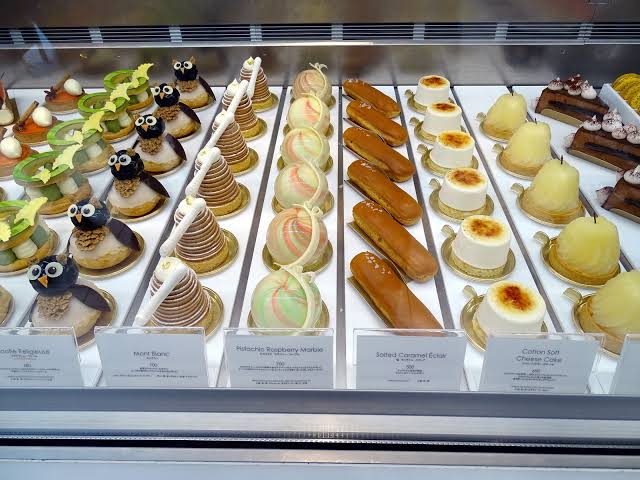
Having a bit of a sweet tooth myself, I am always overjoyed when there is an occasion to eat cake. And the many cakes shop to choose from always leaves me delighted as well.

Something in the aesthetic balance among the visual delightfulness and the immaculate amalgamation of flavours is breathtaking more often than not to say the least.

Right down to the wasteful packaging of wrapped cake into box, into bigger box, and then a very well designed and sturdy plastic bag, to make the cake purchasing experience almost surreal in a sense.

Now dear reader, if you have not had the opportunity to experience the Japanese Way of Cake, I strongly urge you to do so.

You can see these exquisite cake shops in the food floors of the department stores throughout Japan, individual cake shops dotting the landscape of the rural towns, in the American style malls, and indeed, these elegant pieces of cake art are also served in the plethora of quaint coffee shops that infuses Japan with a cultural uniqueness all to it own.

Wagyu vs Amegyu

Wagyu vs Amegyu

Wagyu vs Amegyu

Wagyu vs Amegyu

The way one thinks about beef is fundamentally different between America and Japan.

It seems that the general philosophy of the Americans is; more is better.

As this is borne out by the massive steaks, hamburgers, and ribs available in the dinning establishments of the US. As well as the plethora of meat products to choose from at the supermarket, it seems like meat is consumed for almost every meal in America household.

What about Japanese beef, know as “Wagyu”?

As you may or may not know, Japanese beef is highly valued throughout the world for its high quality.

In particular you can look to renowned beef producing regions of Japan including; Matsuzakagyu, Kobegyu, or the incredible YonezaWagyu.

Have you ever had the opportunity to try “Wagya”?

The secret behind the incredible flavour of Wagyu is in the raising of these cattle.

These animals live in luxurious condition and are pampered for 18 months more than regular American beef; 3 full years.

Indeed, in light of these facts, the cost of such beef is at a premium.

Additionally, the meticulous marbling is the signature of Wagyu, and not only does this marbling provides an exquisite texture that melts in your mouth, but compared to other types of beef, Wagyu is rich in monounsaturated fatty acid (oleic acid).

And due to the very high ratio of this oleic acid, Wagyu has a rich and powerful flavour; a must try for all beef connoisseur

When I first came to Japan, beef was extraordinarily expensive and was thought of as an item for special occasions only.

I once went into a butcher shop and was shocked by the price of their beef, with the most expensive one coming in at ¥1,000/100g (USD $9.50/3.5oz).

It was extremely delicious to say the least, but not something on the daily shopping list.

During this time there was some trade friction between the US and Japan concerning the non-tariff trade barriers to American beef and oranges.

And just when this friction between partners seemed to have been resolved, mad cow disease shows up.

In 1986, the first case of mad cow disease was discovered in the UK. A few year later, Japan’s first mad cow disease was discovered in 2001, and Japan banned beef imports from 2003 to 2013 when the regulations were finally relaxed.

As such, we are seeing a significant increase in the amount of beef being consumed by the Japanese, much of it imported.

Could it be that the only successful American warehouse club in Japan has gained traction and is the reason why ”all-you-can-eat” yakiniku (Korean BBQ style) restaurants popping up all over Japan.

Examining this trend you could say that the Japanese as a culture have always taken from outside influences, and make them incrementally better over time (kaizen).

Where will the Japanese take the American way of eating beef, and what will be the consequences on the health of the Japanese citizens in the future?

Only time will tell.

Delights Of The Sea

Delights Of The Sea

Delights Of The Sea

Delights Of The Sea: Sashimi

Sashimi translates to “raw fish”, and who would have ever have thought this Japanese word would become a part of the English lexicon.

Let’s think about it: Who in their right mind would think, “Why not – let’s eat fish raw”, said no one from the western world, ever.

However, once you discover the delightful and subtle flavours of the “umi no sachi [delights of the sea]” there is no turning back.

Sometimes things just take a little getting used to, like the texture.

A particularly delightful aspect of sashimi, is its seasonality.

For example, in the autumn the saury pike are mature and have layers of fat on them, absolutely delicious with the soy sauce and freshly grated ginger. I also recommend saury pike done in shioyaki (baked in salt), with a squeeze of kabosu (What is “kabosu”?)

Around the end of October, one of my all time favourites, bonito (katsuo) will be returning to this area after feeding in the northern seas off Hokkaido over the spring and summer. These fish have also fattened up and are amazing when seasoned with freshly grates garlic (I suggest Aomori garlic) and soy sauce.

At the beginning, I never thought of eating abalone liver. I was amazed at just how delicious the liver of not only abalone is, but fish liver in general being extremely delicious. I actually love abalone liver so much I make a video of preparing abalone livers (How to prepare abalone)

Not everything is love at first sight: The first time I tried sea urchin, it was not so good. I am not sure if the sea urchin was not fresh or what, but I was certainly not a fan at the beginning. However, after I went to a sushi bar and was served sea urchin again, only this time it was incredible, as it was fresh out of the water and still shimmering, absolutely delightful (What is sea urchin?)

Not only is sashimi the most delicious way to eat fish, it is offered nestled in a stunning visual displays of the chefs artistic creativity.

If I had to choose one Japanese cuisine for that I consider the best, I have to nominate sashimi to be the most exquisite delicacy in the entire Japanese food culture.