Shoes On, Shoes Off

Shoes On, Shoes Off

Shoes On, Shoes Off

Shoes On, Shoes Off

Now, say the title again with the voice of Mr. Miyagi, the karate master to his young disciple, Daniel LaRusso, the downtrodden and bullied boy.

Wax on, wax off.

Recall, where the training started?

The first of many training session consisted of washing and waxing the cars.

Clock-wise, wax-on.

Counterclockwise, wax-off.

If one can not recall this extraordinary cinematic event in the Karate Kid, or is too young to have ever heard about this important film, the refresh is below:

The seemly disconnected start of the karate training was significantly different from the constructed reality of the young grasshopper own mind of what karate training actually is.

Things are not what they seem.

Shoes on, shoes off.

reasons_take_off_shoes_minute_walk_in_house_toxins

One will notice after arriving in the Land Of The Rising Son, that more often than not, one must remove the shoes before entering a house and often in restaurants as well.

This was not the case growing up in the countryside of British Columbia where most of the time people wore their shoes in the house.

Recalling an very unfortunate incident where as a child the outside shoes were worn onto a friend’s mothers beautiful plush white carpet, after having failed to wipe off the doggie poo before entering their house.

I am truly very sorry for this Mrs. Henderson.

ごめなさい I am sorry

Indeed removing shoes before entering a dwelling makes perfect sense, why would one carry the impurities of the outside world to pollute one’s own inner sanctuary?

Here is the shoe secret:

Loosen the laces.

Crush down and flatten the heals of your beloved shoes under the boot-heal of the incessant shoes on, shoes off reality.
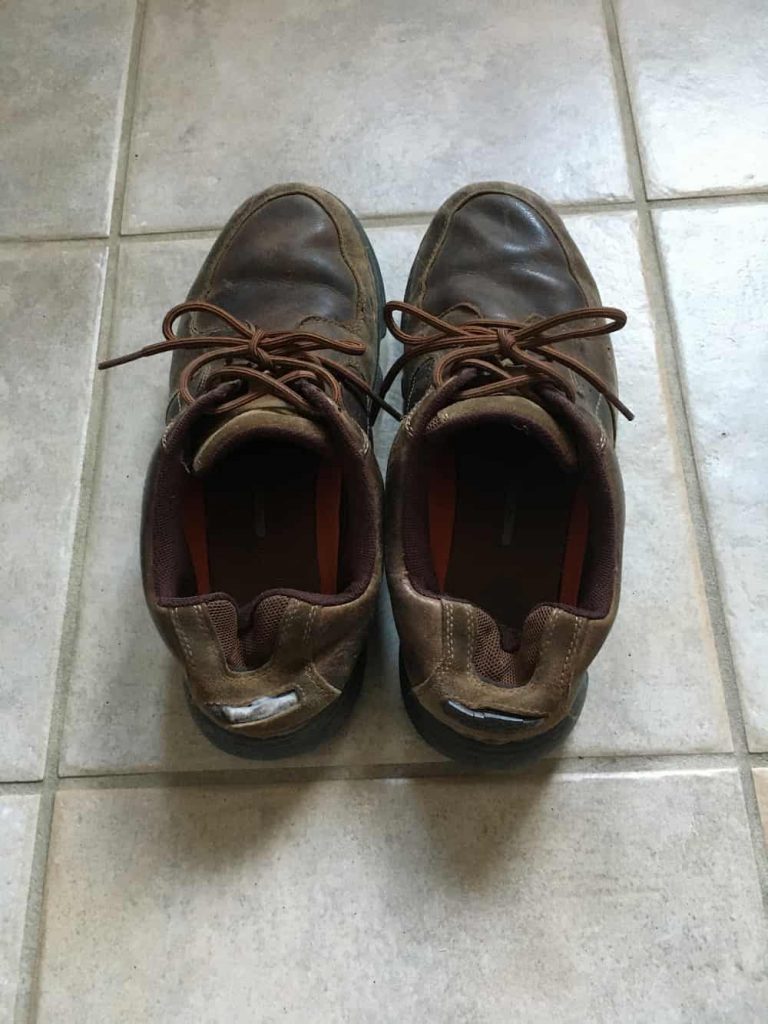
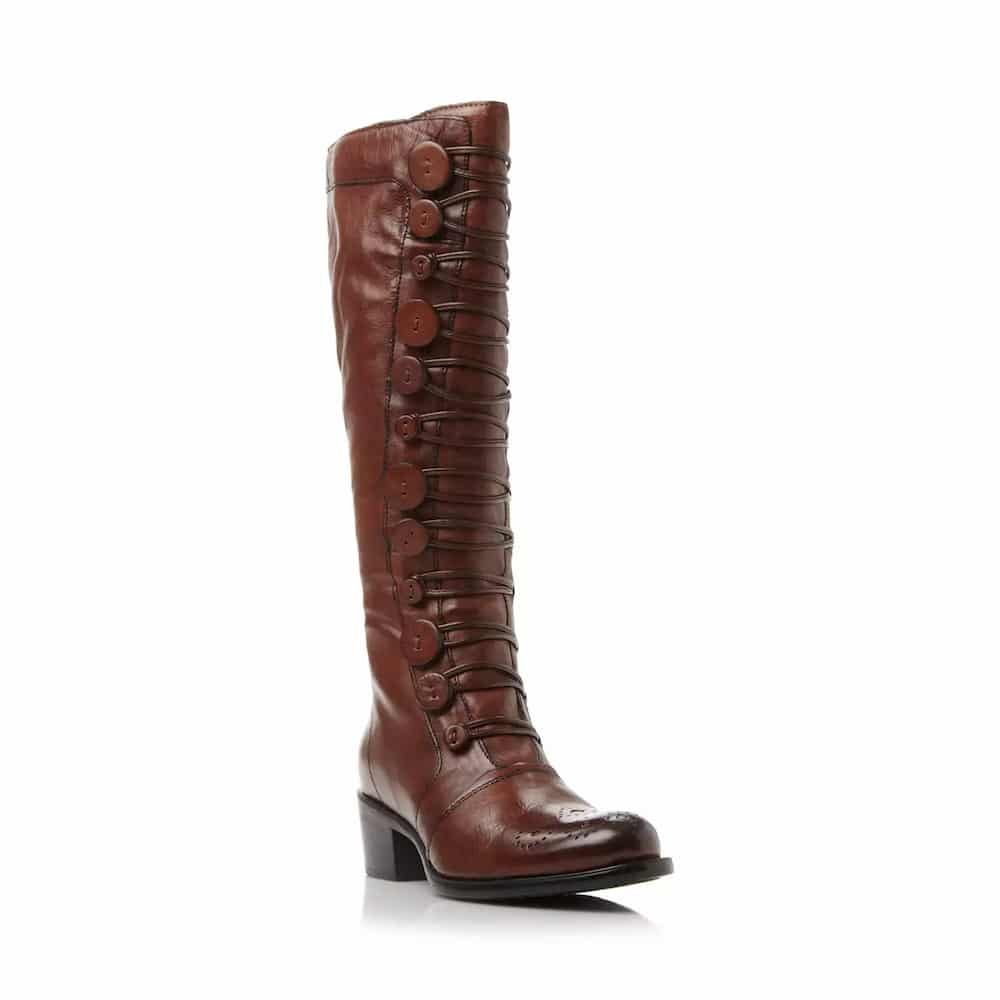
Shoes With Crushed Backs

Perhaps the shoes on, shoes off protocol leads to subconscious and ingrained disciplines, like keeping one’s outside world separated from the inner sanctum of one’s private life, thus maintaining one’s sanity.

And now here.

Mask on, mask off.

In the simple reality of going about one’s regular outside life, the mask protocol is just like every other Japanese winter flu season.

Except from now on it will extended throughout the year, to include all and has become the social norm in Japan without much further ado.

Moreover, the Japanese have already been socially conditioned to wear their metaphorical mask from an early age in order to co-exist in this ridged hierarchical society.

Perhaps the mundane tasks of life such as wax on, wax off, shoes on, shoes off, and now mask on, mask off, will lead to being mindfulness of one’s own life form, order and process, as one continues to fortify one’s own constitution and resolve in this new mask on, mask off world.

Bonus 1:
Now circle around to the beginning of this post and watch the masterful outcome of the wax off wax philosophy here:

Bonus 2:
Recommended footwear
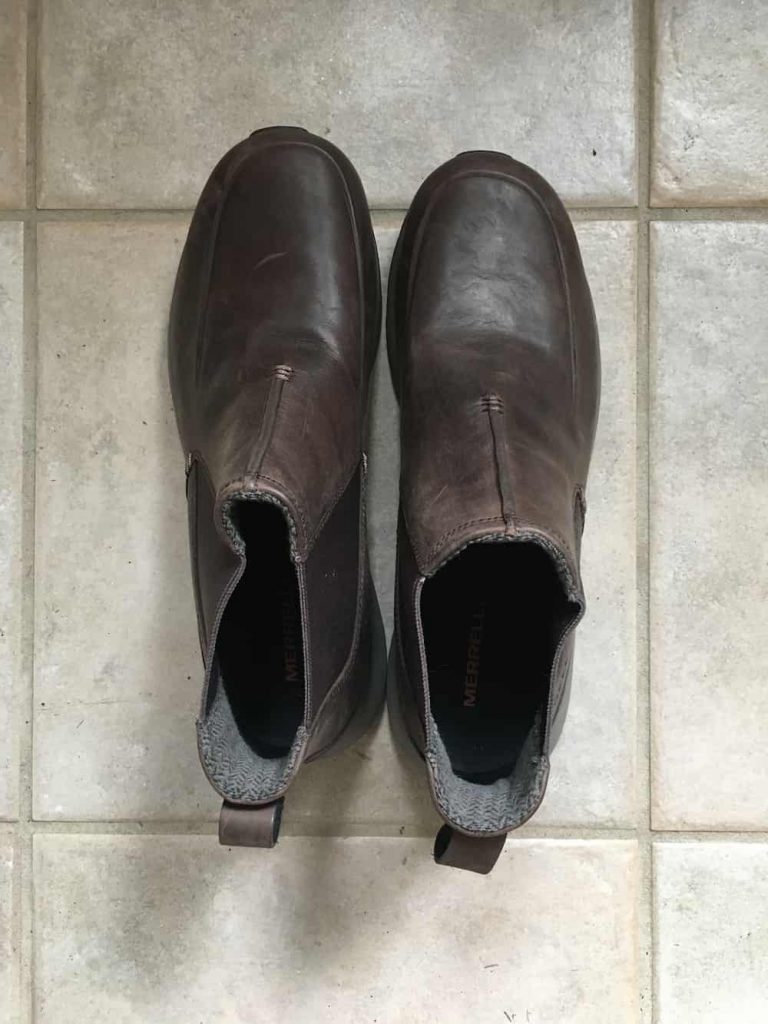
New Slip On Shoes

Recommended Footwear 04


Recommended Footwear 05  Recommended Footwear 01 Recommended Footwear 06


Bonus 3:

Not recommended footwear

Not Recommended Footwear 06


Not Recommended Footwear 08 Not Recommended Footwear 01 Not Recommended Footwear 05 Not Recommended Footwear 03 Not Recommended Footwear 04 Not Recommended Footwear 07 Not Recommended Footwear 02
Sorry Boys, No Baseball Today

Sorry Boys, No Baseball Today

Sorry Boys, No Baseball Today

Sorry Boys, No Baseball Today

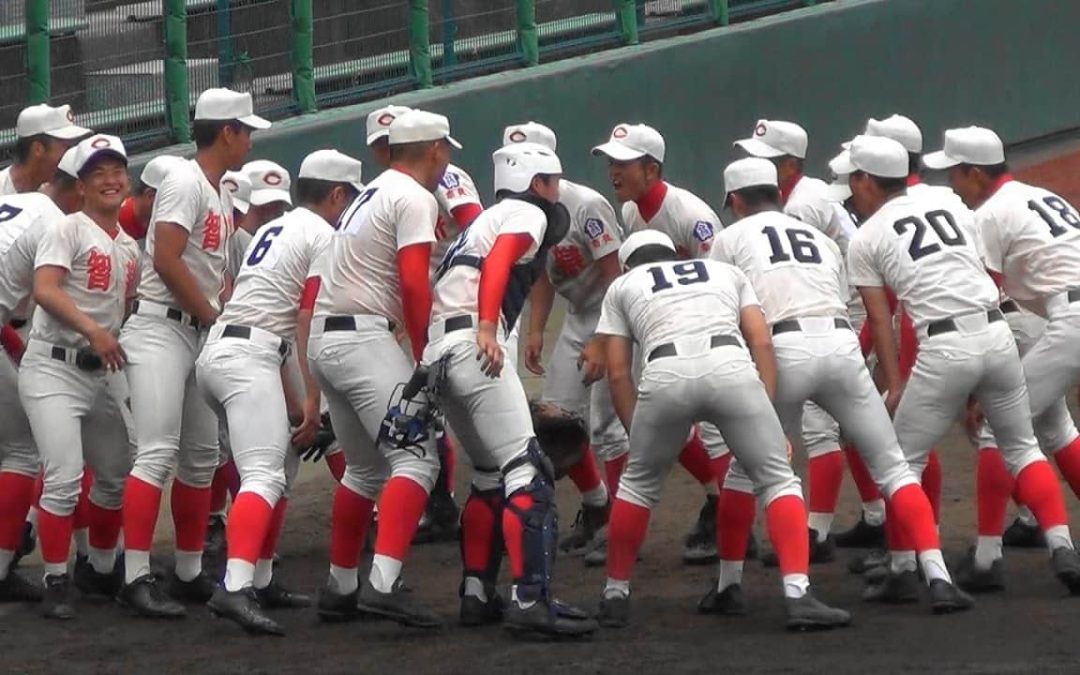
The Japanese National High School Baseball Championship tournament got cancelled for they first time in several decades.

Alas.

Personally, I am not a spectators of sports, preferring to play badminton with my local club; however, I do love the Japanese National High School Baseball Championship for its sheer fervour and passion.

This tournament is the largest amateur sport event in Japan, and if you have ever seen a high school baseball game whether at this major tournament, or at a local game with the players doing their very best along with their vision of the national high school championship clearly in their sights, there simply is nothing like this event in the sporting world anywhere.

A catalyst for many young aspiring baseball stars to go on to bigger things, in particular those who aspire to the ultimate goal of playing on a major league team, especially an American one.

Having only been cancelled twice in it over 100-year history (the tournament started in 1915), once in 1918, and then again, in 1941.

You could say that this was a “Black Swan” event for everyone involved.
Not only were these aspiring major league baseball players deeply saddened by the cancellation of this important life event, but the shock and dismay reaches far beyond the gloom of not only their immediate families and supporters, but indeed into the entire nation of Japan.

Why is this so you might ask?

National unity through friendly competition.

Yes the rivalries among the Japanese are very fierce, but this is an occasion for the Japanese to cheer on their home team, and to feel a sense of Japanese unity by doing so.

For many older folks in Japan this yearly event is a time to cheer on the home prefecture team, and to become nostalgic for the day of yore.

For the young baseball players, their high schools, and supports, this sad tales of how their dreams got cancelled with the stroke of a pen will become a discussion point long after school is out.

Bonus material:
Some of the alumni you may be familiar with having gone on to careers in the American Majors have been; Ichiro Suzuki, Daisuke Matsuoka, and Hideki Matsui, who was also know as “Godzilla” to the Americans.

Many of you may think Hideo Nomo, was the first Japanese to play in the American majors, but you would be wrong. It was actually Masanori Murakami, who pitched for the San Francisco Giants for one year in the 1964-65 season.


情熱


フル回転


応援団練習風景

A Journey Of A Thousand Miles Must Start With The First Step

A Journey Of A Thousand Miles Must Start With The First Step

A Journey Of A Thousand Miles Must Start With The First Step

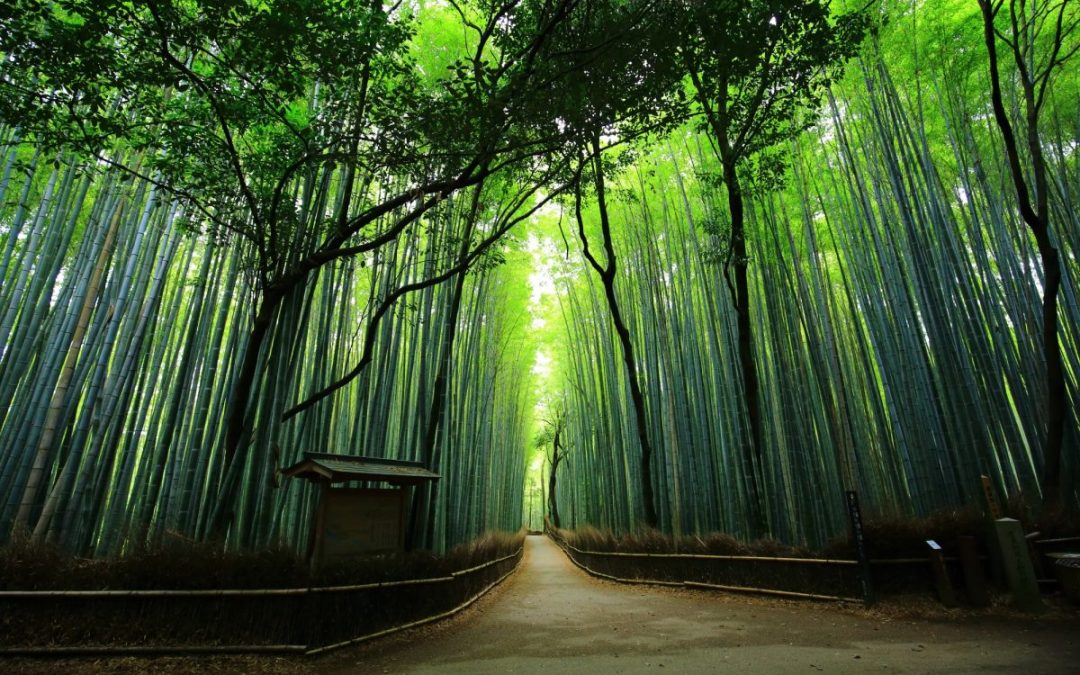
A Journey Of A Thousand Miles Must Start With The First Step

At one of my favourite restaurants, the young man next to me confessed; “I just quit smoking on April 1”.

I mentioned to him that “I thought it was awesome” he quit smoking, and that “a journey of a thousand miles must start with the first step”.

He looked at me with a blank stare, and through my experience told me he didn’t understand “senri no michi mo ippo kara”, or “a journey of a thousand miles must start with the first step”. For your information “senri is about 4000km”.

Neither did his colleague, who was probably in his 50s, nor did the lady that runs this delicious shop with her relatives for that matter.

Never one to pass up an opportunity to do a quick Japanese lesson and edify the Japanese as to the origins of this meaningful, and indeed useful phrase which happens to come from Confucius.

Over the fading years I find more and more many of these older and culturally rich phrase and idioms are becoming less and less known among the Japanese, and feel that some of these beautiful elements of the ancient Japanese culture are truly fading away. Alas.

Indeed this phrase embodies the Stoic way as how to approach the long and arduous road in which we all face.

And surley, as one instinctively knows, without that first step into one’s own road, and then the next, and the next one after that, one is doomed to look upon one’s live as a life in which one never took that very first step at all.

Each day is the day to take the step leading into the heart desire and into the future of what one will become.

A Journey Of A Thousand Miles Must Start With The First Step

Snow Monkeys Of Hell’s Valley

Snow Monkeys Of Hell’s Valley

Snow Monkeys Of Hell’s Valley

Snow Monkeys Of Hell’s Valley

An incredible natural phenomena is happening in the Land Of The Rising Son as we traveled to one of the largest prefectures and Japan, Nagano.

By the way, Nagano is mostly know for hosting the 1998 Winter Olympics.

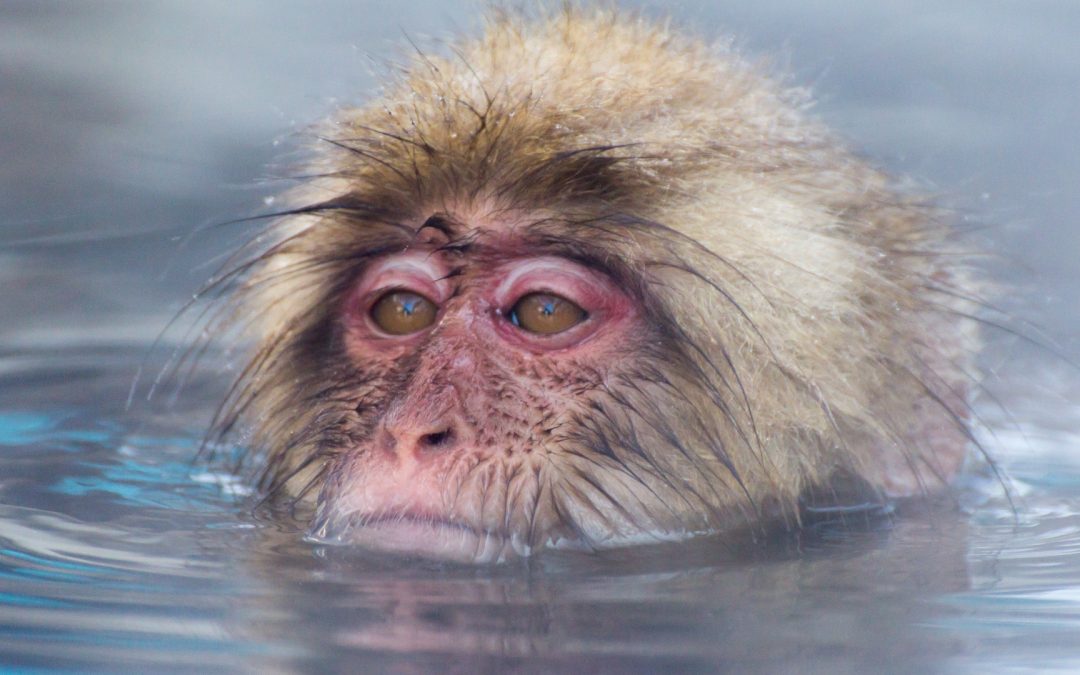
We made our way over the mountain trail to see the wild snow monkeys (wild Japanese macaques) bathing in the hot springs, and we were truly intrigued along with many other visitors at this incredible spot.

As we were observing these incredibly resilient animals, I couldn’t help but wonder, if it is actually us which are the ones in the zoo.

If you ever get a chance, please go to visit the Wild Snow Monkeys of Hell’s Valley.

PS: This particular prefecture is also where I have my very first taste of horse meat, both raw (soy sauce and garlic), and cooked on a hibachi decades ago now. Excellent, it was.

Japanese School Girl Enchants Powerful Talk Show Host: Part 1

Japanese School Girl Enchants Powerful Talk Show Host: Part 1

Japanese School Girl Enchants Powerful Talk Show Host: Part 1

Japanese School Girl Enchants Powerful Talk Show Host: Part 1

What does a 9-year old Japanese child have to teach what is arguable one of the most powerful, if not the most powerful person in American show business?

A little of the Japanese Way from Yokoka, the 9-year old drumming sensation to her very powerful and most gracious host.

The meeting of these two minds really starts when Yoyoka-Prodigy gave the most very powerful host a gift of a two-character calligraphy picture.

When asked “What does this say?”, Yoyoka-Prodigy points out to the most very powerful host, “this is your name”;

“E 絵
REN 蓮”

You can see the delighted surprise in the most very powerful host’s face, and then remarks “Oh, that’s my name”.

If you look at the picture below carefully, you can see what someone who is startled looks like.

I believe the most very powerful host had actually had no previous knowledge of what this elegant two-character ideographic calligraphy piece would mean.

Now, the wonderful name Yoyoka-Prodigy gave the most very powerful host was, 絵蓮 (E REN), which happens to mean “Lotus-Picture”.

I think you will have to agree, this was a very tender, well thought-out, and indeed meaningful gesture to honour this most very powerful host, who is now known to Yoyoka-Prodigy as Eren(sama).

Of course, Yoyoka-Prodigy was undoubtedly appending an honorific suffix to Eren’s name in her head, because you would never “throw away” {yobisute} anyone’s name without some kind of title, and thus an indication of the hierarchical tree, to which the Japanese are beholden.

LF = Lotus Flower (most very powerful host)
YP = Yoyoka Prodigy

LF continues, “Thank you very much, that beautiful, did you, did you do this on your own?”, stammering just a tich.

YP cheerful chimes “hai!”, while giving the whole scene a big thumbs up.

LF continues, “That beautiful, thank you.”

You can then see LF has been truly moved by this simple gesture from a 9-year old child.

Continuing “And we think it’s hard to teach our kids….., I mean that’s really intricate!”

Always the professional, LF brilliantly continues; “You know, we are taking her word for it, we don’t know what this says, this could really say anything….!”

This extraordinary exchange continues:

LF: I want to give you a gift, what kind of instrument do you want “learn” how to play next?
YP: In Japanese: I don’t want to “learn”, however, I am into playing the bass and guitar now, you know, guitar, bass.
LF: She is naming a lot of instruments, I just want to give her one. What, what is she saying?
Interpreter: She does really want to “learn” it, but she working on the the guitar and the bass right now.
LF: No Oh!!!
YP: In Japanese: Pardon? (looking perplexed as she tilts her head slightly)

LF: That’s not what I was hoping she would say.
Interpreter: Not that…
LF: Ask her some other instruments…
Interpreter: Any thing else???
YP: (stroking chin pensively) Nope!
LF: That’s it?

You can see the puzzled wonderment in the eyes of LF, shaking the head in semi-disbelief.

LF: Does she like a xylophone?
Interpreter: In Japanese; How about xylophone?
YP: “Learn” it??? (while giggling)

Interpreter: She doesn’t want to “learn” it.
LF: Does she want to look at one?
Interpreter: In Japanese; Would you like to see one?
YP: Nods her head in puzzlement
LF: Bring it out! (with a wave of the hand)
YP: Expresses a shakojirei (polite and diplomatic), by going “Yeahhh” and waving her arms.

I really had to smile at the title of this clip on EllenTube entitled; “Kid Drummer Yoyoka Soma Gets a Present She’ll Never Forget”.

I suggest the title read; “Most Powerful Person in American Show Business Has Most Meaningful Meeting of Minds With 9-Year Old Japanese Schools Girl.

Keep in mind, your TV program tends to take some unexpected and indeed delightful twists and turns, when talking to a 9-year-old Japanese schools girls who simply has no idea what; “What instrument do you want to learn next” means, and in her mind also thinking “why exactly are you talking about a xylophone?”.

Here is this incredible segment on Ellen Tube.

You can see the viral-video of Yoyoka covering one of rock music most difficult drum parts in; “Good Times Bad Times” by Led Zeppelin here.

Here is Robert Plant of Led Zeppelin fame reacting to Yoyoka playing “Good Times Bad Times”.

Stay tuned for part 2 next week where we explore more of this most intriguing meeting of the Japanese and the Western mind, when Yoyoka returns to the Ellen Show.

Enthronement Ceremony of Emperor Naurhito

Enthronement Ceremony of Emperor Naurhito

Enthronement Ceremony of Emperor Naurhito

Enthronement Ceremony of Emperor Naurhito

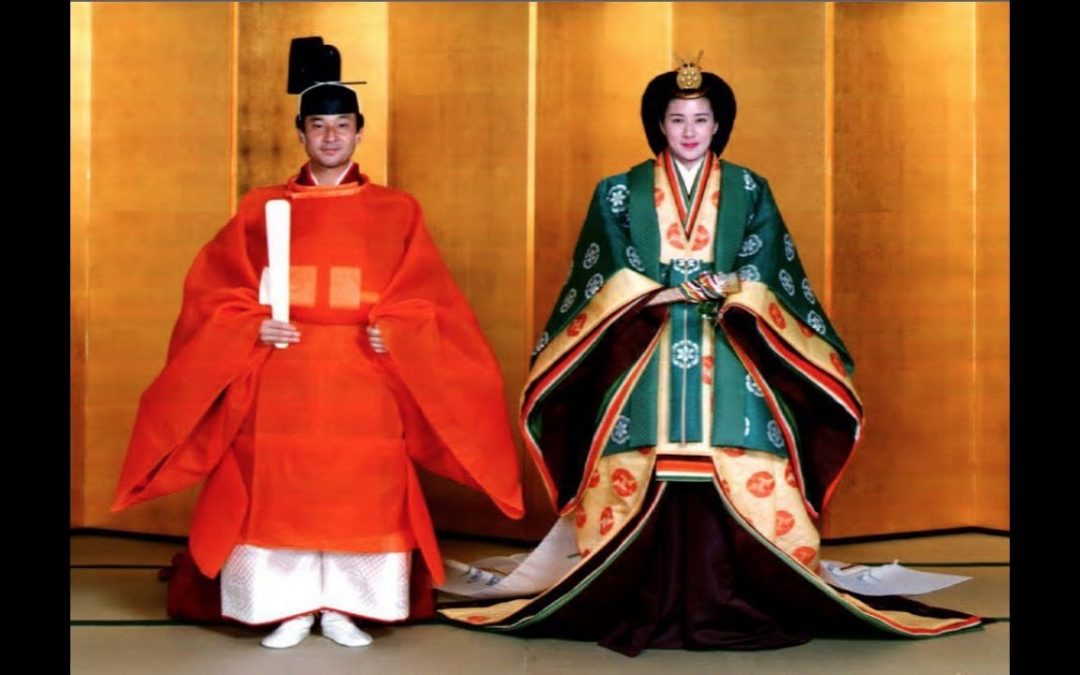
The enthronement ceremony for Emperor Naruhito took place on October 22, 2019 ().

I talked about the importance of the emperor to the Japanese in my first podcast back in May.

If you care to listen to this podcast you can do so here ().

Six months ago, Naruhito, the new emperor of Japan, received a sword, a jewel and official seals in a sacred ceremony that heralded his succession to the throne after his father, Akihito, became the first emperor to abdicate in more than 200 years.

The second ceremony which took place the other day, proclaims the new emperor before the rest of the world. 

Over 2000 guests and dignitaries from 190 countries were invited to witness this auspicious occasion, a rare once-in-a-lifetime event for these guests for certain.

Emperor Naruhito gave a short speech and this speech relays the desire of our new Emperor to continue the work of his father Emeritus Emperor Akihito to work as a symbol of peace and unity not only for the Japanese people but for all humankind.

Here is Emperor Naruhito’s speech:

Having previously succeeded to the imperial throne in accordance with the Constitution of Japan and the Special Measures Law on the Imperial House Law, I now perform the ceremony of enthronement at the Seiden State Hall and proclaim my enthronement to those at home and abroad.

I deeply reflect anew that for more than 30 years on the throne, his majesty the emperor emeritus constantly prayed for the happiness of the people and world peace, always sharing in the joys and sorrows of the people, and showing compassion through his own bearing. I pledge hereby that I shall act according to the Constitution and fulfill my responsibility as the symbol of the state and of the unity of the people of Japan, while always wishing for the happiness of the people and the peace of the world, turning my thoughts to the people and standing by them.

I sincerely hope that our country, through our people’s wisdom and unceasing efforts, achieves further development and contributes to the friendship and peace of the international community and the welfare and prosperity of humankind.

I sincerely hope these guest will return to their own countries with a renewed sense of duty towards the betterment of their own countries and the welfare for the citizens in the context of a harmonious global community.

In my next podcast, I discuss the roots of Japan, and shed more light on this enigmatic society and how it was formulated to become the most misunderstood society in our world.