Official Education

Official Education

Official Education

Official Education

The extent to which national character has been fixed by the discipline of centuries, and its extraordinary capacity to resist change, is perhaps most strikingly indicated by certain results of State education. 

The whole nation is being educated, with government help, upon a European plan, and the full program includes the chief subjects of Western study. 

From kindergarten to university the entire system is modern in outward appearance.

Yet the effect of the new education is much less marked in thought and sentiment than might be supposed. 

This fact can not be explained merely by the large place which old Chinese study still occupies in the mandatory program, nor by differences in belief.

Learn Japanese To Understand The Way - Land Of The Rising Son

It is much more due to the fundamental difference in the Japanese and the European conceptions of education as means to an end. 

In spite of new system and program, the whole of Japanese education is still conducted upon a traditional plan almost the exact opposite of the Western plan. 

In the Occidental world, the repressive part of moral training begins in early childhood.

The European or American teacher is strict with the little ones, we think that it is important to ingrain the duties of behaviour.

The “must” and the “must not” of individual obligation, as soon as possible. 

Later on, more liberty is allowed. 

The well-raised boy is made to understand that his future will depend upon his personal effort and capacity, and he is thereafter left to take care of himself, being occasionally admonished or warned. 

Finally, the adult student of promise and character may become the intimate, or, under happy circumstances, even the friend of his tutor, to whom he can look for counsel in all difficult situations. 

And throughout the whole course of mental and moral training competition is not only expected, but required. 

The aim of Western education is the cultivation of individual ability and personal character, the creation of an independent and forceful being.

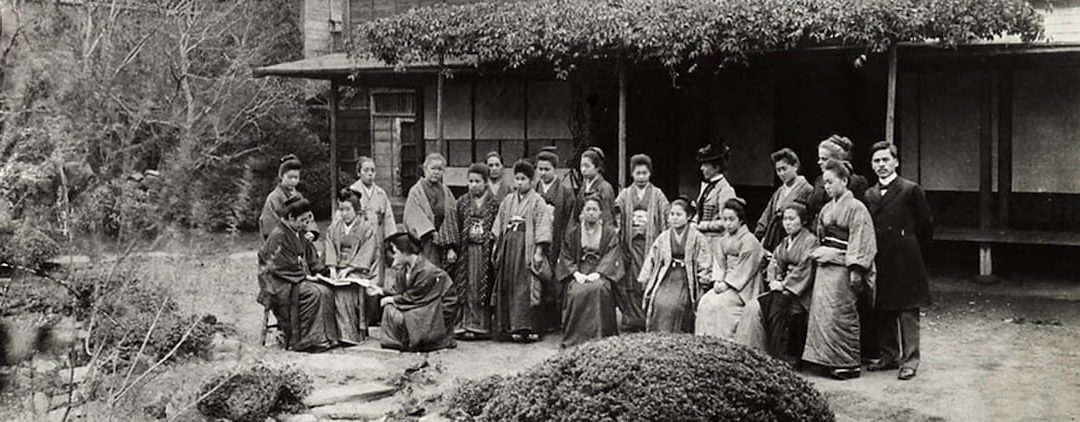
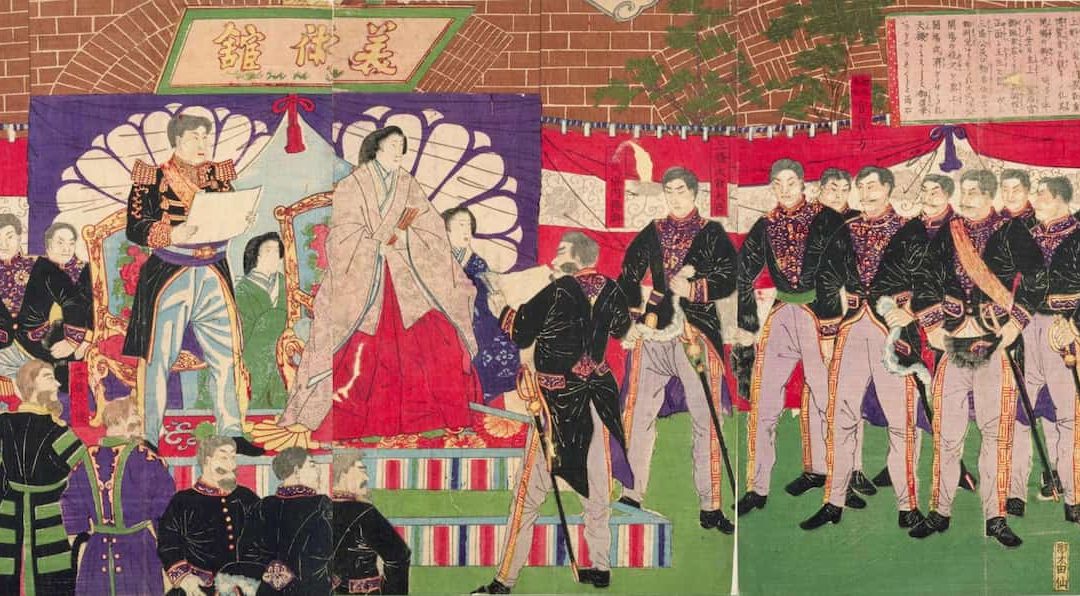
Meiji Era School - Land Of The Rising Son

Now Japanese education has always been conducted, and, in spite of superficial appearances, is still being conducted, mostly upon the reverse plan. 

Its object never has been to train the individual for independent action, but to train him for cooperative action, to fit him to occupy an exact place in the mechanism of a rigid society. 

Constraint among Occidentals begins with childhood, and gradually relaxes.

Constraint in Japanese training begins later, and thereafter gradually tightens, and it is not a constraint imposed directly by parents or teachers, which fact, as we shall see, makes an enormous difference in results. 

Not merely up to the age of school-life, but considerably beyond it, a Japanese child enjoys a degree of liberty far greater than is allowed to Occidental children. 

Exceptional cases are common, of course, but the general rule is that the child be permitted to do as he pleases, providing that his conduct can cause no injury to himself or to others. 

He is guarded, but not constrained, admonished, but rarely compelled. 

Punishment is administered only when absolutely necessary, and on such occasions, by ancient custom, the entire household, servants and all, intercede for the offender.

The little brothers and sisters, if any there be, begging in turn to bear the penalty instead.

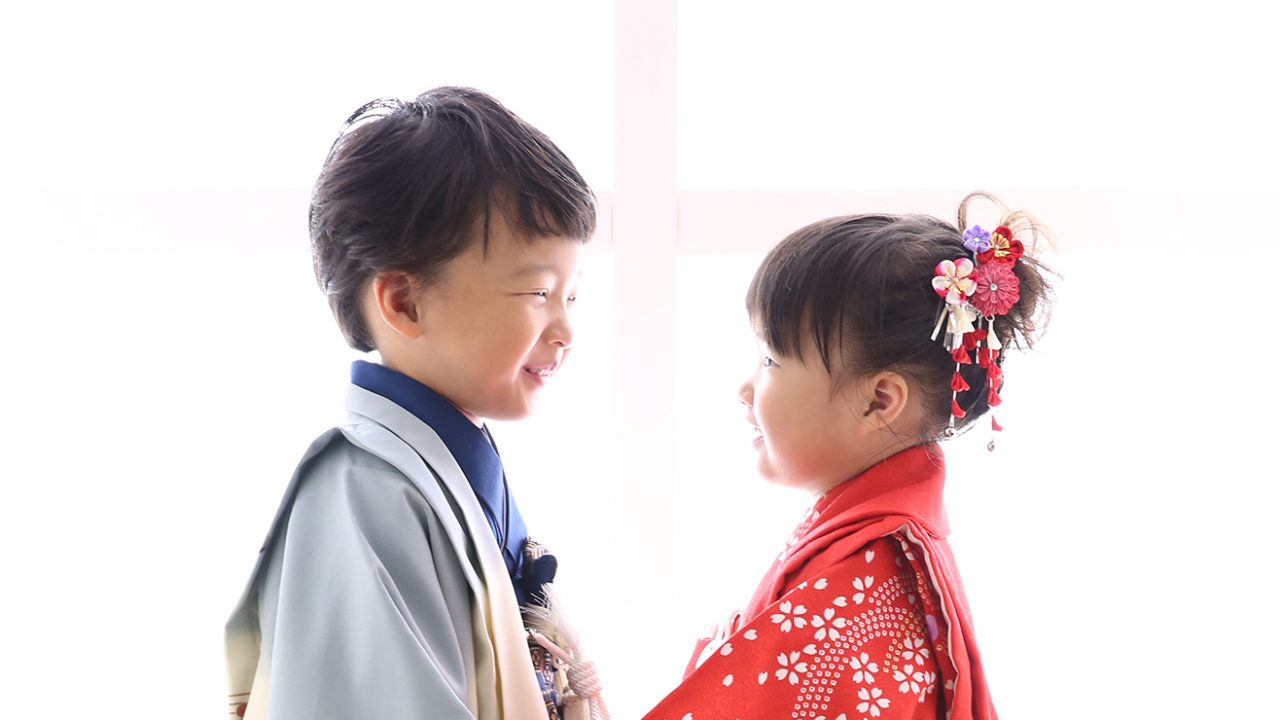
兄弟仲良し - Land Of The Rising Son

Whipping is not a common punishment, except among the roughest classes. 

To frighten a child by loud harsh words, or angry looks, is condemned by general opinion.

All punishment ought to be inflicted as quietly as possible, the punisher calmly admonishing all the while. 

To slap a child about the head, for any reason, is a proof of vulgarity and ignorance. 

It is not customary to punish by restraining from play, or by a change of diet, or by any denial of accustomed pleasures. 

To be perfectly patient with children is the ethical law. 

At school the discipline begins, but it is at first so very light that it can hardly be called discipline.

The teacher does not act as a master, but rather as an elder brother, and there is no punishment beyond a public admonition.

Whatever restraint exists is chiefly exerted on the child by the common opinion of his class, and a skillful teacher is able to direct that opinion. 

The ruling power always being class-sentiment, not the individual will of the teacher. 

In middle schools the pupils become serious.

明治時代中学生 - Land Of The Rising Son

Class-opinion there attains a force to which the teacher himself must bend, as it is quite capable of expelling him for any attempt to override it. 

Each middle-school class has its elected officers, who represent and enforce the moral code of the majority, the traditional standard of conduct.

It is never the domination of the one over the many that regulates class-life, it is always the rule of the many over the one, and the power is formidable. 

The student who consciously or unconsciously offends class-sentiment will suddenly find himself isolated, condemned to absolute solitude. 

alone on the mountain top - Land Of The Rising Son

No one will speak to him or notice him even outside of the school, until such time as he decides to make a public apology, when his pardon will depend upon a majority-vote.

Such temporary ostracism is not unreasonably feared, because it is regarded even outside of student-circles as a disgrace, and the memory of it will cling to the offender during the rest of his career. 

As a rule, the student passes into official life after having graduated, marries, and becomes the head, or the prospective head of a household. 

How sudden the transformation of the man at this epoch of his career, only those who have observed the transformation can imagine. 

It is then that the full significance of Japanese education reveals itself.

The reader will now be able to understand the general character, aim, and results of official education as a system.

Here the foreign professor is now regarded merely as a teaching-machine, and he is more than likely to regret any effort made to maintain an intimate relation with his pupils. 

Indeed the whole formal system of official education is opposed to the development of any such relation. 

No matter what the foreigner may do in the hope of finding his way into touch with the emotional life of his students, or in the hope of evoking that interest in certain studies which renders possible an intellectual tie, he must toil in vain. 

The Japanese professor, however, can ask for extraordinary efforts and, obtain them. 

He can afford to be easily familiar with his students outside of class, and he can get what no stranger can obtain, their devotion. 

The difference has been attributed to race-feeling, but it cannot be so easily and vaguely explained.

Something of race-sentiment there certainly is, it were impossible that there should not be. 

No inexperienced foreigner can converse for one half hour with any Japanese, at least with any Japanese who has not sojourned abroad, and avoid saying something that jars upon Japanese good taste or sentiment.

日本人の体質- 欧米人とはこんなに違った - Land Of The Rising Son

Few among untravelled Japanese can maintain a brief conversation in any European tongue without making some startling impression upon the foreign listener. 

Sympathetic understanding, between minds so differently constructed, is next to impossible. 

But the foreign professor who looks for the impossible, who expects from Japanese students the same quality of intelligent comprehension that he might reasonably expect from Western students is naturally disturbed. 

“Why must there always, remain the width of a world between us?” is a question often asked and rarely answered.

Some of the reasons should by this time be obvious, but one among them and the most curious, will not. 

Before stating it I must observe that while the relation between foreign instructor and the Japanese student is artificial, that between the Japanese teacher and the student is traditionally one of sacrifice and obligation. 

The inertia encountered by the stranger, the indifference which chills him at all times, are due in great part to the misapprehension arising from totally opposite conceptions of duty. 

Old sentiment lingers long after old forms have passed away, and how much of feudal Japan survives in modern Japan, no stranger can readily divine. 

Clarity Over Time - cybersensei - Land Of The Rising Son

Probably the bulk of existing sentiment is hereditary sentiment.

The ancient ideals have not yet been replaced by fresh ones.

In feudal times the teacher taught without salary.

He was expected to devote all his time, thought, and strength to his profession. 

High honour was attached to that profession, and the matter of remuneration was not discussed.

The instructor trusting wholly to the gratitude of parents and pupils. 

Public sentiment bound them to him with a bond that could not be broken. 

The tie between teacher and pupil was in force second only to the tie between parent and child. 

The teacher sacrificed everything for his pupil, the pupil ready at all times to die for his teacher. 

先生や生徒の明治時代 - Land Of The Rising Son

From the summit of society to the base, this sacrificial spirit rules. 

For example: A certain university professor is known to have supported and educated a large number of students by dividing among them, during many years, nearly the whole of his salary. 

He lodged, clothed, boarded, and educated them, bought their books, and paid their fees, reserving for himself only the cost of his living, and reducing even that cost by living upon hot sweet potatoes.* 

*Fancy a foreign professor in Japan putting himself upon a diet of bread and water for the purpose of educating gratuitously a number of poor young men! 

There are yet other facts in modern education suggesting even more forcibly how much of the old life remains hidden under the new conditions, and how rigidly race-character has become fixed in the higher types of mind. 

I refer chiefly to the results of Japanese education abroad, a higher special training in German, English, French, or American universities. 

In some directions these results, to foreign observation at least, appear to be almost negative. 

Considering the immense psychological differentiation, the total oppositeness of mental structure and habit, it is astonishing that Japanese students have been able to do what they actually have done at foreign universities. 

To graduate at any European or American University of mark, with a mind shaped by Japanese culture, filled with Chinese learning, crammed with ideographs is a prodigious feat, and scarcely less of a feat than it would be for an American student to graduate at a Chinese University. 

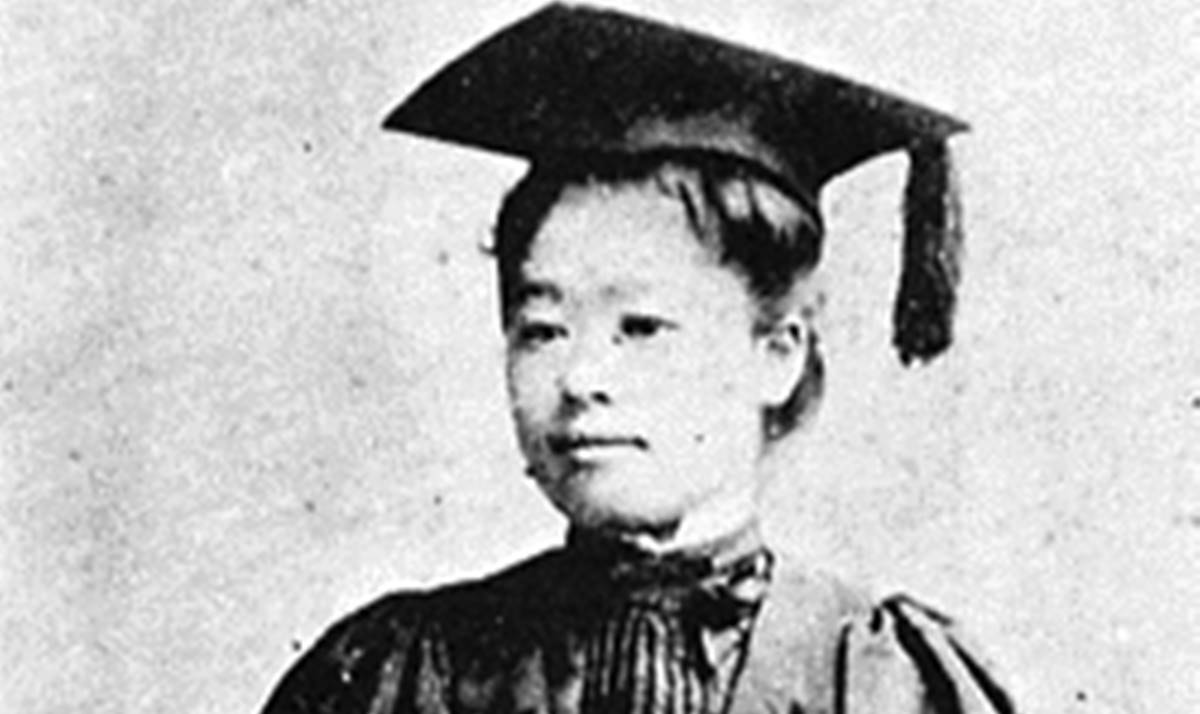
津田梅子11歳 - Land Of The Rising Son 津田梅子11歳 - Land Of The Rising Son

Certainly the men sent abroad to study are carefully selected for ability, and one indispensable requisite for the mission is a power of memory incomparably superior to the average Occidental memory, and different altogether as to quality, a memory for details, nevertheless, the feat is amazing. 

But with the return to Japan of these young scholars, there is commonly an end of effort in the direction of the speciality studied, unless it happens to have been a purely practical subject. 

Does this signify incapacity for independent work upon Occidental lines? 

Incapacity for creative thought? 

Lack of constructive imagination? 

Disinclination or indifference? 

The history of that terrible mental and moral discipline to which the race was so long subjected would certainly suggest such limitations in the modern Japanese mind. 

The plain truth is that young men are sent to foreign seats of learning for other ends than to learn how to devote the rest of their lives to the study of psychology, philology, literature, or modern philosophy. 

They are sent abroad to fit them for higher posts in Government-service, and their foreign study is but one obligatory episode in their official career. 

Study Abroad - Land Of The Rising Son

Each has to qualify himself for special duty by learning how Western people study and think and feel in certain directions, and by ascertaining the range of educational progress in those directions, but he is not ordered to think or to feel like Western people, which would, in any event, be impossible for him. 

He has not, and probably could not have, any deep personal interest in Western learning outside of the domain of applied science. 

His business is to learn how to understand such matters from the Japanese, not from the Occidental point of view. 

But he performs his part well, does exactly what he has been told to do, and rarely anything more. 

It is otherwise in the case of men sent abroad for scientific studies requiring, not only intelligence and memory, but natural quickness of hand and eye, surgery, medicine, military specialities. 

I doubt whether the average efficiency of Japanese surgeons can be surpassed. 

The study of war, I need hardly say, is one for which the national mind and character have inherited aptitude. 

But men sent abroad merely to win a foreign university-degree, and destined, after a term of educational duty, to higher official life, appear to set small value upon their foreign acquirements. 

However, even if they could win distinction in Europe by further effort at home, that effort would have to be made at a serious pecuniary sacrifice, and its results could not as yet be fairly appreciated by their own countrymen.

Some of us have wondered at times what the old Egyptians or the old Greeks would have done if suddenly brought into dangerous contact with a civilization like the Occidental.

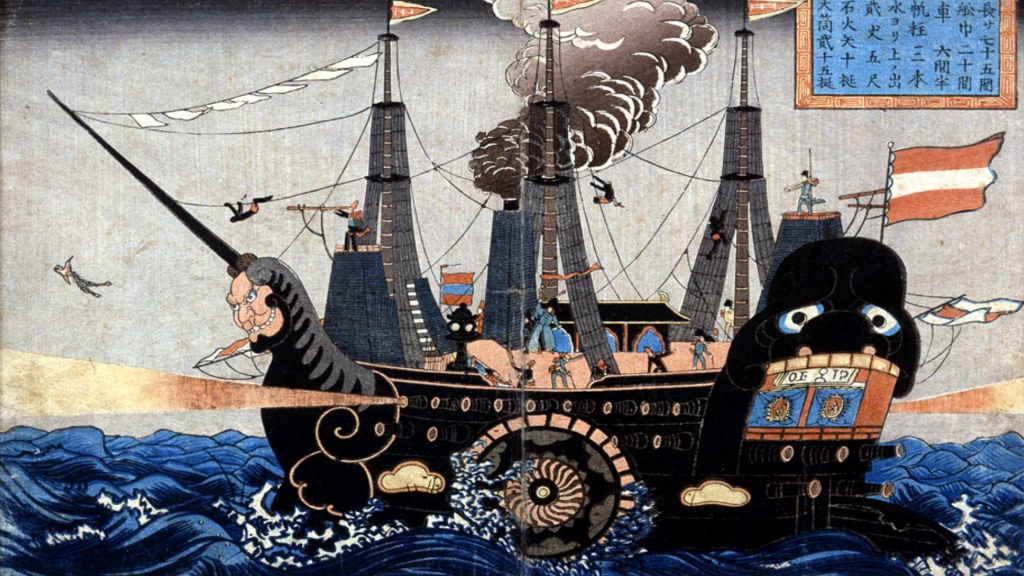
Perry's Black Ship - Land Of The Rising Son

A civilization of applied mathematics, with sciences and branch-sciences of which the mere names would fill a dictionary. 

I think that the history of modern Japan suggests very clearly what any wise people, with a civilization based upon ancestor-worship, would have done. 

They would have speedily reconstructed their patriarchal society to meet the sudden peril.

They would have adopted, with astonishing success, all the scientific machinery that they could use.

They would have created a formidable army and a highly efficient navy.

They would have sent their young aristocrats abroad to study alien convention, and to qualify for diplomatic duty.

They would have established a new system of education, and obliged all their children to study many new things.

But toward the higher emotional and intellectual life of that alien civilization, they would naturally exhibit indifference. 

Its best literature, its philosophy, its broader forms of tolerant religion could make no profound appeal to the Japanese moral and social experience.

Based Upon

Japan,  An Attempt At Interpretation

Published 1904

Patrick Lafcadio Hearn

Modern Restraints

Modern Restraints

Modern Restraints

Modern Restraints

For even a vague understanding of modern Japan, it is necessary to consider the effect of the three forms of social coercion, mentioned in Survivals, as restraints upon individual energy and capacity.

All three represent survivals of the ancient religious responsibility. 

It has often been asserted by foreign observers that the real power in Japan is exercised not from above, but from below. 

What cannot be denied is that superior authority has always been more or less restrained by tendencies to resistance from below. 

At no time in Japanese history do the peasants appear to have been left without recourse against excessive oppression, notwithstanding all the humiliating regulations imposed on their existence.

They were suffered to frame their own village-laws, to estimate the possible amount of their tax-payments, and to make protest through official channels against unmerciful exaction. 

白川村 - Land Of The Rising Son

They were made to pay as much as they could, but they were not reduced to bankruptcy or starvation.

And their holdings were mostly secured to them by laws forbidding the sale or alienation of family property. 

There were, however, wicked daimyo, who treated their farmers with extreme cruelty, and found ways to prevent complaints or protests from reaching the higher authorities.

The almost invariable result of such tyranny was revolt, and the tyrant was then made responsible for the disorder, and punished.

Samurai Executing Prisoner - Land Of The Rising Son

Though denied in theory, the right of the peasant to rebel against oppression was respected in practice.

The revolt was punished, but the oppressor was likewise punished. 

It may seem strange that a society in which religion and government, ethics and custom, were practically identical, should furnish striking examples of resistance to authority. 

From the earliest period there was firmly established, in the popular mind, the conviction that implicit obedience to authority was the universal duty under all ordinary circumstances. 

But with this conviction there was united another, that resistance to authority (excepting the sacred authority of the Supreme Ruler) was equally a duty under extraordinary circumstances.

And these seemingly opposed convictions were not really inconsistent.

So long as rule followed precedent, so long as its commands, however harsh, did not conflict with sentiment and tradition, that rule was regarded as religious, and there was absolute submission.

But when rulers presumed to break with ethical usage, in a spirit of reckless cruelty or greed, then the people might feel it a religious obligation to resist with all the zeal of voluntary martyrdom. 

Greed is a Mental-Health Disorder - Land Of The Rising Son

The danger-line for every form of local tyranny was departure from precedent. 

Even the conduct of regents and princes was much restrained by the common opinion of their retainers, and by the knowledge that certain kinds of arbitrary conduct were likely to provoke assassination.

This old policy still characterizes Japanese administration, and the deference of high authority to collective opinion astonishes and puzzles the foreign observer. 

Just as in Old Japan the ruler of a district was held, responsible for the behaviour of his subjects, so to-day, in New Japan, every official in charge of a department is held responsible for the smooth working of its routine.

But this does not mean that he is responsible only for the efficiency of a service.

It means that he is held responsible likewise for failure to satisfy the wishes of his subordinates, or at least the majority of his subordinates. 

Bossy Boy Boss - Land Of The Rising Son

The efforts of the man will never be judged by any accepted standard of excellence, never estimated by their intrinsic worth, they will be considered only according to their direct effect upon the average of minds.

Considering the extraordinary changes suddenly made in the educational system, it will be obvious that a teacher’s immediate value was likely to depend on his ability to make his teaching attractive. 

If he attempted to teach either above or below the average capacity of his pupils, or if he made his instruction unpalatable to minds greedy for new knowledge, but innocent as to method, his inexperience could be corrected by the will of his class.

From above downwards through all the grades of society, the same system of responsibility, and the same restraints upon individual exercise of will, persist under varying forms.

The second kind of coercion to which the individual is subjected, the communal, seems likely to prove mischievous in the near future, as it signifies practical suppression of the right to compete.

The everyday life of any Japanese city offers countless suggestions of the manner in which the masses continue to think and to act by groups.

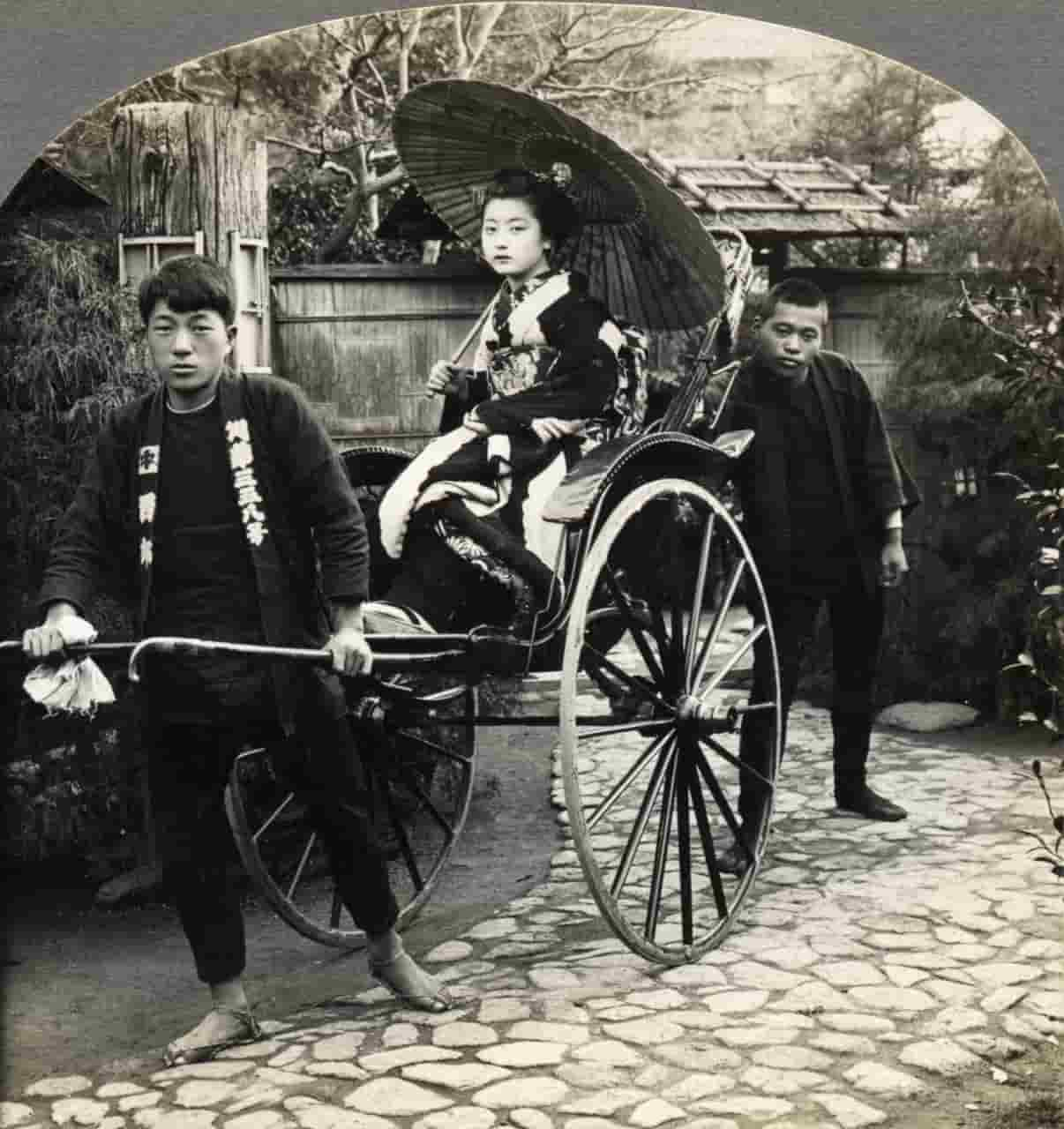
But no more familiar and forcible illustration of the fact can be cited than that which is furnished by the code of the kurumaya or jinrikisha-men.

Rick Shaw - Land Of The Rising Son

According to its terms, one runner must not attempt to pass by another going in the same direction. 

Among the tens of thousands of public kurumaya, it is the rule that a young and active man must not pass by an old and feeble man, nor even by a needlessly slow and lazy man.

To take advantage of one’s own superior energy, so as to force competition, is an offence against the calling, and certain to be resented. 

You engage a good runner, whom you order to make all speed.

He springs away splendidly, and keeps up the pace until he happens to overtake some weak or lazy puller, who seems to be moving as slowly as the gait permits.

Therewith, instead of bounding by, your man drops immediately behind the slow-going vehicle, and slackens his pace almost to a walk.

For half an hour, or more, you may be thus delayed by the regulation which obliges the strong and swift to wait for the weak and slow. 

Japan’s 105-year-old Golden Bolt Sprint Record - Land Of The Rising Son

Of course the modern communal restraint upon free competition represents the survival and extension of that altruistic spirit which ruled the ancient society, not the mere continuance of any fixed custom.

In feudal times there were no kurumaya, but all craftsmen and labourers formed guilds or companies.

The discipline maintained by those guilds or companies prohibited competition as undertaken for merely personal advantage. 

There remains to be considered a third form of restraint, that exercised upon the individual by official authority. 

This also presents us with various survivals, which have their bright as well as their dark aspects.

We have seen that the individual has been legally freed from most of the obligations imposed by the ancient law.

He is no longer obliged to follow a particular occupation, he is able to travel, he is at liberty to marry into a higher or a lower class than his own, he is not even forbidden to change his religion, he can do a great many things at his own risk. 

But where the law leaves him free, the family and the community do not.

The persistence of old sentiment and custom nullifies many of the rights legally conferred. 

香取神宮 - Land Of The Rising Son

Precisely in the same way, his relations to higher authority are still controlled by traditions which maintain, in despite of constitutional law, many of the ancient restraints, and not a little of the ancient coercion. 

In theory any man of great talent and energy may rise, from rank to rank, up to the highest positions. 

But as private life is still controlled to no small degree by the old communal way, so public life is yet controlled by survivals of class or clan despotism. 

The chances for ability to rise without assistance, to win its way to rank and power, are extraordinarily small, since to contend alone against an opposition that thinks by groups, and acts by masses, must be almost hopeless. 

Only commercial or industrial life now offers really fair opportunities to capable men. 

Several years ago a Japanese official made in my presence this curious observation: 

“Our Government does not wish to encourage competition beyond the necessary. The people are not prepared for it; and if it were strongly encouraged, the worst side of character would come to the surface.”

 How far this statement really expressed any policy I do not know. 

Japanese Doctor Shrugging - Land Of The Rising Son

But every one is aware that free competition can be made as cruel and pitiless as war, though we are apt to forget what experience must have been undergone before Occidental free competition could become as comparatively merciful as it is. 

Among a people trained for centuries to regard all selfish competition as criminal, and all profit-seeking despicable, any sudden stimulation of effort for purely personal advantage might well be impolitic. 

Evidence as to how little the nation was prepared, twelve or thirteen years ago, for Western forms of free government, has been furnished by the history of the earlier district-elections and of the first parliamentary sessions. 

There was really no personal enmity in those furious election-contests, which cost so many lives, there was scarcely any personal antagonism in those parliamentary debates of which the violence astonished strangers.

The political struggles were not really between individuals, but between clan-interests, or party-interests, and the devoted followers of each clan or party understood the new politics only as a new kind of war, a war of loyalty to be fought for the leader’s sake, a war not to be interfered with by any abstract notions of right or justice. 

justice-not-blind-hand-offers-money-to-moves-bandage-look-greedy-political-cartoon - Land Of The Rising Son

Suppose that a people have been always accustomed to think of loyalty in relation to persons rather than to principles, loyalty as involving the duty of self-sacrifice regardless of consequence.

It is obvious that the first experiments of such a people with parliamentary government will not reveal any comprehension of fair play in the Western sense. 

If you can persuade such a people that in other matters every man has a right to act according to his own convictions, and for his own advantage, independently of any group to which he may belong, the immediate result will not be fortunate, because the sense of individual moral responsibility has not yet been sufficiently cultivated outside of the group-relation.

The probable truth is that the strength of the government up to the present time has been chiefly due to the conservation of ancient methods, and to the survival of the ancient spirit of reverential submission. 

Perhaps the future history of modern civilization will hold record of nothing more touching than the patient heroism of those myriads of Japanese patriots, content to accept, under legal conditions of freedom, the official servitude of feudal days, satisfied to give their talent, their strength, their utmost effort, their lives, for the simple privilege of obeying a government that still accepts all sacrifices in the feudal spirit as a matter of course and a national duty. 

And as a national duty, indeed, the sacrifices are made. 

All know that Japan is in danger, between the terrible friendship of England and the terrible enmity of Russia.

Battle_of_Yalu_River_1904 - Land Of The Rising Son

That she is poor, that the cost of maintaining her armaments is straining her resources, that it is everybody’s duty to be content with as little as possible. 

So the complaints are not many.  

Nor has the simple obedience of the nation at large been less touching, especially, perhaps, as regards the imperial order to acquire Western knowledge, to learn Western languages, to imitate Western ways. 

Only those who have lived in Japan during or before the early nineties (1890) are qualified to speak of the loyal eagerness that made self-destruction by over-study a common form of death. 

The passionate obedience that impelled even children to ruin their health in the effort to master tasks too difficult for their little minds (tasks devised by well-meaning advisers with no knowledge of Far-Eastern psychology).

Moreover, the strange courage of persistence in periods of earthquake and conflagration, when boys and girls used the tiles of their ruined homes for school-slates, and bits of fallen plaster for pencils. 

What tragedies I might relate even of the higher educational life of universities, of fine brains giving way under pressure of work beyond the capacity of the average European student, of triumphs won in the teeth of death, of strange farewells from pupils in the time of the dreaded examinations, as when one said to me: 

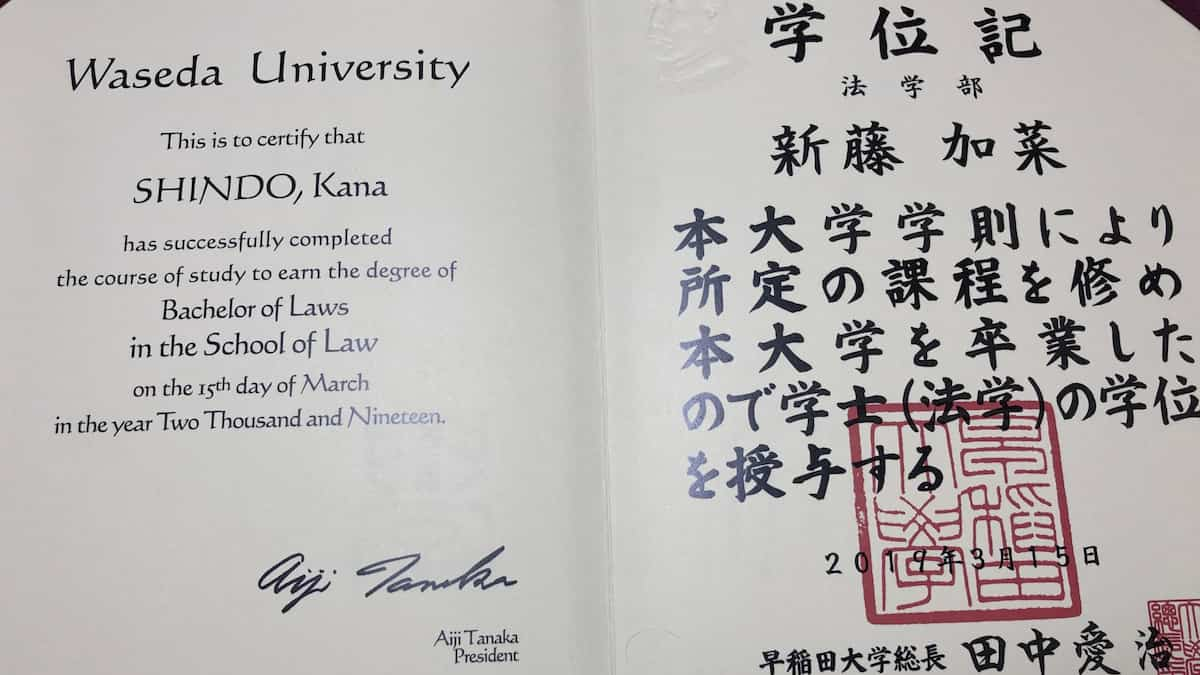
“Sir, I am very much afraid that my paper is bad, because I came out of the hospital to make it, there is something the matter with my heart.”* 

*His diploma was placed in his hands scarcely an hour before he died.

早稲田卒業書 - Land Of The Rising Son

And all this striving, striving not only against difficulties of study, but in most cases against difficulties of poverty, and underfeeding, and discomfort has been only for duty, and the means to live. 

To estimate the Japanese student by his errors, his failures, his incapacity to comprehend sentiments and ideas alien to the experience of his race, is the mistake of the shallow. 

To judge him rightly one must have learned to know the silent moral heroism of which he is capable.

Based Upon

Japan,  An Attempt At Interpretation

Published 1904

Patrick Lafcadio Hearn

Survivals

Survivals

Survivals

SURVIVALS

In the gardens of certain Buddhist temples there are trees which have been famous for centuries, trees trained and clipped into extraordinary shapes. 

Some have the form of dragons, and others of pagodas, ships, and umbrellas. 

Suppose one of these trees were abandoned to its own natural tendencies, it would eventually lose the queer shape so long imposed upon it.

Bonsai Tree In Serenity - Land Of The Rising Son

However, the outline would not be altered for a considerable time, as the new leafage would at first unfold only in the direction of least resistance.

That is to say, within limits originally established by the shears and pruning-knife. 

By sword and law the old Japanese society had been pruned and clipped, bent and bound, just like such a tree.

Japanese Sword - Land Of The Rising Son
After the reconstructions of the Meiji period, after the abolition of the feudal fiefdoms, and the suppression of the military class, it still maintained its former shape, just as the tree would continue to do when first abandoned by the gardener.

Though delivered from the bonds of feudal law, released from the shears of military rule, the great bulk of the social structure preserved its ancient aspect, and this rare spectacle bewildered, delighted, and deluded the Western observer. 

Here indeed was Elf-land.

白川郷 - Land Of The Rising Son

The strange, the beautiful, the grotesque, the very mysterious, totally unlike anything as strange and attractive ever to have been beholden elsewhere. 

It was not a world of the nineteenth century after Christ, but a world of many centuries before Christ.

Yet this fact, a wonder of wonders, remained unrecognized, as it remains unrecognized by most people even to this day.

Fortunate indeed were those privileged to enter this astonishing fairyland thirty odd years ago, before the period of superficial change, and to observe the unfamiliar aspects of its life.

Liker the universal courteousness, the smiling silence of crowds, the patient deliberation of toil, and the absence of misery and struggle.

Proper Bowing Technique- Land Of The Rising Son

Even yet, in those more remote districts where alien influence has wrought but little change, the charm of the old existence lingers and amazes, and the ordinary traveller can little understand what it means.

That all are polite, that nobody quarrels, that everybody smiles, that pain and sorrow remain invisible, that the new police have nothing to do, would seem to prove a morally superior humanity.

But for the trained sociologist it would prove something different, and suggest something very terrible. 

It would prove that this society had been moulded under immense coercion, and that the coercion must have been exerted uninterruptedly for thousands of years. 

He would immediately perceive that ethics and custom had not yet become dissociated, and that the conduct of each person was regulated by the will of the rest. 

He would know that personality could not develop in such a social medium, that no individual superiority dare assert itself, that no competition would be tolerated.

He would understand that the outward charm of this life, with its softness, its smiling silence as of dreams signified the rule of the dead.

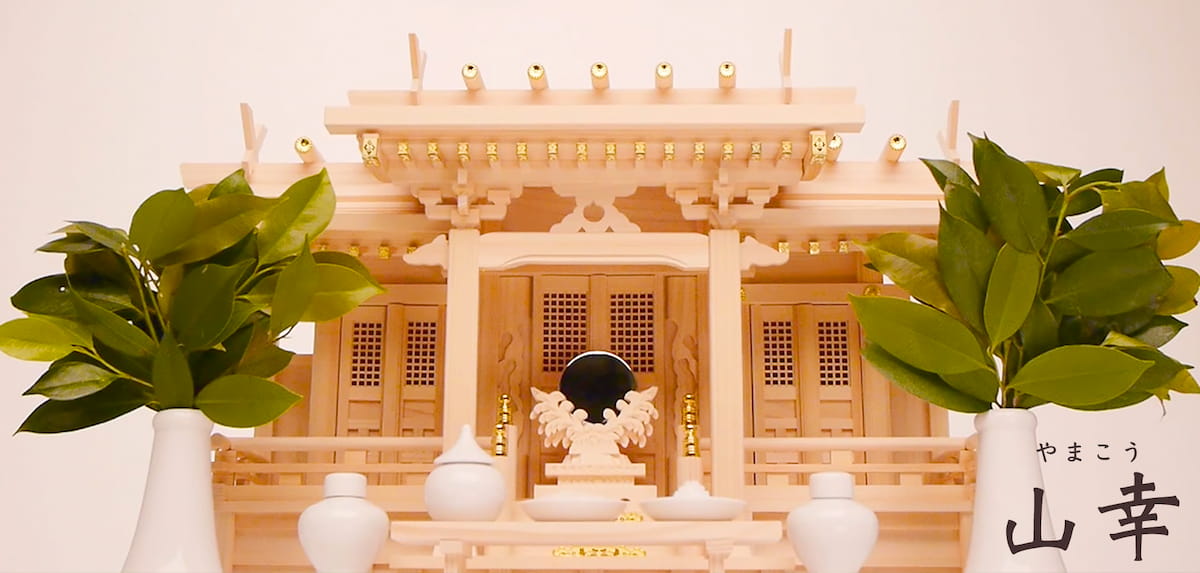
神棚- Land Of The Rising Son

Yet this knowledge probably would not, and certainly should not blind him to the intrinsic charm of things.

Not to feel the beauty of this archaic life is to prove oneself insensible to all beauty.

Now that the great social tree, so wonderfully clipped and cared for during many centuries is losing its fantastic shape, let us try to see how much of the original design can still be traced.

Under all the outward aspects of individual activity that modern Japan presents to the visitor’s gaze, the ancient conditions really persist to an extent which no observation could reveal.

The immemorial cult still rules all the land.

Still the family-law, communal law, and to a lesser extent clan-law, control every action of existence.

I do not refer to any written law, but only to the old unwritten religious law, with its host of obligations deriving from ancestor-worship.

Ancestor Worship - Land Of The Rising Son

It is true that many changes and, in the opinion of the wise, too many changes have been made in civil legislation.

However, the ancient proverb, “Government-laws are only seven-day laws,” still represents popular sentiment in regard to hasty reforms.

 The old law, the law of the dead, is that by which the millions prefer to act and think.

Though ancient social groupings have been officially abolished, re-groupings of a corresponding sort have been formed, instinctively, throughout the country districts. 

In theory the individual is free, in practice he is scarcely more free than were his forefathers, and this remains true up until this very day.

Old penalties for breach of custom have been abrogated, yet communal opinion is able to compel the ancient obedience. 

Though the individual is now registered, and made directly accountable to the law, and the household has been relieved from its ancient responsibility for the acts of its members, still the family practically remains the social unit, retaining its patriarchal organization and its particular cult. 

Not unwisely, the modern legislators have protected this domestic religion.

To weaken its bond at this time were to weaken the foundations of the national moral life, and likely to introduce disintegrations into the most deeply seated structures of the social organism.

Family and public sentiment are still more potent than law. 

安寧秩序 - Land Of The Rising Son

However, a political leader fully acquainted with the history of clan-parties, and their offshoots can accomplish marvelous things.

Even foreign residents with long experience of Japanese life have been able, by pressing upon clan-interests, to exercise a very real power in government circles. 

But to the ordinary foreigner, Japanese contemporary politics must appear a chaos, a disintegration, a hopeless flux. 

Not only politics, but nearly all phases of modern life yield evidence that the disintegration of the old society has been superficial rather than fundamental. 

The dissolved structures have recrystallized, taking forms dissimilar in aspect to the original forms, but inwardly built upon the same plan. 

Independence of personal action, in the Western sense, is still almost inconceivable. 

The individual of every class above the lowest must continue to be at once coercer and coerced. 

Like an atom within a solid body, he can vibrate; but the orbit of his vibration is fixed. 

He must act and be acted upon in ways differing little from those of ancient time.

As for being acted upon, the average man is under three kinds of pressure.

Pressure from above, exemplified in the will of his superiors.

Pressure about him, represented by the common will of his fellows and equals.

Pressure from below, represented by the general sentiment of his inferiors. 

Dis-satisfied - Land Of The Rising Son

Individual resistance to the first kind of pressure, as represented by authority is not even to be thought of, as the superior represents a clan, a class, an exceedingly multiple power of some description.

To resist injustice he must find ample support, in which case his resistance does not represent individual action.

Resistance to the second kind of pressure, communal coercion, signifies ruin and the loss of the right to form a part of the social body.

Resistance to the third sort of pressure, embodied in the common sentiment of inferiors, may result in almost anything, from momentary annoyance to sudden death, all according to circumstances.

In all forms of society these three kinds of pressure are exerted to some degree.

 However,  in Japanese society, owing to inherited tendency, and traditional sentiment, their power is tremendous.

Volcano - Land Of The Rising Son

Thus, in every direction, the individual finds himself confronted by the despotism of collective opinion.

It is impossible for him to act with safety except as one unit of a combination. 

The first kind of pressure deprives him of moral freedom, exacting unlimited obedience to orders.

The second kind of pressure denies him the right to use his best faculties in the best way for his own advantage (that is to say, denies him the right of free competition).

The third kind of pressure compels him, in directing the actions of others, to follow tradition, to forbear innovations, to avoid making any changes, however beneficial, which do not find willing acceptance on the part of his inferiors.

These are the social conditions which, under normal circumstances make for stability, for conservation, and they represent the will of the dead. 

They are inevitable to a militant state and they make the strength of that state.

They render facile the creation and maintenance of formidable armies. 

But they are not conditions favourable to success in future international competition, in the industrial struggle for existence against societies incomparably more plastic, and of higher mental energy.

Based Upon

Japan,  An Attempt At Interpretation

Published 1904

Patrick Lafcadio Hearn

Shinto Revival

Shinto Revival

Shinto Revival

Shinto Revival

The slow weakening of the Tokugawa Shogunate was due to causes not unlike those which had brought about the decline of previous regencies. 

The race degenerated during that long period of peace which its rule had inaugurated.

The strong builders were succeeded by feebler and feebler men. 

Japanese boy band - The Age of Soy Boy - Land Of The Rising Son

Nevertheless the machinery of administration, astutely devised by Iyeyasu, and further perfected by Iyemitsu, worked so well that the enemies of the Shogunate could find no opportunity for a successful attack until foreign aggression unexpectedly came to their aid. 

The most dangerous enemies of the government were the great clans of Satsuma and Choshu. 

For more than two hundred years the Satsuma and Choshu clans, and several others ready to league with them, submitted to the discipline of the Tokugawa rule. 

薩摩と長州の地図 - Land Of The Rising Son

But they chafed under it, and watched for a chance to break the yoke. 

All the while this chance was being slowly created for them, not by any political changes, but by the patient toil of Japanese men of letters. 

Three of the greatest scholars Japan ever produced prepared the way, by their intellectual labours, for the abolition of the Shogunate. 

They were Shinto scholars representing the natural reaction of native conservatism against the long tyranny of alien ideas and alien beliefs.

Against the literature and philosophy and bureaucracy of China.

Against the preponderant influence upon education of the foreign religion of Buddhism. 

To all this they opposed the old native literature of Japan, the ancient poetry, the ancient cult, the early traditions and rites of Shinto. 

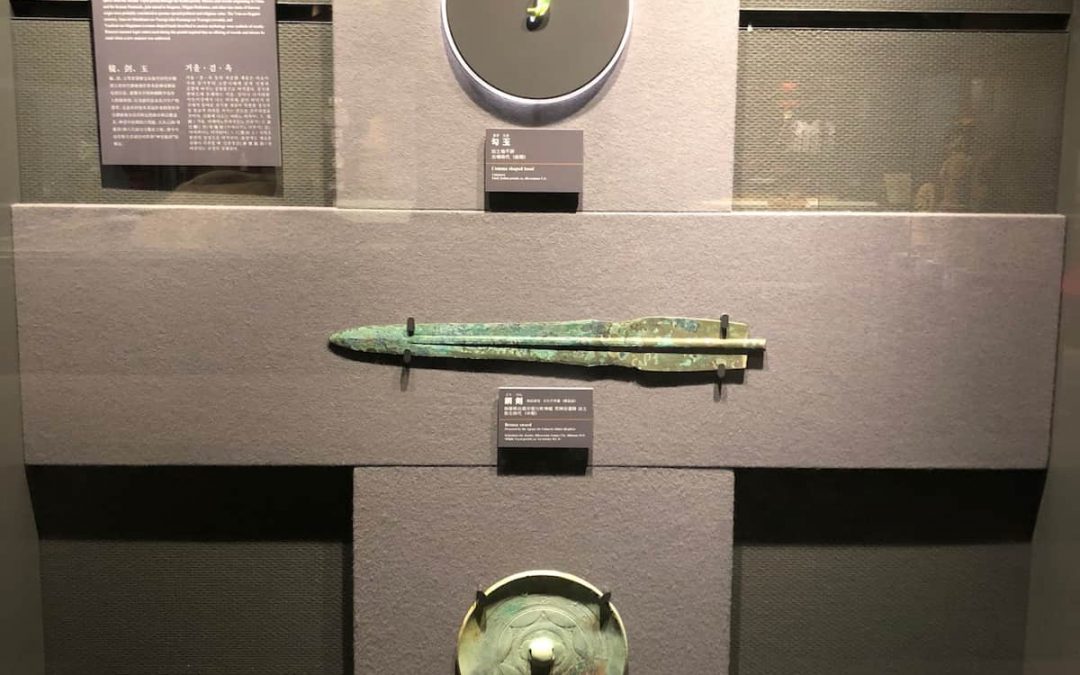
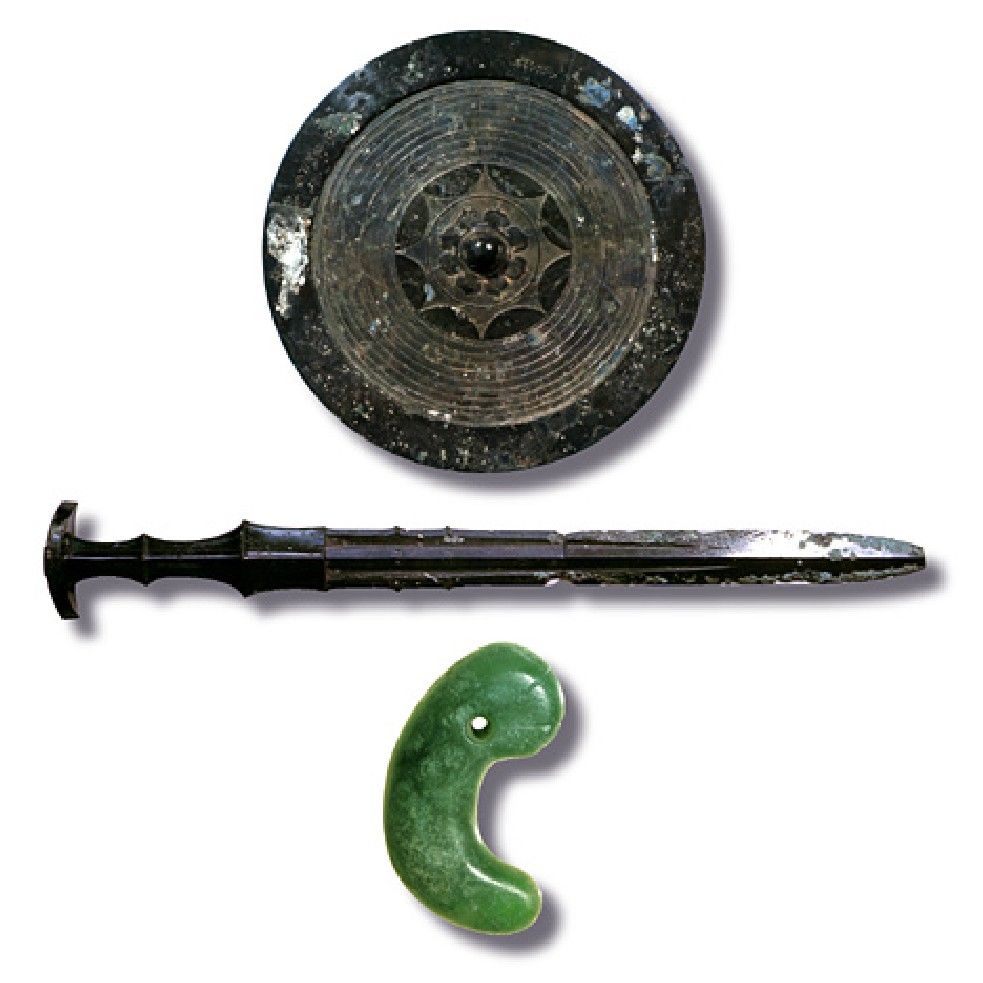
A Jomon stone figurine or gangu. Komukai, Nanbu-cho, Aomori, Japan. Jomon Period, 1000-400 BCE - Tokyo National Museum - Land Of The Rising Son

The names of these three remarkable men were Mabuchi (1697-1769), Motowori (1730-1801), and Hirata (1776-1843). 

Their efforts actually resulted in the disestablishment of Buddhism, and in the great Shinto revival of 1871.

This intellectual revolution made by these scholars could have been prepared only during a long era of peace, and by men enjoying the protection and patronage of members of the ruling class. 

By a strange chance, it was the house of Tokugawa itself which first gave to literature such encouragement and aid as made possible the labours of the Shinto scholars. 

Iyeyasu had been a lover of learning and devoted the later years of his life to the collection of ancient books and manuscripts. 

Under the patronage of Iyeyasu descendants, the collectors of these libraries, there gradually developed a new school of men-of-letters.

Men who turned away from Chinese literature to the study of the Japanese classics. 

Tales Of Genji - Land Of The Rising Son

They reedited the ancient poetry and chronicles, they republished the sacred records, with ample commentaries. 

They produced whole libraries of works upon religious, historical, and philological subjects.

They wrote treatises on the art of poetry, on the nature of the gods, on government, on the manners and customs of ancient days.

The study of the ancient records, the study of Japanese literature, the study of the early political and religious conditions, naturally led men to consider the history of those foreign literary influences on Japan, which had practically stifled native learning.

And to also consider the history of the foreign creed which had overwhelmed the religion of the ancestral gods. 

Chinese ethics, Chinese ceremonial, and Chinese Buddhism had reduced the ancient faith to the state of a minor belief, almost to the state of a superstition.

 “The Shinto gods have become the servants of the Buddhas!”, exclaimed one of the scholars of the new school of Shinto.

But those Shinto gods were the ancestors of the race, the fathers of its emperors and princes, and their degradation could not but involve the degradation of the imperial tradition. 

The Shogunate had indeed established peace and inaugurated prosperity, but who could forget that it had originated in a military usurpation of imperial rights? 

Only by the restoration of the Son of Heaven to his ancient position of power, and by the relegation of the military chiefs to their proper state of subordination, could the best interests of the nation be really served.

香取神宮 - Land Of The Rising Son

All this was thought and felt and strongly suggested; but not all of it was openly proclaimed. 

To have publicly preached against the military government as a usurpation would have been to invite destruction. 

By the end of the eighteenth century, however, their teaching had created a strong party in favour of the official revival of the ancient religion.

The restoration of the Mikado to supreme power, and the repression, if not suppression, of the military power. 

Yet it was not until the year 1841 that the Shogunate took alarm, and proclaimed its disquiet by banishing from the capital the great scholar Hirata, and forbidding him to write anything more. 

Not long afterwards the Shogunate died. 

The restive lords of Choshu, Satsuma, Tosa, and Hizen were watching and waiting. 

They encouraged the new Shintoism, and felt that a time was coming when they could hope to shake off the domination of the Tokugawa. 

And their opportunity came at last with the advent to Japan of Commodore Perry‘s fleet.

Commodore Perry Black Ship - Land Of The Rising Son

Commodore Perry - Land Of The Rising Son

The enemies of the Shogunate persuaded the imperial court to order the expulsion of the foreigners.

This order, which it must be remembered, was essentially a religious order, emanating from the source of all acknowledged authority, placing the military government in a serious dilemma. 

It tried to effect by diplomacy what it could not accomplish by force.

But while it was negotiating for the withdrawal of the foreign’ settlers, matters were suddenly forced to a crisis by the Prince of Choshu, who fired upon various ships belonging to the foreign powers. 

This action provoked the bombardment of Shimonoseki, and the demand of an indemnity of three million dollars. 

One Dollar Any Face - Land Of The Rising Son
The Shogun Iyemochi attempted to chastise the daimyo of Choshu for this act of hostility, but the attempt only proved the weakness of the military government. 

Iyemochi died soon after this defeat, and his successor Hitotsubashi had no chance to do anything, for the now evident feebleness of the Shogunate gave its enemies courage to strike a fatal blow. 

Pressure was brought upon the Imperial Court to proclaim the abolition of the Shogunate, and the Shogunate was abolished by decree. 

Hitotsubashi submitted, and the Tokugawa regime thus came to an end.

In 1867 the entire administration was reorganized, and the supreme power, both military and civil, being restored to the Mikado (Emperor).

Soon afterward the Shinto cult, officially revived in its primal simplicity was declared the Religion of State, and Buddhism was disendowed. 

Thus the Empire was reestablished upon the ancient lines; and all the literary party had hoped for seemed to be realized, except one thing.

Be it here observed that the adherents of the literary party wanted to go much further than the great founders of the new Shintoism had dreamed of going. 

These later enthusiasts were not satisfied with the abolition of the Shogunate, the restoration of imperial power, and the revival of the ancient cult. 

Jomon Period Settlements - Land Of The Rising Son

They wanted a return of all society to the simplicity of primitive times, they desired that all foreign influence should be got rid of, and that the official ceremonies, the future education, the future literature, the ethics, the laws, should be purely Japanese. 

They were not even satisfied with the disendowment of Buddhism, but there was a vigorous proposal made for its total suppression! 

And all this would have signified, in more ways than one, social retrogression towards barbarism. 

The great scholars had never proposed to cast away Buddhism and all Chinese learning, they had only insisted that the native religion and culture should have precedence. 

Happily the clansmen who had broken down the Shogunate saw both past and future in another light. 

They understood that the national existence was in peril, and that resistance to foreign pressure would be hopeless.

Satsuma had witnessed the bombardment of Kagoshima in 1863 and in Choshu, the bombardment of Shimonoseki in 1864. 

Bombardment of Shimonoseki in 1864 - Land Of The Rising Son

Evidently the only chance of being able to face Western power would be through the patient study of Western science, and the survival of the Empire depended upon the Europeanization of society. 

By 1871 the feudal estates were abolished.

In 1873 the edicts against Christianity were withdrawn.

 In 1876 the wearing of swords was prohibited. 

The samurai, as a military body were suppressed, and all classes were declared thenceforward equal before the law. 

New codes were compiled, a new army and navy organized, a new police system established, a new system of education introduced at Government expense, and a new constitution promised. 

Finally, in 1891, the first Japanese parliament was convened. 

By that time the entire framework of society had been remodelled, so far as laws could remodel it, upon a European pattern. 

The nation had fairly entered upon its third period of integration. 

The clan had been legally dissolved, the family was no longer the legal unit of society.

By the new constitution the individual had been recognized.

Promulgation of the new Japanese Constitution Emperor Meiji 1889 - Land Of The Rising Son

When we consider the history of some vast and sudden political change in its details only, the factors of the movement, the combinations of immediate cause and effect, the influences of strong personality, the conditions impelling individual action, then the transformation is apt to appear to us the work and the triumph of a few superior minds. 

We forget, perhaps, that those minds themselves were the product of their time, and that every such rapid change must represent the working of a national or race-instinct quite as much as the operation of individual intelligence. 

The events of the Meiji reconstruction strangely illustrate the action of such instinct in the face of peril.

The readjustment of internal relations to sudden changes of environment. 

The nation had found its old political system powerless before the new conditions, and it transformed that system. 

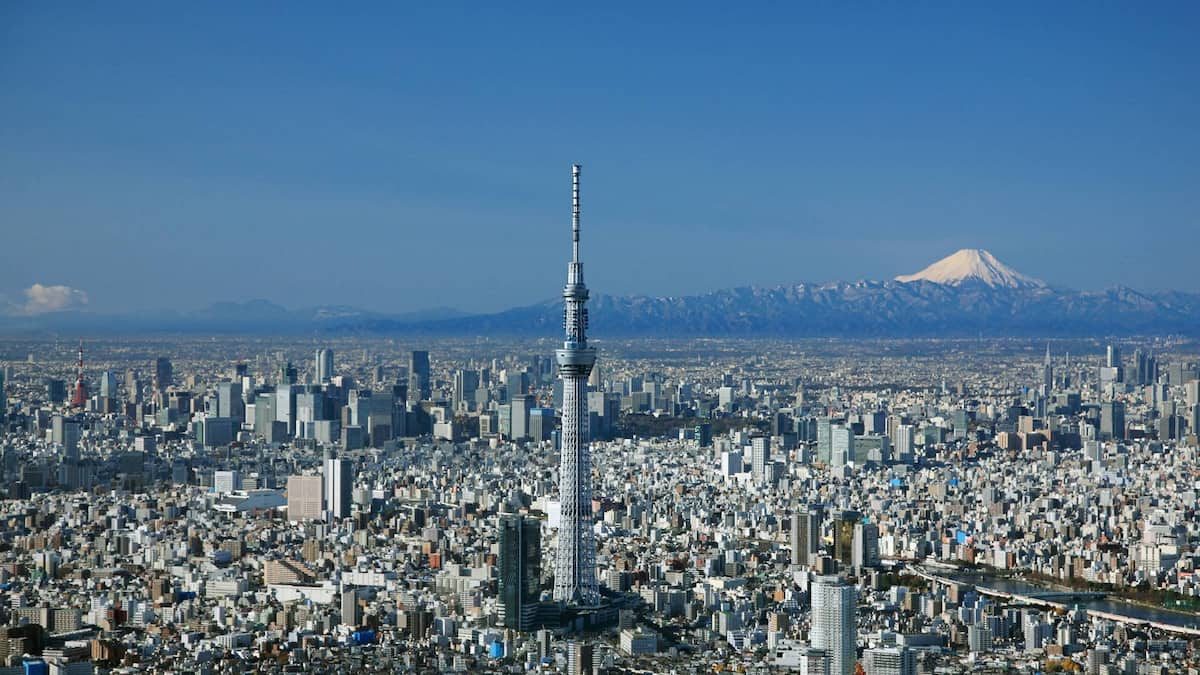
Tokyo from SkyTree with Fuji San - Land Of The Rising Son

It had found its military organization incapable of defending it, and it reconstructed that organization. 

It had found its educational system useless in the presence of unforeseen necessities, and it replaced that system, simultaneously crippling the power of Buddhism, which might otherwise have offered serious opposition to the new developments.

And in that hour of greatest danger the national instinct turned back at once to the moral experience upon which it could best rely, the experience embodied in its ancient cult, the religion of unquestioning obedience. 

Relying upon Shinto tradition, the people rallied about their ruler, descendant of the ancient gods, and awaited his will with unconquerable zeal of faith. 

Japan, by right of self-acquired strength, has entered into the circle of the modern civilized powers, formidable by her new military organization, respectable through her achievements in the domain of practical science. 

And the force to effect this astonishing self-improvement, within the time of thirty years, she owes assuredly to the moral habit derived from her ancient cult, the religion of the ancestors. 

氏神棚 - Land Of The Rising Son

To fairly measure the feat, we should remember that Japan was evolutionally younger than any modern European nation, by at least twenty-seven hundred years, when she went to school!

Herbert Spencer has shown that the great value to society of ecclesiastical institutions lies in their power to give cohesion to the mass, to strengthen rule by enforcing obedience to custom, and by opposing innovations likely to supply any element of disintegration. 

In other words, the value of a religion, from the sociological standpoint, lies in its conservatism. 

Various writers have alleged that the Japanese national religion proved itself weak by incapacity to resist the overwhelming influence of Buddhism. 

I cannot help thinking that the entire social history of Japan yields proof to the contrary. 

Though Buddhism did for a long period appear to have almost entirely absorbed Shinto, by the acknowledgment of the Shinto scholars themselves.

Though Buddhist emperors reigned who neglected or despised the cult of their ancestors, though Buddhism directed, during ten centuries, the education of the nation.

Shinto remained all the while so very much alive that it was able not only to dispossess its rival at last, but to save the country from foreign domination.

American Occupation of Japan - Land Of The Rising Son

To assert that the Shinto revival signified no more than a stroke of policy imagined by a group of statesmen, is to ignore all the forbearers of the event. 

No such change could have been wrought by mere decree had not the national sentiment welcomed it.

Moreover, there are three important facts to be remembered in regard to the former Buddhist predomination: 

  1. Buddhism conserved the family-cult, modifying the forms of the rite. 
  2. Buddhism never really supplanted the Ujigami cults, but maintained them.
  3. Buddhism never interfered with the imperial cult. 

Now these three forms of ancestor-worship, the domestic, the communal, and the national, constitute all that is vital in Shinto. 

The Supreme Cult is not now the State Religion by request of the chiefs of Shinto, it is not even officially classed as a religion. 

Obvious reasons of state policy decided this course. 

But as representing all those traditions which appeal to race-feeling, to the sentiment of duty, to the passion of loyalty, and the love of country, it yet remains an immense force, a power to which appeal will not be vainly made in another hour of national peril. 

伊勢神宮 - Land Of The Rising Son

Based Upon

Japan,  An Attempt At Interpretation

Published 1904

Patrick Lafcadio Hearn

Feudal Integration

Feudal Integration

Feudal Integration

Feudal Integration

It was under the later Tokugawa Shogun during the period immediately preceding the modern regime (Meiji era) that Japanese civilization reached the limit of its development. 

No further evolution was possible, except through social reconstruction. 

More than ever before, the old compulsory systems of cooperation were strengthened.

More than ever before all details of ceremonial convention were insisted upon with merciless exactitude. 

The paternal coercion of the Tokugawa rule helped develop and accentuate much of what is most attractive in the national character of the Japanese. 

Paternal Coercion of the Tokugawa Rule - Land Of The Rising Son

During two hundred years of peace, prosperity, and national isolation, the graceful and winning side of this human nature found chance to bloom.

The multiform restraints of law and custom then quickened and curiously shaped the blossoming, as the gardener’s untiring art evolves the chrysanthemum flowers into a hundred forms of fantastic beauty.

Though the general social tendency under pressure was toward rigidity, constraint left room, in special directions, for moral and aesthetic cultivation.

Although the hierarchal rules of Japan weighing heavily upon all classes, from the highest to the lowest, the legal burden was proportioned to the respective strength of the bearers, and the application of law being made less and less rigid as the social scale descended. 

From the earliest times, the poor and unfortunate had been considered as entitled to pity, and the duty of showing them all possible mercy was insisted upon in the oldest extant moral code of Japan.

The Laws of Shotoku Taishi. 

Shotoku-Taishi - Land Of The Rising Son

However, the most striking example of such discrimination appears in the Legacy of Iyeyasu, which represents the conception of justice in a time when society had become much more developed, its institutions more firmly fixed, and all its bonds tightened. 

This stern and wise ruler, who declared:

“The people are the foundation of the Empire. 

He commanded leniency in dealing with the humble.

Perhaps the humane spirit of the legislator is most strongly shown in his enactments regarding crime. 

For example, where he deals with the question of adultery, necessarily a crime of the first magnitude in any society based on ancestor-worship.

Should the offenders be brought up for trial, Iyeyasu advises in the case of common people, particular deliberation be given to the matter.

He remarks upon the weakness of human nature, and suggests that, among the young and simple-minded, some momentary impulse of passion may lead to folly even when the parties are not naturally depraved. 

But in the next article of his code, he orders that no mercy whatever be shown to men and women of the upper classes when convicted of the same crime. 

Tokugawa Ieyasu - Land Of The Rising Son.jpeg

He declares:

“These are expected to know better than to occasion disturbance by violating existing regulations, and such persons, breaking the laws by lewd trifling or illicit intercourse, shall at once be *punished without deliberation or consultation.”

*That is to say, immediately put to death.

Another humane aspect of Tokugawa legislation is furnished by its dictates in regard to the relations of the sexes. 

Although concubinage was tolerated in the Samurai class, for reasons relating to the continuance of the family-cult, Iyeyasu denounces the indulgence of the privilege for merely selfish reasons: 

“Silly and ignorant men neglect their true wives for the sake of a loved mistress, and thus disturb the most important relation.”

“Men so far sunk as this may always be known as Samurai without fidelity or sincerity.” 

Celibacy, condemned by public opinion, except in the case of Buddhist priests, was equally condemned by the code. 

“One should not live alone after sixteen years of age, and all mankind recognize marriage as the first law of nature.

Considering that this code which instilled humanity, repressed moral laxity, prohibited celibacy, and rigorously maintained the family-cult, was drawn up in the time of the extirpation of the Jesuit missions.

“High and low alike, may follow their own inclinations with respect to religious tenets which have obtained down to the present time, except as regards the false and corrupt school [Roman Catholicism]. 

Spanish Inquisition - Land Of The Rising Son

Religious disputes have ever proved the bane and misfortune of this Empire, and must be firmly suppressed.

One must carefully read the entire Legacy in order to understand Iyeyasu’s real position, which was simply this.

Any man was free to adopt any religion tolerated by the State, in addition to his ancestor-cult. 

Iyeyasu was himself a member of the Jodo sect of Buddhism, and a friend of Buddhism in general. 

But he was first of all a Shintoist, and the third article of his code commands devotion to the Kami as the first of duties:

“Keep your heart pure and so long as your body shall exist, be diligent in paying honour and veneration to the Gods.”

That he placed the ancient cult above Buddhism should be evident from the text of the 52d article of the Legacy, in which he declares:

“No one should suffer himself to neglect the national faith because of a belief in any other form of religion.” 

香取神宮 - Land Of The Rising Son

“My body, and the bodies of others, being born in the Empire of the Gods, to accept unreservedly the teachings of other countries, such as Confucian, Buddhist, or Taoist doctrines, and to apply one’s whole and undivided attention to them, would be, in short, to desert one’s own master, and transfer one’s loyalty to another.”

“Is not this to forget the origin of one’s being?”

The general character of the Tokugawa rule can be to some degree inferred from the foregoing facts. 

It was in no sense a reign of terror that compelled peace and encouraged industry for two hundred and fifty years. 

Though the national civilization was restrained, pruned, clipped in a thousand ways, it was at the same time cultivated, refined, and strengthened. 

The long peace established throughout the Empire what had never before existed, a universal feeling of security. 

Serene Japan - Land Of The Rising Son

The individual was bound more than ever by law and custom, but he was also protected. 

Though coerced by his fellows, they helped him to bear the coercion cheerfully.

Everybody aided everybody else to fulfil the obligations and to support the burdens of communal life. 

Conditions tended, therefore, toward the general happiness as well as toward the general prosperity. 

There was not, in those years, any struggle for existence, not at least in our modern meaning of the phrase. 

Every man had a master to provide for him or to protect him, competition was repressed or discouraged, there was no need for supreme effort of any sort, no need for the straining of any faculty. 

Moreover, there was little or nothing to strive after.

For the vast majority of the people, there were no prizes to win. 

Ranks and incomes were fixed, occupations were hereditary, and the desire to accumulate wealth must have been checked or numbed by those regulations which limited the rich man’s right to use his money as he might please. 

Personal ambition being thus restrained, and the cost of existence reduced to a minimum much below our Western ideas of the necessary.

There were conditions established which were highly favourable to certain forms of culture, despite of sumptuary regulations. 

The national mind was obliged to seek solace for the monotony of existence, either in amusement or study. 

漢字練習 - Land Of The Rising Son

Tokugawa policy had left imagination partly free in the directions of literature and art, and within those two directions repressed personality found means to express itself and became creative. 

Observation concentrated itself upon the interest of everyday life.

Upon incidents which might be watched from a window, or studied in a garden.

Upon familiar aspects of nature in various seasons. 

Upon trees, flowers, birds, fishes, or reptiles, and upon insects and the ways of them.

 Upon all kinds of small details, delicate trifles, amusing curiosities. 

And it was especially during the Tokugawa period that this sense of beauty began to inform everything in common life. 

Literature also ceased, like art, to be the enjoyment of the upper classes only, and it developed a multitude of popular forms. 

This was the age of popular fiction, of cheap books, of popular drama, of storytelling for young and old.

We may certainly call the Tokugawa period the happiest in the long life of the nation. 

During the Tokugawa period, various diversions or accomplishments, formerly fashionable in upper circles only, became common property. 

Three of these were of a sort indicating a high degree of refinement: 

Poetical contests, tea-ceremonies, and the complex art of flower-arrangement. 

生花 - Land Of The Rising Son

It was under the Tokugawa Shogunate that such amusements and accomplishments became national. 

Then the tea-ceremonies were made a feature of female education throughout the country. 

Their elaborate character could be explained only by the help of many pictures, and it requires years of training and practice to graduate in the art of them. 

Yet the whole of this art, as to detail, signifies no more than the making and serving of a cup of tea. 

However, it is a real art, a most exquisite art. 

The actual making of the infusion is a matter of no consequence in itself.

The supremely important matter is that the act be performed in the most perfect, most polite, most graceful, most charming manner possible.

Therefore a training in the tea-ceremony is still held to be a training in politeness, self-control, delicacy, a discipline in behaviour and manners.

It was in this period also that etiquette was cultivated to its uttermost, that politeness became diffused throughout all ranks, not merely as a fashion, but as an art. 

For it has well been said that the most wonderful aesthetic products of Japan are not its ivories, bronzes, porcelains, swords, nor any of its marvels in metal or lacquer, but its women. 

Japanese  Meiji Era Women - Land Of The Rising Son

Accepting as partly true the statement that woman everywhere is what man has made her, we might say that this statement is more true of the Japanese woman than of any other. 

Of course it required thousands and thousands of years to make her, but the period of which I am speaking beheld the work completed and perfected. 

Before this ethical creation, criticism should hold its breath.

For there is here no single fault save the fault of a moral charm unsuited to any world of selfishness and struggle. 

It is the moral artist that now commands our praise, the realizer of an ideal beyond Occidental reach. 

How frequently has it been asserted that, as a moral being, the Japanese woman does not seem to belong to the same race as the Japanese man! 

The Japanese woman is an ethically different being from the Japanese man. 

Perhaps no such type of woman will appear again in this world for a hundred thousand years, as the conditions of industrial civilization will not admit of her existence. 

This type could not have been created in any society shaped on modern lines, nor in any society where the competitive struggle takes those unmoral forms with which we have become all too familiar. 

Only a society under extraordinary regulation and regimentation, a society in which all self-assertion was repressed, and self-sacrifice made a universal obligation. 

A society in which personality was clipped like a hedge, permitted to bud and bloom from within, never from without, in short, only a society founded upon ancestor-worship, could have produced it. 

Its charm is the charm of a vanished world.

Around Here - Land Of The Rising Son

A charm strange, alluring, indescribable as the perfume of some flower of which the species became extinct in our Occident before the modern languages were born. 

Transplanted successfully it cannot be.

Under a foreign sun its forms revert to something altogether different, its colours fade, its perfume passes away. 

The Japanese woman can be known only in her own country. 

The Japanese woman as prepared and perfected by the old-time education for that strange society in which the charm of her moral being, delicacy, supreme unselfishness, child-like piety and trust, and her exquisite tactful perception of all ways and means to make happiness about her, can be comprehended and valued.

Even if she cannot be called handsome, according to Western standards, the Japanese woman must be confessed pretty.

Pretty like a comely child, and if she be seldom graceful in the Occidental sense, she is at least in all her ways incomparably graceful.

Her every motion, gesture, or expression being, in its own Oriental manner, a perfect thing, an act performed, or a look conferred, in the most easy, the most graceful, the most modest way possible. 

Is she not, then, one may ask, an artificial product, a forced growth of Oriental civilization? 

Japanese Civilization - Land Of The Rising Son

I would answer both “Yes” and “No.” 

She is an artificial product in only the same evolutional sense that all character is an artificial product, and it required tens of centuries to mould her. 

She is not, on the other hand, an artificial type, because she has been particularly trained to be her true self at all times when circumstances allow, or, in other words, to be delightfully natural. 

The old-fashioned education of her sex was directed to the development of every quality essentially feminine, and to the suppression of the opposite quality. 

Kindliness, docility, sympathy, tenderness, daintiness, these and other attributes were cultivated into incomparable blossoming. 

Of course being formed by such training only, she must be protected by society, and by the old Japanese society she was protected. 

Her success in life was made to depend on her power to win affection by gentleness, obedience, kindliness, not the affection merely of a husband, but of the husband’s parents and grandparents, and brothers-in-law and sisters-in-law, in short of all the members of a strange household. 

Thus to succeed required angelic goodness and patience, and the Japanese woman realized at least the ideal of a Buddhist angel. 

Buddhist Angels - Land Of The Rising Son

A being working only for others, thinking only for others, happy only in making pleasure for others, a being incapable of unkindness, incapable of selfishness, incapable of acting contrary to her own inherited sense of right.

And in spite of this softness and gentleness, ready at any moment, to lay down her life, to sacrifice everything at the call of duty.

Such was the character of the Japanese woman. 

Stronger within her than wifely affection or parental affection or even maternal affection, stronger than any womanly emotion, was the moral conviction born of her great faith. 

With the Japanese woman, as formed by the ancient training, each act of life was an act of faith. 

Her existence was a religion, her home a temple, her every word and thought ordered by the law of the cult of the dead.

This wonderful type is not extinct, though surely doomed to disappear. 

A human creature so shaped for the service of gods and men that every beat of her heart is duty, that every drop of her blood is moral feeling, were not less out of place in the future world of competitive selfishness, than an angel in hell.

Buddha Quote - Land Of The Rising Son

Based Upon

Japan,  An Attempt At Interpretation

Published 1904

Patrick Lafcadio Hearn

Jesuit Peril

Jesuit Peril

Jesuit Peril

Jesuit Peril

The second half of the sixteenth century is the most interesting period in Japanese history for three reasons. 

First, because it witnessed the apparition of those mighty captains, Nobunaga, Hideyoshi, and Iyeyasu.

Secondly, this period is all-important because it saw the first complete integration of the ancient social system, the definitive union of all the clan-lordships under a central military government. 

And lastly, the period is of special interest because the incident of the first attempt to Christianize Japan.

The story of the rise and fall of the Jesuit power belongs to it.

Three Samurai Captains Of Japan - Land Of The Rising Son

The sociological significance of this episode is instructive. 

Except for perhaps the division of the Imperial House against itself in the twelfth century, the greatest danger that ever threatened Japanese national integrity was the introduction of Christianity by the Portuguese Jesuits. 

The nation saved itself only by ruthless measures, at the cost of incalculable suffering and of myriads of lives.

It was during the period of great disorder preceding Nobunaga’s effort to centralize authority, that this unfamiliar disturbing factor was introduced by Xavier and his followers. 

Xavier landed at Kagoshima in 1549, and by 1581 the Jesuits had upwards of two hundred churches in Japan. 

Francis Xavier - Land Of The Rising Son-03

In 1585 a Japanese religious embassy was received at Rome, and by that date no less than eleven daimyo, or “kings,” as the Jesuits not inaptly termed them had become converted. 

Among these were several very powerful lords. 

When Nobunaga rose to power, he favoured the Jesuits in many ways, not because of any sympathy with their creed, for he never dreamed of becoming a Christian.

He thought that their influence would be of service to him in his campaign against Buddhism. 

Like the Jesuits themselves, Nobunaga had no scruple about means in his pursuit of ends. 

Nobunaga now began to regret his previous policy in permitting the introduction of Christianity. 

He accordingly assembled his retainers, and said to them:

‘The conduct of these missionaries in persuading people to join them by giving money, does not please me.” 

“How would it be, think you, if we were to demolish Nambanji?

Nambanji: The “Temple of the Southern Savages” so the Portuguese church was called.

To this Mayeda Tokuzenin replied:

“It is now too late to demolish the Temple of the Nambanji.” 

“To endeavour to arrest the power of this religion now is like trying to arrest the current of the ocean.” 

“Nobles, both great and small, have become adherents of it.” 

“If you would exterminate this religion now, there is fear that disturbance should be created among your own retainers.” 

“I am therefore of opinion that you should abandon your intention of destroying Nambanji.”

南蛮寺 -  Land Of The Rising Son

Nobunaga in consequence regretted exceedingly his previous action in regard to the Christian religion, and set about thinking how he could root it out.
The assassination of Nobunaga in 1586 may have prolonged the period of toleration. 

His successor Hideyoshi, who judged the influence of the foreign priests dangerous, was for the moment occupied with the great problem of centralizing the military power, so as to give peace to the country. 

But the furious intolerance of the Jesuits in the southern provinces had already made them many enemies, eager to avenge the cruelties of the new creed.

We read in the history of Iyeyasu about converted daimyo burning thousands of Buddhist temples, destroying countless works of art, and slaughtering Buddhist priests.

Here we find the Jesuit writers praising these crusades as evidence of holy zeal.

Jesuit Tyranny - Land Of The Rising Son

At first the foreign faith had been only persuasive, afterwards, gathering power under Nobunaga’s encouragement, it became coercive and ferocious. 

A reaction against it set in about a year after Nobunaga’s death. 

In 1587 Hideyoshi destroyed the mission churches in Kyoto, Osaka, and Sakai, and drove the Jesuits from the capital.

In the following year he ordered them to assemble at the port of Hirado, and prepare to leave the country. 

They felt themselves strong enough to disobey.

Instead of leaving Japan, they scattered through the country, placing themselves under the protection of various Christian daimyo. 

The priests kept quiet, and ceased to preach publicly, and their self-effacement served them well until 1591. 

In that year, the advent of  certain Spanish Franciscans changed the state of affairs. 

These Franciscans arrived from the Philippines, and obtained leave to stay in the country on condition that they were not to preach Christianity. 

They broke their pledge, abandoned all prudence, and aroused the wrath of Hideyoshi. 

He resolved to make an example.

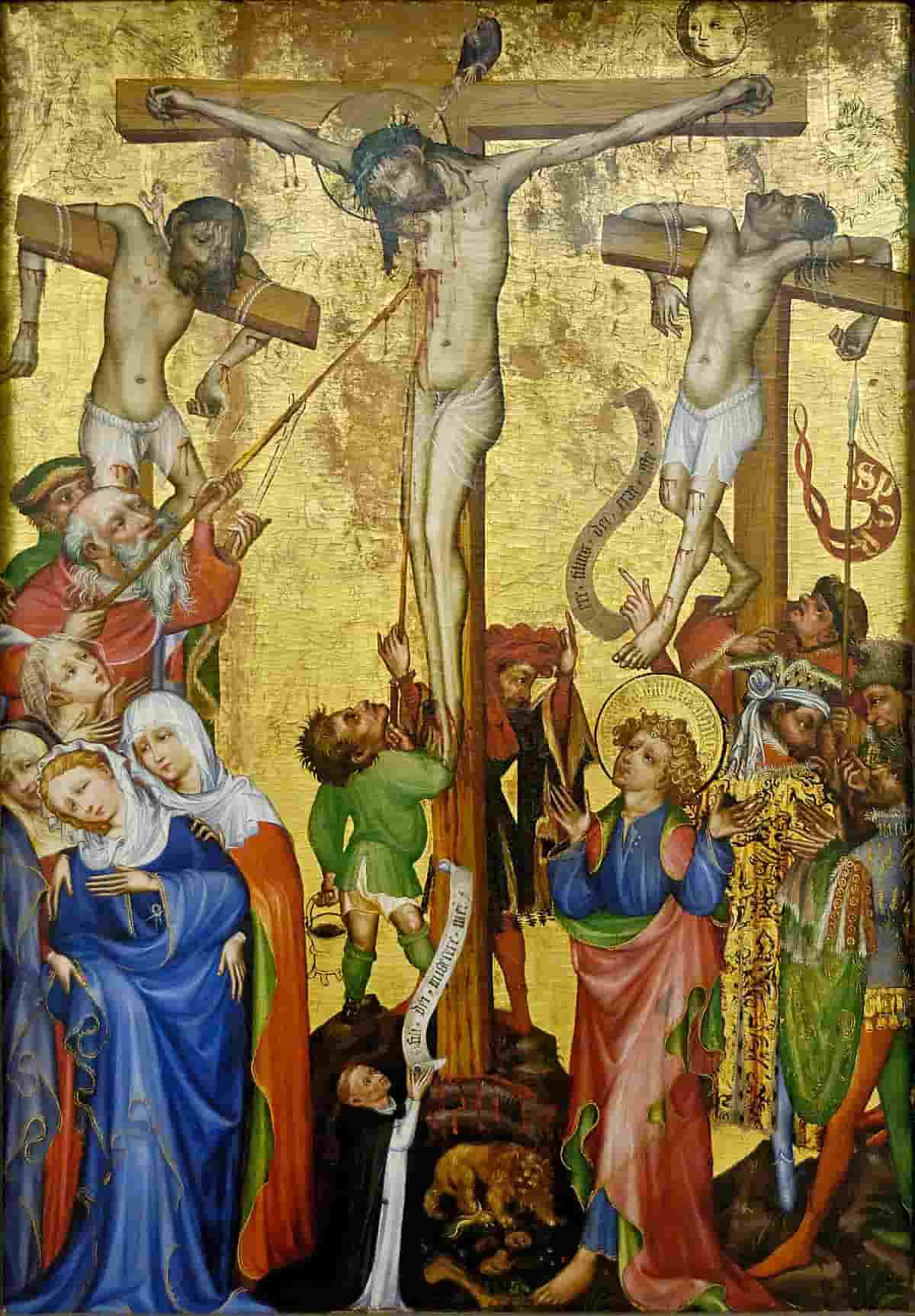
In 1597 he had six Franciscans, three Jesuits, and several other Christians taken to Nagasaki and there crucified.

Jesuit Crusade Japan - Land Of The Rising Son-01 
However, due to Hideyoshi’s death in 1598 the Jesuits were enabled to hope for better fortune. 

His successor, the cold and cautious Iyeyasu, allowed them to hope, and even to reestablish themselves in Kyoto, Osaka, and elsewhere. 

Iyeyasu was preparing for the great contest which was to be decided by the battle of Sekigahara.

Iyeyasu knew the Christian element was divided.

Some of its leaders being on his own side, and some on the side of his enemies.

But in 1606, after having solidly established his power, Iyeyasu for the first time showed himself decidedly opposed to Christianity by issuing an edict forbidding further mission work, and proclaiming that those who had adopted the foreign religion must abandon it. 

Nevertheless the propaganda went on, conducted no longer by Jesuits only, but also by Dominicans and Franciscans. 

The number of Christians then in the empire is said, with gross exaggeration, to have been nearly two millions. 

But Iyeyasu neither took, nor caused to be taken, any severe measures of repression until 1614, from which date the great persecution began. 

Persecution of Christians in Japan -  Land Of The Rising Son

The local persecutions in Kyushu would seem to have been the natural consequences of the intolerance of the Jesuits in the days of their power, when converted daimyo burned Buddhist temples and massacred Buddhist priests.

These persecutions were most pitiless in those very districts such as Bungo, Omura, and Higo where the native religion had been most fiercely persecuted at Jesuit instigation. 

From 1614, at which date there remained only eight, out of the total sixty-four provinces of Japan, into which Christianity had not been introduced, the suppression of the foreign creed became a government matter.

The persecution was conducted systematically and uninterruptedly until every outward trace of Christianity had disappeared.

Of the three great captains, all had, sooner or later, become suspicious of the foreign propaganda.

Propaganda Poster - Land Of The Rising Son

However, only Iyeyasu could find both the time and ability to deal with the social problem which it had aroused. 

Iyeyasu decided that Roman Christianity constituted a grave political danger and that its extirpation would be an unavoidable necessity.

Iyeyasu decided the Jesuit intrigues had a political objective of the most ambitious kind.

By 1603 he had every district of Japan under his yoke, but he did not issue his final edict until eleven years later. 

It plainly declared that the foreign priests were plotting to get control of the government, and to obtain possession of the country.

Persecution of Christianity in Japan -  Land Of The Rising Son

“The Kirishitan have come to Japan, not only sending their merchant-vessels to exchange commodities, but also longing to disseminate an evil law, to overthrow right doctrine, so that they may change the government of the country, and obtain possession of the land.”

“This is the germ of great disaster and must be crushed.”

Japan is the country of the Gods and of the Buddha.”

“It honours the Gods, and reveres the Buddha.”

“The faction of the Bateren* disbelieve in the Way of the Gods, and blaspheme the True Law, violate right-doing, and injure the good.”

“They are the true enemies of the Gods and of the Buddha.”

Great Buddha of Japan - Land Of The Rising Son

“If this be not speedily prohibited, the safety of the state will assuredly hereafter be imperilled.”

If those who are charged with ordering its affairs do not put a stop to the evil, they will expose themselves to Heaven’s rebuke.”

[*Bateren, a corruption of the Portuguese padre, is still the term used for Roman Catholic priests, of any denomination.]

“These missionaries must be instantly swept out, so that not an inch of soil remains to them in Japan on which to plant their feet.”

“If they refuse to obey this command, they shall suffer the penalty.”

“Let Heaven and the Four Seas hear this: Obey!

香取神宮へようこそ - Land Of The Rising Son

There are two distinct charges made against the Bateren.

First that of political conspiracy under the guise of religion, with a view to getting possession of the government.

Second that of intolerance, towards both the Shinto and the Buddhist forms of native worship. 

The edict was issued in 1614, and Iyeyasu had found opportunity to inform himself about some of these matters as early as 1600. 

The malevolent anxiety of the Jesuits about the matter had not escaped Iyeyasu’s penetrating observation. 

Iyeyasu termed it a “false and corrupt religion” both in his legacy and elsewhere.

It was essentially opposed to all the beliefs and traditions upon which Japanese society had been founded. 

The Japanese State was an aggregate of religious communities, with a God-king at its head.

The customs of all these communities had the force of religious laws, and ethics were identified with obedience to custom.

Filial piety was the basis of social order, and loyalty itself was derived from filial piety. 

Filial Piety Japan - Land Of The Rising Son

But this Western creed, which taught that a husband should leave his parents and cleave to his wife, held filial piety to be at best an inferior virtue. 

It proclaimed that duty to parents, lords, and rulers remained duty only when obedience involved no action opposed to Roman teaching.

That the supreme duty of obedience was not to the Heavenly Sovereign at Kyoto, but to the Pope at Rome. 

Had not the Gods and the Buddhas been called devils by these missionaries from Portugal and Spain? 

This creed in Europe had been a ceaseless cause of disorders, wars, persecutions, and atrocious cruelties. 

This creed, in Japan, had fomented great disturbances, had instigated political intrigues, had wrought almost immeasurable mischief. 

The Mischievous Doctrine of Endless Suffering

In the event of future political trouble, it would justify the disobedience of children to parents, wives to husbands, subjects to lords, and lords to Shogun. 

The paramount duty of government was now to compel social order, and to maintain those conditions of peace and security without which the nation could never recover from the exhaustion of a thousand years of strife. 

But so long as this foreign religion was suffered to attack and to sap the foundations of order, there never could be peace.

Japan of the sixteenth and seventeenth centuries, the religion of the ancestors was very much alive.

However, the needless Jesuit attacks upon the ancestor-cult are necessarily attacks upon the constitution of society, and Japanese society instinctively resists these assaults upon its ethical basis.

It was recognized that the triumph of the foreign religion would involve the total disintegration of society, and the subjection of the empire to foreign domination.

World War 2 Allied Powers - Land Of The Rising Son

Neither the artist nor the sociologist, at least, can regret the failure of the missions. 

The extirpation of Christianity enabled Japanese society to evolve and preserved the marvellous world of Japanese art, and the yet more marvellous world of its traditions, beliefs, and customs.

Roman Catholicism, triumphant, would have swept all this out of existence. 

For a in-depth understanding of the “Jesuit Peril” look no further than the brilliant epic movie “Silence”, by Academy Award winning director Martin Scorsese.

Silence-The Tale Of Jesuit Failure In Japan - Land Of The Rising Son

Based Upon

Japan,  An Attempt At Interpretation

Published 1904 

Patrick Lafcadio Hearn