Strangeness and Charm

Strangeness and Charm

Strangeness and Charm

Strangeness and Charm

One of Yakumo’s dearest friends said to him:

“When you find, in four or five years more, that you cannot understand the Japanese at all, then you will begin to know something about them.” 

These astute words from a Meiji Era Japanese citizen to his Occidental friend, are as true today as they were back then, and these sentiments continues to ring in one’s own ears to this very day.

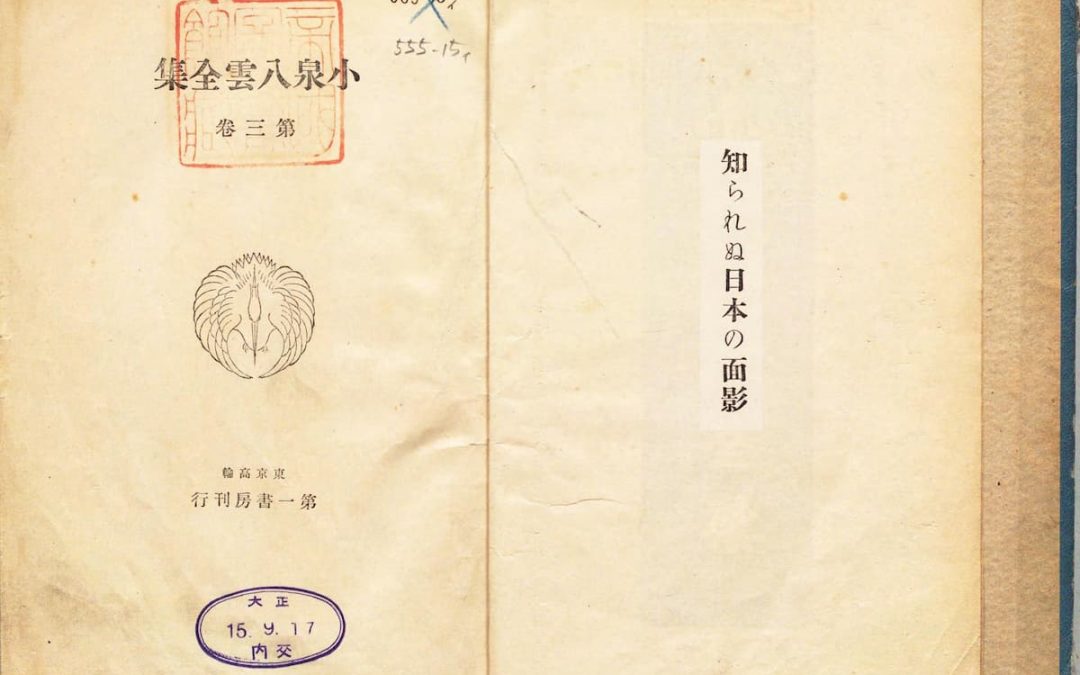
Yakumo Koizumi lived in Japan for 14 years until his death on September 26, 1904. 

Here, he does a brilliant job with his, Attempt At Interpretation, allowing a glimpse into the society of Japan during the Meiji Restoration.

“At first perceived, the outward strangers of things in Japan produces a queer thrill impossible to describe, a feeling of weirdness which comes to us only with the perception of the totally unfamiliar.”
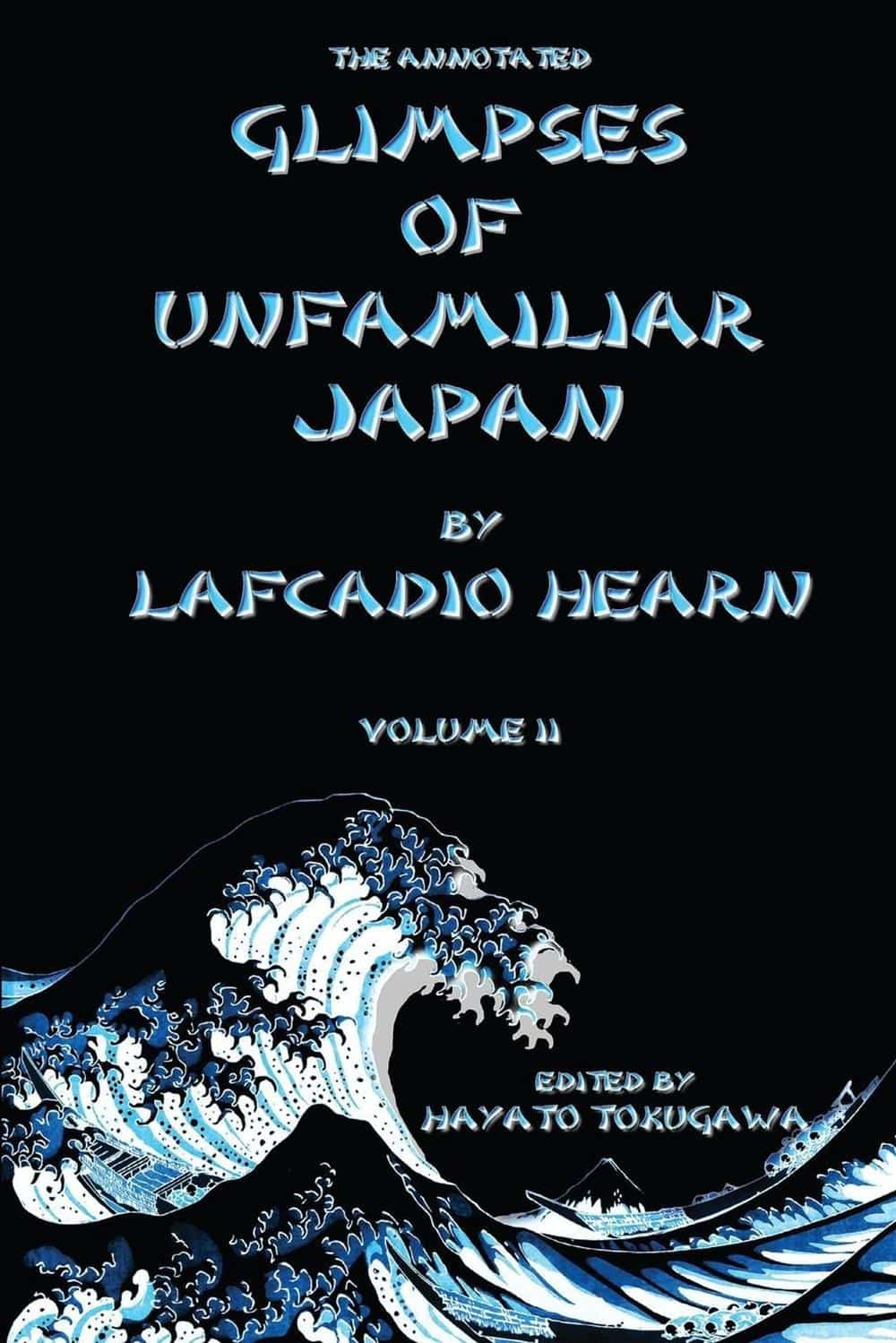
The Annotated Glimpses of Unfamiliar Japan by Lafcadio ... The Annotated Glimpses of Unfamiliar Japan by Lafcadio Hearn

Surely this feeling of weirdness also washes over and engulfs one after entering Japan for the first time, stepping into another dimension.

“You find yourself moving through queer small streets full of odd small people, wearing robes and sandals of extraordinary shapes, and you can scarcely distinguish the sexes at sight.”

Vintage- Japan in the late XIX Century - Meiji era

“Food-stuffs of unimaginable derivation; utensils of enigmatic forms; strange masks and toy that commemorate legends of gods or demons.”
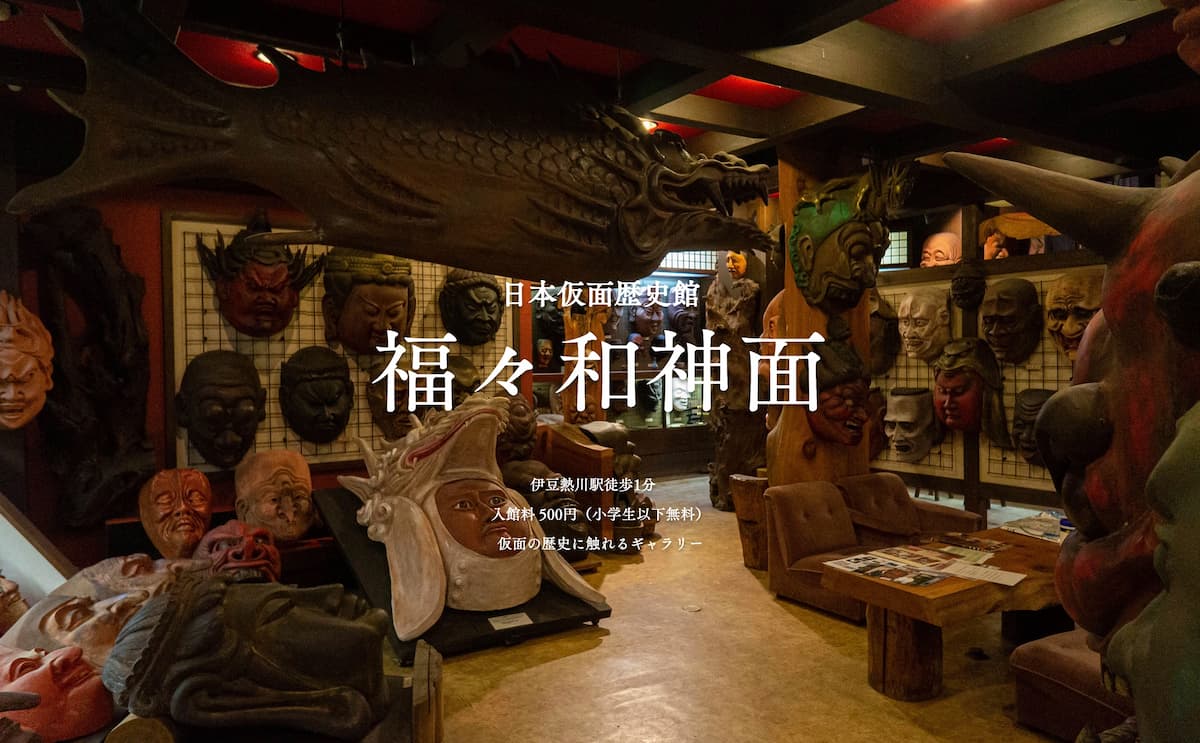
日本仮面歴史館 福福和神面

Thanks to the digital revolution, one can see Japan from the comfort of a favorite chair from anywhere in the world. 

There one can enjoy the visual and audio aspects of Japanese cultural charm.

However, as charming and delightful as this may be, one can only truly understand the essence of Japan by coming here to bath in the Japanese “air” and feel Japan in one’s very own spirit and soul.

Japanese girls wearing kimono

“Everywhere on signs and hangings, on the backs of people passing by, you will observe wonderful Chinese characters, and the wizardry of all these texts makes the dominant tone of the spectacle.”

Japanese Street in the Meiji Era

Indeed, the complexity of Chinese ideograms permeating the country only adds to the otherworldliness charm one experiences here.

In fact, one of the most formidable life challenges was to address one’s own illiteracy in Japanese, and commit a lifetime to understand and absorb these complex and magnificent ideograms.

Daily Practice Example - Land Of The Rising Son

As Yakumo continued to contemplate the extraordinary surreal nature of Japan, he noted: 

“The delicate perfection of workmanship, the light strength and grace of objects, the power manifest to obtain the best results with the least material, the achieving of mechanical ends by the simplest possible means, the comprehension of irregularities as aesthetic value, the shapeliness and perfect taste of everything, the sense displayed of harmony in tints or colours.”

Japanese Basket Merchant Meiji

 “All this must convince you at once that our Occidental has much to learn from this remote civilization, not only in matters of art and taste, but it matters likewise of economy and utility.”

Japan in the late 19th Century Meiji

Indeed these sentiments still ring true today, as the Japanese have created a modern society to be looked upon a desirable model of civility and harmony, having evolved from this very culture.

Yakumo spoke English, Greek, and Japanese, and made the following observation about the difference between English and Japanese.

“Any one of their ordinary phrases, translated into Western speech, makes hopeless nonsense, and the literal rendering into Japanese of the simple English sentence would scarcely be comprehended by any Japanese who have never studied a European tongue.”

Miscommunication - A Case of Mistaken Identity

“Could you learn all the words in a Japanese dictionary, your acquisition would not help you in the least to make yourself understood in speaking, unless you had learned also to think like a Japanese.”

Find Your Ikigai

The secret to meaningful cultural understanding is in the language, when one can think and conceptualize in Japanese. 

Then, and only then, can one start to read the “air” where the unspoken social conventions and protocols reside.
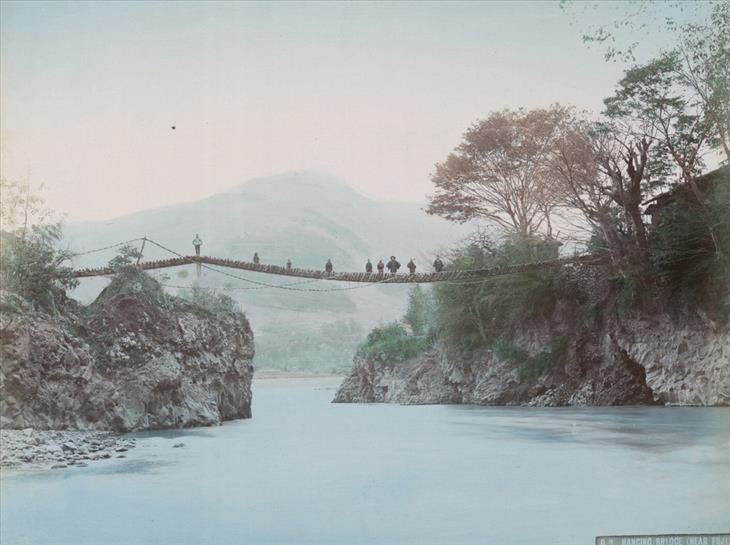
Hark Back to Meiji-Era Japan

The Japanese have evolved under strict laws and societal protocols which mandate harmony.

Life was particular rigid when the Japanese were isolated from the rest of the world for centuries during Tokugawa Bakufu, which preceded the Meiji Restoration.

Here these ingrained societal courtesies still continue to characterize the way the Japanese interact and behave among each other today.  

“Everybody greets everybody with happy looks and pleasant words, faces are always smiling, the commonest incident of every day lives are transfigured by a courtesy at once so artless and so faultless that it appears to spring directly from the heart, without any teaching.”

Japanese Bowing To Each Other

Japan’s crime rate is the lowest in the industrial world (here), as when breaching the laws of our land, the accompanying punishment can be harsh. 

Remember, Japan still has capital punishment, with the vast majority of the Japanese citizens in full support of this ultimate punishment. 

Historically the Japanese view death very differently than Occidentals, and this form of punishment remains here to reminder wayward Japanese citizens, when one disrupts harmony and breaches social conventions, you will be punished.

“I have lived in districts were no case of theft occurred for hundreds of years.” 

“Where newly-built prisons of Meiji remain empty and useless.” 

“Where people left their doors unfastened by night as well by day.”

“In such a district, you might recognize that kindness shown to you, as a stranger, is the consequence of official command.”

“But how explain the goodness of these people to each other?” 

“When you discover no harshness, no rudeness, no dishonesty, no breaking of law, and learning that this social conditions have been the same for centuries, you’re tempted to believe that you have entered into the domain of a morally superior humanity.” 

“You cannot help being delighted by such conditions, or feel indignant and hearing them denounced as ‘heathens’.”
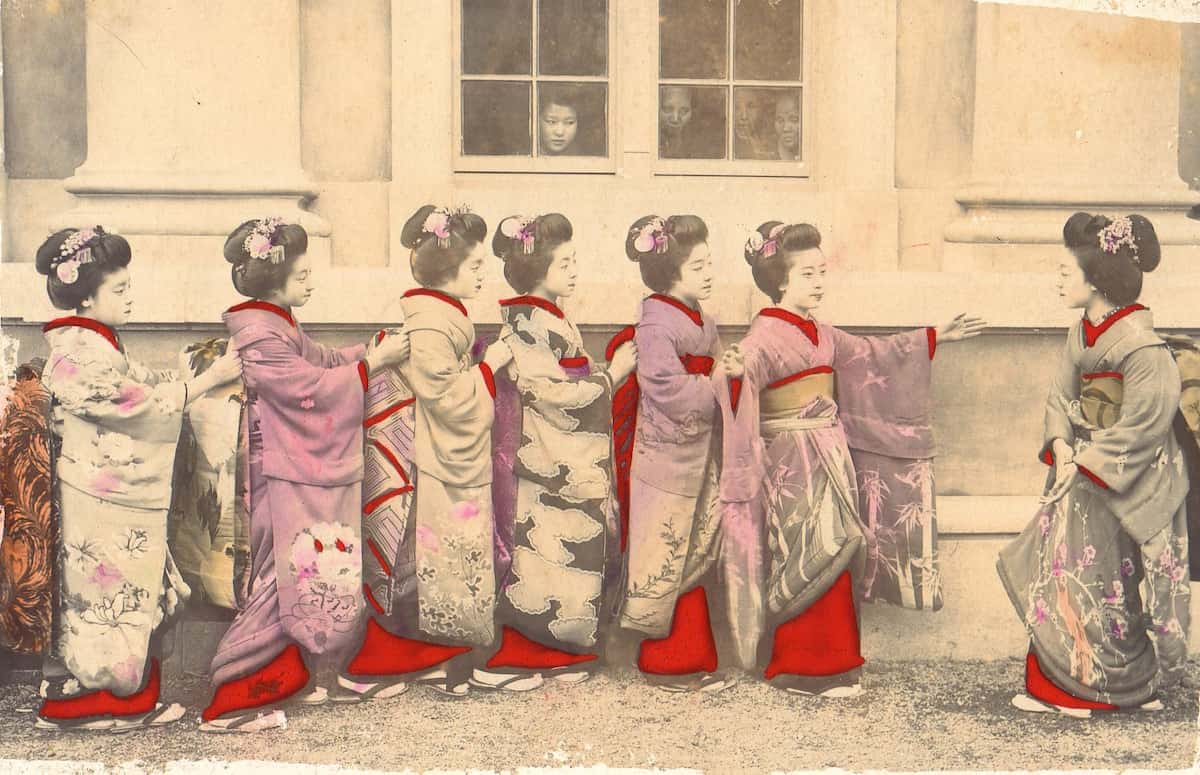
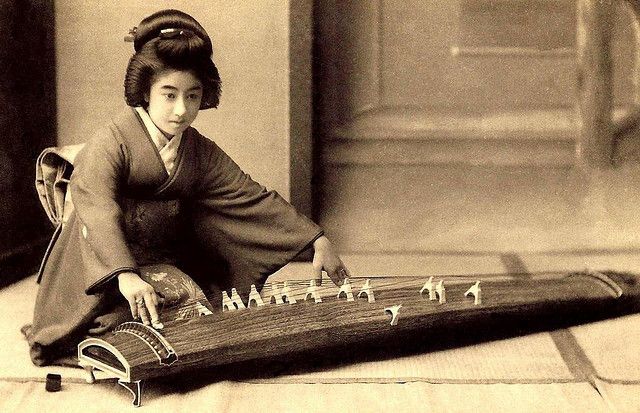
Maikos in the Meiji era, Japan 1868-1912

Why was Yakumo able to experience Japan in such a profound way, where he was able to feel the multilayered society of Japan and recognizing the concept of life as being ephemeral? 

Moreover, he deeply felt the presence of the ghosts as ancestors turn into deities, and regarded all thing as instilled with life. 

Life in all things ~ ban butsu (万物).

Kwaidan Ghost Stories and Strange Tales of Old Japan ... Kwaidan Ghost Stories and Strange Tales of Old Japan

“Really you are happy because you have entered bodily into Fairyland, into a world that is not, and never could be your own.” 

“You have been transported out of your own century, over spaces enormous of perished times, into an era forgotten, into a vanished age.”

“This much more archaic civilization of Old Japan attained an average of aesthetic and moral culture well worthy of our wonder and praise.” 

“Only a shallow mind, a very shallow mind will pronounce the best of that culture inferior.”

“But Japanese civilization is peculiar to a degree for which there is perhaps no Western parallel, since it offers as a spectacle of many successive layers of alien culture superimposed above the simple indigenous basis, and forming a very bewilderment of complexity.”

Layer upon layer upon an ancient civilization from an ancient time, continuing to add layer upon layer still now in these modern times.

Based Upon
Japan,  An Attempt At Interpretation
Published 1904
Patrick Lafcadio Hearn
STRANGENESS AND CHARM
Patrick Lafcadio Hearn

Patrick Lafcadio Hearn

Patrick Lafcadio Hearn

Patrick Lafcadio Hearn

Unless digging deeply into the annals of Japan, the name Lafcadio Hearn is probably unfamiliar.

However, Lafcadio Hearn can be considered a paramount historic figure of Meiji-era Japan, where he lived until the end of his days.

Lafcadio HearnPortrait 1889

He is considered an early pioneer who introduced Japanese culture to the West with his intriguing observations and stories embedded throughout his body of work about Japan.

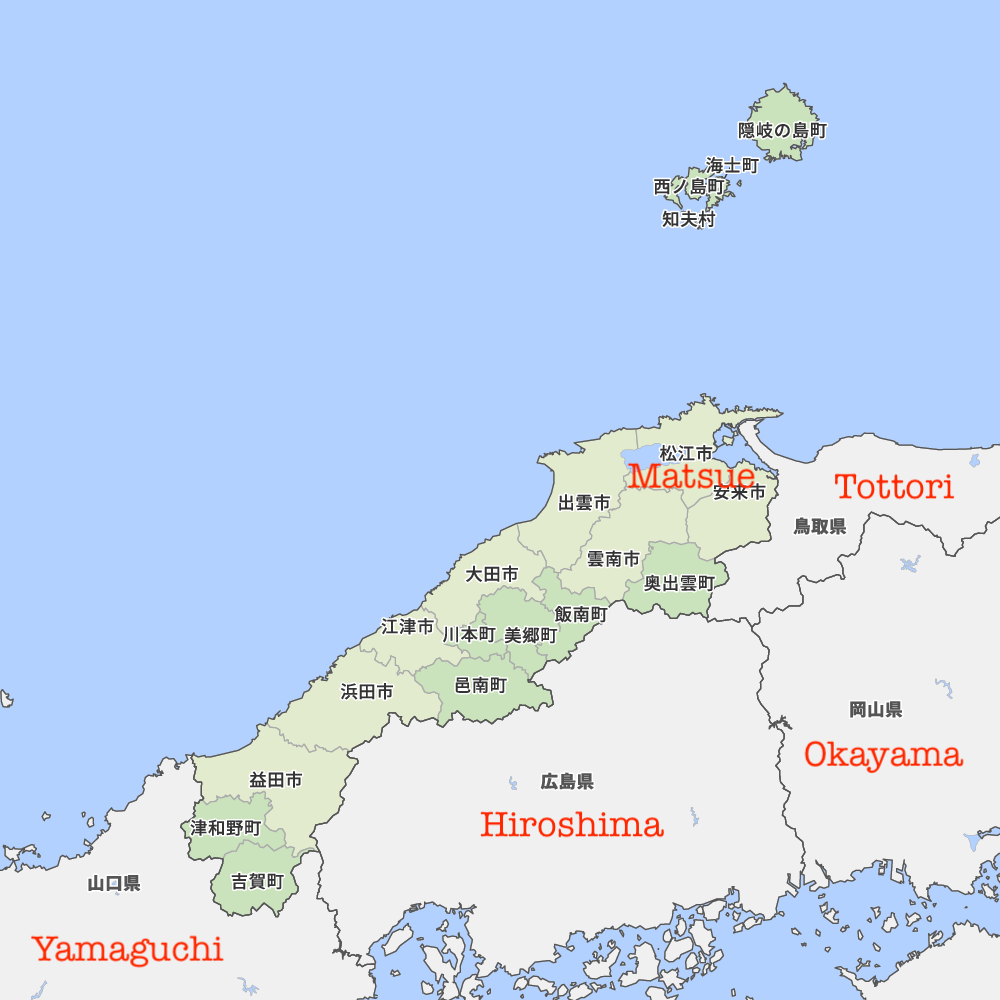
After arriving in 1890, he became a teacher in Matsue, Shimane Prefecture thanks to Basil Hall Chamberlain, another important figure of the Meiji period.

島根県の地図

島根県松江市

It was here where Yakumo submerged himself into the Japanese culture.

Remember, Japan had just been forced to open after 250 years of isolation under the strict rule of the Tokugawa Shogunate ending in 1868.

Here, Yakumo exposed to the West another word in a different dimension having evolved for over two centuries absent of influence from foreigns. 

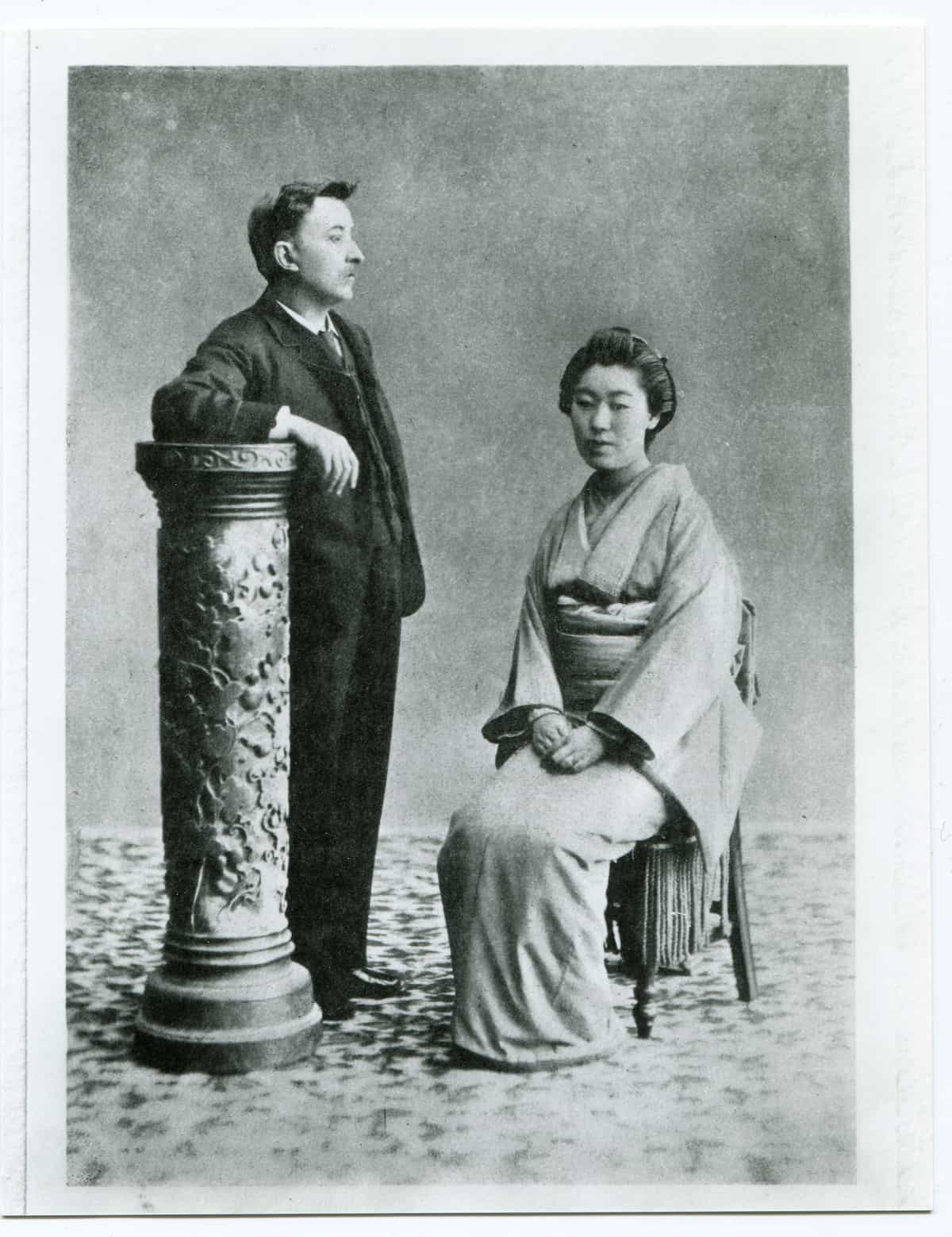
This is also where in 1896 Lafcadio Hearn married Koizumi Setsuko, the daughter of local samurai family, took the name Koizumi Yakumo (小泉 八雲), and became a citizen of Japan.

Lafcadio Hearn with Setsu

Traveling the world in the 1800s was difficult, so it was rare to find someone so deeply engrossed in Japanese culture as Yakumo, who also wrote with depth and clarity about this new and intriguing world now surrounding him.

Indeed, Yakumo works on Japan allows one to gain a deeper understanding of the extraordinary society of Japan, as described over 100 years ago.

In 1894 Yakumo published “Glimpses of Unfamiliar Japan” his first book about Japan.

Glimpses of Unfamiliar Japan Volumes I and II Lafcadio ... Glimpses of Unfamiliar Japan Volumes I and II Lafcadio Hearn

Among his other books written about topics pertaining Japanese culture were “Kokoro: Hints and Echoes of Japanese Inner Life”, published in 1896, “Japanese Fairy Tales” released 1899, and the fascinating and entertaining “Kwaidan: Stories and Studies of Strange Things”, which was published in 1903, and subsequently turned into a film.

Kwaidan- Stories and Studies of Strange Things by Lafcadio

One of the most important works of Yakumo is his deeply insightful book Japan: An Attempt At Interpretation.

Published in 1904, it is truly amazing to reach deep into the past to see the Japan of old through the eyes of this incredible storyteller.

In this book, one gets an vivid sense of the Japanese society during the Meiji Restoration, and gains a deeper awareness and sensitivity to the Way of the Japanese.

Japan: An Attempt at Interpretation is free to read here.

Japan, an attempt at interpretation

Make sure to visit the Koizumi Yakumo Commemorative Park while visiting Shinjuku, it has a wonderful garden garden with a bust of Lafcadio Hearn and an plaque describing his talents and achievements.

Koizumi Yakumo (Lafcadio Hearn) died on September 26, 1904, and is interned at the Zoshiyaga Cemetery, located in Toshima, Tokyo.

Lafcadio Hearn Bust

Right-Brain Left-Brain – Part 5

Right-Brain Left-Brain – Part 5

Right-Brain Left-Brain – Part 5

Right-Brain Left-Brain – Part 5

An important cultural trait of the Japanese is the practice of giving intuition presidents over reason.

Stories from the annals of the Japanese are replete with incidents where the fate of individuals, groups, and even the entire nation hung in the balance, and these critical decisions were based upon intuition, rather than reason.

intuition versus logic

In fact, the higher placed and more powerful the individual concerned in such sticky situations, the more likely they were to rely upon innate intuition.

A case in point would be the visionaries Masaru Ibuka and Akio Morita of Sony fame seeing the future of consumer electronics.

Although invented in the U$A, this is where the innate ability of the Japanese to take imported technology and intuitively reimagine it into the future kicks in.

Are you KY

In this pioneering case, the transistorized broadcast radio receiver was the object of the Japanese intuition toward the nascent consumer electronic industry.

This seminal work served to make the broader consumer electronic industry aware of the potentialities of the transistor, thanks to Sony.

As the greatest hockey player of all time Wayne Gretzky (also an example of extraordinary deep intuition) said:

I skate to where the puck is going to be, not to where it has been

Always keep these immortal words of wisdom close to the heart, and one can also now see the future via intuition.

There was a crucial word learned from very early in one’s journey in the Land Of The Rising Son.

haragei

Where the literal translation is the art (芸げい) of the stomach (腹はら) .

Alas, when referencing haragei in conversation with the younger generation, it feels as though this culturally important communication tool is being serially diluted in large part due to the Micky Mousification of Japan.

Ever had a “gut feeling?”

There, one has experienced haragei, and would do well to consciously obverse and note the haragei for future reference.

One can then tune into this curious Japanese communication protocol and relate to them at a much higher level than one could have ever imagined without understanding the importance of intuition in Japanese communication.

Think of haragei as cultural telepathy, which is being able to communicate among people on the basis of common knowledge and experience.

Interesting Facts About The Land Of The Rising Son

This has been described in an article entitled: “Japanese Telepathy: I Shin Den Shin

Another significant term is chokkan, meaning intuition.

However, this word holds much deeper significance to the Japanese as opposed to the Occidentals.

The Japanese are still homogenized to a considerable degree by strict cultural programming.

They are instilled with the same beliefs and forms of behaviour, which results in the Japanese thinking and act very much alike.

Indeed, even now the power of traditional Japanese culture is still very much evident in the attitudes and behaviour of the Japanese, and it’s still possible to assume that in group situation they react in the “Japanese Way.”

In this, the Japanese can intuit what others are thinking and what type of action to be undertaken in most circumstances, according to identifiable traditional Japanese values.

This is where intuition continues to play a critical role in non-verbal Japanese communication which resides in the “air”, or what the Japanese refer to as kuki.

One of the challenges facing those unfamiliar with these peculiar Japanese communication protocols is being able to determine whether a reaction is based on intuition or reason.

Generally speaking, reactions based on intuition reflect the traditional Japanese mindset as a whole and can be observed in the group consensus nature of Japanese society.

On the other hand, reactions based on pure reason will reflect the personal opinions or positions of the individuals, which may or may not be representative of the group consensus.

Keep in mind, group consensus still is paramount to the smooth functioning of Japanese society.

Geisha among the Cherry Blossoms

Personal opinions are accepted in informal gatherings, or in unofficial business setting like the ubiquitious drinking session, however, one ignores the importance of group consensus at one’s own peril.

There is a great deal of innate wisdom in Japanese intuition, and when marrying it with reason, it often results in a more comprehensive answer or solution to whatever discussion or problem is at hand.

How about adding the intuition element into ones own reasoned thinking for a higher level of awareness to assist when navigating this multifaceted and rapidly changing world.

The power of one's own intuition

Bonus: Continue exploring the unique Japanese regard toward the stomach (腹はら) in the podcast entitled: A Worm Told Me

Right-Brain Left-Brain – Part 4

Right-Brain Left-Brain – Part 4

Right-Brain Left-Brain – Part 4

Right-Brain Left-Brain – Part 4

Ever thought to think about fuzzy thinking versus linear thinking?

The core principal which can be considered the Japanese way of thinking can be though of as fuzzy thinking, or better still, holistic thinking.

Fuzzy thinking

If this concept has not became apparent yet, this “way of thinking” contrasts sharply with the linear way of thinking in which most of the rest of the world operates.

Despite the Japanese cultural kinship and similarities with the Koreans and Chinese, these similarities only came about due to primitive Koreans and then primitive Japanese adopting many facets of Chinese culture at a very early stage in Japanese cultural and societal development.

For certain, Japan retain its own native cultural essence and this makes the Japanese conspicuously different from the Chinese and Koreans.

Here one submits:

Often the world is divided between East and West, Oriental and Occidental. 

One could almost say…black and white. 

But where are the rainbow and divine shades of gray?

Grayscale Paper

The third, and paramount to the delicate balance of the rapidly changing world is the holistic right brain thinking of the Japanese.

Japanese Civilization

Eastern Civilization

Western Civilization

Despite the debacle of the Japanese attempt to create a Greater East Asia Co-propriety Sphere once upon a time, the ability of the Japanese to absorb, improve on, and innovate technology undoubtedly played a key role in the meteoric rise of Japan as the second largest economy in the world up until the early part of the 21st century.

The Greater East Asian Co-prosparity Sphere - when total empire met total war

The natural tendency of the Japanese is to look at all things from a holistic viewpoint, a valuable asset for sure, especially when applied to the use of technology and associated aesthetic factors.

Indeed, the mystical ability of the Japanese is their innate capacity to understand, duplicate, and improve on imported technology, whether synthetic paper, passenger cars, or the arquebus, is unparalleled.

The right brain influence has truly manifested itself in the Japanese as one can observe in their systematic approach to arts and crafts, architecture, garden design, and the continuing emphasis on aesthetic practices weaved into the daily routine of ordinary Japanese life.

Japanese Woman Bowing to the Land Of The Rising Son

The dominance of the right side of the brain remains so powerful the Japanese still have somewhat of an aversion to thinking based solely on facts and logic. 

Unequivocally, the Japanese regard the linear, purely logical way of thinking to be somewhat callous, cruel, and anti-human.

To be sure, the attribute most admire by the Japanese in people is humanism.

What Is Secular Humanism

Now if one’s world could only find a little more humanism around the globe, the future for descendants would becoming a much better place.

Stay tuned for next week installment as we continue our right-brain left-brain journey in the Land Of The Rising Son.

Right-Brain Left-Brain – Part 3

Right-Brain Left-Brain – Part 3

Right-Brain Left-Brain – Part 3

Right Brain Left Brain – Part 3

The profound influence of right-brain dominance in Japanese culture reaches into their deepest values, motivation, and behaviour while encompasses all aspect of Japanese life.

One can see the influence of the right-brain thinking in Japanese arts and crafts, in the meticulous attention to detail when creating new and innovative products, and in the general aura throughout the nation of Japan.

Circular Rainbow Sun Halo

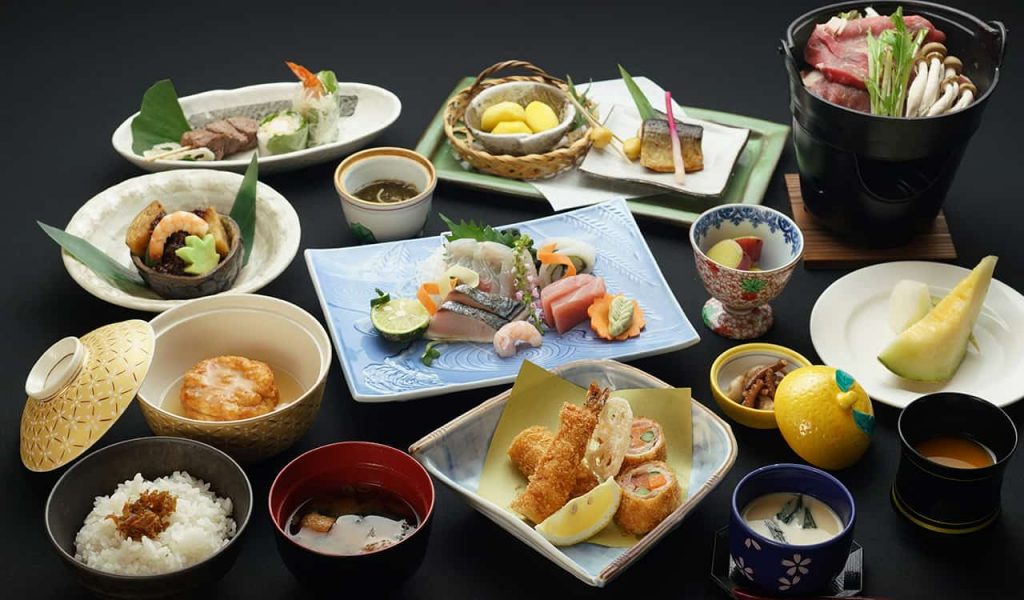
Truly, this even includes the way the Japanese go about doing some of the most mundane tasks, such as arranging food into a well thought-out presentation.

Indeed, anyone having experienced a Japanese banquet with the meticulously prepared and arranged food, of which can only be considered a form of high art, can bear witness to this reality.

washoku example

Fundamentally, the influence of the physical manifestations of the right brain dominance in Japanese culture are positive, and account for virtually all things both Japanese and non-Japanese find so emotionally and spiritually satisfying about Japan and the Japanese Way.

Interestingly enough, when the Japanese interact with each other, they exist in the same cultural realm, and the aspects of the right brain orientation that conflicts with the left brain attitudes and behaviour are controlled by established communication, tolerance, and cooperation protocols.

By the same token, when the Japanese are dealing with people whose left-brains are dominant and not culturally program to accommodate right brain thinking and behaviour, misunderstandings and friction are inevitable.

This is particularly prevalent when the left brain people concerned are not sensitive to cultural differences or choose to ignore them, which is often the case, and at one’s own peril when dealing with the Japanese.

Commander Perry Black Ship - ペリーの黒船

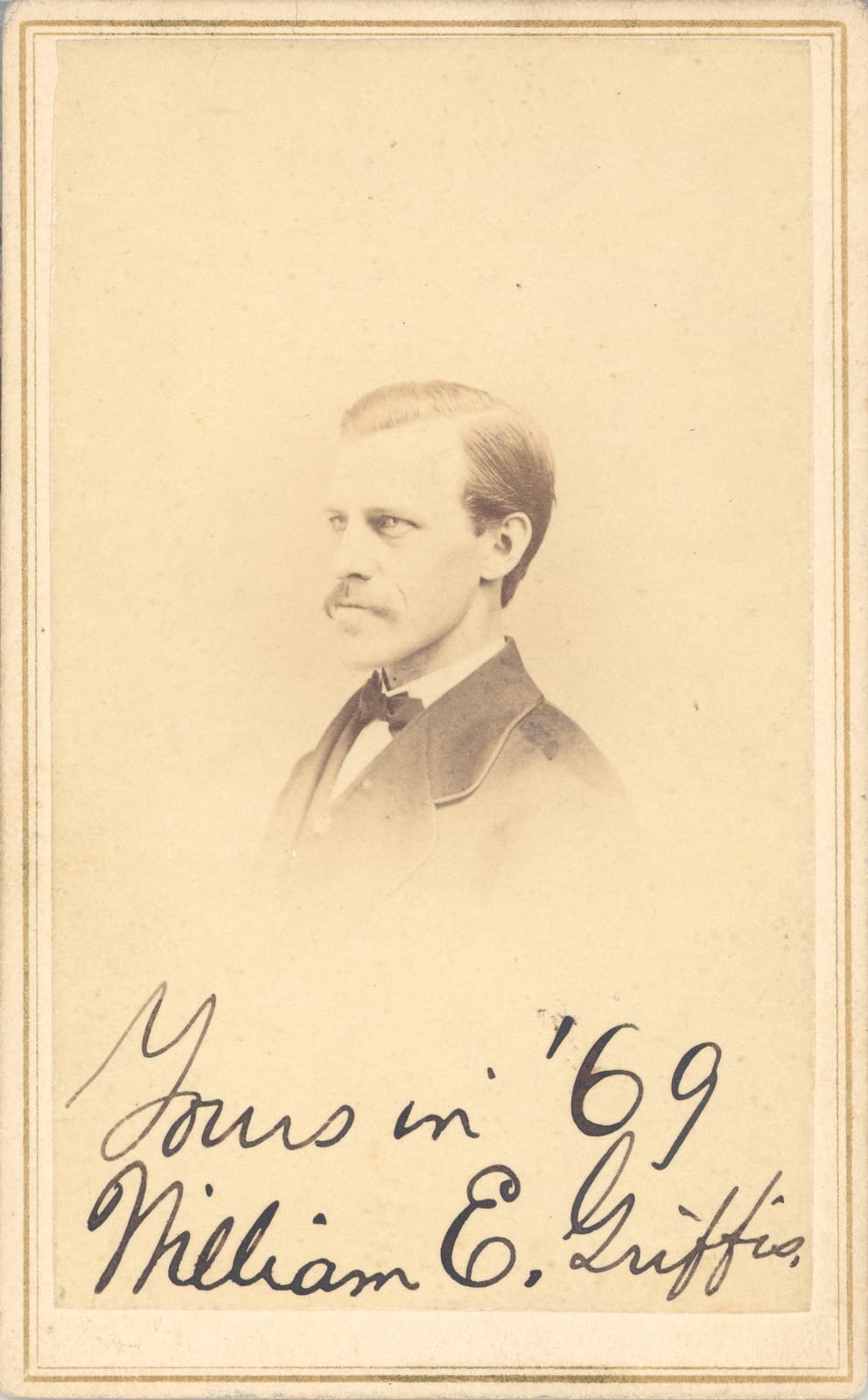
Let’s examine one of the earliest Japan pioneer, William Elliot Griffis, who first arrived in Japan on December 29, 1870.

After living and teaching in the hinterlands of Japan (Fukui), he began to question the ways he’d been taught from an early age.

Here he wrote the following in 1871:

“Why is it that we do things contrariwise to the Japanese?

Are we upside down, or they?

The Japanese say that we are reversed.

They call our penmanship “crab-writing,” because, say they, “it goes backward.”

The lines in our books cross the page like a craw-fish, instead of going downward “properly.”

In a Japanese stable we find the horse’s flank where we look for his head.

Japanese screws screw the opposite way.

Their locks turn to the left, ours to the right…

An occidental, to injure his enemy, kills him; A Japanese kills himself to spite his foe.

Which race is left-handed?

Which has the negative, which the positive of truth?

What is truth?”

William Elliot Griffis

Shortly after Japan opened up to the world after 250 years of peaceful isolation, Mr. Griffis, the puritanical occidental was fully exposed to the right-side-of-the-brain thinking Japanese.

One can also see similar observations reflected in the writing of Patrick Lafcadio Hearn (Koizumi Yakumo), in particular, in the very important book entitled, Japan, an attempt at interpretation, which was published in 1904.

Patrick Lafcadio H - 小泉八雲

One can read this important historical interpretation of Japan during the Meiji Restoration for free here.

Japan, an attempt at interpretation

Based upon the above historical passage by William Elliot Griffis, reading Patrick Lafcadio Hearn, and first-hand experience from over 3 decades of living in the countryside of Japan, one can confirm the validity of the right-brain left-brain thesis.

As one journeys along and when interacting with, and living among the Japanese, it is always a very good idea to keep in mind what side of the brain one is dealing with.

Stay tuned next week for a deep dive into the right-brain left-brain contrasting in the way of thinking, and the way of life.

Right-Brain Left-Brain – Part 2

Right-Brain Left-Brain – Part 2

Right-Brain Left-Brain – Part 2

Right-Brain Left-Brain – Part 2

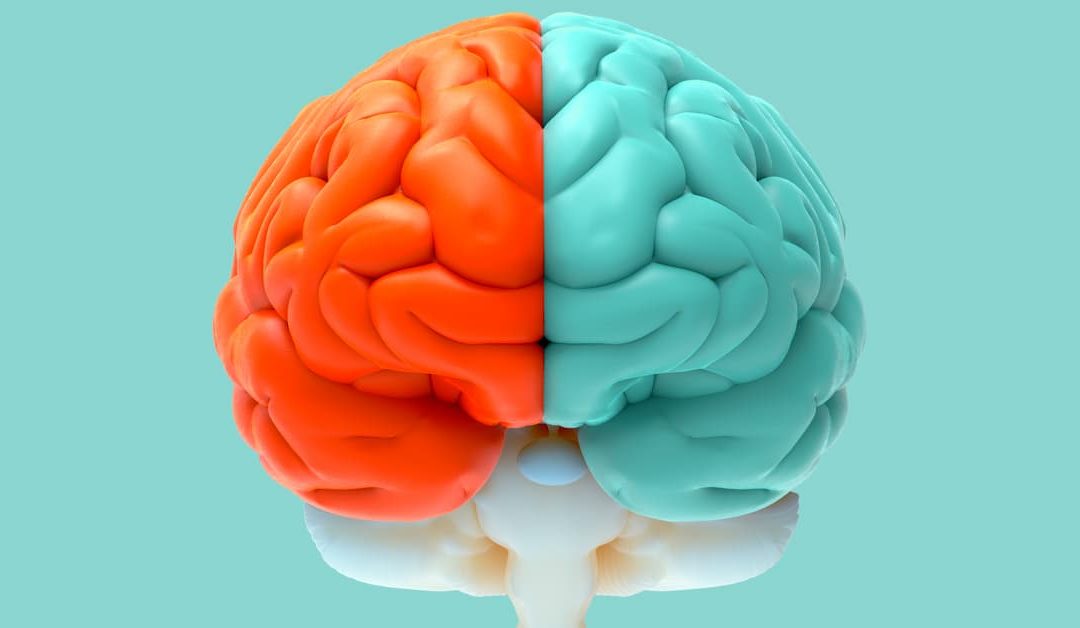
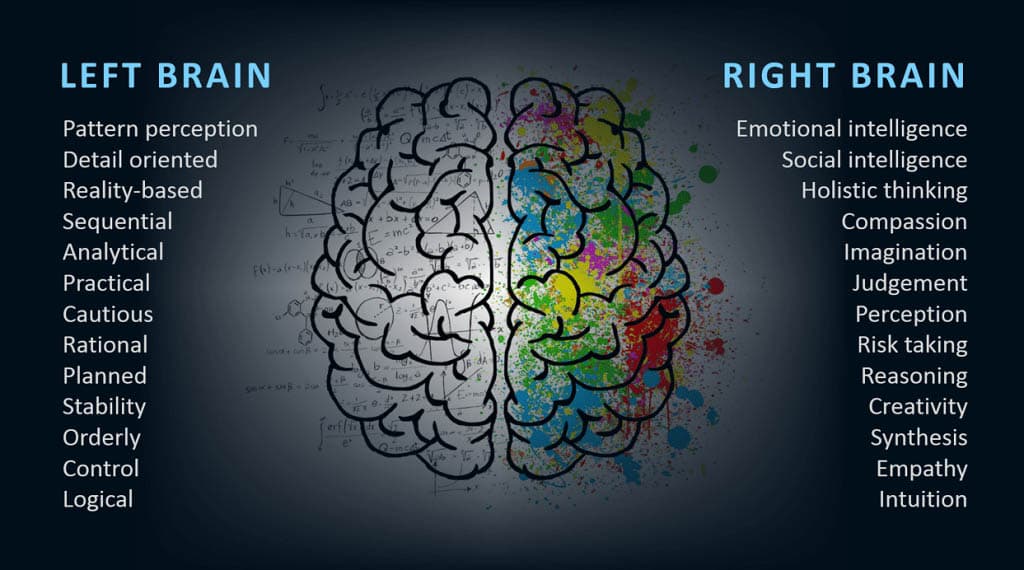
According to the research of Dr. Tadanobu Tsunoda in the 1970s, there is a fundamental difference in the hemisphere dominance of the brains in the Japanese and non-Japanese.

レトロファッション 1970

His research also demonstrated the difference in dominant side of the brain is a direct result of the individual’s native language.

What is even more remarkable is that Dr. Tsunoda found there were only two languages which always produces right brain dominance: Japanese and Polynesian.

As a musician, one found Dr. Tsunoda’s research indicating the secret of which side of the brain is dominant is based on whether the sounds of the language are harmonic or non-harmonic.

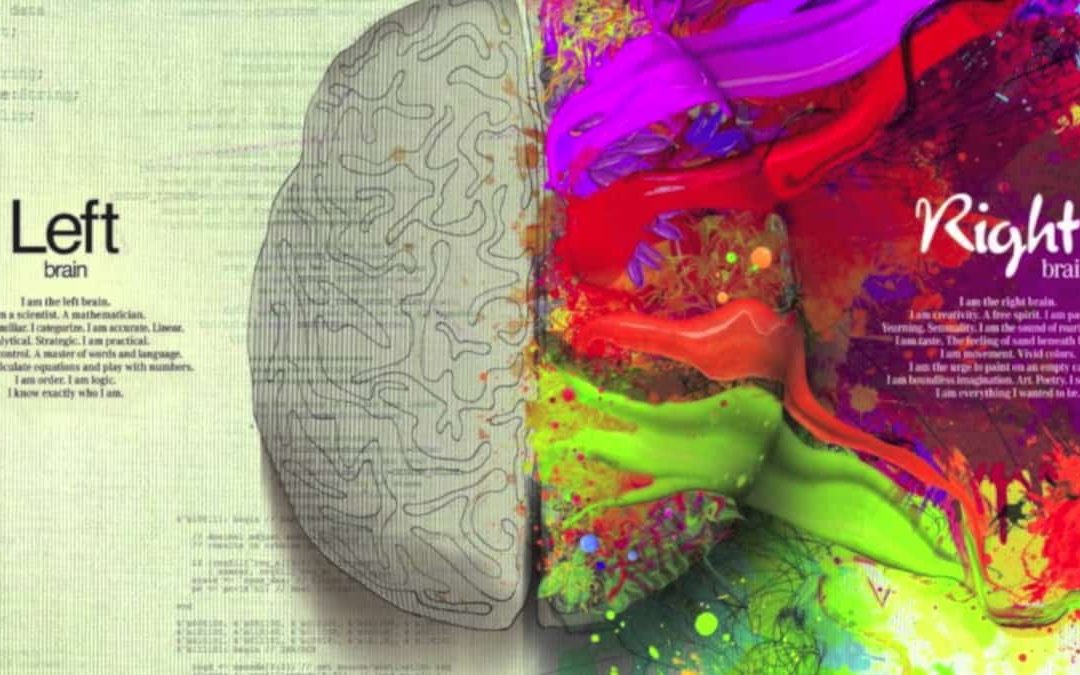
日本人の脳

This led to the understanding that Japanese being a harmonic language uses the right side of the brain, while all other languages are non-harmonic and are processed by the left side of the brain.

The Japanese are unique as the worlds only large, prominent, group of people whose mind is primarily right-brain centric.

As an outsider reflecting on the spirit and soul of the Japanese for over three decades, one believes a valuable culture traits is the Japanese ability to apply both right and left brain insights and energy in all their efforts.

On the other hand, a negative right-brain aspect would be the extraordinary emotional content of the Japanese culture, which makes it complex and time-consuming to maintain harmonious relationships.

Emotional Intelligence The Japanese Way

Indeed, maintaining harmonious relationships with the Japanese is tricky and one must always pay close attention so as to successfully navigate this esoteric culture and society.

This is even more true, when the Japanese have to maintain relationships with people whose cultures are less emotionally burdensome.

The difficulty in maintain proper relationships in this complex and hierarchical system of Japan is something one has experienced many times.

Valuable, if not somewhat painful lessons are plenty when going thorough the inevitable growing pains of assimilating into the Japanese culture and understanding their right-brain thinking.

Every Pain Gives a Lesson

During the industrialization of Japan between 1870 and 1890, left brain decision-making and a growing degree of left brain behaviour was necessary to incorporate to modernize Japan.

Further erosion of the right-brain culture continued after the defeat of Japan in the second world war, and with the importation of popular American culture.

In fact, one has observed more and more of the left brain thinking staining the right-brain Japanese over three decades living among the Japanese.

One could almost attributed this to the incessant creeping of American culture, if there is indeed such a thing as, “American culture.”

However, this erosion process has still not penetrate to the core of the Japanese culture or psyche, and the Japanese language remains virtually intact and continue to program the right side of the brain from birth.

Over the last few decades, a large percentage of the Japanese population has been exposed to English with mixed results.

Confused Japanese

One could say the more English imprinted on to left side of the Japanese brain the more readily the Japanese can switch to the left brain thinking and acting.

However, for most Japanese, speaking and listening to English can be extremely tiring, especially if they are not very good at language.

In fact, the has been mentioned many times by one’s extraordinary spouse, who only started to learn English much later in life, and for certain still finds English not only tiring, but noisy.

Indeed, the core of Japanese culture will always remain right-brain, and this may turns out to be an advantage in this changing world, only time will tell.

Next week let’s peak further into the right-side-of-the-Japanese-brain.

Peak into the right brain of the Japanese