Ban Butsu — All Things

Ban Butsu — All Things

Ban Butsu — All Things

Japan has long been perceived from the outside as a mysterious civilization, full of paradoxes and contradictions when viewed through Occidental lenses shaped by rigid binaries imposed by institutional power.

Yet this perception could not be further from the lived reality of the people of Yamato.

Japanese cosmology rests upon the foundational principle of Ban Butsu—the totality of existence—life in all things.Ki FlowIn Japanese metaphysical thought, Ban Butsu is not a collection of separate objects.
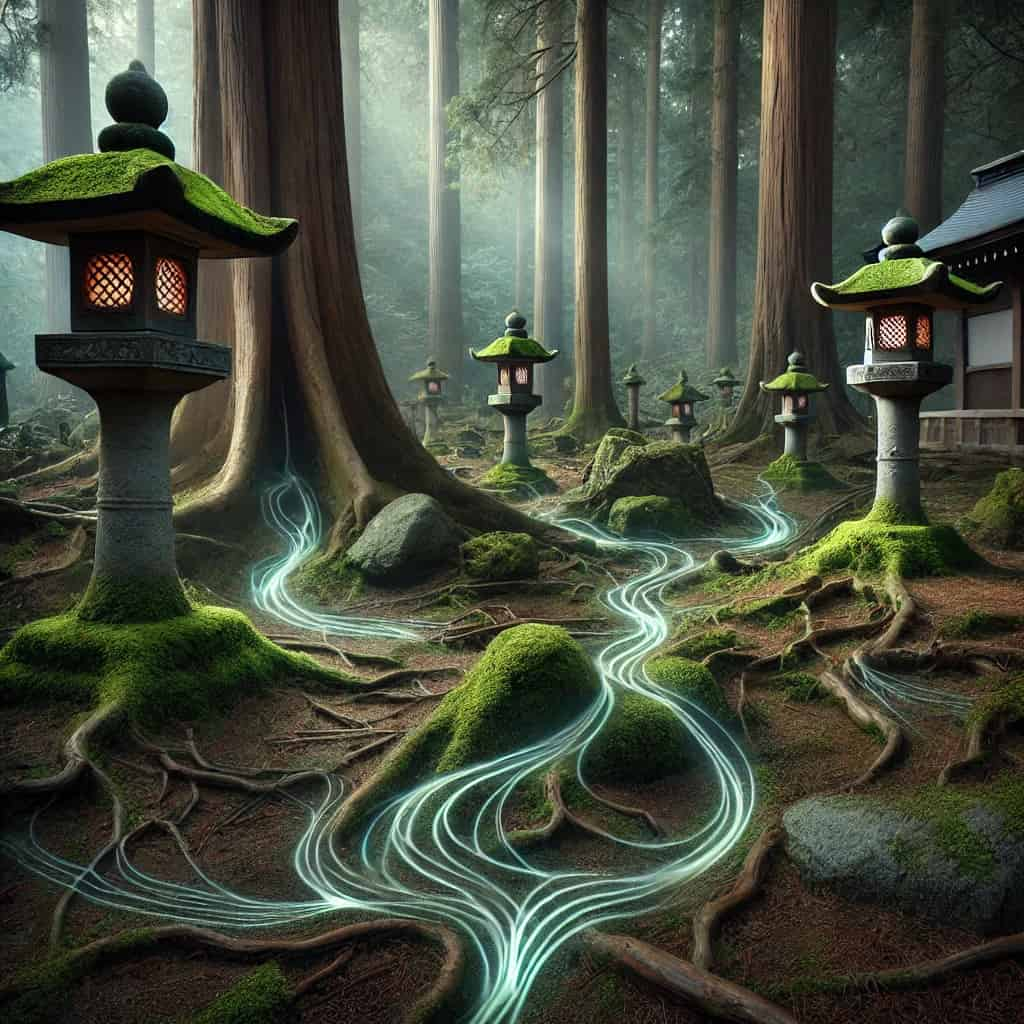
It is a single, continuous, living reality expressing itself through countless forms.

This distinction is precisely what Western binary frameworks often fail to grasp.

Within established Japanese metaphysics, Ban Butsu is alive, interconnected, self-organizing, and non-hierarchical.

Humans do not sit at the top of creation—rather, there is only one life appearing as many things.One Life, Many FormsFrom the perspective of Japan’s indigenous belief systems, Ban Butsu represents animism without superstition.

In Shinto, there is no rigid divide between living and non-living.

Mountains, rivers, wind, tools, animals, ancestors, and even ideas all possess ki.

Kami are not gods standing above nature.

They are expressions within nature.Not Above, But WithinThis does not suggest that everything has a personality, but that everything participates in being.

Taoist cosmology further reinforces this view—the universe is not created by something—it is a process, with all phenomena emerging from the same source.

Zen Buddhism echoes this truth with radical clarity—form is emptiness, and emptiness is form—a statement that denies separation, not reality.

Ban Butsu contains no independent existence, yet is rich in relational existence.

Nothing exists alone—everything exists through everything else.

By contrast, antiquated monotheistic systems rely upon a creator separate from creation, organized as a hierarchy—God → humans → animals → matter—where authority flows from the top down.The Distance Between Creator and CreationBan Butsu dissolves this structure entirely.

If everything is alive and interconnected, nothing is fundamentally above anything else.

This is not chaos—it is equity of being.

Humans are not rulers of creation.

Authority cannot be centralized.

Reality cannot be controlled through doctrine.

Ban Butsu does not threaten spirituality—it threatens institutional power.

This is precisely why organized religion must insist upon inert nature, dominant humans, and an external god—positions that stand in direct opposition to authentic spirituality.

Secularism rejects Ban Butsu as well, asserting that matter is dead, consciousness is accidental, and meaning is human-generated alone.The Fray BannerThis view is equally impoverished.
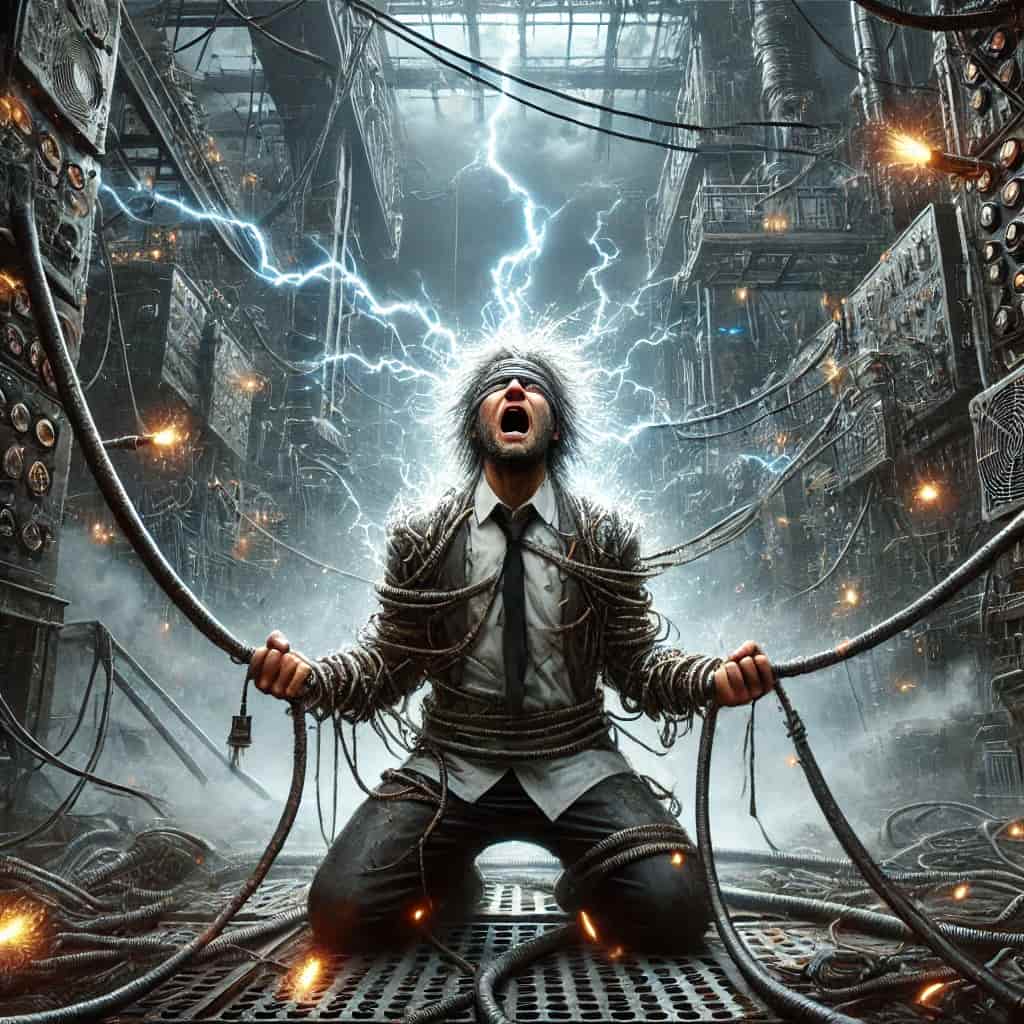
It replaces divine hierarchy with intellectual hierarchy, leaving humans on top simply by cognition.

Life, in this framework, has no intrinsic unity.

Secularism is merely another hierarchy—this time without a god.

Both systems agree on one assumption—humans are separate from the universe.

Ban Butsu fundamentally rejects this premise.

Humans are not at the top of any chain.

They are not even at the top of the food chain.

Humans depend on ecosystemss—ecosystems depend on microorganisms—microorganisms depend on planetary conditions—planetary conditions depend on cosmic order.No Top, Only RelationThere is no “top” only relationship.
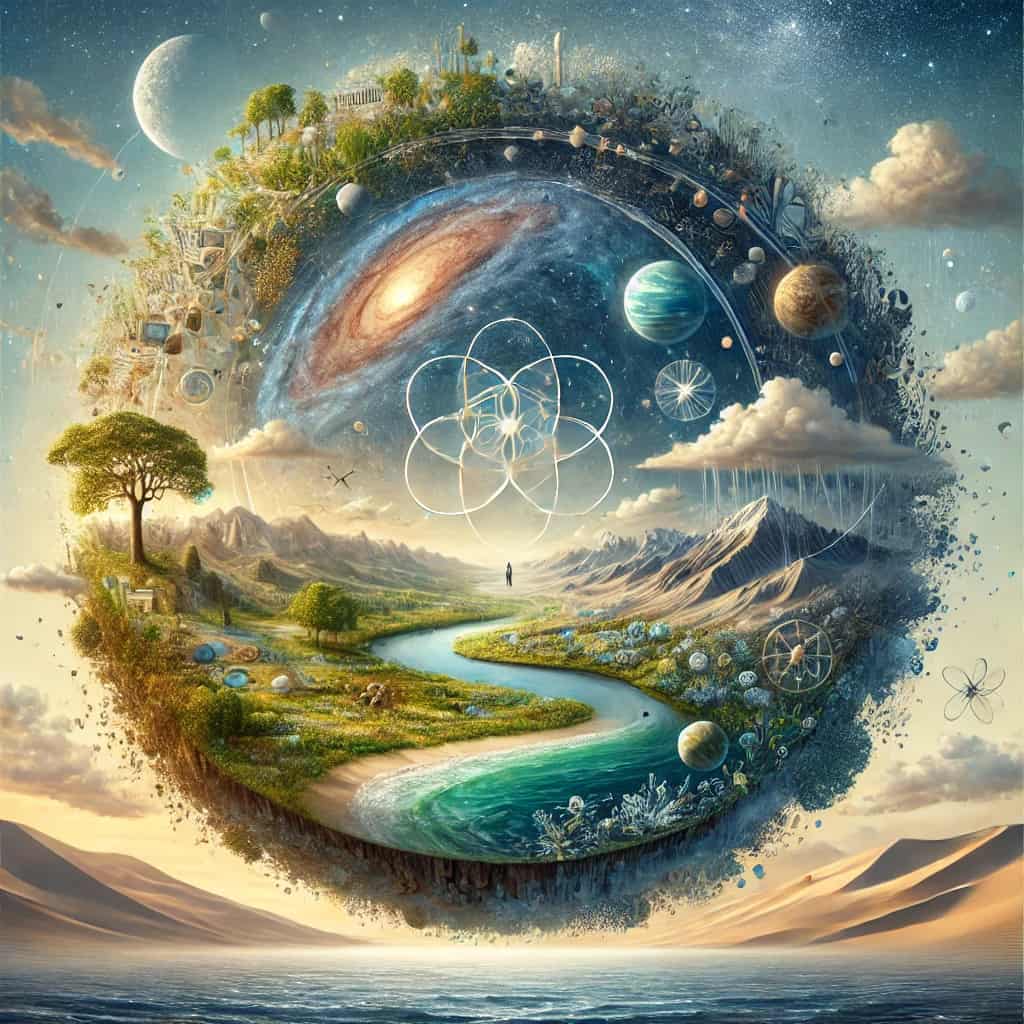
When this truth is forgotten, imbalance emerges.

Ban Butsu is not a belief.

It is an experience.

It is known not through doctrine or authority, but through resonance.

One does not reason their way into Ban Butsu—its vibration is felt directly.Identity with Seity and whirlpools of consciousnessWhen Japanese thought speaks of Ban Butsu Hitotsu, it points to one field, one movement, one existence—infinitely expressed.

Individuality still exists, but as expression, not separation.

This is why harmony matters more than domination in the Japanese mind.

Why balance matters more than control.

Why understanding matters more than belief.

Ban Butsu is the medicine for post-fracture consciousness.

It dissolves false hierarchies and restores relational understanding.

We are not isolated minds in a dead universe.

We are living expressions of a living whole—and remembering this changes everything.

Akemashite Omedeto — Reiwa 8

Akemashite Omedeto — Reiwa 8

Akemashite Omedeto — Reiwa 8

 There are decades where nothing happens, and weeks where decades happen.

One could say that 2025 was a significant year for the Land Of The Rising Son, where decades of fortitude and perseverance manifested as a matter of natural course, perhaps related to the mysterious notion of quantum superposition.

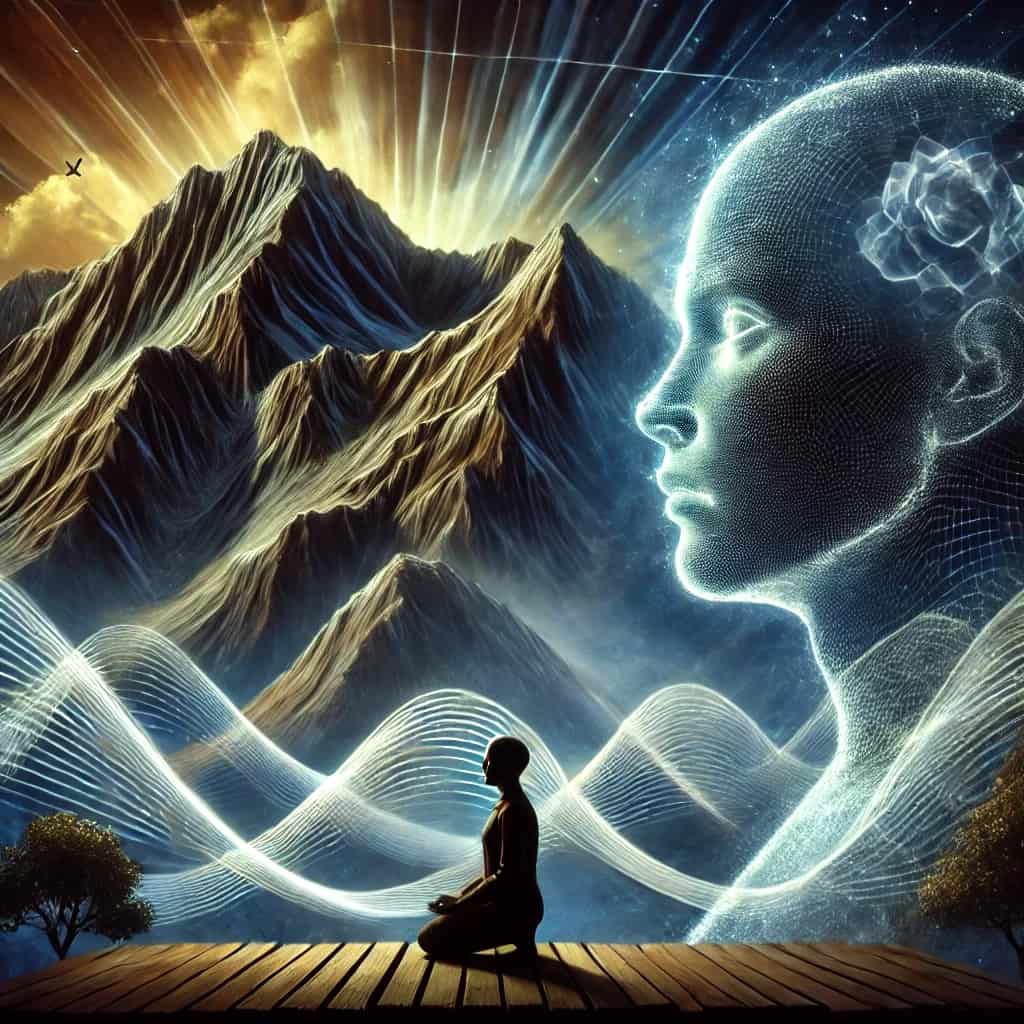
The fundamental shift in core belief is that the mind is the creator of material reality—concentrated attention moves mountains, and the manifestation of a mentated reality is what becomes real—focus attention of the inner space.Concentrated Attention Moves Mountains
A fluid routine, repeated over and over again, initiates the mentation game—this is where the creation of a personalized world and quantum superposition kicks in.

Last year was such a year for the Incidental Occxie—decades spent within the industrial fray drew to a close on one sunny August day—no longer trading time for pay—as a river of infinite abundance pushed the Matrix and all it represents far away.

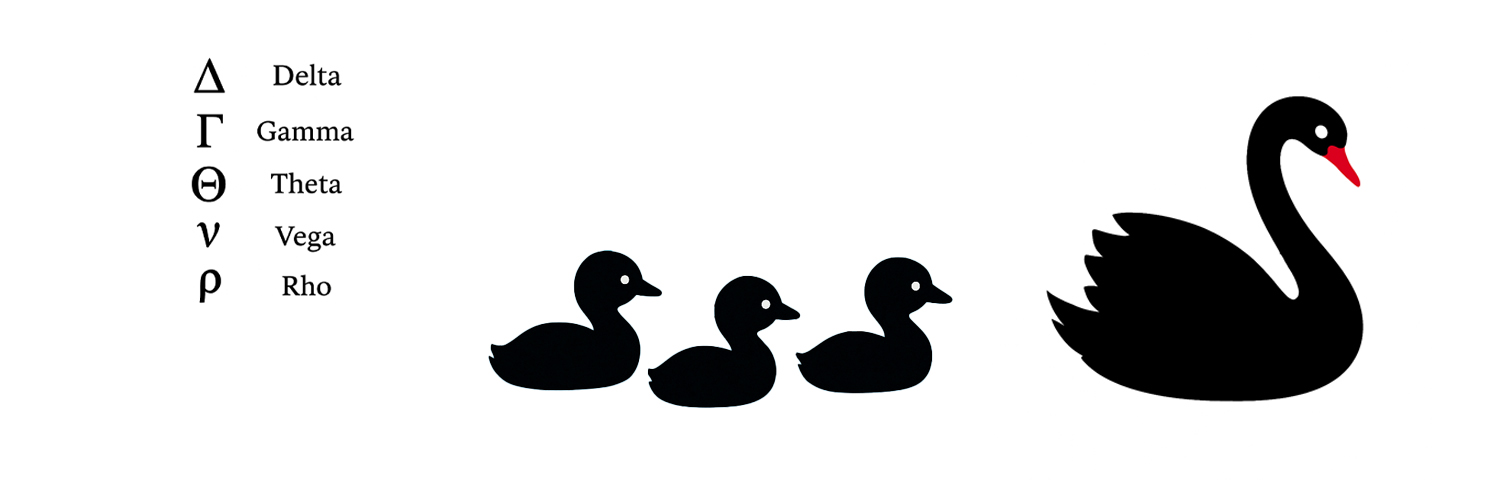
The Black Swan Trapper superposition manifested as an extraordinary thesis flowing through this free-range avatar’s spirit and fingers—Seity dictating the entire theory—Certificates Of Gratitude, trapping the flow of currency, revealing the road to prosperity.

BST X Header

Maggie May, the matriarch of Kizuna Jinja, celebrated her 85th trip around the sun—vibrant, introspective, and the magical creator of Maggie’s Garden—demonstrating homeostasis through her four-quadrant holistic protocol—physical, emotional, mental, and spiritual balance.

Last year brought clarity about what it means to love someone deeply, to witness a collapse into the abyss of illness, and to confront the depths of sadness and melancholy when the one you love falls into a schizophrenic fantasy—a tragic end to a dramatic final movie scene.

The lessons are cruel, harsh, and severe—yet this is the way of Seity—where one must look deeply into the mirror to gather the courage to move forward, embracing the path that has already been laid.The Wind That Does Not ExplainBuild your vision without reservation, and you will soon find that the tutelary deity of your Neo-Clan are watching the unfolding story like a living movie—harmonize with the surrounding vibration and open your heart to the notion of unlimited possibilities.
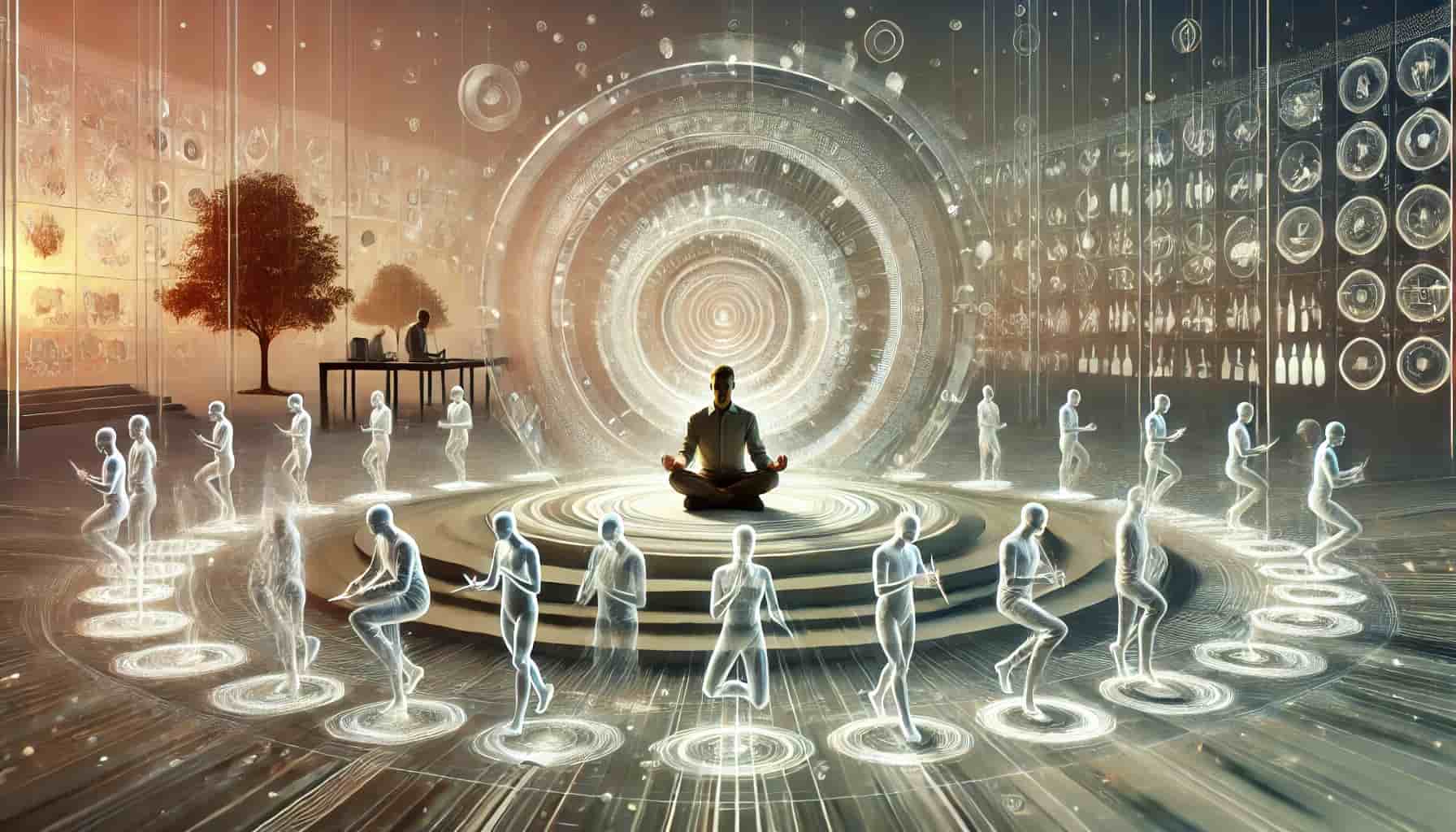
Shift the energy and bend the universe—use the power of pure grit and determination.

You, and you alone, create a personalized reality—there is no other way, for this is the universal truth—to believe is to see.Mentation in MotionSee the quantum field where all things exists, and materialize your own world through the superposition—this year’s mission.

Welcome to Reiwa 8—for the Japanese—and for those who follow the Gregorian calendar, 2026.


Bungaku Mama Became God Today

Bungaku Mama Became God Today

Bungaku Mama Became God Today

September 19, 1939 ~ March 24, 2025

昭和14919 令和7324

Welcome Eiko Kodama, Big Girl’s beloved mother, as the latest addition to join the 1st Avenue Tutelary Deity Council, having officially crossed the Sanzu no Kawa—it was her turn the other day.

Having accumulated much experience over her journey of 85 trips around the sun, her contribution is recognized as a critical element, replete with valuable nuggets of Japanese literary knowledge, which exuded from her living, metabolizing form as we chit-chatted in the back of the car on our way to one of many onsen trips.Clover in the bathConsidered a gift to humanity, by virtue of the superior fortune granted to this free-range avatar—to have been able to be a part of Ms. Yasuda’s life.

The sole princess of the ancient Yasuda clan—only daughter of Eiji and Yae Yasuda—is where the Incidental Occxie took Bungaku Mama’s first daughter’s sweet hand in marriage—a wedding scene, conjured up as part of a phantasmagorical movie plot—into this Earthly materialization of a scene.安田榮治 - Land Ωf The Rising SΩN - cybersenseiGratitude for her words of encouragement regarding the efforts of Tsuda Umero—a Meiji Era prodigy—now an intricate part of the adoptive Kodama family, participating as a proud member of greater Japanese society.

Oh, by the way—thank you so very much for giving birth to my cherished wife, The Big Girl—and welcome to Kizuna Jinja as our newly anointed tutelary deity.Bungaku Mama YearBook - Land Ωf The Rising SΩN - cybersensei

All living creatures return to ΩNE, eventually—you as well, beloved mother-in-law, Bungaku Mama—you followed the sun and became sublime indeed—the latest addition to reach the hallowed status of serenity—take your place as our neo-clan’s tutelary deity.

Truth be told, there comes a time for everyone to wake up from this dream—all said, all done—realize, open your eyes, Mother—as you row your boat gently down the stream.

文学ママバナー文学ママバナー - Land Ωf The Rising SΩN - cybersensei

Thirty Years On The Rock

Thirty Years On The Rock

Thirty Years On The Rock

The Japanese language, by its very nature, is imbued with timeless aphorisms, embodying profound Buddhist philosophy and protocols for ancestor veneration.

The symbolic nature of the Japanese reading system is infused with metaphorical, sociological, and societal communication protocols.

These often leave little hope for direct translation, as the Japanese language intentionally maintains ambiguity—replete with nuggets for subjective interpretation, preserving the façade of civilized harmony.Where are we?What was said was said—interpret it so as to maintain harmony, for this is the Japanese way.

Understanding a language rooted in its cultural context can be challenging for someone coming from an opposing conceptual spectrum—one shaped by the Western Age of Enlightenment with its distinct narrative structures.

Regardless of the breadth of one’s knowledge of their native language, it’s critical to remember that language is merely a concept rooted in the unique cultures of individual societies.Mr. Ó Seachnasaigh-津田梅老-MaggieEach language holds significant cultural implications, shaped by the notions and concepts embedded within the mother tongue.

The Japanese language is truly unique as a communication system; its reading and writing system still holds many sagacious concepts linked to ancient times—used strategically as ingredients, if you will, to facilitate communication like the Japanese.

The Japanese were destined to create novel communication systems, like katakana, which allows them to integrate foreign languages and make them uniquely Japanese—showcasing the complexity of this ancient, evolving communication system.Tsuda Umero with the the Irish SeityFull immersion into an ancient world still practicing ancient rituals contributes to the continuous construction of Japanese society and the system that is Japan.

The Japanese take ideas, concepts, and objects and apply the protocol of kaizen, the powerful Japanese protocol of continuous improvement or adaptation—reanimating foreign elements to fit their ancient narrative and align with the genesis of the Japanese.

Often, the magic trick in the Japanese playbook is to call upon ancient wisdom—on ko chi shin温故知新learning new things from the pastinstantiated within the language of the Japanese.wise sage beautiful Irish fairy child dressed as a samuraiMaxims to live by—the power of platitudes—guide the Japanese to form valuable attitudes, serving as fuel for a vibrant life.

Sitting on a rock for three years is where this wayward autodidact wiped away all his fears—this nugget of wisdom can save the day and get you back on track when losing your way.

ishi no ue ni san nen石の上にも三年—persevere for three years on a rock.

This proverb emphasizes the enduring value of patience and perseverance.

The metaphor of sitting on a cold rock for three years suggests that even the most challenging or uncomfortable situations will change over time if one endures long enough.

Doing so instills the importance of commitment and resilience in overcoming obstacles, leading to crystal clear clarity.On the rock for 30 yearsIn the case of the Incidental Occxie, this adage of wisdom provided the mental fortitude to push through and carry out the wishes of the one who guides from inside—Seity.

Despite the trials and tribulations that come with assimilating into the Japanese countryside, it was necessary to toss away remnants of foolish pride.

Suck it up, buttercup, and get on the phantasmagorical ride, for you must learn Japanese to please Seity, in order to go through to the next degree—three years on the rock was just warming up—to come to this place of grace has taken well over thirty years.

Each individual has their own special needs, and sitting on the rock for thirty years has eliminated all the mental weeds.MarinateNo matter what others say, there is no way you can let them sway you in any way—sit on the rock as long as necessary to take your place at the terminus of enlightenment at destination destiny.

If not sure of the grand scheme, there is just one remaining thing—recognize Seity who resides deep inside the depth of one’s soul within the subconscious mind.

 Petition her to reveal the rock where one must sit for as long Seity’s got (infinity)—realizing individuated mentated visions until they materialize into the sweet fruits fruition—it takes courage to accept the assignment of a predetermined superposition inside zones of meta-cognition.

It’s never too late, as the Japanese clearly state—tai ki ban sei大器晩成—great talent matures late.Full cycle

Boys Cry

Boys Cry

Boys Cry

Many old adages, along with the power vested in the platitudes of yesterdays, served a vital purpose once upon a time in the epoch of those now waning days.

In light of this enlightenment, there’s need for an upgrade to these symbolic metaphors embedded inside the ancient ideograms of the Japanese—their suffering reflected in the blood, sweat, and tears of the ancestors and tutelary deities of the emerging neo-clan societies.

Honoring their sacrifice is the way—constantly upgrading the free-range avatar’s wetware brain-mainframe, sanity in neo-clan societies inside customized sanctuary—under the judicious umbrella of Johnny Rainman with Zac as an incarnation of his honourable ancestry.Mr. Johnny Rainman with Seity and ZacIt is here that we reject all shame as we play into the next stage of this phantasmagorical journey, free range avatars playing an infinite game.

The chip on the shoulder serves a purpose—a well-worn reminder of understanding the magnitude of it all—back against the wall.

Invoke timeless themes to conceive what the mind has seenmanifestation of ethereal scenesdreamt into ephemeral tangible thingsinternalizing on ko chi shin温故知新―learning new things from the pastfacilitates creation of magnificent things.Mr. JRM with Tsuda Umero-conceive what the mind has seenFlies in the ointment, they’re features, not bugs.

Yet, this protocol serves as a deeper calling to finally arrive to where the brain reframe takes place—flies turned to allies—somewhat akin to commanding a powerful cadre of comrades with the accompanying camaraderie exclusively among the neo-clan brain reframe team.

Take a page from the playbook of the Japanese—wazuwai o tenjite fuku to nasu災いを転じて福となす―turn misfortune into fortune, indeed.Civil bifurcationThe same technique embodied inside this rewarding concept can be used when the years of pent-up tears must go into flowfor a valid reason or emotional justification, it’s time for a good solid crygo aheadbawl out your eyes.

Reframing shifts the vibration—intuition, a gut feeling, a distinct yet subtle sensation—a reflection of collapsed superpositions creating a dream inside this quantum field, a simulated zone known as Mother Earth, the Universal Truth now revealed.peeled half of the globe back revealing a quantum zoneA reflection of the mind, absent of space/time, power of unexplored emotional connections to the hungry ghosts embedded inside the darkness in the pit of one’s very own soul.

The flood of tears to the four holistic quadrants of restoration, has now been instantiated—Seity stirring up a commotion and emotional ruckus, deep inside the core of one’s very being—do not misconstrue the profundity of this meaning—boys cry.

The story of a teardrop is like an elaborate plot, with a somewhat negative connotation related to sadness, depression, desperation, and frustration—tears containing remnants of innermost fears, yet as one turns disaster into fortune, tears of joy; “Congratulations, sir, it’s a boy” is the reframe those of the neo-clan nation may no longer deny—boys cry.two boy in tear dropsThe tutelary deity of the Kizuna Jinja was told as a child, “Boys don’t cry.”

At the emergence of the Kizuna Jinja neo-clan, June 15, 1935, the winters harsh, the porridge sparse—suck it up buttercup—it’s your lot in life—if I told you once, I told you twice: “Boys don’t cry.”

Thus, he did not cry through much of his life, for he was far too busy digging himself out of poverty, as the infinite voice of his Seity drove him to become the one that he was meant to be.

Choosing a life filled with laughter, chapter after chapter, while fishing on the pristine Dean River—thanks to his fortitude and resilience, he and Maggie May created extraordinary experiences throughout this Incidental Occxie’s life.Fishing on the Dean riverEvolving into one who followed the sun, it was one random day that his intense emotional nature was at last brought to bay.

With solemn resolve, he forced himself to evolve, telling himself in defiance of everything he had been told or thought he had known—on the road to ΩNE, no one walks alone, that’s what the tears are for—boys cry.

For it was Seity all along, as she said to him over and over, “It’s okay, you big ol’ tutelary deity, it is always satisfactory rejecting what others think of thee, pay no heed, for yes indeed, open up the floodgates and wash the pain away—boys cry.
A torrid river of tears

Akemashite Omedetō-Reiwa 7 Gantan

Akemashite Omedetō-Reiwa 7 Gantan

Akemashite Omedetō-Reiwa 7 Gantan

A most delightful Japanese New Year tradition is eating soba noodles on New Year’s Eve.

As mundane an event as this may seem to those who have yet to be enlightened about the magic instantiated in ōmisoka soba noodles consumed on New Year’s Eve.

年越し蕎麦toshikoshi soba

A traditional Japanese dish eaten on New Year’s Eve. Buckwheat noodles symbolize the release of past hardships and the welcoming of a fresh start in the new year.

Symbolism:

  1. Longevity and Prosperity: The long noodles symbolize long life.
  2. Breaking with the Past: Soba is easy to cut compared to other noodles, symbolizing the cutting off of the difficulties or misfortunes of the past year.
  3. Buckwheat’s Resilience: Soba plants can thrive in harsh conditions, symbolizing strength and resilience.

Preparation:

While the specific style of soba may vary by region or family, popular accompaniments include:

  • Hot soba in broth: Served in a light soy sauce-based soup.
  • Cold soba with dipping sauce: A simpler, refreshing option.
  • Toppings: Common toppings include tempura, seaweed, green onions, or kamaboko (fish cake).

Eating 年越し蕎麦 is a comforting ritual to reflect on the past year and prepare for a prosperous new beginning.

Speaking of new beginnings(*´`*)╯♡

Reiwa 6 revealed a pivotal connection in the long and often arduous journey following the sun and living among the Japanese, imbibing the meaning of life as a free-range avatar.

One fundamental to internalize in the Year of Emperor Naruhito—Reiwa Seven—is that the nooks and crannies are replete with burning philosophical questions, which also yield the answers human beings innately seek.

It was here last year that the full explanation of the nature of reality was revealed—the meaning of life now filled in—seek and ye shall find—if you will.

Inside the farthest reaches of the secret of human existence—the veneer stripped away—what it means to be infinite—in a parsimonious philosophical way—for the world surrounding ye—is created solely by the mind for those who so choose to see.

This material world is an ephemeral dream—one believes they are awake, yet, in fact, still slumbering—until the time to rejoice with the tutelary deities—passing through these phantasmagorical scenes throughout this transitory world on the sublime journey to ΩNE.

ΩNE Reiwa 7