

Be My Valentine
Be My Valentine
The difference between Valentine’s Day in Japan and the Great White North could not be starker.
The Valentine reali ty of childhood memory is Maggie May creating handmade chocolate, for a delightful treat on Saint Valentine’s special day.
Of course, the KIZUNA JINJA tutelary deity would always bring a bouquet of flowers as well as chocolates for Maggie May, rounding out the day.
Valentine’s Day traces its lineage to a blend of Roman rituals and medieval romance—the original meaning of Valentine’s Day—love. Originating in ancient Rome, Lupercalia was a fertility ritual involving pairing and seasonal transition, where Valentine’s Day still sits on the calendar today.
The name comes from the 3rd century, when a martyr named Valentine became the original legend, secretly marrying couples despite a ban by Emperor Claudius II.
For his crime of uniting two hearts into one, he was executed around February 14, becoming one of the most well-known Christian martyrs.
The Church, never wasting an opportunity, repurposed this pagan festival into a saint’s feast day—a common early Christian strategy.
During the medieval European period, this festival morphed into courtly love, with poets like Chaucer linking February 14 to birds mating, as love became emotional and symbolic. Valentine’s Day evolved into romantic choice, devotion, and chivalry, only to later devolve into commercialized, transactional romance in the early Western civility.
In the Western mind, the core idea represented in Valentine’s Day is mutual romantic expression, usually between couples—the core Western logic being that love is mutual, expressive, and emotionally declarative.
On the other hand, the Japanese skip the love part and go straight to the heart of the matter—social engineering to establish or maintain position within rigid hierarchical tiers.
Like most things on this isolated archipelago, Japan did not inherit Valentine’s Day organically—it was engineered, adapted, and culturally transformed in the aftermath of the Second World War. Introduced by opportunistic confectionery makers, early marketing campaigns reframed Valentine’s Day as women giving chocolate to men, with chocolate becoming a social signal.
Japan formalized the meaning of chocolate into categories that do not exist in the Western mind—these distinctions are embedded in language and societal protocol.
First and foremost, there is the ubiquitous giri-choco, the obligatory chocolate—the “obligation” theme runs deep in Japanese society.
These giri-choco are given to coworkers, bosses, and acquaintances, acting as social lubricant, without an iota of romance.
A rarer case is honmei-choco, the “true feeling” chocolate, given to a romantic interest or partner—often handmade to signal sincerity. Finally, the third category includes tomo-choco and jibun-choco, chocolate gifts for friends or oneself, leading to self-care and peer bonding—an exquisite upgrade to Valentine’s Day, indeed.
In the Japanese mindset, love and obligation are distinct, structured, and time-sequenced—this form, order, and process can be seen across all dimensions of Japanese life.
To gain insight into the deeper cultural differences between these Valentine traditions—in Western societies, the emphasis is on authentic emotion and public declaration, with awkwardness tolerated in the name of sincerity. True to Japanese cultural norms, Valentine’s Day emphasizes social harmony and clarity of roles, with feelings filtered through etiquette.
Ambiguity is managed through categories, timing, and ritual—Valentine’s Day in Japan is less about confession of one’s feelings and more about navigating the nooks and crannies of Japanese society.
Personally, the Incidental Occxie sees every day as the right time to express love and gratitude sincerely.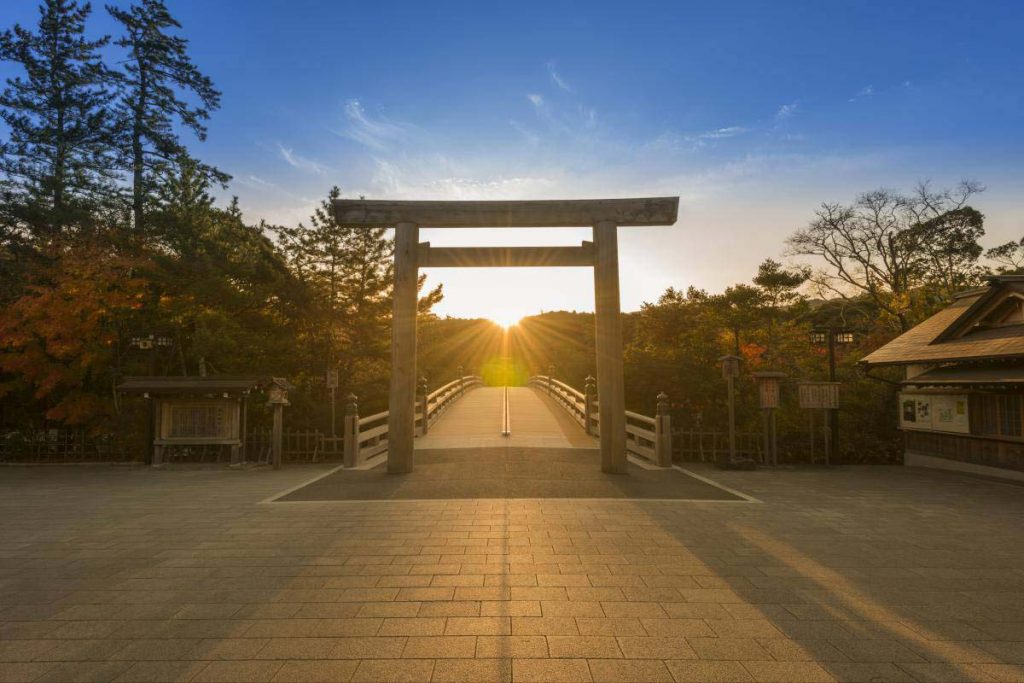
a small gesture
turns an ordinary day
in a special way to say
i care about and love you
every day


 The marble jar allegory comes courtesy of the brilliant psychologist
  This is why the marble jar serves as a relationship barometer.
 Every slight, betrayal, or moment of neglect removes marbles.
 Each positive action adds a marble.
 Why not show up consistently, own your mistakes, and practice empathy?
 The marble jar is powerful because it makes trust observable, teachable, and—when necessary for sanity—revocable.

 The global misadventure leaves the once-wealthy family tree in perpetual poverty.
 The ancestral ground shapes both you and destiny, teaching that form, order, and process lead to the pinnacle of wealth—wealth lasting for generation after generation—the reach of knowledge and the timeless continuity of material longevity.
 There is no true wealth without motion toward mastery—without absorbing the truth that wealth is found within, where the acres of rubies vibrate deeply holding the wealth that you seek.

 Visions manifest into the material world, along with their sub-realities inside a sublime, ephemeral
  Path
Path How
How Access is for those who speak, read, and write in
  Nooks and crannies in your way invite a perpetual shifting of the brain re-frame protocol.

 Intelligence moves through a person when conditions are right.
 Intelligence, by contrast, is motion.
 Curiosity now supersedes credentials, and adaptability matters more than status.
 When purpose appears, intelligence organizes itself naturally.
 The defining feature of animating intelligence is its effect.
 Visualization is the most effective way to internalize this otherwise abstract notion.
 A whirlpool does not contain water.
 There is one consciousness.
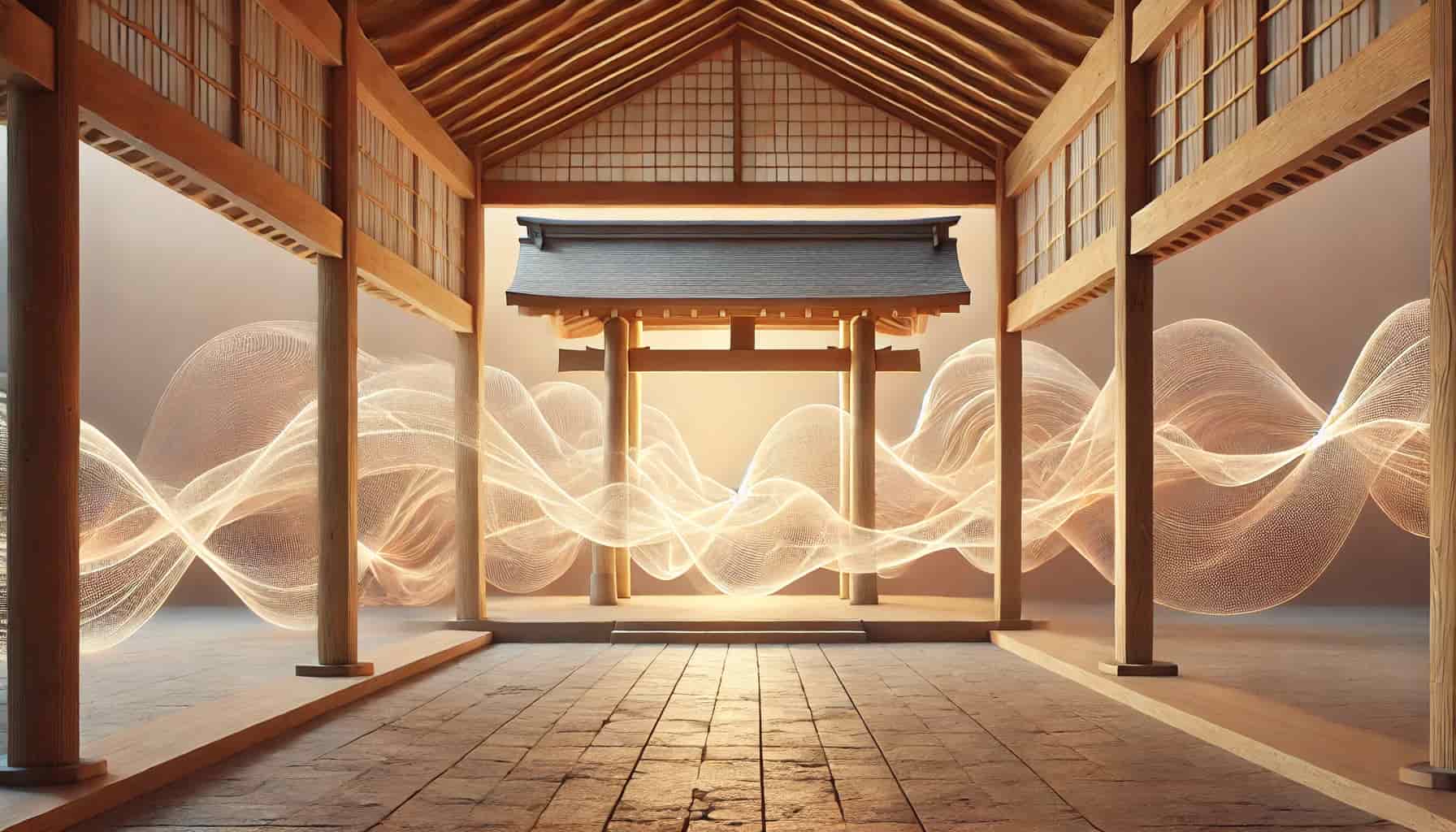 Dissociation is the key term for understanding whirlpools of consciousness.
 This insight aligns directly with phenomena such as psychological dissociation, dream states, psychedelic ego dissolution, near-death experiences, and deep meditation—all of which involve a loosening of the whirlpool’s boundary.
 Physics describes the extrinsic appearance of consciousness.
 Death is not annihilation—death is the dissolution of the whirlpool.
 All things partake in being.
 This aligns seamlessly with ancient protocols embedded within Shinto animism, Japanese cosmology,
Recent Comments