Thirty Years On The Rock

Thirty Years On The Rock

Thirty Years On The Rock

The Japanese language, by its very nature, is imbued with timeless aphorisms, embodying profound Buddhist philosophy and protocols for ancestor veneration.

The symbolic nature of the Japanese reading system is infused with metaphorical, sociological, and societal communication protocols.

These often leave little hope for direct translation, as the Japanese language intentionally maintains ambiguity—replete with nuggets for subjective interpretation, preserving the façade of civilized harmony.Where are we?What was said was said—interpret it so as to maintain harmony, for this is the Japanese way.

Understanding a language rooted in its cultural context can be challenging for someone coming from an opposing conceptual spectrum—one shaped by the Western Age of Enlightenment with its distinct narrative structures.

Regardless of the breadth of one’s knowledge of their native language, it’s critical to remember that language is merely a concept rooted in the unique cultures of individual societies.Mr. Ó Seachnasaigh-津田梅老-MaggieEach language holds significant cultural implications, shaped by the notions and concepts embedded within the mother tongue.

The Japanese language is truly unique as a communication system; its reading and writing system still holds many sagacious concepts linked to ancient times—used strategically as ingredients, if you will, to facilitate communication like the Japanese.

The Japanese were destined to create novel communication systems, like katakana, which allows them to integrate foreign languages and make them uniquely Japanese—showcasing the complexity of this ancient, evolving communication system.Tsuda Umero with the the Irish SeityFull immersion into an ancient world still practicing ancient rituals contributes to the continuous construction of Japanese society and the system that is Japan.

The Japanese take ideas, concepts, and objects and apply the protocol of kaizen, the powerful Japanese protocol of continuous improvement or adaptation—reanimating foreign elements to fit their ancient narrative and align with the genesis of the Japanese.

Often, the magic trick in the Japanese playbook is to call upon ancient wisdom—on ko chi shin温故知新learning new things from the pastinstantiated within the language of the Japanese.wise sage beautiful Irish fairy child dressed as a samuraiMaxims to live by—the power of platitudes—guide the Japanese to form valuable attitudes, serving as fuel for a vibrant life.

Sitting on a rock for three years is where this wayward autodidact wiped away all his fears—this nugget of wisdom can save the day and get you back on track when losing your way.

ishi no ue ni san nen石の上にも三年—persevere for three years on a rock.

This proverb emphasizes the enduring value of patience and perseverance.

The metaphor of sitting on a cold rock for three years suggests that even the most challenging or uncomfortable situations will change over time if one endures long enough.

Doing so instills the importance of commitment and resilience in overcoming obstacles, leading to crystal clear clarity.On the rock for 30 yearsIn the case of the Incidental Occxie, this adage of wisdom provided the mental fortitude to push through and carry out the wishes of the one who guides from inside—Seity.

Despite the trials and tribulations that come with assimilating into the Japanese countryside, it was necessary to toss away remnants of foolish pride.

Suck it up, buttercup, and get on the phantasmagorical ride, for you must learn Japanese to please Seity, in order to go through to the next degree—three years on the rock was just warming up—to come to this place of grace has taken well over thirty years.

Each individual has their own special needs, and sitting on the rock for thirty years has eliminated all the mental weeds.MarinateNo matter what others say, there is no way you can let them sway you in any way—sit on the rock as long as necessary to take your place at the terminus of enlightenment at destination destiny.

If not sure of the grand scheme, there is just one remaining thing—recognize Seity who resides deep inside the depth of one’s soul within the subconscious mind.

 Petition her to reveal the rock where one must sit for as long Seity’s got (infinity)—realizing individuated mentated visions until they materialize into the sweet fruits fruition—it takes courage to accept the assignment of a predetermined superposition inside zones of meta-cognition.

It’s never too late, as the Japanese clearly state—tai ki ban sei大器晩成—great talent matures late.Full cycle

Country Song

Country Song

Country Song

The lyrics of a national song spotlight unique features, reflecting the bedrock of a country, as the song embodies the diverse tapestry of societies throughout Mother Earth’s colorful worlds.

For some, the notion of a national anthem stirs unease—yet fundamentally, the country’s song serves to knit citizenry into cohesive societies, representing the subjective moral tapestry of a nation, such as the Japanese, who laud their ancient ways.

Japan, as a sage society, yearns to dwell in constitutional harmony—a creed woven into the Japanese, echoing the sagacity of Shotoku Taishi, the essence of the Japanese soul.Shotoku Taishi weaving the Japanese ancient constitution into the Japanese soulThe words of this nation’s song have grown into a deep intrigue—the briefest anthem on Earth, yet rich in sublime beauty, enshrined in a lingering, whimsical, whisper—exalting ancestors’ as prayers for the longevity of the Japanese.

A mosaic of ancient fiefs, strewn across this sacred land, founded upon the citizenry’s staunch adherence to the protocol of civility—the denizens of Civilization Three.ΩNE World Civilisation Three-Land Of The Rising Son-JapanA thousand generations to start, thousands and thousands of millennia—one could say this time frame is akin to eternity, a mere picosecond in the life of a tutelary deity.

Generations progress along—nothing permanently etched in rock—what once was a pebble has now become stone—in the flow to ΩNE, no soul walks alone.

The beauty is profound, thousands of generations, the pebbles have become magnificent precious stones covered with moss.A pebble transforming to stone then to a large boulder covered in mossThe roots run so very deep—a reflection of infinity through the eyes of tutelary deities—the world is so much More Than Allegory.

More Than Allegory Dr. Bernardo KastrupOne thing comes to mind—the essence of kinship is sublime—neo-clan nations built on the bedrock of ancient wisdom—Onozuto Protocol.

The saga of tutelary deities commence with their reign at The Beginning of Infinity—every thousand mile journey starts with the first step.A caucasian boy holding a Japanese fairies hand taking the first blood stepIn the Age of Shingo 神悟一界一道—the neo-societies bloom into Civilization ThreeHead Master Derek’s mentation across generations, over millennia, to materialization—thus, so it came to be.

君が代は
千代に
千代に
さざれ石の
巌となりて

苔のむすまで

tutelary deity reigns—

1,000 to 8,000 generations—

until pebbles grow into boulders,

covered in moss.

Origins:
The lyrics of “君が代” stem from a waka poem found in the Kokin Wakashū (古今和歌集), an ancient Japanese anthology compiled in the early 10th century. Originally, the poem was not written as a national anthem but was later adapted for that purpose

Composition as National Anthem:
In 1869, during the early Meiji era, British military bandmaster John William Fenton, stationed in Japan, observed that Japan lacked a national anthem. He recommended composing one, and a melody was created under his guidance. However, this original melody was later replaced.

Official Melody:
In 1880, the current melody was composed by Hayashi Hiromori (林廣守), a musician in the Imperial Household Agency, with additional contributions by Franz Eckert, a German musician. The arrangement reflected a more traditional Japanese aesthetic and was officially adopted.

Adoption as National Anthem:
”Kimi ga Yo” was formally designated as Japan’s national anthem during the Meiji period. It is regarded as one of the world’s oldest and shortest anthems. Despite its deep cultural roots, it was legally recognized as the national anthem in 1999 under the Act on National Flag and Anthem.


Akemashite Omedetō-Reiwa 7 Gantan

Akemashite Omedetō-Reiwa 7 Gantan

Akemashite Omedetō-Reiwa 7 Gantan

A most delightful Japanese New Year tradition is eating soba noodles on New Year’s Eve.

As mundane an event as this may seem to those who have yet to be enlightened about the magic instantiated in ōmisoka soba noodles consumed on New Year’s Eve.

年越し蕎麦toshikoshi soba

A traditional Japanese dish eaten on New Year’s Eve. Buckwheat noodles symbolize the release of past hardships and the welcoming of a fresh start in the new year.

Symbolism:

  1. Longevity and Prosperity: The long noodles symbolize long life.
  2. Breaking with the Past: Soba is easy to cut compared to other noodles, symbolizing the cutting off of the difficulties or misfortunes of the past year.
  3. Buckwheat’s Resilience: Soba plants can thrive in harsh conditions, symbolizing strength and resilience.

Preparation:

While the specific style of soba may vary by region or family, popular accompaniments include:

  • Hot soba in broth: Served in a light soy sauce-based soup.
  • Cold soba with dipping sauce: A simpler, refreshing option.
  • Toppings: Common toppings include tempura, seaweed, green onions, or kamaboko (fish cake).

Eating 年越し蕎麦 is a comforting ritual to reflect on the past year and prepare for a prosperous new beginning.

Speaking of new beginnings(*´`*)╯♡

Reiwa 6 revealed a pivotal connection in the long and often arduous journey following the sun and living among the Japanese, imbibing the meaning of life as a free-range avatar.

One fundamental to internalize in the Year of Emperor Naruhito—Reiwa Seven—is that the nooks and crannies are replete with burning philosophical questions, which also yield the answers human beings innately seek.

It was here last year that the full explanation of the nature of reality was revealed—the meaning of life now filled in—seek and ye shall find—if you will.

Inside the farthest reaches of the secret of human existence—the veneer stripped away—what it means to be infinite—in a parsimonious philosophical way—for the world surrounding ye—is created solely by the mind for those who so choose to see.

This material world is an ephemeral dream—one believes they are awake, yet, in fact, still slumbering—until the time to rejoice with the tutelary deities—passing through these phantasmagorical scenes throughout this transitory world on the sublime journey to ΩNE.

ΩNE Reiwa 7

Bottleneck

Bottleneck

Bottleneck

The Land of the Rising Sun could arguably also be called the land of functioning alcoholics—the peak of the Showa asset bubble is surely evidence of that. 

This massive asset bubble, rivaling the historic Dutch tulip mania, was brought to you by the global financial institutions flush with endless wads of fiat currency, fueling a nationwide Japanese party that was truly in full swig—ponds of alcohol, forests of meat—was the adage back in the day.

Remember, a tiny piece of land in Ginza the size of a postcard was selling for $7,000 a pop.

Ginza Land at its peakFor this micro-plot—zoom out for a full, objective perspective—the Imperial Palace of Japan was valued at more than the beautiful state of California in its entirety—what could possibly go wrong ʅ(◞‿◟)ʃ 
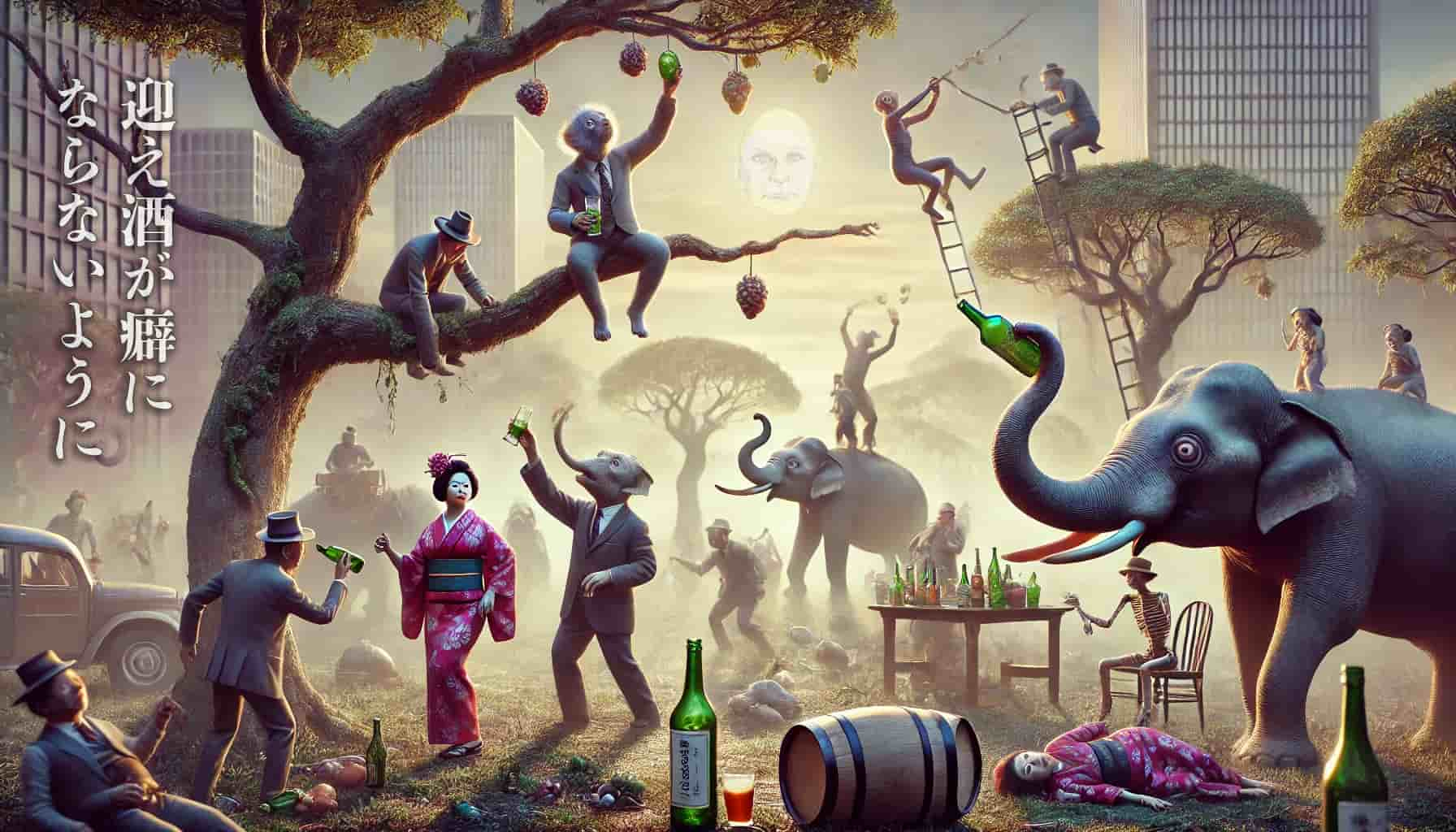
The samurai salaryman of the roaring 80s had plump, juicy expense accounts—¥100,000 on company-sponsored nights out in the nooks and crannies of bars, snacks, and soapland—making business deals while carousing around, blind to the natural flow of things—as surely as the party starts, surely it will end.

In the aftermath of the implosion, the Japanese economic miracle explosion revealed a much more deeply pressing social phenomenon—a large swath of the Japanese population and their varying degrees of alcoholism.

Party time the end of timeThe overall lack of social services in general makes facing addiction here a very lonely place, living in the wetlands of the nation of Japan inside emerging Civilization Three.

The addicted come in all shapes and sizes, not only the company president who is under highly volatile pressures, the likes of which, in recent times are unprecedented.

Lest we forget the infamous housewife, who is not only drunk in the morning after dropping the children off at school, but has also been borrowing heavily from consumer credit companies to support a lavish lifestyle mimicking the chimpanzee she sees on TV—her long-suffering husband on a long commute, a disposable cog in the massive Japanese industrial wheel.

良妻賢母Is alcoholism a hereditary trait or cultural?

In fact, Japanese people often complain about the lack of a particular enzyme (ALDH2) for breaking down alcohol, making it difficult to rid their bodies of accumulated toxins.

Leave it to the Japanese to excel at developing a plethora of different kinds of hangover remedies—shelves replete with products to relieve the alcohol side-effects and accompanying mental suffering.

hangover medicine

On the other hand, a hard and hardy brand of free-range neo-clan avatars thrives—their preferred beverage to imbibe—whisky made from rye—“don’t kill the drink,” chided the tutelary deity as an alcoholic aside.

The Japanese bubble party in full swing—an international shindig mixing all who congregated in the bubble era of industrial Japan, where Middle Eastern counterparts were quite fond of Single Malt Scotch—chugging it back by the 4-litre jug—just like magnums of Baby Duck, the way it used to be when starting early.

babyduck swill

Yes, time marches on, and surely, eventually, alcoholism culminates in the default human condition of pain and suffering, and the things that are wrong can no longer be solved by having just one more drink.

Cheers to Civilization Three

Disastrous Mouth

Disastrous Mouth

Disastrous Mouth

The Japanese have a pithy expression aimed at avoiding the verbal quagmire of the highly volatile freedom of speech, with the liberty to interpret any exchange in a deeply personalized manner to be taken every which way, and loose—口は災いの元kuchi wa wazawai no moto.

Many moons ago, an outstanding filter was gifted from beloved Muse, however, in the heat of verbal battles, inside the plethora of indistinguishable incomprehensible mundane extraordinarily trite themes—oral decorum becomes distorted in an all around ugly scene.

Disastrous MouthIs it kind, necessary, and true—internalizing this san-ten-setto leads to no regret, now a Master communicator and orator, when understanding what lies beyond the wisdom of commonsense.

The urge to merge—Kind-Necessary-True—with FormOrderProcess—leaves not much left, but one small step—and without further ado—a gift from us to you—the evolution of creative communication solutions.

Kind Necessary True Mere with Form Order ProcessWhen this highly sophisticated protocol is ignored, an overabundance of anguish, pain, and their manipulative nefarious friend, mental torture arrive with the preachers and the choir.

A deeply emotional serenade, a skipping record playing the same old song over and over again—being chided while guided—excruciating punishment meted out, it’s a matter of course—brought to task for blatant disregard of the cordial civility enshrined in Japanese communication protocol.

A diverse and inclusive interstellar choir singing in unison with a preacher conducting them. The choir includes aliens, fairies, and elves, all harmoAnnihilate incessant amplification, and its worse mate, cacophony—a manifestation of a viral infestation, consuming a narrowly defined spectrum of a decaying humanoid mind.

The dissonant discord of raspy-throated humanoid noise pollution is reflected in the failure of modern communication systems—cans of germs create fantastical delusion couched as the verified solutions according to the forked-tongued servile minions.

Mitigate the sulphuric acid taste of astringent verbiage, the toxic waste pit kind, moribund products of linguistically decaying artifacts still haunting modern primordial man.

A scene featuring rustic goblets filled with acrid vapors pouring from the mouth of a suspect chalice. The goblets are old and worn, made of rough metThe Japanese innately know the mouth is the fountain of all disasters—more often than not, the Japanese default to the standard protocol of tatemae—maintaining a facade of socially constructed harmony—as it goes—so life flows—internalize this to see—you too can think like the Japanese—a rock-solid 100% money-back guarantee.
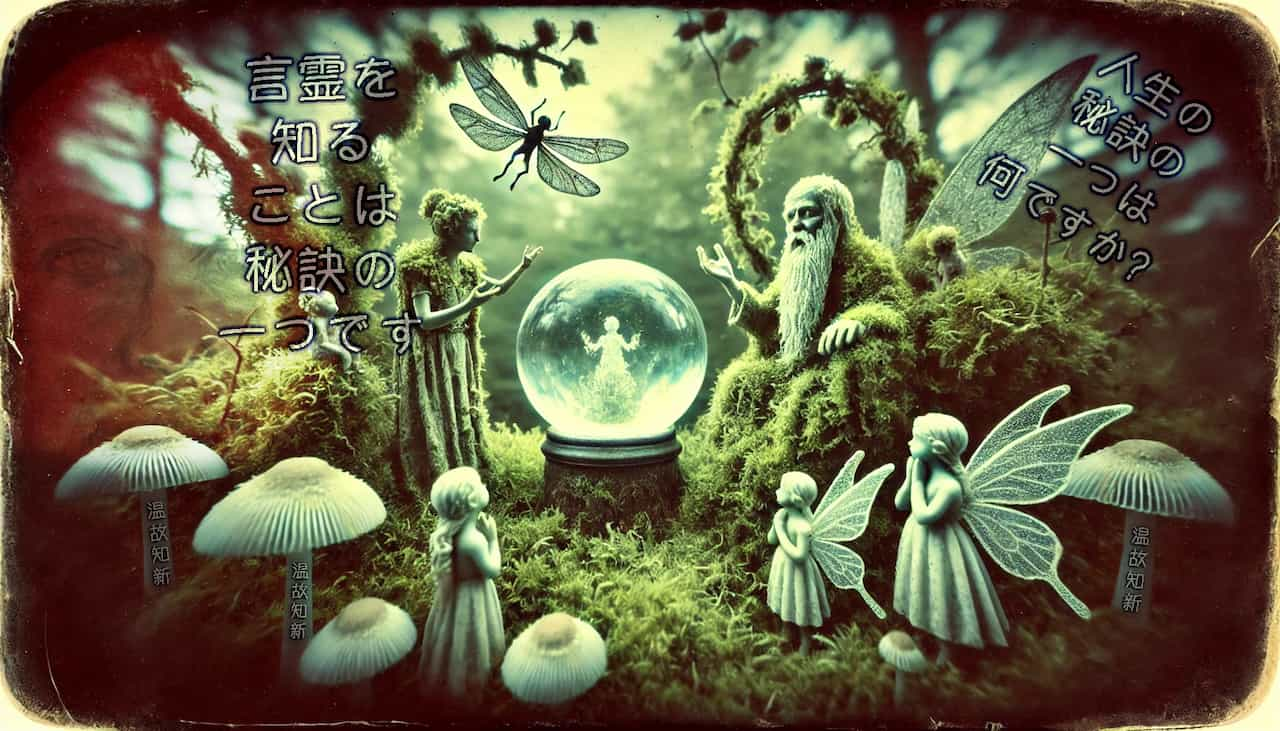
This could really be why the Japanese communication protocol is a game of hidden meanings, inside subtle intonation, ambiguity, and the paramount societal position of each Japanese.

Bound to ancient esoteric communication protocol embedded inside what it means to be Japanese, expressed via extraordinarily beautiful non-verbal communication tools with the ability to reach deep into the past via the culturally rich kanji.

Gain Wisdomー温故知新

For within the Japanese zone they have a visceral historical precedence, strict enforcement of their communication protocol—know your position while edifying all—make sure to not lose your head—the mouth is the source of disaster—that is all.

Once upon a time in Edo Japan, a slip of the tongue got the sideways glance to be met with a visceral real feel of the renowned samurai steel.

A phacken bloody mess, early death, returning to the bosom of the tutelar deity of your neo-clan—the disasters spewing from the mouth flowing to the final destiny.

All disasters spewing from uncontrollable pie-holes—leads to a mediocre destinations for those who fail to gain a semblance of control—loose lips elicit the markings of an untamed beast, and the resultant bore, bears out the cold hard facts—your life is an all-around abject failure—start from the beginning again.

A confrontation on the streets of Edo between an obnoxious drunk rogue and a noble samurai. The scene is set at night, with traditional Edo period arc

Coming from a long line of clever witty conversationalists, gabbers extraordinaire—some innate traits can never be changed, thus, those in this whimsical conversation class must reframe cultural communication codes by internalizing the spirit of the word for they lurk everywhere and hold one of the keys to mastery—this is the way.

Making the transition from a loudmouth full of self opinionated news-cycle driven—brainwashing runs deep, and in this, there is leeway for a slight modicum of forgiveness.

In the realm of humor, disaster from the mouth is always waiting like a dim-witted smartypants anticipating a second chance to ruin the perfect day—lurking inside the shadows of a former-self, just one innocuous blunder away.

A solemn and realistic scene emphasizing the message to 'watch your mouth.' The image shows a person with a ticking time bomb in their mouth, symboliz

Engaging strangers at Meiji Shrine with Sunshine Lover on a brilliant sunny day, an Occxie lass from the British Isles inside the conversation actually said:

Unfiltered Princess said “How about you?”

xybersensei replied: “Here since arriving in 1987 at the age of 23.”

To which the unfiltered princess then sullenly replied: “Why would you live here?!?!?”

In the days of yore, she would have been eviscerated with an unfiltered reply, a common tedious myopic Occxie chick, absent of any wisdom, not even one small pearl, her mind trapped inside a minuscule world.

This is where the filter kicked in, mitigating a tip of the tongue tart wise-guy reply—at long last, the acrid tongue finally reigned in—one giant leap on the road to becoming what Muse has in store to explore throughout the nooks and crannies of the phantasmagorical portals residing within.

The burning question now on the beloved readers’ mind is:

What would you have said if you had allowed yourself the freedom to opine:

The answer is clear for those who care to be:

I never wanted to become someone like you—not kind, nor necessary, nonetheless true.

A slightly obese British princess with raggedy clothes and gaudy makeup, standing in wonderment at a shrine. She has a snotty nose

Constitutional Merger

Constitutional Merger

Constitutional Merger

Ancient wisdom, embedded in mystic tales originating from primordial times, is now reanimated through a manifestation of the sublime four-idiom compound—calling for the amalgamation of two constitutions—on ko chi shin—learning something new based on the past is the next big thing.

The stagnation of progress and suppression of knowledge stem from the rot and decay of mal-matriculated minions, moulded by ivory tower racketeers indoctrinating their vassals to regurgitate poppycock and twaddle verbatim.

“Out with the old, in with the new” epitomizes the stark, black-and-white moral supremacy that reflects deeply rooted, idiotic, institutionalized stupidity.

Old and new-天佑神助は重要だよぅA major fork in the road during this epoch leads to a sublime supposition—it is now high time to reconfigure and reanimate a civil constitution by merging Civilization W and Civilization E (WE).

The Japanese have combined these extraordinary chains of events, culminating in the Loose Muse, Age of Neo Clan, Neo Societies, and the emergence of Civilization Three.

In every emergent neo-society, the first order of business is the elimination of parasites, cancers, and viruses that rot the innate human spirit—nothing less than extermination of the last brass tack hidden in the nooks and crannies at the core of Borg.

Spray away the cancer and parasites out of your lifeThe secret to a civilized amalgamation of the duopolistic notions of WE, as brewed over several centuries, now lies in the strict finishing protocol of Japanese Form, Order, Process.

Regardless of the outer surface appearances, Japan genuinely has a veneer of civility as sincere Japanese citizen has emerged as the preeminent precedent of an authentic civilized society.

This constitutional merger coincides with the revival of ancient Asian healing modalities.

Japanese practitioner of Chinese herbal medicine with a variety of herb, potions, and curesAsian shamans are now free to disseminate ancient herbal healing protocols, firmly committed to create innovative solutions for the maladies plaguing those trapped in the contemporary matrix.

An edict from the Rising Japanese Son has instructed the Japanese to maintain a stiff upper lip, as they are well-equipped and ready to do what they have historically done—persevere through the dip.

Import artifacts from distant lands, combine them, and polish them to a fine, glimmering shine, continuously honing skills embodying daily incremental improvements, in other words embrace kaizen.

The reanimation of two distinct constitutions has recently come to the forefront, causing significant stir and commotion—heralding societal evolution, the bifurcation of civilization, and the emergence of neo-clans with expanding global communities.

Neo Clan BannerInnate human moral behavior sometimes requires a reminder in the form of an update of the communal behavior, their fundamentals carved in stone centuries ago—the basic moral tenets must be updated and reiterated.

After decades of reflection, this philosophical inquiry is neither a delusion nor an illusion, but an observable fusion of fundamental Japanese ethics with the Age of Reason—forming the cohesive vision of Civilization Three.

Dust off the soot from the original constitutional roadmap formulated by Shotoku Taishi in 604 CE, the framework for creating healthy societies based on universal moral precepts, set to merge with a modern constitution influenced by General Bonner Fellers, Uncle Douglas, and the GHQ.

Shotoku Taishi and the Japanese constitution of 604 CE

The long game of life, a fundamental concept in the greater Asian node encumbered with the burden to amalgamate Asia into the Age of Reason.

The magnificent, magnanimous intellectual legacy originating from Sir Isaac and his drinking buddy John Locke, remain a bedrock story to be continued under the guises of civil reformation, threaded into neo-clans and their emerging societies until the end of Earth time. 

Sir Isaac and his drinking buddy John LockeHere, a good healthy smear of kaizen needs to be applied to the Occxie mind, which is still plagued by unfettered crony capitalism—the epitome of a grind. 

Every three months, it’s do or die; indeed, being seated on pins and needles is the order of capitalist exploits day, ensuring you meet your quarterly targets four times a year, until your dying day.

The fusion of fundamental human tenets with the inalienable rights of the sovereign individual, along with Muse’s plan—coupled with the miracle of unrestrained free speech—leads to the universal rejection of parasitic demagoguery and the co-opting of the cherished American dream.

Prepare for the ultimate fusion of Ancestral Etiquette and the spirit of the Age of Reason with Shotoku Taishi’s standards for a civil society, based on the reach of knowledge and the turning of the seasons. 

Merging of the constitutionsThe citizens of Japan have made countless sacrifices along their path to destiny as they embrace each day.

As curators of the next stage of humanity, they innately understand that the next step in the evolutionary process involves the consolidation of neo-clans and the constitutional merging of ancient and modern Japan.

The magnum opus of the Japanese is the reanimation of a globally bifurcated civilization as the phoenix once more rises from the ashes, with the Japanese regarded as both the creators and curators of Civilization Three.

ΩNE World Civilisation Three-Land Of The Rising Son-Japan